
Do these 3 things before closing this tab:
1Scan for outdated or missing drivers - takes under a minute2Clear out junk files and repair common Windows errors3Fix the driver behind crashes, sound loss and screen glitchesKarthik K Pradeep describes how an early CI/CD execution project called PipelineOS evolved into OdinRun: first by making runner behavior more predictable, then by adding persistence and observability, and finally by combining deterministic recovery rules with AI-assisted diagnosis. The rename marks a broader scope for the same project, not a separate replacement. The technical milestones below are the author’s account, not independently verified implementation or performance results. Read the author’s article.
Why the project changed shape
The starting problem was execution reliability. A CI/CD control plane can schedule work, but a build still depends on a runner that can start containers, enforce stage limits, capture logs, and clean up after failures. In Karthik K Pradeep’s account, the original PipelineOS runner had accumulated those responsibilities in one place. As the project grew, the challenge was not simply adding more features; it was making each layer reliable enough for the next one to depend on.
That dependency chain shapes the story: predictable execution makes durable records useful; records and telemetry make failures understandable; known failure patterns can then be handled with explicit rules; unfamiliar failures can be investigated with AI assistance.
PipelineOS began with an overloaded runner
The first runner was an approximately 810-line monolith, by the author’s estimate. It combined control-plane API calls, Docker container lifecycle management, log streaming, metrics, retries, remediation, and orchestration. The early system also included a dashboard and pipeline-stage execution, but the runner became the bottleneck for reliability work.
What’s actually slowing this PC down?
Pick the symptom - the matching free tool is one click away.
#1 Best Overall

- WHY CHOOSE CORE I3-10110U - Better single-core performance: The Core i3-10110U has a higher peak boost clock (4.1 GHz) compared to the Ryzen 3 4300U and the Intel Alder Lake N150 series, making it better for tasks that rely on fast single-core performance (e.g., web browsing, office apps). Better multi-thread performance via Hyper-Threading: the Core i3-10110U offers better performance in multi-threaded workloads compared to the Ryzen 3 4300U, especially for light productivity work and multitasking.
- 16GB RAM MEMORY & 512GB SSD STORAGE - GMKtec Nucbox G3 PRO mini pc is prebuilt with 16GB DDR4 RAM SO-DIMM DUAL CHANNEL, you will enjoy a speedier experience with Built-in 512GB M.2 Hard Drive. Our mini desktop pc boots up in seconds, work on multiple browser tabs, software applications and quickly transfers files. There is a primary slot and secondary expansion storage. Primary slot is M.2 2280 PCIE/SATA and secondary slot is M.2 2242 SATA .
- RICH INTERFACE - Nucbox core i3 mini computer is equipped with USB 3.2*4,up to 5Gbps/S, HDMI(4K@60Hz)×2, 3.5mm Audio Jack. Supports WiFi 6, and Gigabit Ethernet RJ45 2.5GbE network connectivity, Bluetooth 5.2. This Mini PC supports multiple device connection and can be used with servers, monitoring equipment, office equipment, displays, projectors, televisions, etc.
- 4K DUAL SCREEN DISPLAY - Mini desktop computer is equipped with upgraded Intel Graphics(max 1000MHz), supports 4K video playback and AV1 decoding, connect the pc with a projector as a home theatre, enjoy a variety of entertainments. Two HDMI 2.0 ports allows you to multi-task efficiently on two 4K@60Hz displays.
- UPGRADED COOLING FAN - The G3 PLUS has upgraded the cooling fan to reduce fan noise and thermals. We are using an upgraded thermal paste as well to help reduce heat on the CPU.
Pradeep identifies several concrete problems encountered in that design: Docker attach streams could corrupt output, stage timeouts could be ignored, shutdown could leave zombie containers, and runner registration could be unreliable. These examples explain why the first major step was architectural separation rather than adding more diagnosis features.
PIP-33 separated responsibilities and hardened execution
The author presents PIP-33 as the reliability milestone that split runner work into four components. The intended boundary is straightforward: container mechanics, stage behavior, control-plane communication, and coordination no longer need to be entangled in one runner module.
| Component | Responsibility described by the author |
|---|---|
| Container Runner | Manages Docker lifecycle. |
| Stage Runner | Handles retries, log scrubbing, workspace isolation, and environment isolation. |
| API Client | Registers runners and claims tasks from the control plane. |
| Executor | Coordinates the other components. |
The same milestone is described as addressing Docker stdout/stderr demultiplexing, hard stage timeouts, graceful shutdown cleanup, and configurable CPU and memory limits. Those are implementation claims from the article; the account does not provide independent test results or quantify reliability improvements.
Rank #2

- 12th Intel Alder Lake N95 Processor – The GMKtec G3 S Mini PC is powered by the 12th Gen Intel N95 processor with 4 cores, 4 threads, 6MB cache and a burst frequency up to 3.4GHz. Compared with N100/N5105/N5100/N5095, the N95 delivers up to 36% overall performance improvement. Perfect for routine tasks, office work, and home entertainment, this compact mini desktop is more convenient than traditional bulky PCs.
- 8GB RAM & 256GB SSD Storage – Pre-installed with 8GB DDR4 memory and a fast 256GB M.2 2242 SSD, the G3 S mini desktop offers quicker startup, smoother multitasking, and faster file transfers. Enjoy seamless performance whether you’re working on multiple applications, browsing, or streaming content.
- Rich Interfaces & Connectivity – The G3 S mini computer comes equipped with USB 3.2 (up to 10Gbps), dual HDMI 2.0 (4K@60Hz), and a 3.5mm audio jack. With support for WiFi 5, Bluetooth 5.0, and Gigabit Ethernet (RJ45 1000MbE), it connects easily with monitors, projectors, printers, office equipment, and other peripherals, making it versatile for both home and business use.
- Dual 4K Display Support – Featuring upgraded Intel UHD Graphics (up to 1000MHz), the G3 S supports 4K video playback and AV1 decoding for a smooth viewing experience. With dual HDMI outputs, you can connect two 4K@60Hz displays simultaneously, enabling efficient multitasking for work and entertainment.
- GMKtec WARRANTY - GMKtec offers a 1-year limited GMKtec's warranty for each mini PC, starting from the date of the purchase. All defects due to design and workmanship are covered. With a professional after sales team always ready to attend to your needs, you can simply relax and enjoy your mini PC.
PIP-31, PIP-32, and PIP-34 made persistence pluggable
Once execution could be decomposed, the project’s next concern was preserving what happened. The author says PIP-31 and PIP-32 introduced a database persistence abstraction, with SQLite as an option for single-node use and MongoDB for multi-tenant scale. PIP-34 added a separate abstraction for logs and artifacts, with local storage, AWS S3, and MinIO named as possible backends.
The Tool Desk
Outbyte Driver Updater FREEFix the driver behind crashes, sound loss and screen glitchesFind Drivers →Outbyte PC Repair FREEClear out junk files and repair common Windows errorsFree Scan →These are design choices reported by the author, not a comparative evaluation. No performance, cost, security, or scale measurements are supplied to establish when one backend is preferable in a real deployment.
PIP-35 and PIP-38 made executions easier to inspect
Persistence answers what the system keeps; observability helps explain what happened while a job was running. The author describes PIP-35 as capturing stage lifecycle transitions, CPU utilization, memory and peak working set, network ingress and egress, stdout and stderr, execution duration, and runner heartbeats.
Rank #3

- ➊ [ Trusted Quality for Everyday Agentic AI ] GEEKOM equips its SSDs with reliable original-grade flash and conducts rigorous stability testing to support dependable everyday operation. This commitment to quality is backed by a 3-year warranty. Simply connect the Air12 to cloud AI services for research, writing, study support and daily productivity—no NPU or complex local setup required. Designed for students, home users, light office work and first-time buyers, the Air12 is a high-value Cloud Agentic PC for everyday tasks
- ➋ [ Intel 7505 processor ] Powered by the Intel 7505 processor (2 cores, 4 threads, up to 3.5GHz), the GEEKOM Mini PC Air12 delivers smooth performance for everyday computing, office tasks, and home entertainment. With enhanced single-core processing, it handles daily workloads efficiently and responsively. Compact, quiet, and energy-efficient — a solid alternative to bulky desktops.
- ➌ [440lbs(200kg) Pressure Rated Metal Frame for Demanding Environments] Unlike the Plastic Shells You’ll Find on Most Mini PCs, geekom Mini Air12 features a triple-reinforced ABS+PC shell, precision-crafted metal frame and baseplate—engineered to withstand up to 440 lbs of pressure for the perfect balance of strength and thermal efficiency. Tool-free upgrades, shock-absorbing feet, and a 3D antenna deliver true durability
- ➍ [Dual-Channel RAM & NVMe SSD Expandability] Ships with 8GB DDR4 RAM and a 256GB NVMe SSD for smooth everyday performance. Dual memory slots and dual storage slots give you the flexibility to upgrade to 64GB RAM and 2TB SSD, so your system can adapt as your workload grows. Enjoy faster load times, smoother multitasking, and long-term reliability.
- ➎ [Triple 4K Displays for Maximum Productivity] Connect up to three 4K monitors via HDMI 2.0, Mini DisplayPort 1.4, and USB-C — ideal for stock trading dashboards, multi-tab research, office document editing, and light spreadsheet work. WiFi 6 and Bluetooth with high-gain antenna ensure stable wireless connections throughout your workspace. 5x USB ports and a full-size SD card reader provide quick access to peripherals and camera files — no adapters required.
For presenting telemetry, the account describes decoupling updates through Server-Sent Events (SSE) and WebSockets. PIP-38 then added a visual execution timeline intended to show stage durations, overlaps, retries, and failures. The article describes these capabilities but does not report benchmark results or independently verified operational outcomes.
Independent reader supportYour contribution helps us test, update, and keep practical guides available for everyone.PIP-36 and PIP-37 split recovery into known and unknown failures
With execution context available, the project could distinguish between failures that match known patterns and those that do not. The author’s design puts deterministic rules first for recognizable cases, reserving AI assistance for unfamiliar ones.
Known patterns: deterministic remediation
PIP-36 is described as a rule-based remediation system. A configured policy can retry a failure that matches a known pattern; exponential backoff is given as an example. Registry or network timeouts are cited as possible transient failures. This approach makes the response explicit and repeatable when the rule matches, rather than asking a model to invent runtime behavior.
Rank #4
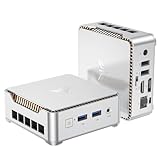
- 【Ryzen 5 3500U Processor】KAMRUI Essenx E2 Mini PC is equipped with AMD Ryzen 5 3500U (4-cores/8-threads, up to 3.7GHz) with integrated Radeon Vega 8 Graphics(1200MHz, 8 Core). The 3500U CPU operates at a base frequency of 2.1 GHz and a Boost frequency of 3.7 GHz. This DDR supports upgradable up to 32GB, SSD supports up to 2TB.(NOT INCLUED), KAMRUI E2 3500U Mini PC is ideal for light office work and home entertainment. KAMRUI E2 3500U is more than 35% more powerful and smoother in operation than the Intel N150, 33% faster than Intel N95, 28% performance boost over Intel i3-10110U, and 42% stronger processing power than AMD Ryzen 3 3200U.
- 【16GB DDR4 & 256GB SSD】The KAMRUI E2 mini computers is equipped with 16GB DDR4(Expandable up to 32GB) for faster multitasking and smooth application switching. 256GB M.2 SSD ensures fast startup times,fast file transfers and plenty of storage space,eliminating slow loading times and ensuring fast responsiveness.Storage space can RAM supports up to 32 GB, SSD supports up to 2TB (Not included)make file storage easier.
- 【4K Dual Display & USB 3.2 Type-A Port】KAMRUI E2 3500U mini desktop pc is equipped with an HDMI 2.0+DP 1.4 interfaces for faster transmission, Support Dual 4K@60Hz Display, E2 mini desktop computers is ideal for visual home entertainment, home office, conference rooms, etc. USB3.2 Gen1 Type-A Port×2 with a transfer speed of up to 5Gbps (10 times faster than USB 2.0) for efficient data transfer. The RJ45 1000M Gigabit Ethernet Port ensures a stable network connection.
- 【WiFi+Bluetooth stable connection】The Kamrui E2 micro pc have reliable and stable wireless connection, open websites in seconds, watch movies without buffering and download files smoothly, connect your monitor from WiFi or Ethernet, use a wireless keyboard and mouse through bluetooth, which will be powerful workstation for you.
- 【Versatile Ports】This KAMRUI E2 Small pc is equipped with HDMI 2.0×1(4K@60Hz)、DP1.4×1(4K@60Hz)、Gigabit Ethernet Port (RJ45, 10/100/1000Mbps) ×1、USB3.2 Gen1 Type-A Port×2(5Gbps)、USB2.0 Type-A Port×2、3.5mm Audio Jack ×1、DC In ×1、Power Button ×1
Unfamiliar failures: AI-assisted diagnosis
PIP-37 adds AI-assisted diagnosis for failure types the rules do not recognize. The context described includes the stage, exit code, duration, resource measurements, and selected scrubbed log snippets. The AI role is to diagnose and suggest fixes, not to rewrite the runtime blindly. An example diagnosis in the article is illustrative, not evidence of a real customer incident or measured success rate.
Why PipelineOS became OdinRun
Pradeep describes PipelineOS as the early name used while the system’s architecture focused on execution. OdinRun is the project’s current identity as its stated scope expanded to encompass durable state, observability, remediation, AI-assisted diagnosis, and debugging. In this account, the name change reflects an evolution in the same project rather than a clean break or separately launched replacement.
The guiding idea is that diagnosis depends on observability, and dependable recovery depends on understanding the circumstances of a failure. That makes the sequence important: adding AI before the runner can reliably capture execution context would leave diagnosis with less useful evidence to work from.
Recommended Free Tools
What this account does—and does not—establish
The article is a first-person engineering account by Karthik K Pradeep. It describes architecture and milestones, but does not independently establish current availability, repository state, installation steps, license, security controls, production use, or performance. It also does not compare OdinRun with other CI/CD products. Readers evaluating the project should check its current repository and documentation for those details rather than treating the milestones here as a verified release or deployment guide.
Quick Recap
Product prices and availability are accurate as of the date/time indicated and are subject to change. Any price and availability information displayed on Amazon at the time of purchase will apply.

