
Outdated Drivers Are Slowing You Down
One free scan finds every outdated or missing driver and matches the right update for your exact hardware.Free scan · exact hardware matchWindows Errors? Fix Them Before They Spread
Repair common Windows errors and clear accumulated junk for a smoother, more stable PC - no reinstall needed.Free scan · no reinstallSatellite internet equipment gets its power from the spacecraft’s onboard electrical system, not from a terrestrial power grid. Vicor says its modules were used in Boeing’s O3b-mPOWER program to convert a 100V spacecraft bus into lower-voltage power for networking ASICs and FPGAs. That is a documented example—not evidence that every satellite constellation uses Vicor modules.
How a satellite powers its internet equipment
A satellite must generate or store its own electrical energy. Spacecraft commonly use solar panels, batteries, or both; the power system then distributes electricity to the payload and other onboard systems. For internet payloads, the challenge is not simply supplying enough watts: processors and communications ASICs need carefully controlled low-voltage power derived from the spacecraft’s higher-voltage bus.
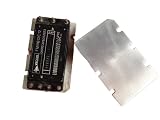


Power electronics bridge that difference. They convert voltage, regulate output, and help manage electrical isolation, noise, transients, and faults. Radiation effects also matter: components must be selected and a power architecture designed for the mission’s radiation environment. Vicor describes these as considerations for satellite power systems, not as problems solved automatically by any single module. Vicor’s satellite FAQ
What Vicor’s modules do in the power chain
Vicor describes a source-to-point-of-load network that separates voltage regulation from voltage transformation. In its Factorized Power Architecture, the pre-regulator module (PRM) regulates an intermediate supply, while a voltage transformation module (VTM) converts that supply close to the load. A bus converter module (BCM) can provide an intermediate rail from the spacecraft bus.
Recommended Free Tools
#1 Best Overall
- BCM: Converts the spacecraft bus to an intermediate voltage. Vicor lists the BCM3423 as an isolated, fixed-ratio converter.
- PRM: Provides a regulated intermediate rail. Vicor lists the PRM2919 as a non-isolated regulated stage.
- VTM: Transforms voltage and supplies high current near a processor or other load. Vicor describes this placement as a way to reduce losses in board-level power distribution.
These are architectural roles, not proof that a particular arrangement is best for every spacecraft. Engineers also have to account for bus compatibility, load behavior, isolation, thermal management, physical integration, and fault handling. Vicor’s LEO/MEO satellite solution page
Vicor’s published LEO/MEO module specifications
The following are specifications published on Vicor’s current LEO/MEO satellite page, accessed in 2026. They are manufacturer figures, not measurements conducted for this article. Efficiency values are peak ratings; they should not be treated as efficiency at every load or as a system-level result.
Rank #2

- 1 OUTPUT
- 200W
- DC-DC REGULATED POWER SUPPLY MODULE
- HYBRID
- Data Aquisition/Converter IC
| Module | Published input and output | Published power or current | Published peak efficiency | Published radiation ratings |
|---|---|---|---|---|
| BCM3423 | 100V nominal input (94–105V; 120V transient); 33V output (31–35V) | 400W | 96% | 50krad TID; 35MeV·cm²/mg SEE |
| PRM2919 | 33V input (30–36V); 25V nominal output (13.4–35V range) | 200W | 97.5% | 50krad TID; 35MeV·cm²/mg SEE |
| VTM2919 | 25V input (13.4–35V); 0.42–1.1V output | 150A | 94.3% | 50krad TID; 35MeV·cm²/mg SEE |
TID means total ionizing dose; SEE means single-event effects. The published figures are specific to the manufacturer’s stated products and ratings. They are not universal qualification for every mission, orbit, shielding scheme, or operating condition. Nor does a module’s peak efficiency alone establish how much power a complete satellite system will use: that depends on operating point, conversion stages, distribution, thermal design, and loads.
What Vicor reported about Boeing’s O3b-mPOWER satellite
In a December 21, 2022 release, Vicor said Boeing’s O3b-mPOWER satellite incorporated its radiation-tolerant power modules. Vicor reported that the satellite launched on December 16, 2022. Its description of the configuration names a BCM3423, a PRM2919, a 150A VTM2919 supplying a 0.8V rail, and a 50A VTM2919 supplying a 3.3V rail. The modules powered ASICs and FPGAs from a 100V bus, according to the company. Vicor’s O3b-mPOWER announcement
The Tool Desk
Outbyte PC Repair FREEClear out junk files and repair common Windows errorsFree Scan →Outbyte Driver Updater FREEScan for outdated or missing drivers - takes under a minuteDriver Scan →That 2022 configuration should be kept distinct from the specifications on Vicor’s current product page. The announcement gives particular VTM current and rail details for the O3b-mPOWER design; the current page publishes broader model specifications. The sources do not establish independent comparative testing of the system’s performance or reliability.
Radiation tolerance and redundancy: useful design features, not guarantees
Vicor describes its satellite products as radiation-tolerant, publishing TID and SEE ratings for the listed modules. Those ratings address radiation-related design considerations, but a suitability decision still depends on mission conditions and the spacecraft’s qualification process. A rating should not be read as a guarantee against every radiation event or failure mode.
Vicor also describes parallel redundant powertrains as an approach to handling single-event functional interrupts (SEFIs). Redundancy can help a system tolerate some faults, but the result depends on how the complete power architecture detects, isolates, and recovers from them. Component claims alone do not establish mission-level reliability. Vicor’s discussion of radiation-tolerant satellite infrastructure
Independent reader supportYour contribution helps us test, update, and keep practical guides available for everyone.What engineers should compare when selecting satellite power modules
A peak-efficiency figure is only one part of a useful comparison. For a proposed spacecraft design, engineers need to check the whole path from the bus to the load:
Best Value
- Bus and rail compatibility: Confirm nominal and transient input conditions, allowable ranges, and the voltage required by the downstream load.
- Capacity at the real operating point: Compare power and current needs, including load transients, rather than relying only on a maximum or peak rating.
- Radiation evidence: Match stated TID and SEE ratings and qualification evidence to the mission environment; do not assume a product rating proves suitability for every orbit or mission duration.
- Electrical behavior: Review isolation, noise filtering, transient suppression, regulation, and fault isolation requirements for the system.
- Physical and thermal integration: Account for module size and mass, heat removal, board layout, and how close the transformation stage can be placed to high-current loads.
- Fault tolerance: Evaluate redundancy, fault detection, isolation, and recovery across the full powertrain.
Vicor’s materials describe its products and architecture; they do not provide independent head-to-head results against alternative satellite power systems. A fair comparison therefore requires mission-specific qualification data and system-level analysis, not a ranking based on a single published efficiency number.
Quick Recap
Product prices and availability are accurate as of the date/time indicated and are subject to change. Any price and availability information displayed on Amazon at the time of purchase will apply.

