
The Tool Desk
Outbyte Driver Updater FREEFix the driver behind crashes, sound loss and screen glitchesFind Drivers →Outbyte PC Repair FREERepair Windows errors before they cause bigger problemsFix Now →Quick Assist lets a trusted person view your Windows PC remotely and, with your separate approval, control it. The helper opens the current Microsoft Store version of Quick Assist, signs in, and generates a temporary six-digit code. The person receiving help enters that code, approves screen sharing, and can later approve or reject a request for full control.
Quick Assist is designed for attended, one-time support—not silent or unattended remote access. Both PCs need internet access, and you should use it only with someone you contacted and trust. Never give a Quick Assist code to an unsolicited caller claiming to be Microsoft or technical support.
Before you start
Quick Assist is available for remote assistance between supported Windows 11 and Windows 10 devices. The normal Windows 11 scenario is one person helping another Windows 11 user. A Windows 11 helper can also assist a Windows 10 recipient when the installed Quick Assist app and current Windows updates support that connection. Microsoft’s current documentation covers both operating systems; keep older installations fully updated before troubleshooting compatibility.
- The helper needs to authenticate with a Microsoft account. Microsoft’s IT documentation also supports Microsoft Entra ID authentication for organizational scenarios.
- The person receiving help does not need to sign in, according to Microsoft’s IT documentation.
- Neither PC needs to be joined to a domain for the basic service. Local Active Directory authentication is not currently listed as a supported helper sign-in method.
- Both people need a working internet connection.
- The Microsoft Store must be available unless an administrator deploys or manages the app another way.
Before connecting, close or minimize anything private that you do not want the helper to see. This includes banking sites, password managers, private email, recovery keys, confidential documents, and work systems. View-only access still exposes anything visible on the screen.
What’s actually slowing this PC down?
Pick the symptom - the matching free tool is one click away.
#1 Best Overall

- Compact Mouse: With a comfortable and contoured shape, this Logitech ambidextrous wireless mouse feels great in either right or left hand and is far superior to a touchpad
- Durable and Reliable: This USB wireless mouse features a line-by-line scroll wheel, up to 1 year of battery life (2) thanks to a smart sleep mode function, and comes with the included AA battery
- Universal Compatibility: Your Logitech mouse works with your Windows PC, Mac, or laptop, so no matter what type of computer you own today or buy tomorrow your mouse will be compatible
- Plug and Play Simplicity: Just plug in the tiny nano USB receiver and start working in seconds with a strong, reliable connection to your wireless computer mouse up to 33 feet / 10 m (5)
- Better than touchpad: Get more done by adding M185 to your laptop; according to a recent study, laptop users who chose this mouse over a touchpad were 50% more productive (3) and worked 30% faster (4)
Install or update the current Quick Assist app
The current Windows workflow uses the Microsoft Store version of Quick Assist. Windows 11 commonly provides the app, but it may need to be installed or updated separately.
- Select Start.
- Open Microsoft Store.
- Search for Quick Assist.
- Select Get, Install, or Update, depending on what the Store displays.
- Open Quick Assist when the installation or update completes.
You can also open the official Quick Assist listing in Microsoft Store. Microsoft moved Quick Assist to the Store to improve performance and security, including faster generation of the six-digit assistance code. The Store-delivered app requires Microsoft Edge WebView2; WebView2 is normally included with Windows 11, but it can be missing, damaged, blocked by policy, or unable to update.
On a work or school PC, an administrator may block Microsoft Store installation. Do not bypass that restriction by downloading an unofficial copy. Ask the administrator to approve or deploy the app and to review the organization’s Quick Assist network and WebView2 policies.
Free tools Windows power users keep installed
One-click scans. No signup required.
If you still have an old Quick Assist shortcut or icon after installing the Store version, choose the newer Quick Assist icon. Microsoft says the old shortcut should normally be removed automatically after the Store app is opened. If it remains, you can remove the obsolete shortcut manually.
Microsoft specifically calls out Windows 11 version 21H1 as a version that may have trouble installing the Store app. Install the latest applicable Windows updates before trying again. As additional servicing context, Microsoft’s release information listed Windows 11 versions 26H1, 25H2, and 24H2 as current general-availability versions on August 10, 2026, while Windows 11 23H2 Home and Pro had reached the end of updates. Quick Assist compatibility should still be checked against the app’s own documentation rather than inferred only from the Windows version.
See Microsoft’s Quick Assist installation and usage guidance and Windows 11 release information for current version details.
Open Quick Assist
Use any of these Windows 11 methods:
- Open Start, type Quick Assist, and select the app.
- Open Start > All apps > Quick Assist.
- Press Ctrl + Windows key + Q.
The shortcut may be written in a different key order elsewhere, such as “Windows + Ctrl + Q,” but it refers to the same three keys. Microsoft’s current wording is Ctrl + Windows key + Q.
How to give remote help
The helper starts the session and sends the code. Do not send the code publicly; use a private phone call or trusted messaging channel.
- Open Quick Assist.
- Select Help someone.
- Sign in when prompted with a Microsoft account or, where applicable, a Microsoft Entra ID account.
- Wait for Quick Assist to generate a temporary, six-digit security code.
- Send the code privately to the person receiving help. Do not post it in a public chat, forum, social-media message, or untrusted support form.
- Wait for the recipient to enter the code and approve screen sharing.
- Use the available support tools, such as text chat, the laser pointer, annotation, or view-only assistance.
- If you need to operate the computer directly, select Request control.
- Wait for the recipient to review and select Allow. Full control does not begin merely because you clicked Request control.
- Select Leave when the work is finished.
Use view-only access whenever it is enough to explain a setting or diagnose a problem. Request full control only for a specific task, explain what you intend to do, and return to view-only mode by selecting Cancel control when direct operation is no longer necessary.
How to get remote help
The recipient does not normally need a Microsoft account. The helper must first generate the current code, and the code must be entered while it is still valid.
Rank #2
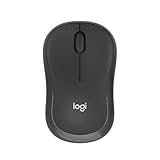
- Pair and Play: With fast, easy Bluetooth wireless technology, you’re connected in seconds to this quiet cordless mouse —no dongle or port required
- Less Noise, More Focus: Silent mouse with 90% reduced click sound and the same click feel, eliminating noise and distractions for you and others around you (1)
- Long-Lasting Battery Life: Up to 18-month battery life with an energy-efficient auto sleep feature, so you can go longer between battery changes (2)
- Comfortable, Travel-Friendly Design: Small enough to toss in a bag; this slim and ambidextrous portable compact mouse guides either your right or left hand into a natural position
- Long-Range: Reliable, long-range Bluetooth wireless mouse works up to 10m/33 feet away from your computer (3)
- Open Quick Assist using Start search, Start > All apps > Quick Assist, or Ctrl + Windows key + Q.
- Enter the helper’s six-digit code in Code from assistant, or in the equivalent Get help field shown by your app build.
- Select Submit or the equivalent button to join the requested session.
- Review the prompt and select Allow to share your screen.
- If the helper requests full control, select Allow only if you trust the helper and understand the task. Otherwise reject or decline the request.
- To withdraw direct control while keeping the session open, select Cancel control.
- Select Leave to end the session completely.
Microsoft’s pages currently show slightly different labels. The detailed Support article uses Code from assistant, Submit, and Allow. Microsoft’s consumer Windows learning article describes a Get help path and may show choices such as View screen or Take full control. Microsoft Learn describes screen sharing first and a separate Request control action. Labels can differ by app build, region, or UI revision. The universal sequence is: enter the helper’s six-digit code, submit it, allow screen sharing, and approve full control only when you want to grant it.
View-only access versus full control
| Permission | What the helper can do | When to use it |
|---|---|---|
| Screen sharing or view-only | See what is displayed and use available guidance tools, such as chat, annotation, and the laser pointer. The helper does not automatically operate the PC. | Explaining steps, looking at an error, or guiding the recipient through a setting. |
| Full control | Operate the PC within the permissions available to the recipient’s Windows session, after the recipient separately approves the request. | Performing a repair or configuration change that is difficult for the recipient to carry out. |
Full control is not the same as unrestricted administrator access. The helper generally has the same permissions as the person sharing the PC. Windows User Account Control prompts may still require the recipient to respond. The helper may need the sharer to approve or interact with a UAC prompt, and Quick Assist does not automatically bypass Windows elevation.
A full-control session can still be powerful. Depending on the user’s permissions, the helper may be able to change settings, run programs, view files, install software, or trigger other actions. Never approve full control just because someone says it is required for a routine “verification” or “refund.”
Pause, cancel control, and leave
- Cancel control: withdraws the helper’s full-control permission while the support session may continue in view-only mode.
- Pause: temporarily stops the remote session without necessarily ending it. Microsoft documents pause as a Quick Assist feature, but the precise pause and resume interface can vary between app revisions.
- Leave: ends the session. Use it when the task is complete or whenever something feels wrong.
Quick Assist codes are six digits and time-limited. Microsoft’s current first-party documentation does not promise a universal expiration period, so do not rely on older guides that say every code expires after exactly 10 minutes. If a session ends or a code no longer works, start a new session and generate a new code rather than assuming the old invitation can be reused.
What Quick Assist does—and does not do
Quick Assist provides attended remote support features including:
- Screen sharing.
- View-only assistance.
- Optional full control after recipient approval.
- Text chat.
- A laser pointer.
- Annotation tools.
- Pause and leave controls.
- Guided troubleshooting and instruction.
Current Microsoft documentation reviewed for this guide does not establish a general-purpose file-transfer feature, so do not assume that Quick Assist is a file-sharing service. Send files through an organization-approved method instead.
Quick Assist is not unattended remote access. The recipient must enter the helper’s code and approve screen sharing, and full control requires another approval. It is therefore a good fit for a family member who is sitting at the PC or a user who needs one-time assistance, but not for silently managing a computer that nobody is attending.
How Quick Assist connects
The connection process is more than a direct inbound Remote Desktop connection:
- The helper signs in and requests a session code.
- Quick Assist contacts Microsoft’s Remote Assistance Service.
- The recipient enters the code and joins the corresponding session.
- The recipient approves desktop sharing.
- Quick Assist uses RDP through Microsoft’s relay service.
- Screen video and input travel through the relay over HTTPS.
Microsoft documents TCP port 443, HTTPS, and TLS 1.2 for the connection. The primary service endpoint is remoteassistance.support.services.microsoft.com. Organizations may also need to allow the Microsoft support, sign-in, Azure Communication Services, telemetry, and WebView2-related domains listed in Microsoft’s Quick Assist network requirements.
Recommended Free Tools
As a practical consequence of that documented architecture, typical home users should not enable inbound Remote Desktop, forward port 3389, or change router settings merely to use Quick Assist. If a corporate network blocks the service, an administrator should review the documented allow list, proxy, firewall, filtering, and policy configuration rather than asking users to disable security controls.
Privacy and security: what the protections mean
Quick Assist uses a code-based session match, explicit recipient approvals, HTTPS, and Microsoft-documented TLS 1.2 encryption. Those controls help protect the connection, but they do not make an untrusted helper safe. A person who obtains the code and persuades the recipient to approve access may be able to see the screen, and a person granted full control may operate the PC within the user’s permissions.
Rank #3

- 【Dual Mode Wireless Bluetooth Mouse】: Switch easily between two devices—connect one via Bluetooth (BT5.2/3.0) and the other using a 2.4G USB receiver. No drivers needed; just plug and play. Enjoy a reliable connection up to 33 feet. Note: You can't use both modes simultaneously; the USB receiver is stored in the mouse.
- 【Rechargeable Wireless Mouse】: Equipped with a 500mAh lithium-ion battery, it charges in 2 hours for over 7 days of use and 30 days on standby. The mouse sleeps after 5 minutes of inactivity to save power and can be woken with any click.
- 【Colorful LED Breathing Light】: Features 7 colorful LED lights that change randomly, adding a fun atmosphere to your workspace.
- 【Portable Mouse】Compact size (4.4 x 2.3 x 1.1 inches) makes it easy to fit in your laptop bag. Lightweight and ergonomic, it's perfect for travel. Contact us anytime for support.
- 【Wide Compatibility】: Works with laptops, PCs, tablets, and smartphones across various operating systems, including Android, Windows, and Mac. Ideal for home, office, and travel.
Microsoft says it records limited session metadata, including:
- Session start and end times.
- Quick Assist errors, such as unexpected disconnections.
- Features used, including view-only, annotation, and pause.
Microsoft also states that:
- No Quick Assist session logs are created on either device.
- Microsoft cannot access the session or view the actions and keystrokes occurring in it.
- The sharer sees an abbreviated version of the helper’s name.
- Microsoft does not retain helper or sharer data for longer than three days, according to the cited documentation.
“No session logs on either device” does not mean “no service metadata exists.” It also does not prevent the helper from seeing information displayed on the screen or from taking actions that the user’s account permits.
Do these 3 things before closing this tab:
1Repair Windows errors before they cause bigger problems2Fix the driver behind crashes, sound loss and screen glitches3Clear out junk files and repair common Windows errorsWhy Quick Assist can be used in scams
Attackers have abused legitimate remote-support tools as part of social-engineering campaigns. Microsoft Threat Intelligence documented attackers misusing Quick Assist in campaigns that led to malware and ransomware activity. The Federal Trade Commission gives similar advice about unexpected callers who claim to be computer technicians and request remote access.
Use this rule: if you did not initiate the support contact, do not provide the code or approve access. Microsoft Support, your bank, a software company, and a government agency should not need you to grant an unexpected caller control of your PC to “remove a virus,” “process a refund,” or “verify your account.”
If a Quick Assist session looks suspicious
Act immediately if the helper becomes aggressive, asks for passwords or payment information, opens unrelated files, installs another remote-management tool, or claims that you must keep the session open.
- Select Leave or close Quick Assist immediately.
- Do not read passwords, one-time codes, banking details, recovery keys, or MFA prompts aloud.
- Do not approve installation of another remote-access or management tool.
- Disconnect the PC from the internet if suspicious activity continues or you cannot end the session normally.
- Using a separate trusted device, change important passwords and enable or review multifactor authentication.
- Contact your organization’s IT or security team if the PC belongs to work or school.
- Report suspected Microsoft impersonation or technical-support fraud to the appropriate authorities and relevant service providers.
Microsoft’s online scam guidance and Quick Assist documentation recommend disconnecting when the connecting person appears malicious and reporting the concern to local authorities or IT staff.
Troubleshooting Quick Assist
Quick Assist will not install from Microsoft Store
- Confirm that Microsoft Store is available and opens normally.
- Check whether a work or school administrator has blocked Store apps.
- Press Windows + R.
- Enter
wsreset.exeand select OK. - Wait for the Store to reopen automatically.
- Install pending Windows updates and restart the PC.
- Check Settings > Time & language, including time, region, and location settings.
- Try the official Quick Assist Store listing again.
wsreset.exe clears and resets the Microsoft Store cache; it does not remove your Windows apps or files. If the Store is intentionally blocked by policy, cache resetting will not override the policy.
Quick Assist opens to a blank screen or reports a WebView2 error
Quick Assist depends on Microsoft Edge WebView2 for parts of its interface. Microsoft identifies these error codes:
| Error | Meaning |
|---|---|
1001 |
Quick Assist failed to initialize an internal component. |
1002 |
WebView2 failed to load. |
1003 |
WebView2 failed to install. |
1004 |
WebView2 could not update because of an Edge group-policy setting. |
Try this recovery sequence:
- Update Microsoft Edge.
- Restart Windows.
- Open Quick Assist again.
- If WebView2 is missing or damaged, install the official Microsoft Edge WebView2 Runtime referenced in Microsoft’s troubleshooting guidance.
- If the error is 1004, ask the administrator to review Edge and WebView2 group-policy restrictions.
Do not download WebView2 or Quick Assist from an unofficial software site.
Repair or reset the app
Windows can repair the app without immediately deleting its data:
- Open Start > Settings > Apps > Installed apps.
- Find Quick Assist.
- Select the … menu.
- Select Advanced options.
- Select Repair.
- Reopen Quick Assist and test it.
- If Repair does not help, return to the same screen and select Reset.
Repair is the less destructive first step. Reset may remove the app’s local data and settings. Microsoft provides the same general repair and reset procedure for supported Windows apps.
Rank #4

- Your hand can relax in comfort hour after hour with this ergonomically designed mouse. Its contoured shape with soft rubber grips, gently curved sides and broad palm area give you the support you need for effortless control all day long.
- You’ve got the control to do more, faster. Flipping through photo albums and Web pages is a breeze, especially for right-handers—with three standard buttons plus Back/Forward buttons that you can also program to switch applications, go full screen and more. And side-to-side scrolling plus zoom gives you the power to scroll horizontally and vertically through your music library, maps and Facebook feeds, and zoom in and out of photos and budget spreadsheets with a click.* * Requires Logitech SetPoint software (Windows) or Logitech Control Center software (Mac OS X)
- Two years of battery life practically eliminates the need to replace batteries. ** The On/Off switch helps conserve power, smart sleep mode extends battery life and an indicator light eliminates surprises. ** Battery life may vary based on user and computing conditions.
- The tiny Logitech Unifying receiver stays in your laptop. There’s no need to unplug it when you move around, so there’s less worry of it being lost. And you can easily add compatible wireless mice and keyboards to the same wireless receiver.
Quick Assist cannot connect
Check the following in order:
- Both PCs can browse the internet.
- The helper can sign in successfully.
- The helper generated a current six-digit code.
- The recipient entered the code correctly and approved screen sharing.
- The recipient approved full control if direct operation is required.
- The devices can reach Microsoft’s Quick Assist services over HTTPS and TCP port 443.
- A corporate proxy, firewall, web filter, or endpoint security product is not blocking the required Microsoft domains.
- The current Store version is installed rather than an obsolete shortcut or legacy package.
- Windows, Microsoft Store, Quick Assist, Edge, and WebView2 are updated.
On a managed network, have an administrator compare the organization’s proxy and firewall configuration with Microsoft’s published Quick Assist endpoint requirements. Do not routinely disable antivirus, the Windows firewall, or network security filtering as a test. That can expose the PC without fixing the actual policy or endpoint problem.
The wrong or old icon appears
Open the newer Quick Assist Store icon. Microsoft says the old shortcut should normally disappear after the new app is opened. If it does not, remove the obsolete shortcut manually and pin the current app to Start or the taskbar if needed.
The session ends unexpectedly
- Have both people close and reopen Quick Assist.
- Have the helper generate a new six-digit code.
- Enter the new code on the recipient’s PC.
- Check both internet connections and any corporate proxy or filtering restrictions.
- Repair or reset Quick Assist if the disconnection repeats.
- Check WebView2 and the error codes above if the app opens incorrectly.
Do not assume that a disconnected session will resume automatically or that an old code can always be reused. Microsoft’s current documentation establishes that codes are time-limited; generating a new code is the reliable recovery step.
Windows Errors? Fix Them Before They Spread
Repair common Windows errors and clear accumulated junk for a smoother, more stable PC - no reinstall needed.Free scan · no reinstallCrashes, No Sound, or Screen Glitches?
Random freezes, missing sound and display glitches usually trace back to one bad driver. Find and replace yours safely.Free scan · under a minuteRemove Quick Assist
For a normal graphical uninstall, open Settings > Apps > Installed apps, find Quick Assist, select … > Uninstall, and confirm.
An administrator can remove the Store package for all users from an elevated PowerShell session with:
Get-AppxPackage -Name MicrosoftCorporationII.QuickAssist | Remove-AppxPackage -AllUsersThe -AllUsers parameter makes this a system-wide administrative removal operation, not a casual per-user uninstall. Use the command only if you understand the impact and have the necessary administrator rights. Microsoft documents this option in its Quick Assist administration guidance.
Quick Assist for organizations
Quick Assist can be adequate for ad hoc attended support, especially when a user must approve every connection and no persistent access is required. It is not a complete enterprise help-desk control plane.
Quick wins for a faster PC:
Clear out junk files and repair common Windows errorsFree Scan →Fix the driver behind crashes, sound loss and screen glitchesFind Drivers →Microsoft recommends considering Intune Remote Help for organizations using remote assistance within a single Microsoft Entra tenant. Remote Help is designed for stronger administrative control and can provide:
- Conditional Access enforcement.
- Role-based access control.
- Session logging and auditing.
- Tenant isolation and data-sovereignty controls.
- Integration with Microsoft Defender for Endpoint.
These controls are not identical to Quick Assist’s consent and basic session features. Review the organization’s licensing, identity, compliance, and support requirements before standardizing on either tool.
| Need | Better fit |
|---|---|
| Help a family member once | Quick Assist |
| The user must approve every session | Quick Assist |
| View a screen and explain steps | Quick Assist |
| Enterprise help desk with auditing, policy, and role controls | Intune Remote Help |
| Unattended or persistent access | A purpose-built remote-management product, not ordinary Quick Assist |
| Ongoing access to a known workstation | Remote Desktop or an enterprise remote-access platform, subject to security policy |
Quick Assist limitations and important edge cases
- It is an attended tool. Someone must be present to enter the code and approve screen sharing.
- The recipient does not need a Microsoft account, even though some third-party instructions incorrectly say both people must sign in.
- A Microsoft Entra ID account can authenticate the helper in organizational scenarios; local Active Directory authentication is not currently listed as supported by Microsoft’s IT documentation.
- A work or school policy may prevent Microsoft Store installation or block WebView2 updates.
- UI labels can change between app builds, regions, and revisions.
- The helper may need the recipient to respond to UAC prompts.
- Different keyboard layouts, mouse settings, or other local input settings may affect the remote session because the sharer’s settings are used.
- Screen sharing can expose confidential information even when full control is not granted.
- Quick Assist is not generally a Mac-to-Windows or Mac-to-Mac family-support tool. Microsoft’s browser-based Quick Assist experience is restricted to interactions with verified Microsoft Support agents, rather than being the normal way to help a family member.
- Current Microsoft documentation reviewed here does not establish general file transfer as a Quick Assist feature.
Frequently Asked Questions
Do both people need Microsoft accounts to use Quick Assist?
No. The helper must authenticate with a Microsoft account or, in supported organizational scenarios, Microsoft Entra ID. Microsoft’s IT documentation says the person receiving help does not have to authenticate. Both people still need internet access.
Does Quick Assist work on Windows 11 Home?
Quick Assist is intended for supported Windows 11 editions, including normal Home and Pro use, provided the app is installed and the PC is updated. A Windows 11 helper can also assist a Windows 10 recipient where the installed app and current updates support that connection.
The Tool Desk
Outbyte Driver Updater FREEScan for outdated or missing drivers - takes under a minuteDriver Scan →Outbyte PC Repair FREEClear out junk files and repair common Windows errorsFree Scan →Best Value

- 【Plug and Play for Home/Office/School】The wireless computer mouse features 2.4GHz connectivity, delivering a stable, interference-free connection up to 32ft. Designed for 𝐦𝐞𝐝𝐢𝐮𝐦 𝐭𝐨 𝐥𝐚𝐫𝐠𝐞 𝐬𝐢𝐳𝐞𝐝 𝐡𝐚𝐧𝐝𝐬, it ensures comfortable use all day. Simply plug in the USB-A receiver for instant pairing—no drivers needed. 📌📌 If the mouse isn’t suitable, place the USB receiver in the battery compartment and return both.
- 【3 Levels Adjustable DPI】This travel USB mouse offers 3 adjustable DPI settings (800, 1200, 1600), allowing you to customize sensitivity for precise design work. Effortlessly switch to match your task and elevate your productivity. 📌 Please remove the film at the bottom of the mouse before use.
- 【Effortless Browsing】Equipped with forward and backward buttons, this computer mice streamlines your workflow, making it easy to navigate through web pages and files with a simple click. 📌Side button does not work on Mac.
- 【Visible Indicator Light】 The pc mouse features a visual indicator for DPI levels and low battery alerts. The red light flashes once for 800 DPI, twice for 1200 DPI, and three times for 1600 DPI. When the battery level is below 10%, the light flashes red until the mouse is completely out of power.
- 【Click to Wake】With smart sleep mode, it saves power by standby after 10 inactive minutes, just 2-3 clicks to wake. This efficient design delivers 3x longer battery life than motion-wake mice. Engineered for durability, its buttons and scroll wheel are tested for 10 million clicks, ensuring long-term reliability and consistent performance.
Can the helper control my PC without permission?
No. You must first approve screen sharing, and full control requires a separate approval. However, view-only access can still expose anything visible on your screen, so use Quick Assist only with a trusted helper.
Does Quick Assist require port forwarding or port 3389?
Normally, no. Microsoft documents Quick Assist using its relay service over HTTPS and TCP port 443, with the primary endpoint remoteassistance.support.services.microsoft.com. Do not enable inbound Remote Desktop or forward port 3389 merely to use Quick Assist. Managed networks may need an administrator to allow Microsoft’s documented service domains.
Can I use Quick Assist through a browser?
Do not treat the browser experience as the ordinary family-support method. Microsoft restricts browser-based Quick Assist interactions to verified Microsoft Support agents. For normal Windows-to-Windows help, use the current Microsoft Store Quick Assist app.
Can Quick Assist connect to a Mac?
Microsoft’s documented macOS support is restricted to interactions with verified Microsoft Support agents. Quick Assist is not generally available for ordinary Mac-to-Windows or Mac-to-Mac family and colleague support.
Free tools Windows power users keep installed
One-click scans. No signup required.
Can Quick Assist work on a work or school network?
It can, but organizational policies may block the Microsoft Store, WebView2, sign-in, or Quick Assist service endpoints. An administrator should review Microsoft’s published endpoint and policy requirements. Do not disable the firewall or security software as a routine workaround.
Does Quick Assist create logs?
Microsoft says no Quick Assist session logs are created on either device. Microsoft does collect limited service metadata, including start and end times, unexpected disconnections, and features used. Microsoft says it does not retain helper or sharer data for longer than three days, according to its cited documentation.
How do I stop the helper from controlling my PC?
Select Cancel control to withdraw full-control permission while the session may continue in view-only mode. Select Leave or close Quick Assist to end the session completely.
What should I do if I gave Quick Assist access to a scammer?
Select Leave immediately, disconnect the PC from the internet if suspicious activity continues, and do not provide passwords, MFA codes, banking details, or recovery keys. From a separate trusted device, change important passwords and enable MFA. Contact your work or school security team where applicable and report the suspected scam.
Recommended Free Tools
Is Quick Assist the same as Remote Desktop?
No. Quick Assist is an attended, consent-based support tool that uses a temporary code and Microsoft’s relay service. It is not designed for unattended or persistent access. Remote Desktop and enterprise remote-access products serve different ongoing-access and administration needs.
The Bottom Line
Quick Assist is a practical way to help a trusted Windows user remotely: the helper generates a six-digit code, the recipient approves screen sharing, and full control requires a second approval. Keep the session attended, use view-only access whenever possible, end it with Leave, and never accept an unsolicited Quick Assist request.
Quick Recap
Product prices and availability are accurate as of the date/time indicated and are subject to change. Any price and availability information displayed on Amazon at the time of purchase will apply.

