
Do these 3 things before closing this tab:
1Repair Windows errors before they cause bigger problems2Fix the driver behind crashes, sound loss and screen glitches3Clear out junk files and repair common Windows errorsA data-center digital twin can help operators reduce avoidable cooling and energy use by connecting a model of facility and IT systems to trustworthy operating data, testing changes against real conditions, and verifying results after implementation. It is not just a 3D view: its value depends on accurate measurements, a specific operational decision, and safeguards that keep equipment within its operating limits. There is no universal savings percentage; outcomes depend on the facility, climate, IT load, controls, and how energy and performance are measured.
What a data-center digital twin does
A useful twin links a digital representation of relevant infrastructure to operational information so teams can understand current conditions, evaluate possible changes, and support decisions. Depending on the question, the model may cover rooms, racks, cooling equipment, airflow paths, power systems, and IT loads. It should reflect how those parts interact—not merely display a static floor plan.
The Open Compute Project’s Digital Twin Initiative describes goals that include open data interchange, models, interfaces, and protocols, as well as simulation and real-time optimization across power, cooling, space, and IT performance. Its stated vision is “an open, interoperable, community-driven digital twin ecosystem delivering efficiency, resilience, and insight across the lifecycle of open hardware and data center infrastructure.” This is an initiative and vision, not a completed certification or universal technical specification.
Digital-twin thinking can apply across a system’s lifecycle. IEEE project P3973 describes functional requirements for digital-twin-enabled modular data centers spanning design, deployment, operation, and maintenance, with attention to safety, energy efficiency, reliability, and resource use. P3973 is an active project; IEEE lists its PAR approval date as February 12, 2026, so it should not be described as an approved standard.
#1 Best Overall

- Condition: 100% Brand New and in Perfect package to ensure you receive a perfect product
- Model: DV4600-492
- Bearing Type: Ball; Fan Diameter: 120mm; Maximum Fan Speed: 2650/3100 RPM; Material: Plastic; Type: Axial cooling fan
- Packaging: Carton; Power Connection: 2-Pin; Voltage: 115VAC
- Fan size: 120*120*38MM
How to use a twin to improve cooling and energy performance
-
Define the decision and establish a baseline
Start with a question that can be tested, such as whether changing a cooling setpoint, airflow arrangement, plant sequence, or workload distribution can reduce cooling energy while maintaining required equipment inlet conditions. Record the baseline period, IT load and workload mix, relevant outdoor conditions, the energy boundary being measured, and any concurrent operational changes.
Choose a comparison period that is meaningful for the proposed change. A result from a mild-weather, low-load period cannot be fairly compared with one from a hot-weather, high-load period without accounting for those differences. State the baseline and comparison conditions rather than treating unlike periods as equivalent.
-
Model the systems that affect the decision
Inventory the relevant topology: rooms, rows, racks, cooling units, air or liquid distribution paths, sensors, power systems, and IT loads. Reconcile asset identifiers and units across systems, confirm that timestamps align, and document sensor locations, missing-data handling, and who owns each data source.
Rank #2
 AmRunJe USB Cooling Fan 120mm 5V Brushless with Speed Controller 2 Packs
- APPLICATION: USB computer fans cool off gaming systems, routers, amplifiers, and receivers. 120mm case fan keep entertainment centers' stereos and cables cool and help with air flow in various spaces
- PLAY AND PLUG: Just plug this server fan into any USB source—like a charger, power bank, phone adapter, game console, or USB outlet. It's a breeze to use
- PACKAGE INCLUDING: This usb cooling fan set comes with two USB fans, one USB cable to control two fans (high speed medium speed low speed), and a metal shield to protect your hands. Easy to use, safe and reliable
- Variable Speed Fan: It has a variable-speed controller so you can adjust the pc fan for the best mix of quiet operation and airflow
- Specification: 120 x 120x 25 mm ( 4.72 x 4.72 x 0.98 in. ) | Rated Voltage : 5V | Rated Current: 0.25A | Airflow: 77 x 2 CFM | Noise: 32dBA | Speed: 2000 RPM (MAX)
Check that the model can exchange information with the facility’s existing sensors, building-management system, data center infrastructure management (DCIM) tools, and controls. Open models and data interchange are stated goals of the OCP initiative, but interoperability should be verified for the particular implementation rather than assumed.
The Tool Desk
Outbyte PC Repair FREERepair Windows errors before they cause bigger problemsFix Now →Outbyte Driver Updater FREEScan for outdated or missing drivers - takes under a minuteDriver Scan →Special offer. See more information about Outbyte and uninstall instructions. Please review EULA and Privacy policy. -
Instrument the thermal environment and actual load
A single room return-air reading may not reveal conditions at the equipment. ENERGY STAR identifies temperature, input power, utilization, air inlet temperatures, and airflow as useful instrumentation variables for understanding data-center conditions and matching cooling capacity and airflow to actual heat load.
ENERGY STAR’s operational guidance recommends rack temperature measurements at three points when feasible: the bottom front, top front, and top back. It also suggests airflow monitoring at the bottom front where possible. This is a recommendation in that guide, not a universal sensor-count requirement. Sensor placement and coverage should reflect the rack, equipment, and cooling arrangement; check calibration and whether the readings represent the conditions the model is intended to assess.
Rank #3
 AC Infinity AIRPLATE S5, Quiet Cabinet Cooling Fan 8" w/ Speed Controller
- An ultra-quiet UL-certified fan system designed for cooling cabinets that requires minimal noise.
- Features a multi-speed controller to set the fan’s speed to optimal noise and airflow levels.
- Contains a CNC machined aluminum frame with a modern brushed black finish.
- Powered by wall outlet or USB port, included Turbo Adapter increases performance by 25%.
- Dimensions: 8.5 x 4.4 x 1.3 in. | Total Airflow: 52 CFM | Total Noise: 18 dBa | Bearings: Dual Ball
-
Use the model to compare scenarios
Test proposed changes against relevant combinations of IT load and environmental conditions. Scenarios might include raising a setpoint within the equipment maker’s allowable range, adjusting fan or pump operation, balancing airflow, coordinating cooling units, shifting workloads, or assessing heat reuse. The twin can help identify likely effects and expose trade-offs before a change is made in the live facility.
Make clear whether the system only advises operators or can apply controls. The OCP initiative identifies simulation and real-time optimization as goals, but that does not establish that autonomous control is suitable for every site. The degree of automation should match the facility’s control design, risk, and operating procedures.
Recommended Free Tools
Special offer. See more information about Outbyte and uninstall instructions. Please review EULA and Privacy policy. -
Apply changes with operational guardrails
Keep equipment protection, availability, and operating limits explicit. Stage changes where practical, define alert thresholds and rollback conditions, and retain operator review appropriate to the risk. Monitor thermal excursions, alarms, reliability events, and control-system behavior alongside energy readings. A reduction in cooling energy is not a successful outcome if it increases equipment risk or threatens service.
Rank #4
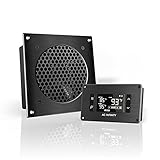 AC Infinity AIRPLATE T3, Quiet Cabinet Cooling Fan System 6"
- An ultra quiet UL-certified fan system designed for cooling cabinets that requires minimal noise.
- Features an on board processor that provides a digital read-out of the cabinets temperatures.
- Programming includes thermostat control, fan speed control, and SMART energy saving mode.
- Dimensions: 6.3 x 6.3 x 1.3 in. | Airflow: 52 CFM | Noise: 18 dBA | Bearings: Dual Ball
Centralized controls can coordinate cooling units and help prevent them from working at cross purposes, according to ENERGY STAR. The right setpoints and control strategy nevertheless depend on the facility and the equipment being cooled.
-
Validate and report the outcome
Compare cooling-system energy and whole-facility energy measures with thermal conditions and reliability indicators over comparable periods. Document the measurement boundary, baseline, workload and weather conditions, instrumentation, model assumptions, and changes made. Report measured results as results for that site and those conditions, not as a guaranteed outcome for other facilities.
What to measure: energy, temperature, and reliability
Cooling energy alone does not show whether an optimization is worthwhile. Pair energy measurements with thermal and operational indicators so the team can see both the resource effect and its consequences for IT equipment.
Best Value
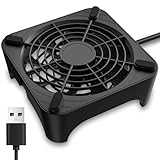
- 【Universal Compatibility】This USB cooling fan works seamlessly with Mini PC, PS5, routers, Apple TV, modems, PlayStation, receivers, Rokus, T-Mobile 5G Home Internet, Xbox Series, and other audio-video electronics. Whether cooling a gaming console, router, or streaming device, it eliminates overheating worries across your digital ecosystem.
- 【Powerful Cooling Performance】Equipped with a 120mm fan boasting 55.8 CFM airflow and 850RPM±10% speed, this USB PC fan delivers rapid cooling—dropping device temperatures by 20% in seconds. The 9-blade design ensures powerful airflow to tackle heat buildup in routers, mini PCs, and gaming consoles, preventing lag and performance drops caused by overheating.
- 【Ultra-Quiet Operation & Scratch-Proof Protection】 Designed for ultra-quiet and scratch-resistant cooling needs, this USB computer fan comes with 4 shock-absorbing pads and operates at just 18dB(A)±10% noise—whisper-quiet, quieter than library silence (30dB) and close to the sound of rustling leaves (20dB). It enables efficient device cooling without noise interference or surface scratches, letting you fully immerse in video, audio, and gaming. It’s perfect for home offices, living rooms, and gaming setups.
- 【USB-Powered & Space-Saving Setup】This USB powered fan features an integrated 530mm (20.87-inch) USB cable, connecting easily to chargers, mobile power banks, or laptops—no extra wires needed. With dimensions of 130mm×130mm×48.6mm (5.12×5.12×1.91 inches), it can be placed flat or upright, making it perfect for narrow spaces while keeping your setup tidy.
- 【Sturdy & Long-Lasting Durability】Made from premium eco-friendly ABS material, this USB fan (with a box fan-like structure) supports heavy-duty use and can withstand weights up to 11LB. With a lifespan of 40000 hours, it offers long-term cooling for your devices, ensuring stable performance and protection against overheating for years to come.
| Measurement area | What it helps assess |
|---|---|
| Cooling-system energy | Whether the cooling equipment or plant uses less energy after a change, within the stated measurement boundary. |
| Whole-facility energy | Whether a local cooling improvement corresponds to a change in overall facility energy use. |
| Equipment inlet temperature and airflow | Whether air reaching IT equipment remains within the required operating conditions and whether distribution is effective. |
| IT load, utilization, and input power | Whether differences in computing demand could explain energy or thermal changes between comparison periods. |
| Alarms, thermal excursions, and reliability events | Whether the change affected operational risk or service, rather than energy alone. |
The U.S. Department of Energy’s Federal Energy Management Program (FEMP) guide covers IT systems and environmental conditions, air management, cooling and electrical systems, heat recovery, and efficiency metrics. It cautions: “No design guide can offer ‘the most energy-efficient’ data center design, but these guidelines can provide efficiency benefits for a wide variety of data center scenarios.” That is why a twin should be used to evaluate a facility’s actual conditions, not to impose one supposedly optimal configuration on every site.
For more granular thermal characterization, ITU-T L.1322 addresses thermal metrics at several levels, from room to chip; the recommendation is listed as in force with a 2025-12 edition. ITU-T L.1327 addresses cooling-technology selection across scenarios and is listed as in force with a 2024-08 edition. Confirm the current edition and applicability before using either in technical requirements.
Independent reader supportYour contribution helps us test, update, and keep practical guides available for everyone.How to choose a digital-twin approach or platform
Evaluate the implementation against the systems and decisions it must support. A visually detailed model may be less useful than a simpler, well-integrated one if it cannot use reliable operational data or represent the relevant cooling and IT relationships.
- Coverage: Does it represent the facility and IT systems that materially affect the decision?
- Integration: Can it work with existing sensors, building-management systems, DCIM, and control equipment?
- Data portability: Are data models and interfaces open enough to export information or connect other tools?
- Measurement detail: Can it use energy and thermal data at the level needed for the intended decision?
- Analysis: Can it compare relevant scenarios or forecast the effects of proposed changes?
- Control and safeguards: Is it advisory or capable of closed-loop control, and what operator review, limits, and rollback mechanisms are available?
- Implementation: What integration work, data cleanup, and ongoing model maintenance will be required?
- Evidence: How does the provider validate and report customer outcomes, including measurement boundaries and conditions?
Cooling architectures also require site-specific assessment. Air cooling, liquid cooling, economizers, and other approaches are not universally interchangeable or ranked by the evidence cited here. ITU-T L.1327 describes a scenario-based approach to selecting cooling technologies; the facility’s load and conditions determine which options merit evaluation.
What savings claims can—and cannot—tell you
There is no broadly applicable percentage reduction established here for data-center digital twins specifically. Historical examples cited on ENERGY STAR’s instrumentation page illustrate why claimed numbers need their original scope and attribution:
- ENERGY STAR cites a Lawrence Berkeley National Laboratory case documented by Dal Sartor in 2015: a total cost of $56,824 for 50 wireless temperature sensors and intelligent control software at a 10,000-square-foot data center with 12 CRAH units and a 135 kW load. The page reports first-year savings of $30,564 and payback under two years. These are figures for that documented case, not a general twin cost or payback forecast.
- ENERGY STAR cites an Emerson Network Power study from 2012 reporting a 20% reduction in cooling-system energy for a 10°F increase in cold-aisle temperature. This is an older, secondary-attributed study result, not a general digital-twin outcome.
- The same ENERGY STAR page attributes a claim of up to 30% lower overall energy costs from DCIM solutions to Michael Potts at DataCenterKnowledge.com in 2012. It is an older secondary citation, not a current independent estimate for digital twins.
Other claims require similar care. Schneider Electric’s 2026 customer story describes “significant energy savings” after deployment of EcoStruxure IT Cooling Optimize, but its accessible summary gives no quantified result. An ebm-papst neo Hannover Messe 2026 workshop description mentions potential energy-cost savings of up to 50% for AI-based HVACR optimization; that is promotional event copy describing potential, not independently verified evidence or an expected result for a data-center twin.
Quick Recap
Product prices and availability are accurate as of the date/time indicated and are subject to change. Any price and availability information displayed on Amazon at the time of purchase will apply.

