
If Ethernet became slow after you added a switch, compare the connection directly to the router with the same computer connected through the switch. Check the negotiated link rate on both the router-to-switch and switch-to-computer links, then test cables and ports one at a time. This separates a slow Ethernet link from an internet-speed problem and helps identify whether the switch is actually responsible.
1. Compare a direct connection with the switched connection
Use the same computer and run comparable speed tests first through the switch, then connected directly to a router port that supports the rate you are checking. Keep the test conditions as similar as possible. Record the speed-test throughput and the Ethernet link rate separately: a speed test measures end-to-end internet performance, while the link rate reports the negotiated speed of an Ethernet connection.
If the direct connection is also slow, the switch may not be the cause. The router, internet connection, computer, or test conditions could be limiting the result. If direct performance is normal but the switched path is slow, concentrate on the switch path. TP-Link and Intel both recommend using a direct connection to a known-capable router port as a comparison: TP-Link’s unmanaged-switch troubleshooting guide and Intel’s guide to Ethernet links capped at 100 Mbps.
2. Check the link rate on both Ethernet segments
Inspect the computer’s Ethernet adapter status in your operating system. If your router reports port status, check that too. The path has at least two relevant links: router to switch, and switch to computer. A lower negotiated rate on either segment can constrain traffic, even if the other link is faster.
Recommended Free Tools
#1 Best Overall

- GIGABIT ETHERNET PORTS: Features 5 x 1.0Gbps Ethernet ports for high-speed connectivity. Auto-negotiating ports detect the optimal speed for connected devices and work with existing Cat5e or Cat6 Ethernet cables.
- PLUG-AND-PLAY UNMANAGED NETWORK SWITCH: Simple plug-and-play setup with no software to install or configuration required.
- FLEXIBLE MOUNTING OPTIONS: Compact metal design supports desktop or wall-mount placement for versatile installation.
- SILENT & ENERGY-EFFICIENT OPERATION: Fanless design ensures silent performance, while IEEE 802.3az Energy Efficient Ethernet reduces power consumption without compromising high-speed network performance.
- REGIONAL COMPATIBILITY: Made for use in U.S. & CA only
For example, a 100 Mbps link where the router, switch, and computer are expected to support gigabit is a reason to investigate the cable, port, or negotiation. It does not, by itself, identify which part is faulty. Compare the reading with the direct-to-router baseline and check both segments before replacing equipment. TP-Link describes this 100 Mbps case as a sign that devices on a link are not communicating well: TP-Link Support.
3. Test cables, wall wiring, and ports
A cable problem can affect the computer-to-switch connection or the switch uplink to the router. Include wall jacks and in-wall cabling if they are part of the route; changing only the short cable beside the computer will not rule out a fault elsewhere in the path.
Rank #2

- 𝗢𝗻𝗲 𝗦𝘄𝗶𝘁𝗰𝗵 𝗠𝗮𝗱𝗲 𝘁𝗼 𝗘𝘅𝗽𝗮𝗻𝗱 𝗡𝗲𝘁𝘄𝗼𝗿𝗸: 5× 10/100/1000Mbps RJ45 Ports supporting Auto Negotiation and Auto MDI/MDIX.
- 𝗚𝗶𝗴𝗮𝗯𝗶𝘁 𝘁𝗵𝗮𝘁 𝗦𝗮𝘃𝗲𝘀 𝗘𝗻𝗲𝗿𝗴𝘆: Latest innovative energy-efficient technology greatly expands your network capacity with much less power consumption and helps save money.
- 𝗥𝗲𝗹𝗶𝗮𝗯𝗹𝗲 𝗮𝗻𝗱 𝗤𝘂𝗶𝗲𝘁: IEEE 802.3X flow control provides reliable data transfer and Fanless design ensures quiet operation.
- 𝗣𝗹𝘂𝗴 𝗮𝗻𝗱 𝗣𝗹𝗮𝘆: Easy setup with no software installation or configuration needed.
- 𝗔𝗱𝘃𝗮𝗻𝗰𝗲𝗱 𝗦𝗼𝗳𝘁𝘄𝗮𝗿𝗲 𝗙𝗲𝗮𝘁𝘂𝗿𝗲𝘀: Prioritize your traffic and guarantee high quality of video or voice data transmission with Port-based 802.1p/DSCP QoS and IGMP Snooping.
- Reseat the Ethernet plugs at the computer, switch, and router.
- Replace one cable at a time with a known-good cable, then check the link rate and performance again.
- Try a different switch port and, if available, a different router port that supports the intended rate.
- If the route uses wall jacks or fixed wiring, test around those sections too. A cable tester can help check wiring or continuity, but a basic continuity check does not establish that a run will support gigabit performance.
Intel specifically advises checking the complete cable route, including connections before and after switches and wall jacks, and comparing with proven Cat 6 or better cabling: Intel Support. A known-good Cat 6 Ethernet cable is a useful diagnostic replacement if you do not already have one; the cable category alone does not guarantee faster internet or repair a faulty in-wall run. TP-Link also identifies nonstandard cabling and poorly secured conductors or connectors as possible causes: TP-Link Support.
4. Confirm device capability and negotiation settings
Verify that the router port, switch port, and computer’s Ethernet adapter each support the rate you expect. A gigabit-capable computer connected to a 100 Mbps switch port, for example, cannot establish a gigabit link on that segment.
Rank #3

- GIGABIT ETHERNET PORTS: Features 8 x 1.0Gbps Ethernet ports for high-speed connectivity. Auto-negotiating ports detect the optimal speed for connected devices and work with existing Cat5e or Cat6 Ethernet cables.
- PLUG-AND-PLAY UNMANAGED NETWORK SWITCH: Simple plug-and-play setup with no software to install or configuration required.
- FLEXIBLE MOUNTING OPTIONS: Compact metal design supports desktop or wall-mount placement for versatile installation.
- SILENT & ENERGY-EFFICIENT OPERATION: Fanless design ensures silent performance, while IEEE 802.3az Energy Efficient Ethernet reduces power consumption without compromising high-speed network performance.
- REGIONAL COMPATIBILITY: Made for use in U.S. & CA only
For gigabit Ethernet, leave speed and duplex on auto-negotiation at both ends unless the device documentation for your exact models directs otherwise. Intel identifies auto-negotiation as the correct Speed & Duplex setting for gigabit on its Killer adapters: Intel Support. TP-Link likewise recommends auto-negotiation for its unmanaged switches and matching behavior at the router and network adapter: TP-Link Support.
If you have manually set speed or duplex on a managed device, check both ends and consult the documentation for those specific models before changing the setting. Do not assume that forcing a speed on just one side will fix a negotiation problem.
Rank #4

- 8 GIGABIT PORTS: Features 8 RJ45 ports supporting 10/100/1000 Mbps speeds, providing high-speed wired network connectivity for computers, printers, gaming consoles, and other Ethernet-enabled devices
- PLUG AND PLAY SETUP: No configuration required; simply connect the switch to your network devices and it is ready to use immediately, making network expansion quick and hassle-free
- FANLESS QUIET DESIGN: The fanless design ensures silent operation, making this switch suitable for noise-sensitive environments such as home offices, bedrooms, or conference rooms
- STURDY METAL CONSTRUCTION: Built with a durable metal housing and shielded ports that provide reliable performance, better heat dissipation, and protection against electromagnetic interference
- TRAFFIC OPTIMIZATION: Supports IEEE 802.3x flow control and advanced traffic optimization technology to reduce data bottlenecks and ensure smooth, efficient data transfer across your network
5. Separate local-network performance from internet performance
If the direct-to-router connection is normal, cables and ports have been checked, and the switched path is still slow, compare local traffic with internet traffic. If you have two computers, connect both to the switch with other devices disconnected and transfer a file between them. Treat this as a diagnostic comparison, not a universal speed benchmark.
- If the local transfer is healthy but internet tests remain slow, investigate the router or internet path.
- If local transfers are also very slow, the switch, its links, or the computers’ network connections deserve closer attention.
TP-Link describes this two-computer transfer as a way to help distinguish local switch-path trouble from an internet-side problem: TP-Link Support.
Free tools Windows power users keep installed
One-click scans. No signup required.
Best Value
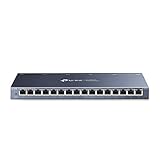
- One Switch Made to Expand Network-16× 10/100/1000Mbps RJ45 Ports supporting Auto Negotiation and Auto MDI/MDIX
- Gigabit that Saves Energy-Latest innovative energy-efficient technology greatly expands your network capacity with much less power consumption and helps save money
- Reliable and Quiet-IEEE 802.3X flow control provides reliable data transfer and Fanless design ensures quiet operation
- Plug and Play-Easy setup with no software installation or configuration needed
- Advanced Software Features-Prioritize your traffic and guarantee high quality of video or voice data transmission with Port-based 802.1p/DSCP QoS and IGMP Snooping
6. Decide whether the switch is the likely cause
Change one variable at a time—first cables, then ports—so each comparison tells you something. If the same computer performs normally when connected directly to the router, but remains slow through the switch after those checks, the switched path is implicated. That still does not prove the switch itself is defective: its uplink cable, a port, or another connection in the path may be responsible.
With an unmanaged switch, do not expect a software setting to resolve a physical link or negotiation problem. If controlled comparisons continue to isolate the switch after cables and ports have been ruled out, contact its manufacturer or test with a known-good replacement. TP-Link recommends support if transfer speed remains substantially below the direct-router comparison: TP-Link Support.
Quick Recap
Product prices and availability are accurate as of the date/time indicated and are subject to change. Any price and availability information displayed on Amazon at the time of purchase will apply.

