
iTechGuides is reader-supported. When you buy through links on our site, we may earn an affiliate commission. As an Amazon Associate I earn from qualifying purchases. Learn more
You can broadcast a prerecorded lake ambience video as a YouTube Live stream from a Raspberry Pi by looping a local media file with FFmpeg and sending its output to YouTube’s ingest server. For a stream that should run unattended, you also need a stable upload connection, a supervised FFmpeg process, recovery planning, and a test at the resolution and bitrate you intend to use. A Raspberry Pi can be part of this setup, but available sources do not establish that every Pi model can encode every format or sustain every resolution indefinitely.
What the Raspberry Pi is doing
YouTube Live receives a continuous encoder feed; it is not simply playing a video that you uploaded to your channel. FFmpeg reads a local file, repeats it, and sends the resulting live feed to the YouTube stream URL using the private stream key YouTube provides. The Pi must stay powered, connected to the internet, and able to keep the encoder process running for the broadcast to continue.

This guide covers a locally stored, prerecorded lake video with ambience audio. It does not make a camera broadcast live, and it cannot establish whether any particular footage or soundtrack is licensed for your use. Confirm that you have the rights to stream every audio and video element before going live.
Free tools Windows power users keep installed
One-click scans. No signup required.
Check the channel and prepare the media
Confirm that the channel can livestream
YouTube’s live-stream setup guidance says a channel must be verified and must not have had a live-streaming restriction in the preceding 90 days; the person livestreaming must be at least 16 years old. Account status and platform rules can change, so check your own channel in YouTube Studio before building around a 24/7 broadcast. See YouTube’s live-stream setup requirements.
#1 Best Overall

- Includes Raspberry Pi 5 with 2.4Ghz 64-bit quad-core CPU (8GB RAM)
- Includes 128GB Micro SD Card pre-loaded with 64-bit Raspberry Pi OS, USB MicroSD Card Reader
- CanaKit Turbine Black Case for the Raspberry Pi 5
- CanaKit Low Noise Bearing System Fan
- Mega Heat Sink - Black Anodized
Prepare a file FFmpeg can read
Store the lake video and its audio on the Pi or on storage mounted reliably to it. The exact file format and encoding must be compatible with the FFmpeg build you install. A third-party guide documents FFmpeg’s -stream_loop option for repeating a file, but compatibility and the appropriate command depend on the input file and FFmpeg version; do not assume a command copied from another setup will work unchanged.
Before streaming, play the file locally and check that its video and audio are present, that the loop point is acceptable, and that it does not contain material you lack permission to broadcast. Keep the file accessible after reboot: removable storage that disconnects or changes mount location can stop an unattended stream.
Rank #2

- Includes Raspberry Pi 4 4GB Model B with 1.5GHz 64-bit quad-core CPU (4GB RAM)
- Includes Pre-Loaded 32GB EVO+ Micro SD Card (Class 10), USB MicroSD Card Reader
- CanaKit Premium High-Gloss Raspberry Pi 4 Case with Integrated Fan Mount, CanaKit Low Noise Bearing System Fan
- CanaKit 3.5A USB-C Raspberry Pi 4 Power Supply (US Plug) with Noise Filter, Set of Heat Sinks, Display Cable - 6 foot (Supports up to 4K60p)
- CanaKit USB-C PiSwitch (On/Off Power Switch for Raspberry Pi 4)
Create a YouTube Live stream and protect its key
- Open YouTube Studio and use its Live Control Room to create or configure a stream.
- Copy the stream URL and stream key (also called a stream name in YouTube’s API documentation) shown for that stream. FFmpeg needs the ingest destination and key to send the feed.
- Keep the stream key private. Anyone who obtains it may be able to send a feed to your stream. Do not put it in a public script repository, screenshot, or support post; restrict access to any local configuration file that contains it.
- Choose RTMPS when your encoder and setup support it. YouTube recommends RTMPS for encrypted transport. Its API documentation describes the ingest address, stream name, and supported protocol values: LiveStreams API documentation.
Use the stream URL and key supplied for your own stream rather than guessing an ingest address. If YouTube regenerates the key or you select a different stream, update the encoder configuration accordingly.
Quick wins for a faster PC:
Scan for outdated or missing drivers - takes under a minuteDriver Scan →Clear out junk files and repair common Windows errorsFree Scan →Choose conservative video, audio, and network settings
Start with a profile the Pi and your connection can sustain, then test it. YouTube recommends measuring upload capacity, testing a representative feed before relying on it, and monitoring stream health. A speed test is only a snapshot: sustained upload stability matters more than a brief peak, and the connection needs headroom beyond the encoder’s bitrate.
| Setting | Practical starting point | Qualification |
|---|---|---|
| Video codec and rate control | For the H.264 profiles below, use constant bitrate (CBR). | YouTube’s current RTMP/RTMPS encoder guidance also lists H.265/HEVC and AV1; whether a particular Pi and FFmpeg build can encode them adequately is not established here. |
| 1080p at 30 fps, H.264 | YouTube recommends 5 Mbps video bitrate. | This is YouTube’s encoder recommendation, not a guaranteed minimum internet speed or a tested Pi performance result. |
| 720p at 30 fps, H.264 | YouTube recommends 3 Mbps video bitrate. | This is YouTube’s encoder recommendation, not a guaranteed minimum internet speed or a tested Pi performance result. |
| Frame rate | Use a frame rate your source, encoder, and connection can sustain; YouTube’s guidance supports up to 60 fps. | Do not infer from the platform limit that a given Raspberry Pi can encode that rate continuously. |
| Keyframe interval | Set a two-second interval where configurable. | YouTube recommends two seconds and says the interval should not exceed four seconds. |
| Stereo audio | YouTube gives 44.1 kHz and recommends 128 kbps audio bitrate. | Check that the chosen FFmpeg output includes an audio stream; a silent or missing audio track can trigger a health issue. |
| Transport | Use RTMPS if supported by the chosen ingest setup. | YouTube recommends encrypted RTMPS transport. |
These values are from YouTube’s encoder settings, bitrates, and resolutions guidance, accessed in 2026. Check the current settings page before configuring a production stream because platform recommendations can change. If the Pi must transcode rather than pass through media already encoded appropriately, encoding can add substantial processing demand; the sources do not establish a safe resolution for every board. Test the actual file, output settings, and hardware together.
Run FFmpeg as a supervised service
FFmpeg’s loop option can repeat a file, but a looping command alone does not make a reliable 24/7 service. A terminal session can close, a network interruption can break ingest, or FFmpeg can exit after an error. Run the encoder under a process supervisor configured to restart it on failure, and make sure the service starts after the file storage and network are available.
Rank #4
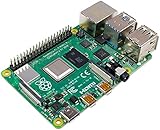
- Broadcom BCM2711, quad-core Cortex-A72 (ARM v8) 64-bit SoC @ 1. 5GHz
- 2. 4 GHz and 5. 0 GHz IEEE 802. 11b/g/n/ac wireless LAN, Bluetooth 5. 0, BLE
- 2 × USB 3. 0 ports, 2 x USB 2. 0 Ports
- 2 × micro HDMI ports supproting up to 4Kp60 video resolution
- Micro SD card slot for loading operating system and data storage
- Install an FFmpeg build that supports the input media and output protocol you plan to use. Confirm the version and available codecs on the Pi rather than assuming every build has identical capabilities.
- Put the looped input and YouTube output configuration in a service-managed command or configuration file. Use the stream URL and private key from YouTube; keep credentials readable only by the account that runs the service.
- Configure a Linux service manager such as systemd to start FFmpeg at boot and restart it if it exits. A public project demonstrates a headless FFmpeg and systemd approach for a Raspberry Pi-class Linux host, but it is an example implementation, not an official YouTube recipe or a performance guarantee: YouTube AutoEncoder project.
- Review the service’s logs after starting and after any restart. Confirm that FFmpeg is reading the intended file, emitting both audio and video, and connecting to the expected YouTube ingest endpoint.
- Test a representative stream before leaving it unattended. Check the image, audio, loop transition, bitrate, service restart behavior, and YouTube’s stream-health status.
No single command is included here because the correct FFmpeg options depend on the installed version, input encoding, whether transcoding is required, and the chosen ingest protocol. Treat third-party command examples as starting points to verify against your own setup.
The Tool Desk
Outbyte Driver Updater FREEScan for outdated or missing drivers - takes under a minuteDriver Scan →Outbyte PC Repair FREEClear out junk files and repair common Windows errorsFree Scan →Preflight and monitor the broadcast
- Check the local output: Review FFmpeg logs for input or encoder errors, and confirm that both audio and video are being sent.
- Check YouTube’s diagnostics: The LiveStreams API documents health and configuration issues including low bitrate, unsupported codec, absent audio, GOP intervals over four seconds, and video ingestion starvation. YouTube notes that starvation can result in buffering. See the health and configuration issue documentation.
- Check the connection under realistic conditions: Test the representative feed and monitor for sustained upload drops; do not rely solely on a speed-test result.
- Check unattended recovery: Verify that the supervisor restarts FFmpeg after a process exit, and that the restarted process can still access the media and current stream key.
- Check physical conditions: Continuous encoding generates heat and requires dependable power and network access. A suitable case or cooling, wired networking, reliable power, or a UPS may help depending on the installation; none is a universal mandatory purchase.
Plan for local recording and storage
YouTube says live streams shorter than 12 hours can be automatically archived, while streams exceeding 12 hours may not be captured at all. It recommends keeping a local backup if an archive matters. A true 24/7 broadcast should therefore have its own recording and retention plan if you need a complete copy. See YouTube’s archive guidance.
Best Value
- Includes Raspberry Pi 5 16GB with 2.4Ghz 64-bit quad-core CPU (16GB RAM)
- Includes 128GB Micro SD Card pre-loaded with 64-bit Raspberry Pi OS, USB MicroSD Card Reader
- CanaKit Turbine Black Case for the Raspberry Pi 5
- CanaKit Low Noise Bearing System Fan
- Mega Heat Sink - Black Anodized
Storage capacity depends on the recording bitrate, duration, and retention period; no single card or drive size can be recommended without those figures. A microSD card may hold the operating system and source media, while a separate drive can be useful for local recordings. Avoid writing continuous recordings to a drive without checking available capacity and planning how old files will be retained or removed.
Independent reader supportYour contribution helps us test, update, and keep practical guides available for everyone.Raspberry Pi choice: test the complete setup
Raspberry Pi 5 is a current product, but its official product page does not establish guaranteed 24/7 YouTube encoding performance or a supported stream resolution for this use. See the Raspberry Pi 5 product page. There is no supported basis here for ranking Pi models by sustained streaming performance.
Before leaving any model in service, test the exact media file and FFmpeg output profile for an extended representative run. Watch for encoder errors, rising temperature or instability, missed frames, ingest warnings, and interruptions. If the setup only works at a lower resolution or bitrate, use the stable profile rather than assuming a more powerful board or higher upload speed will solve every bottleneck.
Windows Errors? Fix Them Before They Spread
Repair common Windows errors and clear accumulated junk for a smoother, more stable PC - no reinstall needed.Free scan · no reinstallCrashes, No Sound, or Screen Glitches?
Random freezes, missing sound and display glitches usually trace back to one bad driver. Find and replace yours safely.Free scan · under a minuteTroubleshooting common failures
| Symptom | Likely checks | Fix or next step |
|---|---|---|
| YouTube receives no feed | Confirm FFmpeg is running, the stream URL and key are current, and the Pi can reach the ingest server. | Correct the destination or key, inspect FFmpeg logs, then restart the service. Keep the key private while checking it. |
| Video buffers or ingest starves | Check upload stability, bitrate, and FFmpeg logs for interruptions. | Reduce the output bitrate or resolution to a profile the connection sustains; retest with the representative feed. YouTube identifies video ingestion starvation as a health issue that can cause buffering. |
| YouTube reports low bitrate | Compare the output with the bitrate configured and check for encoder or network drops. | Use a stable bitrate consistent with YouTube’s guidance and the actual connection; diagnose upload instability rather than treating the recommendation as a minimum-speed guarantee. |
| Audio is missing | Verify the source has an audio track and FFmpeg is including it in the output. | Correct the input or output configuration and confirm audio in a test stream before returning to unattended operation. |
| Codec or keyframe warning | Check that the output codec is supported and the GOP/keyframe interval is not over four seconds. | Configure a supported codec and a two-second keyframe interval where possible, then inspect YouTube health again. |
| FFmpeg stops after an interruption | Check the service manager’s status and logs, along with power, network, and media mount availability. | Configure process restart behavior and verify the service can recover after reboot or an FFmpeg exit. Test recovery deliberately before depending on it. |
Or let it run in the cloud
If you would rather not keep a Raspberry Pi or home connection running, StreamNeo is a cloud service for keeping a prerecorded YouTube stream live. Upload the recording or build a playlist, add your YouTube stream key once, and go live; StreamNeo loops the uploaded video from the cloud. It does not stream from a camera or to platforms other than YouTube.
- Your computer and home connection do not have to stay on for the stream to continue.
- Uploaded video streams as made, up to 4K 60fps, with one flat price per slot and no quality tiers.
- StreamNeo automatically recovers if YouTube drops the stream.
- The first day is free with no card, one free day per account.
Each slot includes one always-on stream, 10 GB storage per slot pooled across active slots, looping and playlists, automatic recovery if YouTube drops, and StreamNeo team support. The same product is included on every plan; only the billing length changes. The monthly option is $9.99 per month. See StreamNeo or its pricing page for details; UPI and cards are available in India, and card checkout is available worldwide. Start your free day on StreamNeo.
Quick Recap
Product prices and availability are accurate as of the date/time indicated and are subject to change. Any price and availability information displayed on Amazon at the time of purchase will apply.

