
iTechGuides is reader-supported. When you buy through links on our site, we may earn an affiliate commission. As an Amazon Associate I earn from qualifying purchases. Learn more
Start by asking the second-opinion clinic what records it needs and how it accepts them. Then request those records from each doctor, hospital, lab, or imaging center that holds them—or ask a provider to send them directly to the named clinic. You can usually arrange the transfer electronically or on paper; confirm the destination and check that the clinic received usable files.
1. Ask the second-opinion clinic what it needs
Before requesting records, contact the clinic or specialist who will provide the second opinion. Ask for its exact instructions so you do not send an incomplete packet or use a delivery method it cannot accept.
- Which records does the clinician need, and what date range should they cover?
- Does the clinic need imaging reports, the actual image files, or both?
- Which file formats and delivery methods does it accept?
- What is the exact recipient name, department, address, portal, or fax number?
- Can the clinic request records from your other providers on your behalf?
Clinics have different workflows, so do not assume that a particular portal, fax, or file format will work. ONC’s guidance on getting your health record describes common delivery options, but the receiving clinic determines what it can use.
Free tools Windows power users keep installed
One-click scans. No signup required.
2. Identify every provider that may hold relevant records
Make a list of the people and facilities involved in the care related to the consultation. Depending on your situation, that may include your primary doctor, specialists, hospitals, imaging centers, laboratories, and previous treating facilities. One office may not have records created by another, so contact each source separately unless a provider confirms it has the full set.
#1 Best Overall

- Complete Health Organization: Keep all your vital medical information in one convenient location with dedicated sections for personal profile including blood type and allergies, insurance details, pharmacy contacts, and comprehensive family health history to ensure you never miss important health details
- Comprehensive Medical Tracking: Record and monitor your complete medical journey with organized spaces for surgeries, hospitalizations, emergency room visits, vaccination records, current and past medications, vision care, and dental history all in a structured format for easy reference
- Detailed Visit Documentation: Document every medical appointment with dedicated pages to track symptoms, test results, diagnoses, prescribed treatments, and medications, helping you maintain accurate records of your healthcare journey and communicate effectively with healthcare providers
- Portable and Durable Design: Features a sturdy bookbound hardcover construction measuring 5-3/4 inches wide by 8-1/4 inches high, making it perfectly sized to carry to medical appointments while protecting your sensitive health information with 128 pages of organized record-keeping space
- Convenient Access Features: Includes an elastic band attached to the back cover that keeps your place during use or securely closes the book when not in use, ensuring your personal health records remain private and easily accessible whenever you need them
Ask for the material relevant to the second opinion, such as visit notes, diagnoses, medication lists, test results, pathology reports, radiology reports, and imaging files. The U.S. Department of Health and Human Services (HHS) describes the right of access as covering a broad range of records, including medical and billing records, laboratory reports, X-rays, and clinical notes. HHS explains how to request medical records.
Psychotherapy notes kept separately have a distinct exception: HHS says patients do not have a general right of access to those notes. Ask the provider about the specific records you need if you are unsure whether something is included.
Rank #2
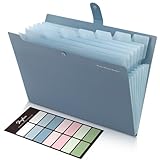
- Size: 13 x 10 x 0.7 inches. Fits A4 and letter-size paper, standard documents and filing needs.
- User-Friendly Features: Included sticker labels allow you to easily distinguish between different categories of files, maintaining neatness and enhancing productivity!
- Sleek and Portable: Designed to slip seamlessly into backpacks, laptop bags, or file cabinets, our lightweight folder keeps your documents tidy and accessible wherever you go.
- Built to Last: Crafted from polypropylene, our folders resist tears and deformation while remaining flexible. The secure snap closure offers easy access while keeping your papers securely in place.
- Versatile Utility: This folder isn't limited to organizing course papers for college students; it's perfect for storing business tax documents, recipes, important receipts, and more!
3. Request the records or direct the provider to send them
Each provider may have its own request or release form. You can ask for a copy for yourself, or use your HIPAA access right to direct a covered provider to transmit records to a named person or organization. For a directed transmission, HHS says the request must be in writing, signed, and clearly identify the recipient and where to send the records. A provider may accept an electronic copy of a signed request or an electronic request with an electronic signature through a secure portal. See HHS’s access-right guidance for details.
HIPAA does not require you to act as the courier in every case. HHS says covered providers may share protected health information with another provider for treatment without your authorization, provided they use reasonable safeguards. They may communicate for treatment by fax, email, phone, or other means. As HHS puts it: “The Privacy Rule allows covered health care providers to share protected health information for treatment purposes without patient authorization, as long as they use reasonable safeguards when doing so.” The practical process still varies by provider, and directing or requesting the transfer yourself can help specify the recipient and the records you want included. Read HHS’s FAQ on treatment communications.
Rank #3
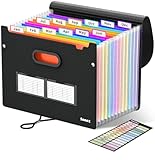
- Superior Durability: Featuring strong 100C thickened cover and reinforced edges, surpassing competitors in durability. Made from PVC-free, acid-free materials, ensuring secure organization of bills and documents while delivering unparalleled durability and reliability
- Deeper Pockets & Unobstructed Tabs: In response to a common issue in accordion folders where papers cover index labels, we've increased pocket height by 0.8 inches (2 cm). This unique enhancement ensures your labels remain visible—a feature unmatched by competitors
- Ample Capacity Monthly Bills Organizer: Our expandable monthly bill organizer can extend up to 14 inches, accommodating over 1500 sheets files while standing stable. With 12 pockets, it's perfect for storing tax records, bills, receipts, invoices and important family files for over a year
- Sticky Labels & 3 Loops Bungee Closure: Colorful monthly tabs and labels help you locate the target object at a glance and manage monthly tasks with ease. The elastic band closure with three loops expands generously to accommodate all your storage needs
- Unlock Versatile Organization: Whether at home, in the office, or on the go, it offers flexible organization for invoices, medical finance records, and identification documents, ensuring efficiency wherever you need it
4. Choose a delivery method that both offices accept
Ask the sending provider which routes it can use, then make sure the receiving clinic accepts the method and can open the files. ONC lists these possible ways to get records to a provider; availability differs by office:
- Secure email through a patient portal or direct upload to the receiving provider’s electronic record system.
- A health information exchange, if one is available to the providers.
- Fax, mail, or in-person pickup.
- A CD, USB drive, or health app.
- Personal email, if the involved offices support and approve that route.
These are options to confirm, not guarantees that every provider offers them. For imaging, ask specifically whether the actual image files can be transmitted in the chosen format; a written radiology report may not meet the clinic’s needs. ONC provides an overview of ways to get and share your health record and discusses health information exchange.
Rank #4

- High-Quality Materials: Protect your files with ENGPOW fireproof accordion file organizer.It is made of 3-layered non-itchy silicone-coated fiberglass which withstand the temperature up to 2200℉.It has passed the UL94 -V0/5VA flame retardant test.Fireproof File Folder is fireproof&Water-resistant,which can effectively protect your important documents in a fire,flood,and wet weather. They will further keep your files intact.Giving you time to save your important documents when disaster strikes
- Accordion File Organizer: A Safe Enough Folder to Keep Your Files. Say goodbye to cluttered files and disorganization with ENGPOW's file organizer folders. Compared with other folders,our fireproof folders is allows you to neatly store and classify letter/A4 files, receipts, cards, USB drives, pen, passports and more in a safe and orderly way. Perfect for daily file filing and storage.The Non-dusty material can prevent dust from sticking to the outside of our folder,always keep it neat and tidy.
- Large Capacity: 14.2" x 10.4" x 2", Compared with other folders, our Accordian File Organizer adopts a multi-layer design that can meet all your storage needs.These include 13 accordion Pockets with labels(each expanding to 1.2 inches),1 zipper pocket,2 pen slot,6 card slots,4 small mesh bags,4 medium mesh bags,and 1 main pocket. You can securely store all your important documents and other items in this fireproof expanding file folder while effectively classifying and finding your files.
- Innovative Humanized Design: Design with a strong grab handle for carrying everything you needed easily. Featuring a double zipper for convenient opening and closing,you won't have to worry about losing any important documents. The included colorful labels make categorizing your files effortless. The fireproof file folder is suitable for business, travel, office, school, home storage, you can be 100% sure that your important documents are in a safe place.
- Trusted after sales service: In the event of an emergency, our fireproof accordion file organizer folders are lighter, easier to carry than fireproof safes and quick to grab and go. We only wish to present the best to customers,to protect your valuables.If there any quality problem, please feel free to let us know.We promise to arrange a REPLACEMENT or 100% REFUND immediately. Ready to respond within a 24 hour time,your suggestion has a great impact on the upgrade of our products.
5. Protect the records and verify delivery
Use the contact details supplied by the intended clinic. If a provider is sending records to an unfamiliar fax number or address, verify it first; HHS gives confirming an unfamiliar fax number as an example of a reasonable safeguard. If you use a portal, app, or other digital service, check who can access the files and what protections it offers. ONC describes access controls, encryption, and audit trails as security features in health-record systems. See ONC’s privacy and security resources.
What’s actually slowing this PC down?
Pick the symptom - the matching free tool is one click away.
After the transfer, contact the receiving clinic to confirm that the records arrived and that files can be opened. Check that the files belong to the correct patient, cover the requested period, include records from each relevant source, and contain usable image files if requested. These are practical checks, not a universal required packet; the clinic’s instructions determine what it needs.
Best Value
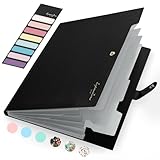
- Eye-Catching Colors: Designed to stand out, this folder combines fresh, vibrant hues with sleek patterns, making organization not just functional but stylish. Perfect for adding a touch of charm and energy to your workspace
- Upgraded Spine for Larger Capacity: Our accordion file organizer with expandable spine design is more stretchy to fit over 250 sheets without bulking up too much. Unlike regular spines that can easily get dented, our spine is made for quality and not easy to deform in transit
- Easy Organization: This expanding file folder makes sorting and organizing your papers a breeze. Featuring 5 pockets with tabs and colorful labels for quick sorting and retrieval
- Made to Last: Reinforced plastic document folders resists tearing and creasing, with a secure snap closure to keep papers in place
- Portable & Lightweight: 13 x 9.5 inches. Fit A4/letter size documents. Compact and lightweight for easy carrying. Easily take your paperwork to a meeting or school
What to know about fees and timing
HHS says a provider cannot deny you a copy because you have not paid for services. A provider may charge a reasonable fee for copying and mailing, but not for searching for or retrieving your records. State law may provide additional rights. Before placing a large request, ask the provider for an estimate of any copying or mailing cost and its expected turnaround time. HHS’s medical-record access guidance describes these limits.
Quick Recap
Product prices and availability are accurate as of the date/time indicated and are subject to change. Any price and availability information displayed on Amazon at the time of purchase will apply.

