
iTechGuides is reader-supported. When you buy through links on our site, we may earn an affiliate commission. As an Amazon Associate I earn from qualifying purchases. Learn more
To search the web anonymously with the strongest practical protection, use the official Tor Browser, avoid personal accounts and identifying information, and keep its default privacy settings. For ordinary search privacy, use DuckDuckGo or Brave Search without signing in. Incognito mode alone is not anonymous, and no consumer tool guarantees perfect anonymity.
The right setup depends on what you are trying to hide: search-history profiling, traces left on a shared device, your IP address, activity from an ISP or public Wi-Fi operator, or your real-world identity. Those are different privacy problems, and the simplest tool that solves one may not solve another.
Key takeaways
- Tor Browser offers the strongest practical browser anonymity for ordinary users, but Tor cannot guarantee perfect anonymity.
- DuckDuckGo or Brave Search used without an account can reduce search profiling, but neither service alone anonymizes every website opened from a result.
- Incognito or private browsing mainly limits locally stored browser data; it does not hide your IP address or searches from websites, ISPs, employers, schools, or network administrators.
- A VPN generally hides your normal IP address from websites and routes traffic away from the ISP, but it shifts trust to the VPN provider rather than eliminating trust.
- Signing in, entering your name or email address, reusing an identifiable username, or mixing personal and anonymous activity can connect a session to you even when Tor or a VPN is working.
What does “search anonymously” actually mean?
“Search anonymously” can refer to several different goals. A search engine not attaching queries to a named account is search privacy; preventing family members from seeing local history is local privacy; hiding your ordinary public IP address is network anonymity; and preventing a website from connecting activity to your real identity is identity anonymity.
No single setting automatically provides all four. A privacy-focused search engine can reduce profiling while your ISP still sees the connection. An incognito window can remove ordinary history after a session while the destination website still sees your IP address. Tor can hide your normal IP address from websites, but logging into a personal account can identify you to that website immediately.
Popular on Amazon
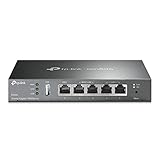
- 【Five Gigabit Ports】1 Gigabit WAN Port plus 2 Gigabit WAN/LAN Ports plus 2 Gigabit LAN Port. Up to 3 WAN ports optimize bandwidth usage through one device.
- 【One USB WAN Port】Mobile broadband via 4G/3G modem is supported for WAN backup by connecting to the USB port. For complete list of compatible 4G/3G modems, please visit TP-Link website.
- 【Abundant Security Features】Advanced firewall policies, DoS defense, IP/MAC/URL filtering, speed test and more security functions protect your network and data.
- 【Highly Secure VPN】Supports up to 20× LAN-to-LAN IPsec, 16× OpenVPN, 16× L2TP, and 16× PPTP VPN connections.
- Security - SPI Firewall, VPN Pass through, FTP/H.323/PPTP/SIP/IPsec ALG, DoS Defence, Ping of Death and Local Management. Standards and Protocols IEEE 802.3, 802.3u, 802.3ab, IEEE 802.3x, IEEE 802.1q
| Goal | Recommended starting point | What it does not solve |
|---|---|---|
| Reduce personalized search history and advertising | DuckDuckGo or Brave Search without an account | It does not necessarily hide your IP address or anonymize destination websites. |
| Prevent ordinary history remaining on a shared device | Private or incognito browsing, then close every private window | It does not hide activity from the network, ISP, employer, school, or websites. |
| Hide your normal IP address from websites | Tor Browser or a VPN | Account logins, cookies, fingerprints, and identifying forms can still reveal you. |
| Hide ordinary browsing destinations from an ISP or public Wi-Fi operator | A reputable VPN or Tor Browser | The VPN provider or a network observer may still learn some metadata; Tor use may be detectable. |
| Strongest practical anonymity for web searches | Official Tor Browser plus disciplined identity separation | Tor is slower, may trigger CAPTCHAs, and cannot protect a compromised device or careless behavior. |
What is the best way to search the web anonymously?
The strongest practical general-purpose setup is the official Tor Browser, used without personal accounts or identifying information. Download Tor Browser from the official Tor Project download page, connect to the Tor network, use its default privacy-oriented search engine or another search engine that does not require an account, and close the session when finished.
Tor Browser routes browser traffic through the Tor network, normally presenting websites with a Tor exit-node address instead of your ordinary public IP address. Tor Browser also includes privacy modifications designed to make browsers look more alike and harder to distinguish through fingerprinting. The Tor Project’s explanation of Tor Browser describes these network and browser-level protections. Tor Browser is free and open source, according to the Tor Project’s cost guidance.
How do you use Tor Browser for an anonymous search?
- Download Tor Browser from the official Tor Project. Avoid downloading an altered copy from an unknown website. Verify the download signature when feasible.
- Install and launch Tor Browser. Connect to the Tor network using the normal connection flow for your platform.
- Keep the default configuration. Do not add random extensions, heavily customize the browser, or resize the window in unusual ways. Tor Browser’s standardized configuration is part of its anti-fingerprinting strategy.
- Search without signing in. Tor Browser uses DuckDuckGo as its default search engine because the Tor Project considers it aligned with the browser’s privacy goals; the Tor Project documents that choice on its default search engine page.
- Do not submit identifying details. Avoid your name, personal email address, phone number, home address, distinctive username, or other information that links the session to you.
- Use HTTPS websites where possible. HTTPS encrypts content between the browser and the website, but HTTPS alone does not hide the website’s destination or guarantee that the website cannot identify you.
- Do not use torrents or unrelated applications through Tor. Tor Browser is intended for web browsing, not for routing every application or handling torrent traffic.
- Close Tor Browser when finished. Also account for downloads, screenshots, bookmarks, copied text, and anything else saved outside the browser.
Tor’s own safe-use guidance makes the central limitation clear: Tor reduces exposure but cannot guarantee perfect anonymity. A person who signs in or supplies personal information can reveal an identity to the receiving service even if Tor is functioning correctly.
Which tool should you use for your privacy concern?
The most appropriate method depends on the observer you are trying to exclude. Someone avoiding targeted advertising usually does not need the inconvenience of Tor, while someone trying to hide a source IP address from a destination website needs more than a private search engine.
If you want to reduce personalized search results and ads
Use DuckDuckGo or Brave Search without signing in. A separate browser profile and tracker-blocking browser can further separate privacy-oriented searches from ordinary browsing. Disable search suggestions when possible, because autocomplete can send partial queries as you type.
This approach reduces search-provider profiling compared with an account-based, personalized search history, but it is not complete anonymity. The search provider still receives the search connection, and websites opened from results can use IP addresses, cookies, scripts, browser characteristics, logins, and forms to identify or track a visit.
If you are using a shared computer
Open a private or incognito window, avoid saving passwords and form data, and close every private window afterward. Clear any remaining local history, downloads, screenshots, bookmarks, or autocomplete entries that could disclose the activity.
Also popular on Amazon

- 【AC1200 Dual-band Wireless Router】Simultaneous dual-band with wireless speed up to 300 Mbps (2.4GHz) + 867 Mbps (5GHz). 2.4GHz band can handles some simple tasks like emails or web browsing while bandwidth intensive tasks such as gaming or 4K video streaming can be handled by the 5GHz band.*Speed tests are conducted on a local network. Real-world speeds may differ depending on your network configuration.*
- 【Easy Setup】Please refer to the User Manual and the Unboxing & Setup video guide on Amazon for detailed setup instructions and methods for connecting to the Internet.
- 【Pocket-friendly】Lightweight design(145g) which designed for your next trip or adventure. Alongside its portable, compact design makes it easy to take with you on the go.
- 【Full Gigabit Ports】Gigabit Wireless Internet Router with 2 Gigabit LAN ports and 1 Gigabit WAN ports, ideal for lots of internet plan and allow you to connect your wired devices directly.
- 【Keep your Internet Safe】IPv6 supported. OpenVPN & WireGuard pre-installed, compatible with 30+ VPN service providers. Cloudflare encryption supported to protect the privacy.
Private browsing is primarily a local-storage feature, not a network-anonymity feature. The Tor Project’s comparison of Tor Browser and incognito mode explains that private browsing does not hide activity from websites, network operators, ISPs, employers, or schools.
If you want to hide searches from an ISP or public Wi-Fi operator
Use Tor Browser or a reputable VPN, and use HTTPS regardless. A privacy-focused search engine alone may encrypt the connection to the search service, but it does not anonymize the rest of the browsing session or necessarily hide all destinations from the local network.
If you want websites to see something other than your normal IP address
Use Tor Browser for stronger anonymity or a VPN for convenience and whole-device coverage. Do not sign in to personal accounts or submit identifying information, because changing the IP address does not prevent account-based identification.
If you face a sophisticated adversary
Use Tor Browser according to the Tor Project’s safety guidance, keep the operating system updated, avoid mixing identities, and consider whether an ordinary internet-connected computer is suitable for the activity. No consumer browser, VPN, or search engine should be presented as a guaranteed defense against a determined or global adversary, malware, or a monitored device.
Do these 3 things before closing this tab:
1Clear out junk files and repair common Windows errors2Fix the driver behind crashes, sound loss and screen glitches3Repair Windows errors before they cause bigger problemsHow private are DuckDuckGo and Brave Search?
DuckDuckGo and Brave Search are useful when the main goal is less personalized search profiling rather than complete network anonymity. Both can be used without a paid subscription for basic search, but using either service without an account does not make every subsequent website visit anonymous.
| Search service | Useful for | Important limitation | Cost information in the research snapshot |
|---|---|---|---|
| DuckDuckGo Search | Simple, privacy-oriented searches without an account; it is also Tor Browser’s default search engine. | The search service does not automatically anonymize websites opened from results or remove every form of browser tracking. | Basic search is free, according to DuckDuckGo’s cost information. |
| Brave Search | Privacy-oriented searching and an independent-search option for people comfortable with the Brave ecosystem. | Using Brave Search alone does not hide your IP address from every observer or make result-page visits anonymous. | Basic search is available separately; Brave listed Search Premium at $3 per month or $29.99 per year on its Premium page in the research snapshot. |
| Google or Bing without signing in | Search quality or local results when those are important. | Not signed in does not mean anonymous; IP addresses, cookies, browser data, device signals, and search behavior may still provide context. | No pricing claim is needed for ordinary use. |
DuckDuckGo says its Search service uses an encrypted connection and is designed not to expose searches to the internet provider through the search connection. That claim concerns the search connection, not every website visited afterward. DuckDuckGo’s separate web-browsing privacy guidance describes additional browser protections, but those protections should not be treated as equivalent to Tor Browser’s anonymity model.
Does a VPN make web searches anonymous?
A VPN can hide your normal public IP address from websites and can make an ISP or public Wi-Fi operator see a VPN connection instead of ordinary browsing destinations. A VPN does not make you invisible: the VPN provider becomes a new party you must trust, websites can still fingerprint or track the browser, and personal account logins still reveal identity.
Also popular on Amazon

- New-Gen WiFi Standard – WiFi 6(802.11ax) standard supporting MU-MIMO and OFDMA technology for better efficiency and throughput.Antenna : External antenna x 4. Processor : Dual-core (4 VPE). Power Supply : AC Input : 110V~240V(50~60Hz), DC Output : 12 V with max. 1.5A current.
- Ultra-fast WiFi Speed – RT-AX1800S supports 1024-QAM for dramatically faster wireless connections
- Increase Capacity and Efficiency – Supporting not only MU-MIMO but also OFDMA technique to efficiently allocate channels, communicate with multiple devices simultaneously
- 5 Gigabit ports – One Gigabit WAN port and four Gigabit LAN ports, 10X faster than 100–Base T Ethernet.
- Commercial-grade Security Anywhere – Protect your home network with AiProtection Classic, powered by Trend Micro. And when away from home, ASUS Instant Guard gives you a one-click secure VPN.
A VPN is therefore best understood as a network-privacy and convenience tool, not a complete anonymity system. A VPN may be preferable to Tor when you need faster browsing, whole-device coverage, mobile-app protection, or fewer CAPTCHAs. Tor is generally the more direct choice when the priority is stronger browser anonymity and reducing reliance on one centralized VPN provider.
Free tools Windows power users keep installed
One-click scans. No signup required.
What should you check before choosing a VPN?
- Read the provider’s privacy policy and identify what account, payment, connection, and abuse-prevention records may exist.
- Look for clearly documented security practices and independent evidence where available. Treat “no logs” as a provider-stated policy unless an audit, court record, or other evidence supports a stronger conclusion.
- Use the official application and its documented DNS-leak and IPv6-leak protections rather than changing many unrelated network settings manually.
- Keep the VPN connected for the entire session and do not assume that one browser tab or one application is the only traffic using the connection.
- Do not use an unknown free VPN merely because it is free. A free plan can be legitimate, but the provider’s business model and data practices still require scrutiny.
For example, Proton VPN says its free plan has unlimited bandwidth, no advertisements, and a no-logs policy; the plan is limited to one device and randomly selected servers in 10 countries, according to Proton’s free-plan information. Proton also advertises DNS and IPv6 leak protection for the free VPN service. Those are provider claims and should not be generalized to every VPN.
Mullvad describes an anonymous-account model and routing DNS queries through its encrypted VPN tunnel on its VPN information page. Brave lists its VPN at $9.99 per month or $99.99 per year, with a seven-day free trial, on its Brave VPN page. Prices, plan limits, taxes, and renewal terms can change by country and date, so verify them before purchase.
What does each privacy tool protect against?
The following table is a practical simplification rather than an absolute guarantee. Actual protection depends on account use, DNS handling, device security, browser configuration, cookies, fingerprinting, and the behavior of the destination website.
| Tool | Hides local history | Hides IP from search engine | Reduces search profiling | Helps against fingerprinting | Hides ordinary destinations from ISP or local network |
|---|---|---|---|---|---|
| Incognito or private window | Partially | No | No, by itself | No, by itself | No |
| DuckDuckGo or Brave Search | No | Not necessarily | Yes, compared with account-based personalized search | No, by itself | The search connection may be encrypted, but broader browsing is not anonymized |
| VPN | No | Generally yes | No, unless combined with private search | Limited and provider-dependent | Generally yes; the ISP sees a VPN connection |
| Tor Browser | Session-oriented protection | Yes, from the user’s normal IP address | Usually reduces personalization | Yes, through standardized protections | Yes, although Tor use may be detectable |
What should you avoid when searching anonymously?
The search query is only one part of the privacy chain. The search provider receives the query, the result page receives a new connection, scripts and cookies operate on that page, and a login or form submission can associate the activity with a person.
- Do not treat incognito mode as anonymity. Incognito mainly reduces local browser storage.
- Do not sign in to personal accounts. Gmail, Microsoft, social-media, banking, work, and school accounts can identify you even over Tor or a VPN.
- Do not enter identifying information into forms. A name, phone number, address, personal email, or distinctive username can defeat identity separation.
- Do not mix identities. Opening a personal account in the same session, reusing a rare username, or combining anonymous and identifiable activity can create an association.
- Do not install random extensions in Tor Browser. Extensions can read searches and pages, transmit data, or make the browser more distinctive.
- Do not customize Tor Browser unnecessarily. Unusual window dimensions, fonts, settings, or extensions can increase fingerprint uniqueness; Tor Browser uses letterboxing, user-agent spoofing, first-party isolation, and related defenses to reduce that risk.
- Do not use torrents through Tor. Torrent applications can expose identifying network information and are not an appropriate use of Tor Browser.
- Do not assume HTTPS hides identity. HTTPS encrypts content in transit but does not by itself hide the source IP address from the service or prevent account and browser-based identification.
- Do not forget files and screenshots. Downloads can contain metadata or remotely loaded content, and local copies remain outside the browser’s session protections.
How do you turn off search suggestions for sensitive queries?
Turn off autocomplete or search suggestions in the search engine or browser settings when the software provides that option. Search suggestions can transmit partial words or phrases before you press Enter, which creates additional query data.
The exact menu name differs by browser, operating system, and search service, so check the current settings for the software being used. If a sensitive query has already appeared in autocomplete, clear the relevant browser history and form data on a shared device, while remembering that local deletion cannot retract data already sent to a service.
Also popular on Amazon

- 【DUAL BAND WIFI 7 TRAVEL ROUTER】Products with US, UK, EU, AU Plug; Dual band network with wireless speed 688Mbps (2.4G)+2882Mbps (5G); Dual 2.5G Ethernet Ports (1x WAN and 1x LAN Port); USB 3.0 port.
- 【NETWORK CONTROL WITH TOUCHSCREEN SIMPLICITY】Slate 7’s touchscreen interface lets you scan QR codes for quick Wi-Fi, monitor speed in real time, toggle VPN on/off, and switch providers directly on the display. Color-coded indicators provide instant network status updates for Ethernet, Tethering, Repeater, and Cellular modes, offering a seamless, user-friendly experience.
- 【OpenWrt 23.05 FIRMWARE】The Slate 7 (GL-BE3600) is a high-performance Wi-Fi 7 travel router, built with OpenWrt 23.05 (Kernel 5.4.213) for maximum customization and advanced networking capabilities. With 512MB storage, total customization with open-source freedom and flexible installation of OpenWrt plugins.
- 【VPN CLIENT & SERVER】OpenVPN and WireGuard are pre-installed, compatible with 30+ VPN service providers (active subscription required). Simply log in to your existing VPN account with our portable wifi device, and Slate 7 automatically encrypts all network traffic within the connected network. Max. VPN speed of 100 Mbps (OpenVPN); 540 Mbps (WireGuard). *Speed tests are conducted on a local network. Real-world speeds may differ depending on your network configuration.*
- 【PERFECT PORTABLE WIFI ROUTER FOR TRAVEL】The Slate 7 is an ideal portable internet device perfect for international travel. With its mini size and travel-friendly features, the pocket Wi-Fi router is the perfect companion for travelers in need of a secure internet connectivity on the go in which includes hotels or cruise ships.
What should you do when Tor sites show CAPTCHAs or block access?
CAPTCHAs, “unusual traffic” warnings, slow pages, and blocked services are common usability costs of Tor, not proof that Tor has failed. Tor exit-node addresses are shared by many users, so websites and search engines may challenge or restrict them.
- Reduce repeated, rapid searches and allow pages more time to load.
- Try a new Tor circuit using the circuit controls available in Tor Browser.
- Use the website’s onion service if the organization provides one.
- Try a text-only or basic version of the site if available.
- Do not weaken Tor’s privacy settings or install an extension merely to make one blocked site work.
- If the site requires a personal login, decide whether access is compatible with the anonymity goal before signing in.
Tor may also break some scripts, media, and interactive features. If speed and compatibility matter more than stronger browser anonymity, a reputable VPN plus a privacy-oriented search engine may be the more practical compromise.
PC Slower Than It Used to Be?
A free scan shows the junk files, broken settings and background clutter dragging Windows down - then fixes them in one click.Free scan · Windows 10 & 11Crashes, No Sound, or Screen Glitches?
Random freezes, missing sound and display glitches usually trace back to one bad driver. Find and replace yours safely.Free scan · under a minuteWhat happens if you accidentally reveal your identity?
If you sign in, submit identifying information, or open a personal account during an anonymity-focused session, assume that the receiving service can associate that activity with the account or information provided. Changing circuits or disconnecting afterward cannot undo information already submitted.
Close the relevant tabs and session, avoid continuing to mix the identities, and review what information was entered or downloaded. If the device may be monitored or compromised, changing browser tools is not enough; update and secure the operating system and consider using a different, trusted device for sensitive work.
Is Tor or a VPN better for anonymous searching?
Tor Browser is usually the better choice for the strongest practical browser anonymity, while a VPN is usually the better choice for convenience, speed, whole-device coverage, and reliable access to ordinary websites. Neither choice removes the need for careful account and identity behavior.
| Choose Tor Browser when… | Choose a VPN when… |
|---|---|
| Hiding your ordinary IP address and reducing browser fingerprinting are central goals. | You need protection for mobile apps, games, or other non-browser traffic. |
| You can accept slower performance, CAPTCHAs, and occasional site blocking. | You need faster browsing and broader website compatibility. |
| You want the strongest practical anonymity without buying a service. | You want a simple connection that protects multiple devices or locations. |
| You are willing to avoid personal accounts and maintain strict identity separation. | You accept that the VPN provider becomes a centralized trust point. |
Tor Browser and a VPN can also be used together in some configurations, but combining tools increases complexity and can create new failure modes. For most readers, choosing one method that matches the threat model is safer than stacking products without understanding their traffic paths.
What’s actually slowing this PC down?
Pick the symptom - the matching free tool is one click away.
What is the simplest setup for ordinary privacy?
For low-risk searches where the main concern is personalized advertising or an account-based search history, use DuckDuckGo or Brave Search without signing in, preferably in a separate browser profile. Disable suggestions for especially sensitive queries and clear local traces afterward if the device is shared.
Also popular on Amazon

- Wi-Fi 6 Speeds: Up to 2402 Mbps on 5 GHz and 574 Mbps on 2.4 GHz bands ensure smoother streaming and faster downloads; support VPN server and VPN client¹. Actual speeds cannot exceed your internet plan and vary based on conditions, distance, & obstacles.
- A More Responsive Experience: Enjoy smooth gaming, video streaming, and live feeds simultaneously. OFDMA makes your Wi-Fi stronger by allowing multiple clients to share one band at the same time, cutting latency and jitter.²
- Expanded Wi-Fi Coverage: 4 high-gain external antennas and Beamforming technology combine to extend strong, reliable, Wi-Fi throughout your home.
- Improved Battery Life: Target Wake Time helps your devices to communicate efficiently while consuming less power.
- Improved Cooling Design: No heat ups, no throttles. A larger heat sink and redefined case design cools the WiFi 6 system and enables your network to stay at top speeds in more versatile environments.
A VPN or Tor is unnecessary for that narrow goal unless you also need to hide activity from the ISP, public Wi-Fi operator, or destination websites. The simplest effective setup is generally safer than a complicated collection of extensions, browser tweaks, and partially understood network settings.
What is the realistic limit of anonymous web searching?
Anonymous web searching is risk reduction, not a promise of invisibility. Tor can hide the ordinary source IP address from websites and make browser fingerprinting harder, but a compromised device, malware, account login, identifying behavior, downloaded metadata, or a powerful adversary can still defeat the intended separation.
Choose language carefully: “reduces exposure,” “hides the ordinary IP address,” and “provides stronger practical anonymity” are accurate qualifications. “100% anonymous” and “completely untraceable” are not responsible descriptions of Tor, VPNs, private search engines, or incognito mode.
Recommended Free Tools
Frequently Asked Questions
Is incognito mode enough to search anonymously?
No. Incognito or private browsing mainly limits history, cookies, and other session data stored locally after the window closes; it does not hide your IP address or searches from websites, the search engine, an ISP, employer, school, or network administrator.
Can a search engine see my searches if I use DuckDuckGo?
DuckDuckGo says its Search service uses an encrypted connection and is designed not to expose searches to the internet provider through that search connection. DuckDuckGo can still receive the search request, and websites opened from results can separately observe or track the visit.
Does Tor Browser guarantee anonymity?
No. Tor Browser provides stronger practical anonymity by routing traffic through Tor and adding anti-fingerprinting protections, but signing in, submitting personal information, mixing identities, using a compromised device, or facing a powerful adversary can still reveal or connect activity.
Is a VPN more anonymous than Tor?
A VPN is generally more convenient and faster, while Tor Browser is usually the stronger choice for browser anonymity and reducing reliance on one centralized provider. A VPN shifts trust from the ISP to the VPN provider and does not prevent account-based identification or browser tracking.
Quick wins for a faster PC:
Repair Windows errors before they cause bigger problemsFix Now →Fix the driver behind crashes, sound loss and screen glitchesFind Drivers →Can I log in to a personal account while using Tor?
You can technically log in, but the account identifies you to that service even if Tor hides your ordinary IP address. Avoid personal logins when identity separation is the reason for using Tor.
The Bottom Line
For ordinary privacy, use DuckDuckGo or Brave Search without an account and consider a private browser profile. For the strongest practical anonymous web searching, use the official Tor Browser, keep its default configuration, avoid personal accounts and identifying details, and accept that no tool guarantees perfect anonymity.

