
To request police body-camera or vehicle-camera footage in the United States, identify the agency that recorded it and follow the public-records law and request process that applies to that agency. Federal FOIA covers federal agencies—not state, county, or city police. For local or state footage, use the relevant state or local law; access may mean a copy, a supervised viewing, a redacted release, or no release under an applicable exemption.
First, identify which public-records law applies
Federal FOIA applies to records held by federal agencies. It does not require state or local police departments to release their recordings. If a federal agency recorded the event, use the federal agency’s FOIA process. For a city, county, or state police recording, look for the applicable state or local public-records law and the agency’s own submission instructions. FOIA.gov explains federal FOIA’s scope and how to identify the agency responsible for a record.
The Bureau of Justice Assistance puts the distinction plainly: “Public and media requests for body-worn camera (BWC) video are governed by local, tribal and state laws.” Its body-camera FAQ explains why there is no single nationwide application process. State rules and agency policies can differ, and camera footage may be subject to investigation, privacy, or other statutory restrictions.
How to submit a focused footage request
- Find the agency that holds the recording. Start with the department or agency whose officers were involved. If you are unsure, check an incident report, dispatch information, or the city or county records portal. Use the agency’s official public-records page to find its named records officer, portal, or mailing instructions.
- Check for existing footage and local instructions. Look for footage already posted, a body-camera release policy, a required form, a fee schedule, and any available retention guidance. The Reporters Committee for Freedom of the Press body-camera resource provides state-level information; it notes that statewide rules are limited and many departments set their own policies.
- Describe the event so staff can locate it. Give the date, approximate time, location, and incident or case number if you have it. Briefly describe the encounter and specify whether you want body-worn camera footage, patrol-vehicle camera footage, or both. Include the time window and whether you are seeking audio as well as video. These details are practical search aids, not a uniform legal checklist.
- State what form of access you are requesting. Ask for a copy if available, and ask whether viewing or listening is an option if a copy cannot be provided. You can say whether you will accept footage with reasonable redactions or a partial release. Request advance notice of any estimated fee where the applicable process allows it.
- Ask for a clear explanation if material is withheld. Ask the agency to identify the legal basis for a denial or redaction and whether any portion can be released. The right to a copy, partial access, a fee estimate, or a particular explanation depends on the jurisdiction.
- Keep a record and follow the agency’s process. Save your request and acknowledgment, note any tracking number and dates, and respond promptly if the agency asks you to clarify the event. If a response is delayed or denied, check the applicable law and agency instructions for an internal appeal, an ombudsman or attorney-general review, or a court process. There is no single national deadline or appeal route: federal FOIA timing varies with complexity and backlog, and state rules differ.
Why a request may not result in a copy
Investigation-related restrictions
The Bureau of Justice Assistance says most local, tribal, and state laws include a provision that can allow an agency to decline a request when footage is part of an ongoing investigation. Separate state exemptions may apply even when an investigation has ended. For example, in an opinion published February 3, 2026, the Delaware Attorney General concluded that Delaware State Police could deny a particular footage request under the state’s investigatory-files exemption, which the opinion said was not limited to pending investigations. That conclusion is specific to Delaware and that exemption; it does not establish the rule elsewhere. Read Delaware Attorney General Opinion 26-IB05.
#1 Best Overall
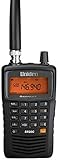
- LISTEN IN AND STAY INFORMED! The Uniden Bearcat SR30C is a very affordable 500 channel hand-held scanner with loads of features in a convenient compact design.
- LISTEN TO OVER 32,000 FREQUENCIES: Get started listening right away with convenient pre-sets for the most popular searches. Frequencies are preset in ten service banks, Non-Digital Police/Fire/Emergency, NOAA Weather reports, Marine, Racing, Civil Aircraft, Ham Radio, Railroad, CB Radio, and other bands. This makes it easy to find channels that interest you.
- PC PROGRAMING lets you program your scanner using your PC. Close call RF capture technology instantly tunes to signals from nearby transmitters and the Priority Scan function Scans the channels you have designated as priority channels. Memory backup keeps the frequencies stored in memory for an extended time if the scanner loses power
- DELAY FUNCTION helps prevent missed replies during two-way conversations. Other features include keypad entry, Earphone Jack, key lock, battery low alert, battery save. The triple-conversion design ensures excellent Performance.
- THREE POWER OPTIONS: #1- The included USB cable will power your SR30C from your PC or other USB power source, such as a smart phone USB charger (not included). #2 - Two AA alkaline batteries (not included). #3 - Two AA rechargeable Ni-MH batteries (not included). You can also charge rechargeable Ni-MH batteries in the unit using the USB cable.
Privacy and sensitive locations
Recordings made inside a home or in a sensitive care setting can raise privacy concerns. Florida’s 2025 statute makes specified body-camera recordings confidential and exempt when recorded inside a private residence, certain health, mental-health, or social-services facilities, or a place where a reasonable person would expect privacy. It also provides defined access routes for certain people depicted in the footage and their representatives, and a court-order route with specified considerations. Other exemptions can still apply. Check Florida Statutes section 119.071 for the current text before making a request.
Redactions, limited viewing, and fees
Depending on the law and facts, an agency may release only part of a recording, redact protected material, or offer a viewing or listening procedure instead of a downloadable copy. A fee may also apply. Ask which options are available and which legal provision supports a restriction; do not assume that a viewing procedure guarantees a copy or that a general records law overrides a camera-specific rule.
Rank #2
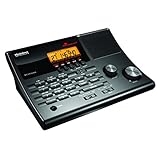
- LISTEN IN AND STAY INFORMED! The Uniden BC365CRS is an affordable 500 channel all-in-one conventional Analog Scanner, Alarm Clock, and FM Radio with loads of features in a convenient desktop design.
- 500 CHANNELS: Get started listening right away with convenient pre-sets for the most popular searches, Non-Digital Police/Fire/Emergency, Weather reports, Marine, Aircraft, Amateur Radio, Railroad, and other bands. This makes it easy to find channels that interest you.
- BUILT-IN FM RADIO & ALARM CLOCK: Save up to 30 FM stations in preset memories so you can instantly tune to your favorite local broadcast. Alarm Clock with Snooze and Sleep - Set the BC365CRS to wake you to scanning, a weather channel, or your favorite FM station.
- ATTRACTIVE DESIGN: Ideal for Home Use. This all-in-one scanner features a fresh design that's attractive on your desktop and easy to read at night through its clear LCD backlit display. The buttons are nicely laid out for ease of use, so there's no fumbling around in the dark.
- PRIORITY with DO-NOT-DISTURB: Store your most important frequencies into priority channels. When scanning, these channels are checked every 2 seconds, so you are more likely to catch important activity on these channels.
State examples: Kansas, Florida, and Delaware
These examples show how much the process can vary. They are not nationwide rules.
| Jurisdiction | What the law or decision provides | What that means for a requester |
|---|---|---|
| Kansas | K.S.A. 45-254 treats law-enforcement body-camera and vehicle-camera recordings as criminal-investigation records. In addition to disclosure permitted under the Kansas Open Records Act, it allows specified people depicted in a recording, certain family representatives, and their attorneys to request viewing or listening under adopted procedures. An agency must allow an eligible requester to view or listen within 20 days and may charge a reasonable fee. | The 20-day provision is a Kansas viewing or listening route for eligible requesters, not a general guarantee of public access or a downloadable copy. Read K.S.A. 45-254. |
| Florida | The 2025 statute exempts specified footage recorded in a private residence, certain care facilities, or a place where a reasonable person would expect privacy. It sets out particular access routes for some depicted people and representatives, allows a court-order route, and requires retention for at least 90 days. | Eligibility and access depend on the statutory route and circumstances. The 90-day minimum is Florida-specific and is not a nationwide retention period. See section 119.071. |
| Delaware | In Opinion 26-IB05, published February 3, 2026, the Attorney General concluded that denying a request for Delaware State Police encounter footage did not violate Delaware FOIA under the investigatory-files exemption. The opinion said the exemption can apply after an investigation closes. | This is an interpretation of Delaware law in a particular matter, not a rule for other states. Read the opinion. |
What to do if the agency denies or delays the request
- Ask for the denial or redaction basis in writing and whether segregable, non-exempt portions can be released.
- Check the state or local law and the agency’s instructions for an administrative appeal or review by an ombudsman or attorney general.
- Keep the request, acknowledgment, correspondence, and any decision together so you can follow the correct review process and deadlines.
- If the footage may be time-sensitive, ask the agency about retention and preservation procedures. Florida, for example, sets a 90-day minimum retention period for recordings covered by its statute; other jurisdictions may have different rules.
The exact deadline, eligibility requirements, available format, fees, retention period, and appeal route cannot be determined without the state and agency. Use the agency’s official records channel and verify the current local statute before relying on a particular procedure.
Do these 3 things before closing this tab:
1Fix the driver behind crashes, sound loss and screen glitches2Clear out junk files and repair common Windows errors3Scan for outdated or missing drivers - takes under a minuteQuick Recap
Best Value
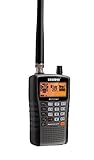
- LISTEN IN AND STAY INFORMED, this sophisticated scanner has 500 alpha-tagged channels in a convenient compact design with loads of features. Close Call RF capture technology instantly tunes to signals from nearby transmitters and the Do Not Disturb Mode prevents Close Call checks during a transmission.
- Please note model BC125AT is NOT a Digital Scanner (analog only scanner) and is not capable of Digital Radio system monitoring, (e.g. Project 25, DMR, NXDN). Some Police/Fire/Emergency/Public Safety Agencies in larger cities are switching over to DIGITAL Trunking systems. If you live in an area where Trunking or Digital Radio systems are used, you need to upgrade to a Uniden Digital model (“D” stands for Digital), such as models SDS150, SDS100, SDS200, BCD436HP, BCD536HP, BCD996P2, BCD325P2, or HomePatrol-2.
- SEARCH MORE EFFICIENTLY with 500 Alpha-Tagged Channels finding the channel you want to listen to is easy, with 500 channels divided into 10 storage banks. Organize your channels by department, location, area of interest, or any other way you prefer. Alpha Tagging lets you assign names to your channels, so you can keep track of who you are listening to.
- LIGHTWIEGHT PORTABLE DESIGN, take this Bearcat handheld radio scanner with you on the road, or on outings. It packs plenty of features, the orange backlight display is easy to read, even in low light conditions.
- GET STARTED LISTENING RIGHT AWAY with convenient Pre-sets for the most popular searches. Frequencies are preset in ten separate Non -Digital Police/Fire/Emergency, Ham, Marine, Railroad, Civil Air, Military Air, CB Radio, FRS/GMRS/MURS, and Racing search bands. This makes it easy to find channels that interest you.
Rank #4

- MENUS THAT MAKE SENSE. 1,000 MEMORIES. 10 NAMED ZONES. Built for amateur operators who want organized analog control. Use clear English menus and the full keypad for common changes; group home, travel, club, event, simplex, and receive channels as your plan grows.
- SCAN THE ZONES THAT MATTER. Choose which named zones scan together. Temporarily skip a busy channel without changing your saved scan list. Scanning is for conventional analog channels; it does not decode DMR/digital or trunked systems.
- MORE INFORMATION AT A GLANCE. Choose Name + Frequency in the two-channel view. Dual Watch alternates one receiver between the two displayed channels. Turn Dual Watch off and enable Single Watch for a full-screen view of one channel's name, zone, and frequency. Approximate dBm adds signal context.
- START ON THE RADIO. BUILD LARGER PLANS ON A COMPUTER. Make common changes from the keypad. For larger plans, use BTECH CPS or supported CHIRP-next with the separately sold PC03. Firmware updates require BTECH CPS, the PC03, and BTECH's matching instructions. USB-C charges the battery.
- TRI-BAND AMATEUR TRANSMIT. RECEIVE-ONLY LISTENING. Valid amateur authorization is required to transmit on amateur frequencies in the U.S.; use only supported amateur bands within your privileges. Airband AM, NOAA weather, and broadcast FM are receive-only.
Rank #3

- Recommend for experienced users of Desktop Scanners
- Priority channel, set the scanner to check one channel every two seconds while scanning
- Scan Delay - delays scanning for two seconds before moving to another channel in order to hear replies
- Tune - find new and unlisted frequencies starting from a specified frequency
Product prices and availability are accurate as of the date/time indicated and are subject to change. Any price and availability information displayed on Amazon at the time of purchase will apply.

