
Recommended Free Tools
Reduce flood damage by preparing early, understanding how water could reach your property, and choosing protections that fit the building and local hazard. Coastal storms can combine surge, tides, waves, rain, and river flow; atmospheric rivers can bring prolonged or intense rain and heavy mountain precipitation. No single household device or retrofit protects every home from every type of flooding.
How can coastal and atmospheric-river storms cause flooding?
Flood risk is not limited to properties beside the ocean or a river. Flooding can result from heavy rain, snowmelt, coastal storms, storm surge, or overflows in water systems, and it can develop quickly or slowly. Flood maps are useful for identifying known hazards, but being outside a mapped flood area does not guarantee that a property cannot flood, according to Ready.gov’s flood guidance.
Coastal storms: water level and waves
Storm surge is water pushed toward shore by storm winds. Tides and other local processes can add to water levels, while waves can raise the hazard and damage structures. FEMA’s 2019 coastal flood-study guidance describes coastal flooding as typically involving increased water levels, high-energy wave action, or both. A measure that might help with rainwater entering a basement should not be assumed to withstand surge or waves.
Atmospheric rivers: prolonged rain and mountain precipitation
An atmospheric river is a concentrated flow of water vapor that can produce significant rain and snow. As moisture moves inland and rises over mountains, it cools and can produce heavy precipitation. This description appears in FEMA’s environmental assessment for a levee project in Hoquiam, Washington, which attributes the underlying description to NOAA. The resulting flood risk is not necessarily confined to the coast: rainfall and river flooding can affect inland locations and persist after the rain begins.
#1 Best Overall

- Water Activated Flood Barriers, Rated #1 in Flood Control
- Grows to 3.5in high in minutes, just get them wet
- Long, flexible design creates all sorts of shapes
- Use to control, contain & divert flood water
- Ready to use, no sand or labor needed
What should you do before storm season?
Prepare before a forecast storm limits your options. Ready.gov’s flood preparedness guidance recommends planning, protecting important belongings, and considering home measures suited to the property.
- Know your local risk and alerts. Check available flood-hazard information, learn how your community sends emergency alerts, and monitor those alerts during a storm. Treat a map as a planning aid, not a guarantee that unshaded areas are flood-free.
- Make and practice a household plan. Identify evacuation routes and a place to go, plan how household members will communicate, and include pets and anyone who may need help evacuating. Keep needed supplies accessible.
- Protect documents and valuables. Store important documents in waterproof protection, keep password-protected digital copies, and move valuables to higher levels where practical.
- Keep drainage paths clear. Clear gutters and drains before the storm season, where it is safe to do so.
- Review flood insurance early. Standard homeowners insurance does not cover flood damage. Ready.gov says NFIP policies typically can take up to 30 days to take effect; check current terms, eligibility, and timing directly with an insurer well before a storm is forecast.
- Assess household water-control equipment. A check valve or battery-backed sump pump may be appropriate for some homes, depending on the drainage system and building design. Neither should be treated as protection from every flood mechanism.
What should you do when a flood warning arrives?
- Follow local officials’ instructions. Monitor emergency alerts and act on evacuation instructions. Shelter in place only when authorities say that is appropriate for your location.
- Move to safe higher ground when advised. Use the route officials recommend; do not wait for water to reach the home before leaving if evacuation has been ordered.
- Stay out of floodwater. Do not walk, swim, or drive through it, and do not go around barricades. Ready.gov warns that six inches of moving water can knock a person down and one foot can sweep a vehicle away.
- Do not treat equipment as permission to stay. A sump pump, portable barrier, or floodproofing measure does not cancel an evacuation order.
Which home retrofits may reduce flood damage?
There is no universally best retrofit. The right choice depends on the flood source, expected water depth and speed, wave action and duration, the building and foundation, utility locations, and applicable floodplain and building-code requirements. FEMA defines floodproofing as structural and non-structural changes that reduce or eliminate flood damage, but the permitted methods depend on the building and flood zone. Consult local officials and qualified professionals before structural work.
Rank #2

- Water Activated Flood Barriers, Rated #1 in Flood Control.
- Grows to 3.5in high in minutes, just get them wet.
- Long, flexible design creates all sorts of shapes.
- Use to control, contain & divert flood water.
- Ready to use, no sand or labor needed.
| Measure | When it may be relevant | Limits and cautions |
|---|---|---|
| Elevation | A property with significant mapped or recurring flood exposure. FEMA lists home elevation among its mitigation project examples. | Suitability depends on the site, foundation, access, utilities, and code requirements. A project example does not establish that elevation is suitable or cost-effective for every property. FEMA project overviews |
| Wet floodproofing | Some permitted enclosures or building situations where water is allowed to enter in a controlled way and flood-resistant materials and systems are used. | It does not keep water out or protect contents. Specific requirements apply; check FEMA guidance and local rules. FEMA floodproofing definition and guidance; FEMA code guidance |
| Dry floodproofing | Certain nonresidential buildings in eligible A-zone situations, when design and certification requirements are met. | NFIP rules do not permit dry floodproofing in Coastal High Hazard Areas. Pressure, leakage, flood duration, and wall strength matter, so professional design is essential. FEMA floodproofing guidance; FEMA code guidance |
| Check valve or battery-backed sump pump | A home with a suitable drainage or sump system, where the equipment fits the building and local conditions. | These devices do not protect against every flood source, wave action, or fast-moving water, and they do not replace alerts or evacuation. Ready.gov flood guidance; FEMA coastal flood guidance |
| Community flood-control or watershed work | A local authority may consider infrastructure or landscape and floodplain measures. FEMA documents an atmospheric-river-related control spillway project in California. | That project is not a recommendation for every watershed. Local hydrology, environmental review, cost, and maintenance shape whether a community-scale project is appropriate. FEMA project overviews; FEMA project environmental assessment |
How to compare retrofit options
- Identify whether the main threat is rainfall, river flooding, coastal water level, waves, or a combination.
- Ask a qualified local professional to assess likely water depth, speed, wave action, and duration, as well as the building’s foundation, walls, and utilities.
- Check flood-zone restrictions, building codes, and local permitting requirements before choosing a design.
- Account for contents and utilities as well as the structure, and consider whether evacuation remains feasible during an event.
- Compare installation and maintenance needs with insurance coverage and the possibility that a community-scale solution is needed.
For context when reading flood documents, FEMA defines Base Flood Elevation as the surface-water elevation from a flood with a 1% chance of equaling or exceeding that level in any given year. That definition does not mean such a flood can happen only once in a century. FEMA’s floodproofing glossary
Independent reader supportYour contribution helps us test, update, and keep practical guides available for everyone.What should you do during and after flooding?
- Stay away from fast-moving water and bridges over it, and obey road barricades.
- If a building floods, follow official instructions about when it is safe to return.
- Avoid floodwater, wet electrical equipment, and downed power lines.
- Use gasoline-powered generators outdoors and away from windows.
This is general U.S. preparedness information, not a property-level engineering assessment, insurance determination, or real-time warning. Follow local officials during an event and consult qualified local professionals about structural work.
Quick Recap
Best Value

- Water Activated Flood Bags, Rated #1 in Flood Control
- Grows to 3.5in high in minutes, just get them wet
- Use to control, contain & divert flood water
- Ready to use, no sand or labor needed
- Compact & Lightweight, stores away until needed
Rank #4
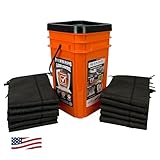
- COMPREHENSIVE FLOOD PROTECTION: Includes ten 5-foot water-activated flood barriers, providing up to 50 feet of coverage to manage leaks, spills, and flooding
- HIGH ABSORPTION CAPACITY: Each barrier absorbs up to 4 gallons of water, swelling to 3.5 inches high within minutes to form an effective barrier against water intrusion
- RAPID ACTIVATION: Barriers activate upon contact with water, expanding quickly to contain and divert floodwater without the need for sand or heavy lifting
- CONVENIENT STORAGE BUCKET: Comes with a durable, resealable orange bucket for organized storage and quick deployment during emergencies
- VERSATILE INDOOR & OUTDOOR USE: Suitable for protecting areas around doorways, garages, basements, and more from water damage. Not suitable for use with salt water, calcium, or chlorine
Rank #3

- Water Activated Flood Barriers, Rated #1 in Flood Control
- Grows to 3.5in high in minutes, just get them wet
- Contains up to 50ft of Flood Protection in each Bucket
- Use to control, contain & divert flood water
- Ready to use, no sand or labor needed
Product prices and availability are accurate as of the date/time indicated and are subject to change. Any price and availability information displayed on Amazon at the time of purchase will apply.

