
Start by improving speaker placement and using the room’s existing furnishings; add targeted absorption only if reflections remain distracting. Test each change from the seat where you normally listen. A rug, curtains, or acoustic panels can soften reflected sound, but none of them blocks sound transmission or replaces the speakers’ direct sound.
Why a bare living room can sound echoey
Sound from a speaker reaches you directly and also reflects off hard surfaces such as floors, walls, and windows. In a sparsely furnished room, those reflections have little to absorb them, so they can linger alongside the direct sound and make playback seem ringy or less clear. Absorption dissipates some reflected energy; it does not remove the direct sound coming from the speakers. The U.S. EPA describes reverberation in bare rooms and household measures such as carpeting and drapery in its Quieting in the Home guidance.
In acoustics, RT60 is the time it takes sound pressure level to decay by 60 dB after a source stops. It varies with frequency, so a single room-level value can conceal different decay behavior at different pitches. See Assessing the Acoustic Characteristics of Rooms: A Tutorial with Examples for the technical definition and frequency dependence.
Improve speaker placement before treating the room
Begin with the speaker manufacturer’s placement guidance, then aim for left/right symmetry around the listening position where the room allows. Unequal distances or nearby boundaries can make the stereo image feel off-center or make one speaker sound different from the other. Small adjustments can matter: the Library of Congress notes placement may come down to inches or centimeters. Its National Recording Preservation Plan recommends that speakers be placed symmetrically and according to manufacturers’ guidelines: Creating a Perfect At-Home Listening Space.
Do these 3 things before closing this tab:
1Fix the driver behind crashes, sound loss and screen glitches2Clear out junk files and repair common Windows errors3Scan for outdated or missing drivers - takes under a minute#1 Best Overall

- 2 x AUX INPUT - Convenient connection to any device that has a 3.5mm headphone output or dual RCA output. Connect to two devices via AUX at the same time, no plugging and switching needed.
- STUDIO SOUND QUALITY - Natural sound reproduction from 13mm silk dome tweeter and 4 inch full range unit
- REMOTE CONTROL - Adjust volume at your figure tips. Bass and treble control located on the side of main speaker.
- CLASSIC WOOD FINISH - High quality MDF wood build finished with wood effect vinyl serves as a great compliment to any home decor.
- SIDE PANEL CONTROLS - Use the side panel knobs to adjust the EQ to your liking. The controls are located on the active/powered speaker.
- Choose the seat where you usually listen.
- Check that the left and right speakers follow their maker’s guidance and are positioned as symmetrically as the room permits.
- Listen to familiar music or dialogue from that seat. Move a speaker a small amount if the sound is unbalanced, then listen again before making another change.
Soften the strongest reflections with furnishings
Once placement is sensible, look for a hard surface that could be reflecting sound toward the listening area. A bare hard floor between the speakers and seat is a practical place to try a rug; the Library of Congress also identifies first-reflection areas as places to consider a rug or shelving. Where large uncovered windows are prominent, curtains may help soften reflections. Use furnishings already in the room when they suit the space.
Make one change at a time and listen again from the usual seat. That makes it easier to tell whether the change addressed the problem, rather than adding soft material everywhere without knowing what helped.
Rank #2
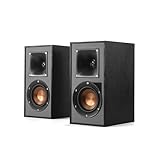
- Single 4" spun-copper IMG woofer
- 1" aluminum LTS tweeter mated to a 90x90 square Tractrix Horn
- 68 hertz - 21 kilohertz +/- 3dB; Nominal impedance - 8 ohms; Compatible crossover frequency – 1,730 hertz
- Sensitivity 90dB @ 2.83V/1M. Power Handling (CONT/PEAK) 50W/200W
- The exclusive Linear Travel Suspension (LTS) minimizes distortion for enhanced, detailed performances. Kapton is an extremely light and rigid material used in the tweeter suspension to provide high efficiency and improve resolution and detail. LTS tweeters are a hallmark of Klipsch speakers, making it a core component of some of the best speakers in the world
When to consider acoustic panels
If bare walls or windows still produce distracting reflections after placement and furnishing changes, consider absorption at the troublesome area. The OSHA Technical Manual explains how absorption and strategic wall or ceiling treatment can reduce reflected sound: Section III, Chapter 5. Panel placement and room conditions matter; buying more panels is not a dependable substitute for identifying the reflective surface.
Small rooms can be overtreated. The Home Acoustics Alliance’s Acoustical Treatment Primer: Absorption cautions against over-treatment and against using large-room formulas to calculate a small-room panel count. It reports that recommended small-room reverberation times cited by various organizations fall between 200 ms and 500 ms, but the passage does not identify those organizations. Treat that range as contextual information from the article, not as a universal living-room target or a reason to add a fixed number of panels.
Rank #3

- BLUETOOTH WIRELESS - Popular classic bookshelf speakers now can be enjoyed without the hassle of wires. Simply connection to an iPhone, Android, Tablet, PC or Mac.
- STUDIO SOUND QUALITY - Naturally fine tuned sound reproduction from 4 inch bass and 13mm silk dome tweeter.
- OPTICAL AND COAXIAL INPUTS - Digital inputs to enable lossless connection to most TV and computers.
- REMOTE CONTROL - Adjust the volume and toggle inputs at your fingertips. Bass and treble control located on the side of main speaker.
- SIDE PANEL CONTROLS - Use the side panel knobs to adjust the EQ to your liking. The controls are located on the active/powered speaker.
Choose a change based on the problem
- Hard floor: Try a rug in the reflection area between speakers and listening seat.
- Large exposed window: Consider curtains if reflections from the glass are noticeable.
- Bare wall that remains troublesome: Consider appropriately placed absorption, such as panels, rather than covering every surface.
- Sound passing between rooms: Absorption is not soundproofing. It can reduce reflections within the living room, but does not by itself block sound transmission.
For any option, consider which surface is involved, how much area it covers, whether the change is reversible and fits the room, and whether the goal is improving sound inside the room or blocking sound from traveling elsewhere.
Quick Recap
Rank #4
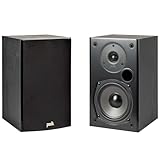
- EXPERIENCE AMAZING HOME THEATER SOUND WITH RICH, IMMERSIVE AUDIO – Featuring a 0.75" tweeter and a 5.25" Dynamic Balance driver, these passive bookshelf speakers deliver clear, balanced sound with deep bass, even at low volumes
- Use these wall-mountable bookshelf speakers as front, left-right, or rear for a surround sound system in your home theater setup and enjoy clear vocals and immersive sound—perfect for anyone starting their home audio journey
- Start your home theater journey with these Polk audio speakers then expand to a full 5.1 setup by adding T50 towers, T30 center channel, and subwoofer when ready
- QUICK & EASY SETUP – Just connect the speaker wire to your AV receiver, and you're ready to enjoy rich, high-quality sound—no complicated setup needed
- Over the past 50 years Polk has become one of the most trusted names in home audio speakers and entertainment. Our unwavering commitment to innovation allows you to sit back, relax, and enjoy music
Product prices and availability are accurate as of the date/time indicated and are subject to change. Any price and availability information displayed on Amazon at the time of purchase will apply.

