
Free tools Windows power users keep installed
One-click scans. No signup required.
There is no single purification recipe validated for every plastic-derived carbon quantum dot (CQD). Choose a separation method based on the plastic and synthesis route, the impurities present, and the CQD fraction you want to keep. Dialysis can remove diffusible small molecules, but it does not by itself establish that a sample is pure or uniform; confirm the result with an analysis suited to your claim.
Start by defining what you need to separate
Plastic-derived CQDs do not necessarily form one consistent mixture: feedstocks, additives, co-reactants, and synthesis chemistries differ. Before selecting a cleanup step, identify the plastic and route, note the solvent system and likely residual materials, and decide whether your goal is to remove small molecules, salts, large particulates, or to separate different dot populations. General carbon-dot literature describes multiple purification methods, but there is no head-to-head comparison establishing a best method for plastic-derived samples. The reviewed literature describes a chemically diverse field.
Keep clarification and purification distinct. Centrifugation or filtration can remove material their physical separation conditions capture, such as larger particulates. Those steps alone do not show that nanoscale CQDs have been separated from molecular fluorophores or from one another. These methods are among those reported for carbon-dot purification.
Match the method to the separation you need
| Method | What it separates | Useful for | Limits to consider |
|---|---|---|---|
| Filtration or centrifugation | Material separated by particle size or sedimentation behavior | Coarse clarification and removal of larger particulates | Does not, by itself, establish removal of nanoscale CQDs, small molecules, or molecular fluorophores. General methods source. |
| Dialysis | Diffusible species separated by their ability to pass through a membrane | Removing some small molecules from a retained sample | Results depend on the sample and membrane. Dialysis may leave low-molecular-weight fluorophores or heterogeneous dot fractions, and may not efficiently concentrate CQDs. A sample-specific MWCO and stopping point need experimental justification. Dialysis limitations review. |
| Solvent extraction | Components with different solvent partitioning behavior | Removing or recovering components based on solvent compatibility | Suitability depends on the sample and solvents; the cited sources do not establish a plastic-specific extraction protocol. General methods source. |
| Chromatography | Components separated by properties such as polarity, charge, or size, depending on the method | Higher-resolution separation or fractionation of CQD populations | More complex than basic cleanup; preparative chromatography can require costly equipment. Recovery, solvent use, and possible changes in measured optical properties should be assessed for the sample. General methods source; methods discussion. |
| Electrophoresis | Components separated by differences in electrophoretic mobility | Fractionating components with distinct mobility-related properties | Requires a suitable setup and analytical confirmation; the cited sources do not provide a validated plastic-specific protocol. General methods source. |
When dialysis is appropriate—and what it cannot prove
Dialysis is commonly used to remove small, diffusible species while retaining a larger fraction, but a fixed dialysis duration is not a substitute for an endpoint measurement. In a 2019 study by Chen, Tsai, and Chang, HPLC monitoring of a citric-acid-derived carbon-dot model indicated that about 120 hours were needed to remove small-molecule byproducts. The same study detected at least three carbon-dot populations after dialysis. That result is specific to the citric-acid model, not a validated duration or purity test for plastic-derived CQDs. Study details.
#1 Best Overall
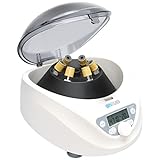
- Easy Use: Rotor speed can be set and displayed by RPM or G-force; Defined program will be stored and activated when power on; Two programs P1/P2, easy to start the procedure by one key; Sound alert; Automatic lid-lock release after running; Noise≤56Db
- Safety – Door lid-interlock prevent opening until the rotor has stopped spinning and automatic lid-lock release when operation has stopped to save processing time. Overspeed detector in running. Automatic internal self-testing after turned on
- High Lab Quality Material – Maintenance-free brushless DC motor enables long life,safety and quick rotating, ;High quality ABS casing and rotor ensure smooth rotate; Cast iron base and specially designed vacuum suction feet for stable operation
- Widely Applications – LCD Digital control and display the time (30sec-99min) or continuous mode and speed (300-5000rpm, up to 2600xg). Fixed rotor with adaptors can hold up to 15/10/7/1.5-5 mL×6 tubes. It is widely used for separation routine practice
- Service from Manufacturer: Conforms to international safety standards and regulations marked with CE, cTUVus and FCC; Any questions, please contact us directly and we will provide immediate service to each customer
Dialysis may also leave low-molecular-weight fluorophores and may not concentrate the retained CQDs efficiently. If you use it, select the membrane MWCO and stopping point for the particular sample, then test whether the unwanted species are reduced and whether the desired fraction remains. Do not describe the sample as pure merely because it was dialyzed. Review of dialysis limitations.
Use fractionation when different dot populations matter
If your experiment depends on distinguishing CQD populations rather than simply removing coarse debris or diffusible molecules, consider a method with greater resolving power. Chromatography can separate by polarity, charge, or size depending on the technique, while electrophoresis separates according to mobility-related differences. These options may provide more information about the mixture, but they add complexity and can affect recovery, throughput, solvent use, and equipment needs. Assess the recovered fractions rather than assuming the original optical behavior is unchanged. General purification methods; methods and tradeoffs.
Rank #2

- ▷BASIC PARAMETERS---Speed range: 300-4000r/min; Timing range: 0-60h(step 5 minutes); Vibration coefficient: ≤0.6mm/s; Support centrifuge tube range: 10ml, 5ml; Centrifuge disc specification: 10mlX6; Motor power: 50W.
- ▷UPDATED BUTTON---The stepless speed regulation design of the buttons makes the operation smoother and have a longer service life.
- ▷COMPACE DESIGN---Small in size, the overall dimension of the machine: 9’’X8.6’’X6.8’’; light weight: 3.5lb, portable, easily carry it everywhere.
- ▷STRONG MATERIALS---The whole lab centrifuge machine adopts ABS high-strength shell, which is strong and durable and has a longer service life.
- ▷STABLE OPERATION---Stable anti-slip feet, high speed accuracy, quiet operation, noise ≤50db, will not disturb your work, DC motor, continuous operation mode.
One example illustrates why feedstock-specific limits matter: a countercurrent chromatography (CPC) study separated avocado-peel CQDs into nine fractions using an n-hexane–ethyl acetate–methanol–water system at 1:2:1:2 (v/v/v/v) with an elution-extrusion protocol. This is an adjacent biomass example, not a demonstrated protocol for plastic-derived CQDs. CPC study and method discussion.
Validate the purification claim
Choose an analytical endpoint that tests the specific separation you intended. For example, HPLC was used in the citric-acid model study to follow small-molecule byproducts and to detect multiple dot populations after dialysis. The appropriate assay for another sample depends on its impurities and the claim being made; the cited sources do not establish one universal acceptance criterion for plastic-derived CQDs. Chen, Tsai, and Chang study.
Outdated Drivers Are Slowing You Down
One free scan finds every outdated or missing driver and matches the right update for your exact hardware.Free scan · exact hardware matchWindows Errors? Fix Them Before They Spread
Repair common Windows errors and clear accumulated junk for a smoother, more stable PC - no reinstall needed.Free scan · no reinstallRank #3
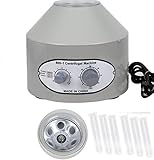
- Time rang:0~60min or without limit. Maximum relative Centrifugal force: 1790×g. Electric current:AC110V 60 HZ. Capacity:20ml×6
- Maximum speed: 4000r/min.6 Tubes are provided in this lab centrifuge, the centrifugal capacity is 20ml per tube, benefitting your workflow efficiency.
- Table-centrifugal machines are widely used in the laboratory or produce department for organisms、 medical、 chemistry etc. Our lower speed centrifugal machine with the maximum speed 4000r/min and be equipped with/without timer. It mainly be used for the appraisal radioactivity and separate cell or particle.
- The table-centrifugal machines are widely used in the laboratory or produce department fororganisms、 medical、 chemistry etc. The lower speed centrifugal machine with the maximum speed 4000r/min and be equipped with/without timer. It mainly be used for the appraisal radioactivity and separate cell or particle.
- Centrifugal machine is easy to use with its clear control panel for controlling the speed and time. bench-top centrifuge is equipped with speed and timer control to meet your requirement.The items are the same as the pictures.We provide carefree return, Our aim at pursuing the maximum satisfaction of our buyers!
- State which feedstock and synthesis route produced the sample.
- Identify the target fraction and the impurity class the method is intended to remove.
- Report the separation conditions that matter for interpreting the result, including the membrane or separation setup where applicable.
- Support claims such as “small-molecule byproducts were reduced” or “fractions were separated” with an analytical result. Avoid calling a product “pure” or “uniform” unless the evidence supports that specific claim.
Why some plastic-derived CQDs may need no extra purification
A paper on one two-step chemical conversion route for plastic waste reports that its process produces carbon dots without additional purification. That is a result for the reported route and product, not evidence that other plastics, synthesis chemistries, or intended CQD fractions are self-purifying. Route-specific report; overview of variation in plastic-derived CQD studies.
Quick Recap
Best Value
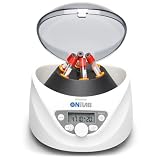
- Easy to use and quite operation – Timer rang 30sec-99min or without limit (continuous running). Rotor speed can be set and displayed by RPM or G-force. Defined program by knob will be stored and activated when power on; Two programs P1/P2 for choose, easy to start the procedure by one key. Easy-to-read processing display and sound alert. Automatic lid-lock release after running; Noise≤56dB
- Safety – Door lid-interlock prevent opening the centrifuge lid until the rotor has stopped spinning and automatic lid-lock release when operation has stopped to save processing time. Overspeed detector in running. Automatic internal self-testing after turned on. Conforms to international safety standards and regulations marked with CE, cTUVus and FCC
- High Lab Quality Material – Maintenance-free brushless DC motor enables strong stirring power for quick rotating, long life and safety. High quality ABS engineering plastic casing and rotor ensure that the tubes rotate smoothly and safely and is not easily damaged. Cast iron base and specially designed vacuum suction feet for stable operation that reduces the chance of moving during operation
- Widely Applications – LCD Digital control and display the time (30sec-99min) and speed (300-5000rpm, up to 2600xg). ONiLAB DM0506 low-speed centrifuge, supplied with built in fixed angle rotor A6-15P with adaptors which can hold up to 15mL/10mL/7mL/1.5-5mL×6 tubes. It is widely used for separation routine practice
- One Year Service from ONiLAB: We are manufacturer that has more than 20 years experience in the field of lab products, for this machine we provide 1 year service freely. Any questions, please contact us directly and we will provide best service to each customer
Rank #4

- 【POWERFUL CENTRIFUGAL】Powerful brushless motor with high performance.Wide range electronic speed control 500-5000 rpm, maximum speed up to 5000RPM, maximum relative centrifugal force 3074 xg
- 【EASY TO USE】LCD digital display can intuitively adjust the experiment time and speed. Timing range 10s-99min59s, electronic speed control 500-5000r/ min. Instantaneous centrifugation function, press the shot button, the centrifuge starts running, release the button, stop running
- 【ALUMINUM ALLOY ROTOR】LABFISH low-speed centrifuge with built-in fixed-angle rotor can accommodate 8*10ml/15ml centrifuge tubes or 8*2ml/5ml/10ml vacuum collection tubes (do not order this item for uses with other sizes of tubes if you do not know whether it fits) low-speed brake, fast and effective separation
- 【OPERATION SAFETY】Secure intelligent electronic lock, the lid will open automatically after the machine ends operation. The instrument will automatically alarm when there is a malfunction
- 【EXCELLENT SATISFACTION】1 year Limited Warranty. If you have any issue, we're always here to help you.Labfish enables to continually make improvement of products based on suggestion
Product prices and availability are accurate as of the date/time indicated and are subject to change. Any price and availability information displayed on Amazon at the time of purchase will apply.

