
What’s actually slowing this PC down?
Pick the symptom - the matching free tool is one click away.
Before upgrading a NAS, monitor it during the specific tasks that feel slow. Compare memory and swap use with disk utilization, throughput, and IOPS; on TrueNAS, include ZFS ARC hit and miss reporting when your release provides it. High memory use alone does not prove that you need more RAM, and neither the cited Synology nor TrueNAS documentation sets a universal upgrade threshold.
Start with the slowdown, not the upgrade
Record the NAS model, operating-system version, workload, and the times when you notice a problem. Examples include slow file access, backups taking longer than expected, or sluggish performance during another recurring task. A chart is useful only when you can compare its values with the activity and symptoms occurring at the same time.
Enable historical monitoring before collecting a baseline. On Synology DSM 7, Resource Monitor’s previous-data view is available only when usage history is enabled in Settings. See Synology’s DSM 7 Resource Monitor overview for the history setting and views.
Monitor a Synology NAS running DSM 7
Check physical memory and swap together
In Resource Monitor, open Performance and review the physical-memory and swap charts during both ordinary use and the workload that triggers the slowdown. High memory occupancy can include frequently accessed data held in cache; Synology says that cache is released when overall memory is insufficient. Its DSM 7 guidance identifies high swap use as a sign of insufficient system memory that can affect performance. Therefore, high RAM use without corresponding swap pressure does not by itself establish that a memory upgrade is needed. See Synology’s DSM 7 Resource Monitor Performance documentation.
#1 Best Overall
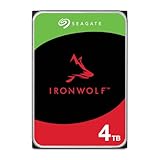
- IronWolf internal hard drives are the ideal solution for up to 8-bay, multi-user NAS environments craving powerhouse performance
- Store more and work faster with a NAS-optimized hard drive providing ultra-high capacity up to 16TB and cache of up to 256MB
- Purpose built for NAS enclosures, IronWolf delivers less wear and tear, little to no noise/vibration, no lags or down time, increased file-sharing performance, and much more
- Easily monitor the health of drives using the integrated IronWolf Health Management system and enjoy long-term reliability with 1M hours MTBF
- Three-year limited warranty protection plan included and three year Rescue Data Recovery Services included
Compare disk utilization, throughput, and IOPS
Resource Monitor provides distinct disk views: overall disk utilization, throughput, or IOPS. Volume charts can show transfer utilization, read/write throughput, or IOPS. Compare the relevant charts with the time of the observed slowdown rather than treating any single high value as a diagnosis. Synology’s documentation describes these metrics but does not prescribe a universal disk-busy or IOPS cutoff for an upgrade.
Monitor a TrueNAS SCALE system
Use reporting available in your installed release
TrueNAS reporting includes memory and disk graphs. The SCALE 27 Reporting Screens documentation describes physical memory available and disk read/write I/O in bytes per second. Menus and auxiliary interfaces vary by release, so use documentation matching the version installed on your NAS. The current TrueNAS SCALE 27 Reporting Screens documentation says the built-in Netdata UI available through SCALE 24.04 and 24.10 was removed in 25.04 and later; users who want that UI can install the Netdata application. The documentation page advises selecting stable-release documentation for the corresponding version.
Rank #2

- Store more, compute faster, and do it confidently with the proven reliability of BarraCuda internal hard drives
- Build a power house gaming computer or desktop setup with a variety of capacities and form factors
- The go to SATA hard drive solution for nearly every PC application from music to video to photo editing to PC gaming. Ax. Sustained transfer rate OD: 190MB/s
- Confidently rely on internal hard drive technology backed by 20 years of innovation
- Frustration Free Packaging - This is just an anti-static bag. No cables, no box.
Read ARC hit and miss figures in context
The archived SCALE 24.04 reporting documentation lists ZFS ARC size, ARC hit ratio, demand and prefetch requests, and counts of hits, misses, and total requests. These describe cache activity, not a standalone score for whether the NAS needs more RAM. Interpret them alongside the workload, request counts, memory, and disk-I/O reports. A hit percentage from one workload is not a universal target for another, and the documentation does not set a general upgrade cutoff. See the release-specific TrueNAS SCALE 24.04 Reporting Screens documentation for the ARC graph names.
Build a useful before-upgrade baseline
- Identify the context. Write down the NAS model, operating-system release, workload, and the periods when performance is poor.
- Turn on history or reporting. On DSM 7, enable usage history in Resource Monitor Settings before relying on previous-data views. In TrueNAS, check which reporting graphs are available in the installed release.
- Capture ordinary and heavy use. Note physical memory, swap behavior, disk utilization, read/write throughput, and IOPS where exposed. For TrueNAS, include ARC size and hit, miss, and request graphs when available.
- Match traces to symptoms. Look at what changed during the slow period, not just the highest value shown across the monitoring window. Consider whether disk activity or swap behavior aligns with the affected task.
- Decide whether a constraint is sustained and relevant. Consider hardware only when monitoring shows pressure that persists during the workload that matters to you. The cited documentation establishes no universal percentage, observation period, or cache-hit-rate cutoff.
- Verify compatibility before buying RAM. Check the precise NAS model’s supported memory type and capacity. Model-specific compatibility is not established by the monitoring documentation linked here.
Compare like with like
If you are comparing more than one NAS or workload, keep the platform and installed software version in view: the available metrics and menus differ. Also compare readings from equivalent tasks and symptom windows. Raw ARC hit percentages from unlike workloads should not be treated as though they were directly comparable scores.
Quick Recap
Rank #4

- Available in capacities ranging from 2 to 22TB(1) | (1) 1GB = 1 billion bytes and 1TB = 1 trillion bytes. Actual user capacity may be less depending on operating environment.
- For RAID-optimized NAS systems with unlimited number of bays
- Rated for 550TB/yr workload rate(2) | (2) Annualized Workload Rate = TB transferred x (8760 / recorded power-on hours). The maximum rated workload is specified for operating at typical temperature of 40C. Workload Rate will vary depending on your hardware and software components and configurations.
- Designed to handle the demands of high-intensity 24x7 multi-user NAS environments
- Western Digital partners with a wide range of NAS system vendors for extensive testing to ensure compatibility with most NAS enclosures
Rank #3

- IronWolf internal hard drives are the ideal solution for up to 8-bay, multi-user NAS environments craving powerhouse performance.date transfer rate:6.0 gigabits_per_second
- Store more and work faster with a NAS-optimized hard drive providing 8TB and cache of up to 256MB
- Purpose built for NAS enclosures, IronWolf delivers less wear and tear, little to no noise/vibration, no lags or down time, increased file-sharing performance, and much more
- Easily monitor the health of drives using the integrated IronWolf Health Management system and enjoy long-term reliability with 1M hours MTBF
- Three-year limited product warranty protection plan and three year Rescue Data Recovery Services included
Product prices and availability are accurate as of the date/time indicated and are subject to change. Any price and availability information displayed on Amazon at the time of purchase will apply.

