
Start with your utility bills, not a shopping list. Compare electricity and fuel use by month, then target the largest costs or loads; if the cause is unclear, ask your utility or state energy office about a home energy audit. The right order depends on your climate, rates, fuel source, building condition, and existing equipment. Some improvements lower electricity use, while insulation and heating or cooling changes may reduce costs for gas or other fuels too.
Where should you start to lower your electric bill?
Collect bills for a full year if available and compare both usage and cost by fuel. A higher bill can reflect greater consumption, a rate change, or seasonal heating and cooling demand, so distinguish those before choosing a project. The U.S. Department of Energy recommends identifying the largest energy consumer or bill; an audit can help uncover less visible whole-home losses and prioritize cost-effective work.
- Note monthly electricity use and charges separately from natural gas, heating oil, or other fuel costs.
- Look for seasonal spikes and consider which systems or activities change during those months.
- If the main sources of loss remain uncertain, seek a home energy assessment through your utility or state energy office. ENERGY STAR recommends using an assessment to plan and sequence improvements.
See the DOE Home Energy Checklist and ENERGY STAR’s guide to planning home energy improvements. No general estimate can predict your bill: usage, local rates, occupancy, climate, and the home’s current condition all matter.
Seal leaks and add insulation where the house needs it
Air sealing and insulation are foundational when a home has drafts or inadequate insulation. ENERGY STAR reports an EPA estimate that air sealing plus adding insulation in attics, floors over crawl spaces, and basements yields average savings of 15% on heating and cooling costs, or 11% on total energy costs. Those are averages for the described measures, not a promise for an individual home. ENERGY STAR also gives a broader estimate of up to 10% savings on annual energy bills from sealing leaks and adding insulation; treat that as a general estimate, not a personalized forecast.
Do these 3 things before closing this tab:
1Scan for outdated or missing drivers - takes under a minute2Clear out junk files and repair common Windows errors3Fix the driver behind crashes, sound loss and screen glitches#1 Best Overall
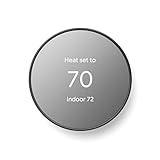
- ENERGY STAR certified smart thermostat for home that helps you save energy and stay comfortable.Connectivity : Wi-Fi - 802.11b/g/n 2.4 GHz, 802.11a/n 5 GHz Wi-Fi., Wireless interconnect : Bluetooth Low Energy Please refer to the product description section below for all applicable legal disclaimers.Product note: You can also check your system’s compatibility before purchasing a Nest thermostat with our online Nest Compatibility Checker on the Google Nest support page
- The Nest Thermostat is designed to work without a C wire in most homes, but for some systems, including heating only, cooling only, zone controlled, and heat pump systems, you’ll need a C wire or other compatible power accessory
- Nest Thermostat turns itself down when you leave, so you don’t waste energy heating or cooling an empty home. Lock feature: No
- Programmable thermostat that lets you create an energy efficient schedule in the Google Home app on your Android or iPhone
- Remote control lets family members change the thermostat temperature from anywhere on a phone, laptop, or tablet[1]
Use the right material for the joint: weatherstripping works on moving parts such as doors and operable windows, while caulk closes stationary cracks and gaps. For a DIY project, ENERGY STAR’s guide to sealing and insulating explains how to find hidden attic and basement leaks, check insulation, and consider safety. Insulation approaches vary by climate zone, so a measure suitable for one region may not be right for another.
DOE’s overview of insulation and air-sealing essentials explains the distinction between sealing stationary gaps and weatherstripping moving joints.
Rank #2

- An Alexa thermostat - Amazon Smart Thermostat is an easy way to switch from a traditional thermostats for homes and help reduce energy usage.
- Create comfort zones throughout your home by connecting to select Alexa devices to automatically adjust heating and cooling based on temperature readings or presence detection.
- Save money and energy - After purchase, Amazon will send you an email with details about home thermostat rebates that may be available from energy providers in your area.
- Save energy - According to EPA estimates, ENERGY STAR certified thermostats save an average of $90 on yearly energy bills.
- Programmable thermostat and automatic control - Create your own home, away and sleep schedules, or have Alexa automatically control the temperature with Alexa+ advanced features.
Check heating, cooling, ducts, and thermostat settings
If your home has forced-air heating or cooling, inspect accessible ducts—especially those routed through attics, crawl spaces, garages, or other unconditioned areas. ENERGY STAR says sealing and insulating ducts in unconditioned spaces can improve heating and cooling system efficiency by as much as 20% in some cases. The result depends on the system and duct condition.
Thermostat changes can help when they fit the household’s schedule. DOE recommends programmable settings, and ENERGY STAR estimates a certified smart thermostat may save approximately $100 per year in homes with high heating and cooling bills or that are unoccupied for much of the day. That estimate is conditional; it does not apply automatically to every home or thermostat.
Rank #3

- Save up to 23% every year on heating and cooling costs, adjusts to your set schedule to save energy when you’re gone and optimize comfort when you’re home. Compared to a hold of 72
- Compatible with 85% of systems, check your system’s compatibility with our online ecobee Compatibility Checker on the ecobee support page
- Change your temperature by easily tapping the color touchscreen or using the ecobee app. Plus, free software upgrades ensure you get the best out of your Smart Thermostat Essential, for years to come
- Automatically adjusts to your set schedule to save energy when you’re gone and optimize comfort when you’re home. Keep track of your energy consumption when you're on the go on the ecobee app
- Easy DIY install. No C Wire, no problem. Get the ecobee Power Extender Kit (PEK) for homes without a C-Wire and keep your walls looking nice with our trim kit – both sold separately
Before replacing major HVAC equipment, get a qualified evaluation and ensure correct sizing and installation. ENERGY STAR warns that improper installation can reduce system efficiency by up to 30%. Its heating and cooling guidance covers ducts, controls, and efficient system operation.
Independent reader supportYour contribution helps us test, update, and keep practical guides available for everyone.Choose lighting and appliance upgrades selectively
DOE recommends replacing incandescent and fluorescent bulbs with LEDs, starting with fixtures used for several hours a day. This focuses the upgrade on lights with the greatest opportunity to reduce electricity use. ENERGY STAR identifies lighting, appliances, and water heating as improvement categories, but the best next purchase depends on what you own and how often you use it.
Rank #4

- EASY DIY INSTALLATION: Do it yourself fast with a built-in level and simple step-by-step instructions. Works with the HVAC equipment found in most homes
- COMMON WIRE REQUIREMENTS: Common wire(C-Wire) required for heat pump and heat/cool only systems. C-wire not required on most systems
- SAVE ABOUT 23% ON HVAC ENERGY: ENERGY STAR-certified and packed with features that help you save money, including flexible scheduling, geofencing, remote access and usage reports
- PRIVACY PROTECTION: Sensi won’t sell your personal information to third parties or leverage your thermostat activity data for targeting or advertising purposes
- CONTROL FROM ANYWHERE: The top-rated mobile app for Android and iOS devices makes it easy to control your comfort from a smartphone or tablet
- Prioritize frequently used lights and energy-intensive appliances rather than replacing equipment solely because a newer model exists.
- Compare an appliance’s age, usage, and condition with the likely benefit of replacement; replacing a working unit early may not suit every household.
- Maintain HVAC filters and use programmable thermostat schedules where appropriate.
- When considering a thermostat or other device, check compatibility with your equipment, relevant certifications, and whether its features fit your routine.
DOE’s checklist and ENERGY STAR’s home improvement guide provide further recommendations.
Check whether home energy rebates are available where you live
Federal Home Energy Rebates are not universally available. DOE says the HOMES and HEEHR pathways are available in select states and may cover eligible measures such as insulation, air sealing, HVAC equipment, water heaters, ducts, appliances, and lighting. Availability, eligibility, covered work, and application timing depend on the state or territory and can change.
Free tools Windows power users keep installed
One-click scans. No signup required.
Check DOE’s Home Energy Rebates Program page and contact your State or Territory Energy Office to confirm current status and rules before committing to a project.
Quick Recap
Product prices and availability are accurate as of the date/time indicated and are subject to change. Any price and availability information displayed on Amazon at the time of purchase will apply.

