
Windows Errors? Fix Them Before They Spread
Repair common Windows errors and clear accumulated junk for a smoother, more stable PC - no reinstall needed.Free scan · no reinstallOutdated Drivers Are Slowing You Down
One free scan finds every outdated or missing driver and matches the right update for your exact hardware.Free scan · exact hardware matchInstall the xfsprogs utilities, verify the exact target partition or logical volume, create the filesystem with mkfs.xfs, and mount it. Formatting erases existing data on the selected target, so identify and back up the device before proceeding.
Install the XFS utilities
XFS is a filesystem format; the xfsprogs package provides the user-space tools, including mkfs.xfs. On Debian or Ubuntu, install it with APT:
sudo apt update
sudo apt install xfsprogs
The available package version depends on your distribution release and configured repositories. Debian’s package listing describes the utilities: Debian xfsprogs package. Debian’s installation documentation also gives the APT installation method: xfsprogs installation document.
Identify the device before formatting
XFS can be created on a disk partition or a logical volume. First inspect block devices and filesystem signatures:
What’s actually slowing this PC down?
Pick the symptom - the matching free tool is one click away.
#1 Best Overall

- ✅For beginners, refer image-7, its a video boot instruction, and image-6 is "boot menu Hot Key list"
- ✅16-IN-1, 64GB Bootable USB Drive 3.2 , Can Run Linux On USB Drive Without Install, All Latest versions.
- ✅Including Windows 11 64Bit & Linux Mint 22.3 (Cinnamon)、Kali 2026.02、Ubuntu 26.04、Zorin Pro 18、Tails 7.8.1、Debian 13.5.0、Garuda 2026.03、Fedora Workstation 44、Manjaro 25.06、Pop!_OS 22.04、Solus 2026.04、Archcraft 26.05、Neon 2026.06、Fossapup 9.5、Sparkylinux 8.3, All ISO has been Tested
- ✅Supported UEFI and Legacy, Compatibility any PC/Laptop, Any boot issue only needs to disable "Secure Boot"
lsblk -f
sudo blkid
Confirm the exact device path, that it is not mounted, and that it is not the active root or boot device. Ensure the target contains no data you need; creating a filesystem writes to the target and can overwrite existing information. The mkfs.xfs manual documents the command and its target behavior: Debian mkfs.xfs manual.
Create the XFS filesystem
Replace /dev/DEVICE below with the verified partition or logical volume. Do not copy a sample device name without checking it on your system.
sudo mkfs.xfs -N /dev/DEVICE   # optional: preview parameters; does not format
sudo mkfs.xfs /dev/DEVICE
The -N option displays the proposed parameters without creating a filesystem. For a basic setup, the defaults are generally the clearest choice; choose specialized geometry or metadata options only when a workload or compatibility requirement calls for them. By default, XFS has no separate real-time section and keeps its log within the data section. See the Debian XFS manual for filesystem characteristics.
Rank #2

- ✔ Legendary Stability – Powered by **Debian 13.7, one of the most reliable and trusted Linux operating systems in the world
- ✔ Bootable USB – Plug & Play – Instantly run in Live Mode or install on your computer with ease
- ✔ Fast & Lightweight System – Optimized for performance on both modern and older hardware
- ✔ Secure & Privacy-Focused – No tracking, no bloatware, and regular security updates
- ✔ Perfect for All Users – Ideal for developers, IT professionals, students, and everyday computing
To assign a label during creation, use -L followed by a label, for example sudo mkfs.xfs -L DATA /dev/DEVICE. Debian’s current mkfs.xfs manual limits XFS labels to 12 characters.
Mount the filesystem
Create a mountpoint and mount the new filesystem by specifying its type:
sudo mkdir -p /mnt/data
sudo mount -t xfs /dev/DEVICE /mnt/data
df -Th /mnt/data
The final command reports the mounted filesystem and its type. Choose a mountpoint appropriate to your system and applications; /mnt/data is only an example.
Rank #3

- Portable Linux Solution: This 8 GB USB drive comes pre-loaded with the latest stable release of Debian Linux, providing a reliable and user-friendly operating system.
- Hassle-Free Installation: Simply plug in the USB and boot from it to easily install or run Debian Linux without the need for CDs or complex setup.
- Versatile Usage: Ideal for setting up new systems, exploring Linux for the first time, or carrying a portable Linux environment on the go.
- Beginner-Friendly: Debian Linux offers a smooth learning curve, making it accessible for both beginners and professionals.
- Compact Storage: The 8 GB capacity provides ample space to store files and documents alongside the pre-loaded operating system.
Mount XFS automatically after reboot
For a persistent mount, use the filesystem UUID rather than a device name such as /dev/sdb1, which can change between boots. Get the UUID with:
sudo blkid /dev/DEVICEAdd a line to /etc/fstab, replacing the example with the actual UUID and mountpoint:
UUID=<actual-uuid> /mnt/data xfs defaults 0 0Test the configuration before rebooting:
sudo mount -a
findmnt /mnt/data
If mount -a reports an error, correct the fstab entry before restarting. Debian documentation covers UUID-based identification and persistent mounts through fstab and mount: Debian Reference, Chapter 9. XFS administration documentation also describes mounting by UUID or label: Debian xfs_admin manual.
Rank #4
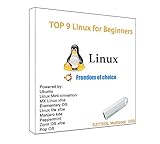
- 1. 9-in-1 Linux:32GB Bootable Linux USB Flash Drive for Ubuntu 24.04 LTS, Linux Mint cinnamon 22, MX Linux xfce 23, Elementary OS 8.0, Linux Lite xfce 7.0, Manjaro kde 24(Replaced by Fedora Workstation 43), Peppermint Debian 32bit (being replaced by MX Linux 32bit) for older PC, Pop OS 22, Zorin OS core xfce 17. The versions you received might be latest than above as we update them to latest/LTS when we think necessary.
- 2. Try or install:Before installing on your PC, you can try them one by one without touching your hard disks.
- 3. Easy to use: These distros are easy to use and built with beginners in mind. Most of them Come with a wide range of pre-bundled software that includes office productivity suite, Web browser, instant messaging, image editing, multimedia, and email. Ensure transition to Linux World without regrets for Windows users.
- 4. Support: Printed user guide on how to boot up and try or install Linux; please contact us for help if you have an issue. Please press "Enter" a couple of times if you see a black screen after selecting a Linux.
- 5. Compatibility: Except for MACs,Chromebooks and ARM-based devices, works with any brand's laptop and desktop PC, legacy BIOS or UEFI booting, Requires enabling USB boot in BIOS/UEFI configuration and disabling Secure Boot is necessary for UEFI boot mode. Packing: The bootable USB drive comes in a colored PET/CPP zipper bag with instructions on how to get started. The box pictured is not included.
Understand XFS checking and repair
fsck.xfs is not a conventional filesystem checker: it exits successfully without checking the filesystem. If recovery is needed after a crash, XFS replays its journal when the filesystem is mounted. For an actual consistency check or repair, use xfs_repair with the filesystem unmounted.
Do not run repair against a mounted filesystem. Avoid xfs_repair -L except as a last resort: it discards the log and can lose metadata updates that were in progress. Check for hardware problems first, preserve a backup when possible, and seek specialist recovery help if the data matters. See the Debian fsck.xfs manual and Debian xfs_repair manual.
Quick Recap
Product prices and availability are accurate as of the date/time indicated and are subject to change. Any price and availability information displayed on Amazon at the time of purchase will apply.
Recommended Free Tools

