
Most class-compliant USB-MIDI keyboards, drum pads, and controllers do not need a separate driver download in Windows 10 or Windows 11. Connect the device and check Device Manager; Windows normally installs its built-in USB audio class driver automatically.
Install a manufacturer driver only if the manufacturer requires one for your model or features. Bluetooth MIDI may also need a vendor driver, and Windows 11’s newer MIDI Services components are delivered through a phased rollout rather than a manual driver download.
Check whether your MIDI device needs a driver
Before downloading anything, identify how the device connects to Windows:
| Connection or device type | What to do |
|---|---|
| Class-compliant USB-MIDI device | Connect it directly. Windows normally installs the built-in driver automatically. |
| Device with a manufacturer-specific Windows driver | Download and install the driver from the manufacturer’s official support page if required for your model or features. |
| Bluetooth Low Energy MIDI | Pair the device in Windows, then install the manufacturer’s Bluetooth MIDI driver if required. |
| MIDI interface using a traditional 5-pin DIN connection | Install the interface manufacturer’s driver if one is supplied or required. |
Windows 10 and 11 include the USB audio class driver Usbaudio.sys, which normally handles class-compliant USB-MIDI hardware. The device generally appears in Device Manager under Sound, video and game controllers.
What’s actually slowing this PC down?
Pick the symptom - the matching free tool is one click away.
#1 Best Overall

- FORE 1 MIDI in / 1 MIDI out MIDI interface, 16 MIDI input & output channels. Connecting keyboard, MIDI keyboard, synthesizer, electric drum and any device with input & output to computer/laptop for recording and editing your track.
- Plug & Play, with a Built-in driver and Intelligent LED Indicator. No extra difficult driver installation. Easy set up, truly plug and play. MIDI converter shows different light indicators & status. Red is Power, Blue is signal transfer & connections. Watch the video to get more details about how to use.
- No delay MIDI Input and Output. High-performance FTP processing chip, stable and fast speed MIDI data transmission. GarageBand, FL studio12, FL studio20, DirectMusic, CoreMIDI, Cubase, Sonar, MIDI Connections, etc. Supported.
- Conveniently integrated USB and cables. High quality wire with multi-layer protection. Technology of resistance to electromagnetic interference, ensuring the audio transmission rapidly and safely without damage. USB bus-powered, 6.5Ft.
- Designed & Produced by FORE. Compatible with iOS & Android, Windows / Mac OS. You can use the USB A-C Adapter to connect to Type-A or Type-C port. || Attention: "USB A-C Adapter" is not included in the package. ||
Do not use a generic driver-updater application or third-party driver-download site. If a special driver is needed, obtain it from the MIDI hardware manufacturer’s official website.
Install a class-compliant USB-MIDI device automatically
- Turn on the MIDI keyboard, controller, or interface.
- Connect it directly to the Windows PC, preferably without a USB hub.
- Wait several minutes while Windows detects the hardware and installs its built-in driver.
- Right-click Start and select Device Manager. You can also open Start, type
Device Manager, and select it from the search results. - Expand Sound, video and game controllers.
- Look for the device’s manufacturer or model name.
Open the device’s properties and check the status on the General tab. A successful installation normally reports:
This device is operating normally.
If the MIDI hardware is listed without a warning icon, Windows has detected it. That does not necessarily mean that every music application has opened the correct MIDI port; application configuration is a separate step.
Install MIDI driver updates through Windows Update
Windows 11
- Open Start > Settings.
- Select Windows Update.
- Select Check for updates.
- Install available updates, including optional driver updates if offered for your hardware.
- Restart the PC.
A driver update may appear as an audio, USB, chipset, or hardware update rather than as a “MIDI driver.”
Recommended Free Tools
Windows 10
- Open Start > Settings.
- Select Update & Security > Windows Update.
- Select Check for updates.
- Install available updates.
- Restart Windows.
Windows 10 reached end of support on October 14, 2025. Particular LTSC editions follow their own support schedules. For a supported Windows installation, Windows Update is the recommended first option for driver updates.
Update the MIDI driver in Device Manager
Use this method when Windows has detected the device but it is malfunctioning, or when you want Windows to search for a newer compatible driver.
- Right-click Start and select Device Manager.
- Expand Sound, video and game controllers.
- Right-click the MIDI device.
- Select Update driver.
- Select Search automatically for drivers.
- Follow the instructions shown by Windows.
- Restart the computer after the update.
If Windows says that the best driver is already installed, check the device manufacturer’s official support page. A newer vendor-specific package may not be in Windows’ driver catalog.
Manually install a downloaded MIDI driver
Use a manual installation only when the manufacturer supplies a driver package or specifically instructs you to install one. Verify the download before running it:
Windows Errors? Fix Them Before They Spread
Repair common Windows errors and clear accumulated junk for a smoother, more stable PC - no reinstall needed.Free scan · no reinstallOutdated Drivers Are Slowing You Down
One free scan finds every outdated or missing driver and matches the right update for your exact hardware.Free scan · exact hardware matchRank #2

- [Premium] Developed by CME with 30+ years of experience and contributing board member of the MIDI Association, providing trusted, human-centric 24/7 support via cme-pro(dot)com/support, lifetime updates, and hassle-free replacement.
- [Computers] Explore 2025 tech with advanced MIDI features: filter, mapping, routing. USB MIDI cable (1-in-1-out), 16 channels. Plug & play on macOS, iOS, Windows, Android, Linux, ChromeOS—no drivers needed!
- [Instruments] Handy colored MIDI plugs. Smart LED indicators. Works with all MIDI instruments including digital drum, digital piano, portable keyboard, MIDI controller, synthesizer, EWI and groovebox.
- [Performance] Ultra-fast 32-bit processor for extreme accuracy, high-speed optocoupler for error-free transmission, close to zero latency and jitter. High quality 6.5ft (2m) cable with all technology integrated into USB connector to reduce cable clutter
- [MIDI] Supports all MIDI channels and messages, including notes, controllers, clock, sysex, MTC & MPE. Free UxMIDI Tools software (Mac/Win) for MIDI filtering (per channel) and MIDI routing (merge/split).
- Choose the package for your exact model.
- Choose the correct Windows version.
- Check the CPU architecture: x64 is normally used on Intel and AMD PCs; Arm64 is used on Windows-on-Arm PCs.
- Download only from the manufacturer’s official website.
Many manufacturers provide an executable installer. Close your DAW and MIDI applications, run the installer as instructed, connect the device when prompted, and restart Windows if requested.
If the package contains driver files rather than a setup program, install it through Device Manager:
- Extract the downloaded ZIP file to a folder.
- Open Device Manager.
- Expand the category containing the MIDI device. This is usually Sound, video and game controllers; a device with a problem may instead appear under Other devices.
- Right-click the device and select Update driver.
- Select Browse my computer for drivers.
- Select Browse… and choose the extracted driver folder.
- Select OK, confirm the folder path, and select Next.
- Select Close when installation finishes.
- Restart Windows.
The selected folder must contain a compatible Windows driver package, normally including an .inf file. Selecting a folder that contains only an installer executable does not perform an INF installation; run the manufacturer’s installer instead.
Install a Bluetooth MIDI driver
Bluetooth MIDI is different from a wired class-compliant USB-MIDI connection. A Bluetooth Low Energy MIDI device may need a manufacturer-specific driver or utility.
Free tools Windows power users keep installed
One-click scans. No signup required.
For example, KORG’s Windows instructions require pairing the Bluetooth MIDI device in Windows before installing the KORG BLE-MIDI driver. Follow the exact order and instructions for your model:
- Turn on Bluetooth in Windows.
- Pair the MIDI device through Settings > Bluetooth & devices in Windows 11, or the corresponding Bluetooth settings in Windows 10.
- Download the Bluetooth MIDI driver from the manufacturer’s official support page.
- Install the driver or utility.
- Restart Windows if requested.
- Open the DAW or MIDI application only after the device is powered on and connected.
Some Bluetooth MIDI products work through Windows’ Bluetooth MIDI support, while others require a vendor utility. Do not assume that a USB driver package also supports the Bluetooth connection.
Reinstall a MIDI device driver
Reinstalling is useful when the device previously worked but now has an error, disappears after reconnecting, or shows a damaged device entry.
- Save your work and close your DAW and other MIDI applications.
- Open Device Manager.
- Expand Sound, video and game controllers.
- Right-click the MIDI device and select Uninstall device.
- Select Uninstall in the confirmation window.
- Restart Windows using Start > Power > Restart.
- After startup, reconnect or power on the MIDI device if necessary.
Windows will attempt to reinstall the device driver during startup. The standard procedure does not require selecting a separate “Delete the driver software for this device” option.
The Tool Desk
Outbyte Driver Updater FREEFix the driver behind crashes, sound loss and screen glitchesFind Drivers →Outbyte PC Repair FREEClear out junk files and repair common Windows errorsFree Scan →Rank #3

- High-Performance MIDI Interface: One-in/one-out MIDI interface with high-performance FPT processing for low latency and tighter clock timing
- Wide Compatibility: Compatible with Mac and Windows operating systems, and now with iOS on the iPad via the Apple iPad Camera Connection Kit
- Visual Data Indicators: Data indicators for both MIDI input and output to monitor signal flow
- Integrated Cable Design: Conveniently integrated USB and MIDI cables for streamlined connectivity without additional adapters
- USB Bus-Powered Operation: No external power supply needed as the device operates via USB bus power
Roll back a MIDI driver after an update
If the MIDI device stopped working immediately after a Windows or driver update, the previous driver may be more compatible with the hardware or your music software.
- Open Device Manager.
- Expand the relevant device category.
- Right-click the MIDI device and select Properties.
- Open the Driver tab.
- Select Roll Back Driver.
- Choose a reason if Windows asks for one, then select Yes.
- Restart Windows if prompted.
Rolling back a driver requires administrator permission. The button may be unavailable if Windows does not retain an earlier driver.
Windows MIDI Services in Windows 11
Windows MIDI Services became generally available for Windows 11 in February 2026. Its core components are built into Windows 11 and are being delivered through phased enablement to supported retail Windows 11 releases.
The new system supports MIDI 1.0 and MIDI 2.0, multi-client access, custom endpoint names, and the usbmidi2.sys USB MIDI 2.0 class driver. Existing MIDI 1.0 software generally does not need an application update to benefit from the new stack.
Most existing MIDI 1.0 devices continue to use usbaudio.sys by default for compatibility. Windows 11 can assign compatible devices to usbmidi2.sys when appropriate; do not force this change just because the newer driver exists.
Do not install Windows MIDI Services preview service builds on an ordinary retail Windows installation. Microsoft warns this can require resetting or reinstalling Windows. Do not force-enable the feature with tools such as ViVeTool.
If you are specifically troubleshooting Windows MIDI Services, Microsoft provides these tools:
| Tool | Purpose and warning |
|---|---|
midicheckservice |
Checks whether Windows MIDI Services is enabled. Third-party feature-forcing results are not authoritative. |
midifixreg |
Repairs a specific MIDI registry configuration problem. Run it only from an Administrator Terminal on a PC where Windows MIDI Services is already enabled; running it otherwise can damage MIDI configuration. |
Do not use the KORG Driver Uninstaller or another utility that reorders MIDI registry entries on a Windows MIDI Services installation. Microsoft says these values should remain under Computer\HKEY_LOCAL_MACHINE\SOFTWARE\Microsoft\Windows NT\CurrentVersion\Drivers32:
Rank #4
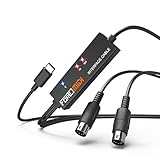
- FORE 1 MIDI in / 1 MIDI out MIDI interface, 16 MIDI input & output channels. Connecting keyboard, MIDI keyboard, synthesizer, electric drum and any device with input & output to iOS Phone/Pad, computer/laptop for recording and editing your track.
- Plug & Play, with a Built-in driver and Intelligent LED Indicator. No extra difficult driver installation. Easy set up, truly plug and play. MIDI converter shows different light indicators & status. Blue is Power, Red is signal transfer & connections.
- No delay MIDI Input and Output. High-performance FTP processing chip, stable and fast speed MIDI data transmission. GarageBand, FL studio12, FL studio20, DirectMusic, CoreMIDI, Cubase, Sonar, MIDI Connections, etc. Supported.
- Conveniently integrated USB and cables. High quality wire with multi-layer protection. Technology of resistance to electromagnetic interference, ensuring the audio transmission rapidly and safely without damage. USB bus-powered, 6.5Ft.
- Designed & Produced by FORE. Compatible with iOS & Android, Windows / Mac OS. You can use the USB A-C Adapter to connect to Type-A or Type-C port. || Attention: "USB A-C Adapter" is not included in the package. ||
midi = wdmaud.drv
midi1 = wdmaud2.drv
Fix common MIDI driver problems
The device appears in Device Manager but not in the DAW
Device Manager detection proves that Windows enumerated the hardware; it does not prove that the DAW is using the correct endpoint. In the DAW’s MIDI or controller preferences, enable the device’s input and output ports and select the correct driver type.
Close and reopen the DAW after connecting or powering on the controller. If it still cannot use the device, test it in another MIDI application. If it works there, the original application may not support that endpoint or may have cached an old port entry.
The device does not appear anywhere
- Disconnect the MIDI device.
- Connect it to another USB port directly on the PC.
- Try a different USB cable, if the cable is removable.
- Remove the hub, dock, or adapter from the connection.
- Power-cycle the MIDI device.
- Test it on another computer.
If it fails on multiple computers with different cables and ports, the problem may be the hardware or its power supply rather than a Windows driver.
A yellow exclamation mark appears
In Device Manager, right-click the device and select Update driver > Search automatically for drivers. A yellow warning icon generally means that Windows detected the hardware but encountered a driver or device-initialization problem. If updating does not help, uninstall the device, restart Windows, and install the manufacturer’s current package if required.
Do these 3 things before closing this tab:
1Scan for outdated or missing drivers - takes under a minute2Repair Windows errors before they cause bigger problems3Fix the driver behind crashes, sound loss and screen glitchesThe controller is powered on after the DAW starts
Some Windows MIDI Services rollout issues have involved controllers not being recognized when powered on after the MIDI application has started. As a workaround, power on and connect the controller first, then launch the DAW.
A manufacturer driver conflicts with the MIDI stack
Do not repeatedly install old driver utilities or registry-cleaning tools. Microsoft documents problems caused by utilities that reorder the midi through midi9 entries. Use the manufacturer’s current Windows-compatible package, and follow its removal instructions only when the manufacturer or Microsoft specifically recommends them.
Confirm that MIDI data is working
A successful driver installation is not the same as successful MIDI communication. After installation:
- Connect and power on the controller before opening the music application.
- Open the DAW’s MIDI, controller, or preferences page.
- Enable the device’s MIDI input.
- Create or select an instrument track.
- Play a key or move a control and verify that the DAW shows incoming MIDI activity.
- For output testing, select the correct MIDI output and use a hardware sound module or software instrument.
If Windows lists the device but the DAW shows no activity, focus on the DAW’s port selection, endpoint compatibility, and cached device configuration rather than immediately downloading another driver.
Quick wins for a faster PC:
Scan for outdated or missing drivers - takes under a minuteDriver Scan →Repair Windows errors before they cause bigger problemsFix Now →Best Value

- Easy to turn your PC into a music studio. Start by connecting an electronic musical instrument to your computer with the provided USB MIDI cable. Within minutes you'll be able to play songs while they are being recorded on your PC. With appropriate software, you can overdub additional instruments, then edit, mix and even print sheet music of your final compositions.
- Easy to install adapter features MIDI in and out cables along with USB PC interface plug | Please Note: Some setups will require both MIDI plugs to be plugged in for use
- MIDI adapter cable supports up to sixteen channels in and sixteen channels out | Adapter features LED power, in and out indicator lights
- Wide Compatibility. Work with Windows XP/Vista/7/8.1/10 and Mac OS. Cable length: 2M (6.5ft). Note: Turn off the keyboard & any other musical instrument. Close the Audio software. Not support Hot-swapping.
- Package Contents: 1x USB to Midi Interface Cable, 1x Instruction Sheet. Attention: For using on iOS devices, Original authentic Camera Connection Kit is needed or it may not work.
FAQ
Do all MIDI keyboards need a driver in Windows 10 or 11?
No. Most class-compliant USB-MIDI keyboards and controllers use Windows’ built-in USB audio class driver and install automatically. A separate manufacturer driver may be required for proprietary functions, special modes, or Bluetooth MIDI.
Where does a MIDI device appear in Device Manager?
It normally appears under Sound, video and game controllers. A device with a failed or missing driver may instead appear under Other devices or show a yellow exclamation mark.
Why does Windows say the best driver is already installed?
Windows may have the newest driver in its catalog, while the manufacturer offers a newer vendor-specific driver on its official support site. Check the exact model, Windows version, and CPU architecture before installing it.
Can I use a generic MIDI driver-updater program?
It is not recommended. Get drivers from Windows Update or the MIDI device manufacturer’s official website. Generic driver sites and registry utilities can install incompatible software or disrupt MIDI configuration.
What is the built-in Windows MIDI driver called?
Class-compliant USB-MIDI hardware traditionally uses Microsoft’s USB audio class driver, Usbaudio.sys. Windows 11 also includes Windows MIDI Services and the newer usbmidi2.sys driver for compatible USB MIDI 2.0 devices.
Why is my MIDI device in Device Manager but missing from my DAW?
Windows detection does not guarantee that the DAW has selected the device’s MIDI endpoint. Enable the correct input and output ports in the DAW, restart it after connecting the device, and test another MIDI application if necessary.
Should I install Windows MIDI Services manually?
No. Windows MIDI Services is built into Windows 11 and is delivered through phased enablement. Do not install preview service builds on a normal retail installation or force the feature with tools such as ViVeTool.
The Bottom Line
Bottom line: Connect a class-compliant USB-MIDI device directly to the PC and check Device Manager before searching for a download. Use Windows Update or Device Manager for ordinary updates, and install a vendor package only when the manufacturer requires it. Bluetooth MIDI and proprietary hardware are common cases where a separate driver may be needed. If the device is visible in Windows but absent from your DAW, troubleshoot the application’s MIDI-port settings rather than assuming the driver is missing.
Sources: Microsoft USB class drivers, Microsoft driver update guidance, Microsoft Device Manager driver guidance, Roland Windows 10/11 instructions, Kawai USB-MIDI guidance, KORG BLE-MIDI instructions, Microsoft Windows MIDI Services announcement, Microsoft Windows MIDI Services rollout issues and workarounds, and Microsoft MIDI releases and tools.
Quick Recap
Product prices and availability are accurate as of the date/time indicated and are subject to change. Any price and availability information displayed on Amazon at the time of purchase will apply.

