
Recommended Free Tools
“Failed to start Light Display Manager” is systemd’s summary that LightDM did not start; it does not identify why. The useful clue is usually an earlier, specific error in the service journal or LightDM’s own logs. Find that error first, then follow the matching branch below rather than applying a generic repair.
Get to a text console and note what changed
If the graphical login is unavailable, switch to a text console using your system’s console key combination and sign in. Record your distribution and version, LightDM version if available, and any recent changes to the graphics driver, desktop, kernel, greeter, or session. These details help select the right distribution-specific instructions; a recent change is a clue, not proof of cause.


Find the first specific error
Read the full systemd status and journal for the failed start. Look above the final “Failed to start” message for the earliest concrete error: the summary can report the outcome without naming the component that failed.
Then inspect LightDM’s own logs and compare their timestamps with the failed start. Ubuntu’s LightDM troubleshooting guidance recommends checking those logs, and its Jammy manual documents a configurable --log-dir option, so the location can depend on the setup. See Ubuntu’s LightDM guidance and the Ubuntu Jammy LightDM manual.
#1 Best Overall
Check the selected display manager and service
Make sure the system is configured to use LightDM and that the appropriate service is enabled using your distribution’s documented method. Service selection differs across distributions, so do not copy another distribution’s enablement or symlink instructions blindly.
Ubuntu
The Ubuntu LightDM service unit checks /etc/X11/default-display-manager for LightDM before launching it. If the system is selecting a different display manager, that check can prevent this unit from starting. Confirm the intended selection and use Ubuntu’s package and service guidance to correct it; do not change the file simply to make the check pass if another display manager is meant to be active. See the Ubuntu LightDM service unit.
Arch Linux
Arch documents lightdm.service and uses display-manager.service as the link for the selected display manager. Check the installed Arch documentation and current link before changing service state. See the ArchWiki LightDM page.
Verify the greeter and session
LightDM needs an available greeter for the login screen and an available session to launch after login. Check that the configured components are installed and that their session definitions are in the directories LightDM uses. The relevant configuration keys include greeter-session and user-session.
Quick wins for a faster PC:
Repair Windows errors before they cause bigger problemsFix Now →Fix the driver behind crashes, sound loss and screen glitchesFind Drivers →Clear out junk files and repair common Windows errorsFree Scan →Rank #3
Use lightdm --show-config to inspect effective settings, then compare the configured greeter, session, and directories with what is installed. The LightDM configuration documentation describes these options; the ArchWiki LightDM guidance discusses startup trouble caused by an unavailable greeter or session.
Follow the log’s failure branch
Use the first specific error to decide what to investigate next. These are distinct failure points, not interchangeable fixes.
Rank #4

- Used Book in Good Condition
- Display-manager selection or service startup: resolve the mismatch between the intended display manager and the service configuration for your distribution.
- Display server or graphics readiness: investigate the driver and whether graphics devices are ready or detected as expected. ArchWiki documents the
logind-check-graphicalsetting for this kind of case. Check the local logs and defaults before changing it; it is not a general-purpose fix. See the ArchWiki LightDM page and LightDM configuration documentation. - Greeter startup: verify the configured greeter is present and inspect its error alongside LightDM’s logs. Ubuntu’s LightDM guidance notes that a greeter failure can make LightDM stop.
- User session startup: verify the intended session is installed and that its definition is discoverable through LightDM’s configured session directories.
Retry and verify the result
After making a change that addresses the observed error, start or restart LightDM using your distribution’s documented method. Check the status and logs again, and confirm that the greeter appears and can launch a usable session. Keep access to the text console in case the graphical login still fails.
If the cause remains unclear, the distribution and version, full service journal around the failed start, and corresponding LightDM logs are the information needed to choose a more specific repair.
Do these 3 things before closing this tab:
1Repair Windows errors before they cause bigger problems2Scan for outdated or missing drivers - takes under a minute3Clear out junk files and repair common Windows errorsQuick Recap
Best Value
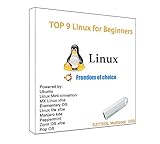
- 1. 9-in-1 Linux:32GB Bootable Linux USB Flash Drive for Ubuntu 24.04 LTS, Linux Mint cinnamon 22, MX Linux xfce 23, Elementary OS 8.0, Linux Lite xfce 7.0, Manjaro kde 24(Replaced by Fedora Workstation 43), Peppermint Debian 32bit (being replaced by MX Linux 32bit) for older PC, Pop OS 22, Zorin OS core xfce 17. The versions you received might be latest than above as we update them to latest/LTS when we think necessary.
- 2. Try or install:Before installing on your PC, you can try them one by one without touching your hard disks.
- 3. Easy to use: These distros are easy to use and built with beginners in mind. Most of them Come with a wide range of pre-bundled software that includes office productivity suite, Web browser, instant messaging, image editing, multimedia, and email. Ensure transition to Linux World without regrets for Windows users.
- 4. Support: Printed user guide on how to boot up and try or install Linux; please contact us for help if you have an issue. Please press "Enter" a couple of times if you see a black screen after selecting a Linux.
- 5. Compatibility: Except for MACs,Chromebooks and ARM-based devices, works with any brand's laptop and desktop PC, legacy BIOS or UEFI booting, Requires enabling USB boot in BIOS/UEFI configuration and disabling Secure Boot is necessary for UEFI boot mode. Packing: The bootable USB drive comes in a colored PET/CPP zipper bag with instructions on how to get started. The box pictured is not included.
Product prices and availability are accurate as of the date/time indicated and are subject to change. Any price and availability information displayed on Amazon at the time of purchase will apply.

