
If your retro game feels delayed on a modern TV, first turn on Game Mode for the HDMI input connected to the console. If that does not help, test the rest of the video chain one component at a time, then consider a dedicated scaler if the TV is struggling with the console’s video signal. No single setting or device guarantees zero delay for every setup.
Why is there a delay when I play games on my TV?
A TV can add delay while processing the picture and sound from a console. Nintendo explains that, in Switch TV Mode, the television processes signals before displaying the image and audio, and says Game Mode or a similar option may shorten that processing time (Nintendo Support). The same general troubleshooting applies to retro consoles, though the exact cause depends on the console, its output signal, any converter or scaler, and the TV.
The delay may also come from elsewhere in the chain. A setting change that improves the response, or a difference between HDMI inputs, can help narrow down where the issue lies. Change one thing at a time so you can tell what made a difference.
Try these TV settings first
Turn on Game Mode
- Open the TV’s settings while viewing the HDMI input used by the console.
- Find the picture or game settings and select Game Mode, or the equivalent low-latency mode.
- Test the same game and input again.
Game Mode reduces processing-related delay according to Nintendo and Roku’s support guidance. The exact menu path and label vary by TV, so consult the manual for your model (Roku Support).
#1 Best Overall
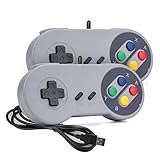
- 【Supported Operating System】The Game Controller is specifically designed for playing classic old school retro snes games on computer or laptop. Compatible with Windows 98 / ME / Vista / 2000/2003 / XP / 7 / 8 / 8.1 / 10/11, Mac OS X/ OS X 10.0 and beyond, Raspberry Pi, Raspberry PI 2 model B,Model A, Raspberry Pi 1 Model B+, Raspberry Pi 2,Raspberry Pi OS, Raspberry Pi 3 Model B+, Raspberry Pi 3, Raspberry Pi Zero.
- 【Simple USB Plug and Play】If your program or application accepts USB controller input, this classic game controller do not need install drivers or patches. 1.5 meter external cable(approx. 5 ft. Long). Notice: Please download the game emulator first before start the games, and then you must manually set the buttons and directionals within the emulator you're using, and the controller not automatically assigns buttons/directional axes. If on the Steam platform, you need to first enable Steam's "Universal Controller Configuration Support" and then restart Steam. After entering the game, you also need to manually bind key positions in the game
- 【High Sensitivity without Delay】Super sensitive buttons for precision control: 6 fire buttons, a 'Start' button and a 'Select' button, motion control cross. Play your favorite old school games with classic retro feel. Fits perfectly in the hand and also perfect for two player action.Note: Not applicable to Switch/PS games. Not Compatible with TV/ TV Box, third Mini Games Box and Tesla Model 3
- 【Supported Game Emulators】The game controller works with most emulators. Download any emulator you wish to download and use from Google and do the same with ROMS. Notice:Third party controller, not original controller. But it works phenomenal with the Raspberry Pi game emulation and so on
- 【Product Service】If you have any problem during use, send message to us and we will help you to solve the problem soon
Check automatic low-latency switching
Some Roku TV models support Auto Low Latency Mode (ALLM), which can switch the TV into Game Mode when a game starts. Check that your particular TV supports ALLM and that the option is enabled; availability is model-dependent (Roku Support).
Review optional picture processing
Consult the TV manual and try disabling optional picture-processing features that are not needed for gameplay. Menu names and available controls differ, so there is no reliable universal list of switches to turn off. Make one change at a time and retest.
Rank #2
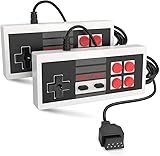
- Easy Plug and play setup.
- Compatible with any game system utilizing a 9 pin sega style connection.
- Excellent playability and response time.
- Sturdy construction and design
- Four Button design improves playability over original style game controllers.
Check the whole console-to-TV signal path
Before buying anything, confirm that the console is connected to the intended TV input and that each cable, converter, or scaler supports the console’s output. If possible, test the console directly on the TV or bypass one intermediary device at a time. A delay that remains after changing TV settings should not automatically be blamed on the TV; another part of the chain may be involved.
- Console and output: Check that the console’s video output and cable are compatible with the device receiving the signal.
- Converter or scaler: If one is in use, check its signal support and settings, including progressive or interlaced handling where relevant.
- TV input and picture mode: Confirm the right HDMI input is selected and that its Game Mode setting is active.
- Extra processing: Retest after changing only one optional setting or device at a time.
When a retro gaming scaler may help
A dedicated scaler is worth considering when a modern TV does not handle a legacy console’s video signal well. It converts and scales the incoming signal, and may offer processing modes tailored to retro video. It is a conditional compatibility option, not a guaranteed fix for delay caused by the game, console, or controller.
Rank #3

- With broad game support, the Logitech Gamepad F310 works with old standbys to today's biggest titles, so it's easy to set up and use with your favorite games.
- Profiler software allows the gamepad to be programmed to perform keyboard and mouse commands for games without gamepad support.* * Requires software installation.
- A familiar control layout that doesn't require a learning curve to be able to use, with all the same buttons as on an Xbox 360.
- The unique floating D-pad rests on four switches-instead of a single pivot point-making it responsive to quick changes in direction.
- The six-foot cord lets you lean back and play a comfortable distance from your PC monitor.
For example, RetroTINK’s experimental 5X firmware describes a 1080p “Min-Lag” mode that “should achieve line-doubler latency (~1 ms)” (RetroTINK 5X Experimental Firmware). That is the manufacturer’s description of a scaler mode, not an independent measurement of delay across a complete console-to-TV setup. Actual results depend on the console, signal, scaler settings and firmware, and display.
Compare the option with your setup
| Option | Best reason to try it | What to check | Latency evidence |
|---|---|---|---|
| TV settings | Start here to reduce delay from TV processing. | Game Mode availability, optional processing controls, and the input-specific settings. | Nintendo and Roku describe Game Mode as a way to reduce processing-related lag; results vary by TV. |
| Dedicated scaler | Consider it if the TV handles the retro console’s signal poorly. | Console output and cable compatibility, progressive or interlaced signal handling, output resolution, and image-processing options. | RetroTINK’s experimental firmware describes a Min-Lag mode, but that is not an end-to-end measurement for every setup. |
Choose hardware based on the signal problem you are trying to solve and evidence for the complete display chain, rather than assuming that a particular scaler is universally fastest. A scaler cannot correct delay intrinsic to a game, console, or controller.
Rank #4
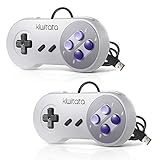
- ✅【Compatibility】Compatible with Raspberry Pi, Windows PC, Linux ,Mac. Specifically designed for playing classic old school retro snes games on computer or laptop.This is the USB controller what has a USB plug for PC, NOT compatible for Original SNES super Nintendo console
- ✅ 【Ergonomic Design】Super precise cross key and function buttons,the cross direction key adopts frosted concave design,anti-sweat and anti-slip.The shape of the controller is designed to fit the contour of your hands,easy and comfortable to hold.
- ✅ 【Advanced Game Experience】PC running operating system:Windows 98/2000/ ME/XP/Vista/Win7/8/8.1/11 or later,or Mac running OS X 10.0/Mac OS X or above.It works with most of emulators you wish to download and use,such as VirtuaNES(PC),sens9x,Zsens,sensgt,Uosnesw,RetroArch,OpenEmu(MAC),NESEmu and Jnes etc.
- ✅ 【Wired USB Connection】Standard USB 2.0 port with a 1.5 meters (5ft) cable, don't need to install any drivers, you must manually set the buttons and directionals within the emulator you're using, and the controller not automatically assigns buttons/directional axes. Notice: please download the game emulator first before start the games, you can download the emulator “VirtuaNES” on PC and “OpenEmu”on MAC.
- ✅【Satisfaction】Third party controller(USB Version), not for original snes console and not support for switch. If there is an incompatibility on MAC or Raspberry Pi , please contact the seller for a support.
A practical order for troubleshooting
- Enable Game Mode on the TV input connected to the console.
- If supported, check whether ALLM is enabled and switches the TV into Game Mode.
- Consult the TV manual and test disabling optional processing that is unnecessary for gameplay.
- Verify the console’s cable, output, intermediary devices, and selected TV input.
- If the TV is not handling the legacy signal well, compare compatible scaler options and their signal handling and latency evidence.
Retro Games Support also recommends checking TV settings when resolving lag (Retro Games Support). For RetroArch, Libretro’s TV documentation discusses display behavior in that software context; it should not be treated as evidence about every original-console setup (Libretro Documentation).
Quick Recap
Best Value

- Wired Controller, USB cable: 1.8M.
- Compatible with Switch (version 3.0.0 or above), Windows, Raspberry Pi devices.
- Rumble vibration.
- Support turbo function.
Product prices and availability are accurate as of the date/time indicated and are subject to change. Any price and availability information displayed on Amazon at the time of purchase will apply.

