
Free tools Windows power users keep installed
One-click scans. No signup required.
If your Linux laptop slows or becomes unresponsive as RAM and swap fill, memory pressure is a strong possibility—but it is not proof that the RAM is faulty. First identify what is consuming memory and look for pressure or out-of-memory (OOM) evidence. Then reduce the workload or adjust the system’s existing swap and early-OOM setup, one change at a time. If freezes do not track memory use, investigate graphics, storage, kernel, thermal, power, or hardware problems instead.
Why does my Linux laptop freeze when memory runs low?
Linux can become severely sluggish before the kernel kills a process. Under memory pressure, the system may spend so much time reclaiming pages or moving them to and from swap that the desktop appears frozen. A process may eventually be killed by the kernel’s OOM handling, but the absence of a kill does not rule out pressure.
Memory shown as “used” is not enough to diagnose a problem: Linux also uses RAM for caches. Look for a pattern—RAM and swap filling, persistent delays, a memory-heavy workload, or OOM messages—rather than treating one snapshot as proof. If the freeze happens regardless of memory use, keep other causes in view.
How can I tell what is using all my RAM?
Take a snapshot while the laptop is still usable
Open a terminal and run:
free -h
swapon --show
ps aux --sort=-%mem | head
free -h summarizes memory and swap; swapon --show lists active swap devices; the final command sorts processes by memory use. These are a quick snapshot, not a diagnosis on their own. If a browser, IDE, virtual machine, container, or another workload repeatedly appears near the top while pressure rises, reduce that workload or investigate whether it is leaking memory before changing system-wide settings.
Outdated Drivers Are Slowing You Down
One free scan finds every outdated or missing driver and matches the right update for your exact hardware.Free scan · exact hardware matchWindows Errors? Fix Them Before They Spread
Repair common Windows errors and clear accumulated junk for a smoother, more stable PC - no reinstall needed.Free scan · no reinstall#1 Best Overall

- [Specs] DDR3L / DDR3 1600MHz PC3L-12800 / PC3-12800 204-Pin Unbuffered Non ECC 1.35V CL11 Dual Rank 2Rx8 based 512x8
- [Size] Module Size: 16GB KIT(2x8GB Modules) Package: 2x8GB
- [Voltage] JEDEC standard 1.35V, this is a dual voltage piece and can operate at 1.35V or 1.5V
- [Compatibility] Compatible with DDR3 Laptop / Notebook PC, Mini PC, All in one Device
- [Color] PCB Color is green
If the desktop is stuck
If the kernel is still responding, try Ctrl+Alt+F3 to switch to a text console. This does not work on every graphics setup or during a hard lockup. If the laptop recovers, save open work and collect logs as soon as practical; rebooting may clear evidence that was only available for the current session.
How do I check for OOM events?
Inspect kernel messages
After recovery, check kernel messages for the current boot:
journalctl -b -k | grep -Ei 'out of memory|oom|killed process'The kernel’s OOM task dump can include process details such as PID, memory size, resident memory (RSS), swap use, and OOM score. These can help show which task was involved. If the problem occurred before a reboot, use the appropriate previous-boot journal selection supported by your system; journal retention and boot numbering vary by distribution.
Rank #2
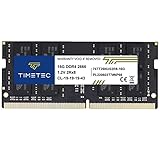
- Capacity – Single Module 16GB Speed up to 2666MHz Non-ECC Unbuffered 260-Pin 1.2V SODIMM.
- Specs – PCB Color (Green or Black) and Rank (1Rx8 or 2Rx8) may vary depending on production batch. Performance and quality remain consistent across all Timetec products.
- Compatibility – Designed for selected DDR4 Laptop, Notebook, Mini PCs, and All-In-One systems(AIO) that support 260-Pin SODIMM memory. NOT compatible with Desktop DIMM slots.
- Installation – Plug-and-Play Upgrade, Quick and Easy to Install, no expertise required (please refer to your system's manual for guidelines).
- Warranty – All Timetec products are high-quality and rigorously tested to meet stringent standards. Backed by Timetec Limited Lifetime Warranty and professional technical support based in the United States.
Check systemd-oomd, if available
On a system that uses systemd-oomd, inspect its service, logs, and monitored cgroups:
systemctl status systemd-oomd
journalctl -b -u systemd-oomd
oomctl
Not every Linux distribution installs or enables this service, and a running service does not necessarily mean the affected workload is monitored. oomctl can show monitored cgroups and pressure. No matching log is not proof that memory was fine: logs may be unavailable or retained in another boot, and the freeze may have a different cause.
How do I stop Linux freezing when RAM is full?
Reduce the pressure-driving workload first
Close or limit the application that coincides with the pressure: for example, reduce browser tabs, lower a virtual machine’s memory allocation, or run fewer heavy applications at once. If one application repeatedly grows unusually large, update it or investigate a reproducible memory leak. These steps are easier to reverse and evaluate than a bundle of kernel tuning changes.
Rank #3

- ✅【DDR3 8GB 1333MHz SODIMM RAM 】PC3-10600, DDR3 1333MHz, Unbuffered Dual Rank Non-ECC 1.5V CL9 memoria ram, apply for AMD, Intel, Mac system
- ✅【Advanced Chips】All DDR3 8GB ram are from high quality ram memory module. Professional company, high-quality materials, more guaranteed product quality
- ✅【Stable and Durable】8GB DDR3-1333MHz Sodimm, 100% tested for stability, durability and compatibility. We test all rams before shipment to ensure this PC3-10600 ram works stably and normally
- ✅【Increases System Performance】PC3 8GB ram will speed up loading times, improve system responsiveness, and increase your system's ability to handle greater workloads. Warm tips: Please make sure your laptop model meets 2x4GB 1333 10600 kit, you can also contact us to make sure
- ✅【Lifetime Service】Lifetime warranty, free technical support. You can also contact us to ensure compatibility. Any questions, feel free to contact us, we are always be with you
Identify the existing swap arrangement before changing it
Use swapon --show and your distribution’s documentation to determine whether the laptop already uses a swap partition, swap file, zram, zswap, or a combination. Do not add another swap mechanism without checking distribution defaults and generators. For disk-backed swap, preserve adequate free disk space and use the distribution’s supported method to make configuration persist across reboots.
Understand what swap can—and cannot—do
Swap gives Linux another backing place for inactive memory pages, which can help the system manage pressure. It is not a guarantee of a responsive desktop: if active pages must repeatedly be read from slow storage, the laptop can remain badly delayed.
The Tool Desk
Outbyte PC Repair FREEClear out junk files and repair common Windows errorsFree Scan →Outbyte Driver Updater FREEFix the driver behind crashes, sound loss and screen glitchesFind Drivers →Swap is also relevant to early OOM handling. The systemd-oomd documentation recommends having swap enabled so the system has time to swap and the service can react; without it, pressure can become abrupt and livelock may arrive sooner. The service documentation states, “It is highly recommended for the system to have swap enabled for systemd-oomd to function optimally.” This recommendation does not specify a universal swap type or size. Ubuntu Manpages’ systemd-oomd documentation (Resolute 26.04, package version 259.5-0ubuntu3.4) describes the recommendation and service behavior.
Rank #4

- SPEED UP COMPUTER: The SSD 512GB SATA achieves blazing read and write speeds of 500MB/s, facilitating rapid file and data transfers
- UPGRADE YOUR COMPUTER: Compared to HDDs, the 512GB SATA SSD boots up at least 50% faster, enabling instant productivity or gaming sessions
- LONG-LASTING DURABILITY: The 2.5 SSD 512GB incorporates 3D NAND TLC chips, offering a longer lifespan in writes compared to QLC, ensuring a more reliable data storage solution
- EXTENSIVE COMPATIBILITY: The S101 512GB internal SSD drive is compatible with desktops, laptops, all-in-one PCs, supporting various operating systems like Windows, Linux, and Mac OS, meeting the needs of diverse devices
- Quality Assurance: fanxiang S101 512GB SSD comes with a 3-year quality assurance, providing lasting protection and confidence for your purchase
Consider zram as a different kind of swap
zram creates RAM-backed block devices that store pages in compressed form. Because pages are compressed in memory, it can provide more effective capacity for compressible data than keeping those pages uncompressed in RAM. It still consumes physical memory, and the benefit depends on how well the workload compresses. The Linux kernel’s zram documentation says there is little point making a device larger than twice physical memory under its expected 2:1 compression ratio; that is documentation guidance, not a sizing prescription for every laptop. A very large device that is rarely used can waste resources.
Would adding swap stop my laptop from freezing?
It may help the system tolerate pressure or give systemd-oomd more time to respond, but it may not prevent slowdowns when active memory is constantly swapped to disk. First check whether swap already exists and whether the workload is driving sustained pressure. Choose a setup using your distribution’s supported configuration, available disk space, workload, and any existing zram or zswap arrangement—not a generic size copied from another laptop.
These options solve different problems and have different trade-offs:
Quick wins for a faster PC:
Scan for outdated or missing drivers - takes under a minuteDriver Scan →Clear out junk files and repair common Windows errorsFree Scan →Best Value

- SPEED UP YOUR COMPUTER: 128GB SATA SSD provides up to 500MB/s sequential read and 350MB/s sequential write speeds, enabling ultra‑fast file and data transfers.
- UPGRADE YOUR COMPUTER: Compared to HDDs, the 128GB SATA SSD boots up at least 50% faster, enabling instant productivity or gaming sessions
- LONG-LASTING DURABILITY: The 2.5 SSD 128GB incorporates 3D NAND TLC chips, offering a longer lifespan in writes compared to QLC, ensuring a more reliable data storage solution
- EXTENSIVE COMPATIBILITY: The S101 128GB internal SSD drive is compatible with desktops, laptops, all-in-one PCs, supporting various operating systems like Windows, Linux, and Mac OS, meeting the needs of diverse devices
- Quality Assurance: fanxiang S101 128GB SSD comes with a 3-year quality assurance, providing lasting protection and confidence for your purchase
| Option | What it addresses | Resource and compatibility considerations | Main risk or limitation |
|---|---|---|---|
| Reduce or investigate the workload | Reduces demand or targets a process that is growing unusually large. | Usually avoids new system-wide configuration; identify the application involved. | Closing work can lose unsaved changes; reducing workload may be a workaround rather than fixing a leak. |
| Disk-backed swap | Provides backing for inactive pages and can help avoid an abrupt shortage. | Uses disk I/O and needs free disk space; configure through the distribution’s supported method. | Heavy swapping can make the laptop very slow and does not add physical RAM. |
| zram | Uses compression to increase effective capacity for compressible pages. | Uses physical RAM; benefits depend on workload compression and distribution/kernel setup. | Consumes RAM and may offer less benefit for poorly compressible workloads. |
| systemd-oomd | Can terminate an eligible cgroup before kernel-space OOM to help preserve responsiveness. | Requires systemd, unified cgroups v2, memory accounting for monitored units, and kernel PSI support; inspect actual monitoring with oomctl. |
Uses SIGKILL when configured thresholds are exceeded, so unsaved work can be lost; it is not a universal default. |
| RAM upgrade | Increases physical memory capacity. | Depends on the exact laptop model, compatible memory, available slots, and whether memory is upgradeable. | Some laptops have soldered or otherwise non-upgradeable RAM; confirm model-specific support before buying. |
Should I enable systemd-oomd?
Consider it only after checking that the distribution provides it and the laptop meets its requirements. According to the Ubuntu systemd-oomd service documentation, it relies on a full unified cgroups-v2 hierarchy, memory accounting for monitored units, and Pressure Stall Information (PSI) support in the kernel; the manpage notes PSI is available from Linux 4.20 onward. Swap is strongly recommended for a timely response.
systemd-oomd is an early userspace response, not a universal Linux default. When configured thresholds are exceeded, it can send SIGKILL to an eligible process cgroup, potentially terminating several processes and losing unsaved application work. Check what is actually monitored with oomctl; do not assume the service’s presence means a particular application is covered. Newer systemd versions document a dry-run mode, but its availability depends on the installed version.
Do not copy old Fedora threshold examples as generic defaults. The Fedora Project proposal concerns Fedora 34 and was last updated 2021-03-30. Check the current configuration and defaults for the distribution and release installed on your laptop.
Should I change swappiness or other kernel settings?
Do not treat a particular swappiness value as a universal fix. The Linux kernel’s virtual-memory documentation describes swappiness as an approximate relative I/O cost of swap versus filesystem paging. It documents a default of 60, says the right value depends on workload, and notes that values above 100 may be considered for in-memory swap such as zram. Those are kernel-documentation values, not a recommendation to change every laptop. A change can trade one kind of I/O for another; test one reversible adjustment at a time and observe the workload.
Do these 3 things before closing this tab:
1Clear out junk files and repair common Windows errors2Fix the driver behind crashes, sound loss and screen glitches3Repair Windows errors before they cause bigger problemsAvoid setting vfs_cache_pressure to zero or applying copied bundles of sysctl tweaks. Kernel documentation warns that zero prevents reclaiming dentries and inodes under memory pressure and can easily lead to OOM. If you adjust a setting, record the original value, make one change, and know how to restore it.
What if the freezes are not caused by memory pressure?
If measurements and logs do not show pressure—or freezing continues after the memory-heavy workload stops—widen the diagnosis rather than continuing to tune swap. Possible branches include kernel or graphics-driver faults, failing storage, thermal throttling, power problems, or faulty RAM. Check your distribution’s logs and use hardware diagnostics supported for your laptop model. Without the model and symptoms, there is no single hardware test or component that can be identified as the cause.
Quick Recap
Product prices and availability are accurate as of the date/time indicated and are subject to change. Any price and availability information displayed on Amazon at the time of purchase will apply.

