
Outdated Drivers Are Slowing You Down
One free scan finds every outdated or missing driver and matches the right update for your exact hardware.Free scan · exact hardware matchPC Slower Than It Used to Be?
A free scan shows the junk files, broken settings and background clutter dragging Windows down - then fixes them in one click.Free scan · Windows 10 & 11Evaluate an automated license plate reader (ALPR) system against the law that applies to the specific agency and records—not against a presumed nationwide standard. Start by identifying who operates the cameras or database, who can query it, what data and access logs are kept, who receives information, how long it is retained, and how oversight and error correction work. Then compare the agency’s public policy with contracts, system settings, and records of actual practice. California offers useful statutory and policy examples, but its rules do not automatically apply elsewhere.
Start with the agency, system, and applicable jurisdiction
“License plate reader” can describe cameras that capture plate images, a database of observations, software for searching those observations, or a shared service that connects several agencies. An agency may operate the cameras or database, use a system operated by another entity, or do both. Those roles can affect its responsibilities and what records it holds.
Before judging compliance, identify the state and local agency, its role, and the exact system in scope. Find out which vendor or public entities provide, host, administer, or receive information. Ask for the system description, contract, applicable usage and privacy policy, and data-flow documentation. A vendor’s product description alone does not establish what the agency collects, how its users search it, or where data goes.
Rules for retention and public-records disclosure depend on jurisdiction, record type, and applicable exceptions. The examples below are California-specific where noted; they are not a legal conclusion about an unnamed agency or a national rule.
The Tool Desk
Outbyte Driver Updater FREEScan for outdated or missing drivers - takes under a minuteDriver Scan →Outbyte PC Repair FREEClear out junk files and repair common Windows errorsFree Scan →#1 Best Overall
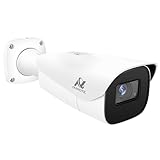
- Compatibility-- Only Work With ONWOTE TD Series NVR (PNT-808, PNA-8016-T, PNT-1232).
- LPR-- License Plate Recognition IP Network PoE Camera.
- 4MP Resolution-- 2592×1520 @30fps for sharp and fluid video.
- 1/1.8" Low-Light Image Sensor-- Ensuring clear images even in dim conditions.
- 8-32mm Motorized Varifocal Lens @F1.6 for adjustable field of view.
What data does the system collect and keep?
Ask the agency to describe each category of information the system collects, generates, stores, or exports, and how those records relate to one another. Request the information in system documentation or policy rather than inferring it from the label “ALPR.” The available California sources do not establish one universal data schema or a cross-system accuracy rate.
- Captured information: What does a camera record, and what information is associated with an observation? Clarify whether the scope includes plate images, recognized plate text, and any other linked information, rather than assuming.
- Search and access records: Does the system log searches, user identity and affiliation, timestamp, query data, and purpose? California SB 34 specifies access-record elements that include date and time, the queried plate or other query data, user name and affiliation where applicable, and purpose.
- Exports and shared records: Can users download, forward, or query information through another agency’s system? Identify what is transferred and whether transfer or onward access is logged.
- Evidence and derived records: Ask whether information copied into investigative files, reports, or other records follows a different retention or disclosure process from the system’s original data.
Distinguish what the policy authorizes from what the agency actually configured and used. Where access is permitted, compare the policy with system descriptions, permissions, training records, sample logs, and audit findings.
Do authorized purposes and user controls have practical limits?
A policy should say what uses are allowed, which staff may access the system, what training they need, how use is monitored, and who is responsible for the system. California SB 34 requires a public usage and privacy policy that addresses authorized purposes, authorized staff and training, monitoring, sharing, the responsible custodian, accuracy and correction, retention, and destruction. Those are California requirements, not a universal checklist imposed by the same law elsewhere.
For any jurisdiction, test whether the policy describes concrete processes rather than broad assurances. Ask how a user is approved, how access is removed when a role changes, what a user must provide to search, and what happens when a search falls outside an approved purpose. Check whether the recorded purpose can be reviewed later and whether exceptions lead to investigation or corrective action.
Recommended Free Tools
California’s State Auditor recommended search audits as a way to help address misuse. Treat that as an oversight measure to examine, not evidence that every agency conducts such audits. Ask who reviews searches, what triggers a review, and how findings and remediation are documented.
How are security and vendor access governed?
Security assessment should cover organizational responsibilities as well as technology. California SB 34 requires reasonable operational, administrative, technical, and physical safeguards against unauthorized access, destruction, use, modification, or disclosure of ALPR information. The statute names safeguard categories; it does not, in the cited material, mandate every individual implementation listed below.
Rank #2

- LICENSE PLATE RECOGNITION CAMERA - Features 8mm - 32mm lens for an 15° - 40° Viewing Angle. F1.6 Max Aperture, 1/1.8" 4-Megapixel CMOS Image Sensor and License Plate Recognition Distance 26.25ft - 98.43ft. Supports recognizing vehicle type, vehicle color, and license plate details. Supports IVS, Tripwire & Intrusion as well as displaying vehicle plate, vehicle path & loitering detection.
- SMARTER SECURITY – Query and review license plate details professionally on a PC using a web browser. Works with most standard web browsers however for an optimal experience it is recommended to use Microsoft Edge in IE mode as the camera may require the use of a .exe plugin. Supports storage to a MicroSD Card (up to 256GB), PC/Windows only supports SFTP, IE mode in Microsoft Edge, Firefox, Chrome (limited query options).
- ACTIVE DETERRENTS – This outdoor POE IP LPR camera features a heavy-duty metal weatherproof IP67 housing as well as 4 IR LEDs for night vision up to 98 feet, includes red/blue warning LEDs which can be used as an active deterrent. Dual H.265/H.264 compression allows for maximum encryption with the latest technology as well as backwards compatibility with legacy platforms.
- SIMPLE, RELIABLE, SECURE – This Amcrest POE camera features a secure connection. At Amcrest, we want to ensure the safety of our customers, their loved ones, homes and businesses. Compatible with the following Amcrest AI NVR's for live view purposes only: B0C381YK91, B0CDHDHPR8, B0CBL8W9NY, B0D464HMBB, B0D47X8WJJ
Use these questions to make the categories concrete:
- Identity and permissions: Who approves accounts? Are permissions matched to job duties, and how quickly are accounts disabled when access is no longer needed?
- Authentication and monitoring: How are users authenticated? Are access events logged and reviewed, including remote or shared-system access?
- Data protection and recovery: What protections apply in storage and transfer? How are backups managed, and how is information securely disposed of?
- Vendor involvement: Can vendor personnel access live data, stored information, or logs? Under what authorization, for what purpose, and with what record of that access?
- Incident response: Who investigates suspected unauthorized use or disclosure, and how are affected records and remedial steps handled?
Request policies or contract terms that answer these questions, then compare them with access controls, audit evidence, and the agency’s described process. A promise of “secure” handling is not a substitute for knowing who can access the information and how that access is controlled.
How long is ALPR data retained?
Do not assume there is one standard retention period for systems with the ALPR label. The California State Auditor’s 2019 report said that, with exceptions, state law did not set a specific period for ALPR images collected, accessed, or used by public agencies. That finding is limited to the California context described in the report; it does not establish the rules for another state or every type of record.
Ask for the agency’s retention schedule and compare it with system settings and evidence of deletion. California SB 34 requires the policy to describe retention and the destruction process. Check whether separate rules apply when data becomes evidence, is subject to a legal hold, or falls under another records schedule. Ask how those exceptions are documented and when the ordinary deletion process resumes, if applicable.
A policy that states a period is not by itself evidence that deletion occurs as scheduled. Look for configuration records, deletion logs, or other evidence the agency can lawfully provide. Also ask whether exported copies, backups, and records held by recipients follow the same schedule or a different one.
Who can receive or share information?
Map information flows beyond the agency’s own users. Identify recipient agencies, vendors, access mechanisms, purposes, approval steps, transfer logs, and limits on onward disclosure. Treat private vendor access and law-enforcement network sharing as separate questions: one does not answer the other.
Rank #3

- 𝐄𝐧𝐡𝐚𝐧𝐜𝐞𝐝 𝐃𝐮𝐚𝐥-𝐂𝐚𝐦𝐞𝐫𝐚 𝐂𝐥𝐚𝐫𝐢𝐭𝐲 𝐚𝐭 𝐔𝐩 𝐭𝐨 𝟒𝟎 𝐟𝐭 (𝟏𝟐 𝐦): Capture every event around your home in ultra-clear 3K resolution. Enjoy sharp, detailed visuals with 8× zoom to see what matters most.
- 𝐒𝐨𝐥𝐚𝐫-𝐏𝐨𝐰𝐞𝐫𝐞𝐝, 𝐈𝐧𝐬𝐭𝐚𝐥𝐥 𝐎𝐧𝐜𝐞 𝐚𝐧𝐝 𝐢𝐭 𝐑𝐮𝐧𝐬 𝐅𝐨𝐫𝐞𝐯𝐞𝐫: Experience constant peace of mind with this solar-powered security camera that's easy to set up and always on, thanks to its removable solar panel.
- 𝟑𝟔𝟎° 𝐆𝐮𝐚𝐫𝐝𝐢𝐚𝐧, 𝐍𝐨 𝐁𝐥𝐢𝐧𝐝 𝐒𝐩𝐨𝐭𝐬: Say goodbye to blind spots with full home coverage by installing the product vertically. Enjoy 360° Pan & Tilt Surveillance , check your front porch, monitor your backyard, and keep an eye on the driveway with ease.
- 𝐕𝐞𝐫𝐬𝐚𝐭𝐢𝐥𝐞 𝐈𝐧𝐬𝐭𝐚𝐥𝐥𝐚𝐭𝐢𝐨𝐧, 𝐄𝐟𝐟𝐨𝐫𝐭𝐥𝐞𝐬𝐬 𝐒𝐞𝐭𝐮𝐩: Experience the convenience of a 7-minute installation with its compact size and wire-free design.
- 𝐑𝐞𝐬𝐭 𝐚𝐬𝐬𝐮𝐫𝐞𝐝 𝐬𝐞𝐫𝐯𝐢𝐜𝐞: you can enjoy a worry-free experience, all backed by our professional customer service team.
California DOJ’s 2023 ALPR Data Guidance discusses California-specific constraints. The Northern California Regional Intelligence Center’s 2024 policy provides a separate example: it says the originating agency retains ownership and control as record custodian and describes limits on sharing. Neither source establishes a rule for every California agency or any other jurisdiction.
California DOJ announced in October 2025 that it had filed suit against El Cajon over alleged sharing with out-of-state agencies. That is a report of allegations and litigation, not proof of a final adjudicated violation. It illustrates why a reviewer should ask for the actual policy, recipient list, approvals, and transfer records rather than treating a reported allegation as a compliance finding.
Does the public policy mean the underlying records are public?
No. California SB 34 requires a publicly available usage and privacy policy, but that requirement does not establish that every raw observation, query, or investigative record must be disclosed. California DOJ’s 2023 ALPR policy says responses to public-records requests or compulsory process consider applicable privileges and exemptions. Disclosure must therefore be assessed by record and under the rules that apply to the agency.
For a records request, identify the agency, date range, record type, and applicable public-records law. Ask for specific records such as the current policy, contract, retention schedule, audit procedures, or access logs, while recognizing that exemptions may apply to some or all of a requested record. A policy’s public availability and access to operational records are distinct questions. Other jurisdictions may reach different results.
How to compare agencies or systems
Use the same questions for each agency, but label which answers are legal requirements in that jurisdiction and which are evaluation criteria. The table separates California examples established in the sources from practical review questions; it is not a statement that every listed control is required by California law.
| Area | What to compare | California example or qualification |
|---|---|---|
| Collection and deployment | Camera scope, system components, information collected, and which entity operates or hosts each component. | The cited California sources do not establish a single collection configuration for all agencies. |
| Purpose and users | Permitted purposes, user roles, training, approval workflow, and response to unauthorized searches. | SB 34 requires California operators’ public policies to address authorized purposes, authorized staff and training, and monitoring. |
| Access accountability | Log fields, coverage of local and remote users, log retention, review frequency, and documented follow-up. | SB 34 specifies access-record elements; California’s State Auditor recommended search audits. |
| Security | Account management, authentication, protections for data, vendor access, incident response, backups, and disposal. | SB 34 requires reasonable operational, administrative, technical, and physical safeguards; it does not specify each technical control in this table. |
| Retention and deletion | Written schedule, system settings, deletion evidence, exceptions, exported copies, and legal holds. | The State Auditor reported no specific state-law period for most public-agency ALPR images, subject to exceptions; SB 34 requires policies to address retention and destruction. |
| Sharing and recipients | Recipients, purposes, approvals, transfer logs, onward-sharing limits, and vendor access. | California DOJ guidance and the NCRIC policy provide California-specific examples, not a nationwide rule. |
| Accuracy and correction | How suspected errors are reported, reviewed, corrected, and communicated to recipients. | SB 34 requires California policies to address accuracy and correction. |
| Transparency and disclosure | Public policy access, request instructions, record categories, and how exemptions are assessed. | A required public policy does not make every underlying record disclosable; California DOJ identifies applicable privileges and exemptions as relevant. |
| Independent oversight | Who audits, what data and sharing are covered, how findings are reported, and whether remediation is tracked. | California DOJ’s own 2023 policy calls for annual audits of access, use, and sharing. This is an agency-policy example, not a universal statutory schedule. |
A practical records and policy review sequence
- Define the target: Name the agency, jurisdiction, system, relevant date range, and whether it operates the system, accesses another system, or both.
- Obtain the governing documents: Request the current usage and privacy policy, system description, contract, retention schedule, and data-flow or sharing documentation.
- Trace a search: Determine who may search, what approval or purpose is recorded, which fields appear in the access log, and who checks those logs.
- Trace data through its lifecycle: Follow collection, storage, access, sharing, export, retention, deletion, and any evidence or legal-hold exception.
- Check oversight evidence: Ask for audit procedures and findings that can lawfully be disclosed, along with documentation of corrective action.
- Make a focused records request: Specify record types and dates, and assess any denial or redaction under the applicable jurisdiction’s rules rather than assuming the policy itself settles disclosure.
California’s examples show why these steps should be tied to the specific agency. In October 2023, Attorney General Rob Bonta said, “As technology that helps us protect the public continues to advance, it is important that we put in place safeguards to ensure that this technology is used appropriately and lawfully.” This is Bonta’s policy statement, not an independent finding about any particular system. A later department policy also shows how narrowly policies can be framed: CDTFA’s posted ALPR policy states an effective date of September 2026 and limits use to legally authorized tax and fee administration functions. That policy applies to CDTFA, not as a general retention or disclosure rule.
What supports a credible evaluation?
A useful assessment distinguishes legal requirements from good review questions, written commitments from system behavior, and allegations from established findings. No cross-system performance or privacy statistic is established by the cited material, so do not infer scan volumes, error rates, or accuracy percentages from it. For a legal compliance conclusion, identify the agency’s role and consult current statutes, regulations, court decisions, retention schedules, public-records exemptions, procurement terms, and the agency’s current policy.
Quick Recap
Product prices and availability are accurate as of the date/time indicated and are subject to change. Any price and availability information displayed on Amazon at the time of purchase will apply.

