
Free tools Windows power users keep installed
One-click scans. No signup required.
After a refinery stock rallies, the key question is whether its new price assumes earnings that can last—or margins that may fade. Start by separating the share-price move from the refining cycle: compare the company’s realized results with relevant regional crack-spread benchmarks, then test its earnings and cash flow under less favorable operating conditions. A benchmark or strong quarter alone cannot establish fair value.
What a crack spread tells you—and what it does not
A crack spread is the difference between benchmark prices for refined products and the cost of crude oil. Investors use it as a proxy for refining margins, but it is not the margin a particular company actually earns. Refineries process different crude slates, produce different product yields, and face different transportation, operating, and distribution costs. Regional price differences and the timing of crude purchases and product sales also affect results. Marathon Petroleum’s 2025 annual report discusses regional benchmarks and refining-margin drivers; CVR Energy’s 2025 Form 10-K describes spread economics and commodity risks.
| # | Preview | Product | Price | |
|---|---|---|---|---|
| 1 |

|
The Oil & Gas Business: A Complete Guide to Gas and Oil Investing | $17.34 | Buy on Amazon |
| 2 |
|
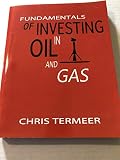
Fundamentals of Investing in Oil and Gas | $24.99 | Buy on Amazon |
| 3 |

|
Investing in Oil and Gas Wells | $12.99 | Buy on Amazon |
| 4 |
|
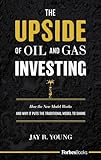
The Upside Of Oil and Gas Investing: How The New Model Works And Why It Puts The Traditional Model... | $9.99 | Buy on Amazon |
| 5 |

|
Oil 101 | $29.95 | Buy on Amazon |
Match the benchmark to the company’s refineries and the crude and products they handle. PBF Energy says it compares each refinery’s margin—revenue less materials cost—with a specific benchmark based on crack spreads. That is the company’s description of its own method, not a universal valuation standard. PBF Energy’s 2025 Form 10-K also discusses regional margins and operating factors.
Work out what the rally may already assume
Define the price move before interpreting it: note the start and end dates, percentage change, and any relevant events or reporting periods. Then gather the company’s current market capitalization or enterprise value, latest reported results, management guidance, and available estimates. Compare valuation with earnings and cash flow across multiple years and through different margin conditions; annualizing a peak quarter can make temporary conditions look permanent.
Do these 3 things before closing this tab:
1Clear out junk files and repair common Windows errors2Scan for outdated or missing drivers - takes under a minute3Repair Windows errors before they cause bigger problems#1 Best Overall
There is no universal refinery-stock multiple or fair-value rule established by the company filings cited here. A stock-specific assessment requires current market data and company financials. Without a named security and those inputs, it is not possible to determine whether its rally is justified or estimate its expected return.
Compare realized results with the right benchmarks
Review several reporting periods rather than relying on one quarter. For each period, compare the company’s reported refining margin with the relevant regional benchmark, and check whether the two moved together. Read management’s explanation for any gap: feedstock differentials, product premiums or discounts, transportation, production fuel, inventory changes, and purchase or sale timing can all affect realized results.
Also track throughput, utilization, product yields, operating costs, and distribution results. A refiner may benefit from running more barrels or obtaining a favorable crude differential even when the headline benchmark is unchanged; those gains may have different durability from a broad improvement in product-versus-crude spreads.
Separate market tailwinds from company execution
Break the earnings change into operating drivers. Ask whether stronger results came mainly from wider benchmark spreads, better crude differentials, higher throughput, lower costs, or changes in other business segments. Then judge whether each driver is likely to persist, using the company’s disclosures rather than assuming that a favorable quarter repeats.
Rank #3
- Used Book in Good Condition
PBF’s 2025 filing offers a dated illustration, not a forecast: its East Coast Dated Brent (NYH) 2-1-1 industry crack-spread benchmark averaged $22.59 per barrel in 2025, compared with $18.24 per barrel in 2024. Those are benchmark averages—not PBF’s realized margin, an industry-wide average, or a forward estimate. The filing also discusses refinery-specific crude differential effects, underscoring why a benchmark change does not explain a company’s full result. See PBF Energy’s 2025 Form 10-K.
Stress-test earnings and financial resilience
Estimate how the business might perform if margins weaken, then consider operating problems that could compound the pressure. Refining results can be affected by commodity-price volatility, seasonal demand, lower utilization, unplanned outages, scheduled maintenance, inventory effects, and compliance costs. PBF’s 2025 Form 10-K describes margin volatility and factors beyond management’s control; Delek US Holdings’ 2025 Form 10-K discusses commodity, timing, and renewable identification number risks.
Use explicit scenarios rather than a single point estimate. For example, compare the latest operating picture with a less favorable margin case and a further downside case that also includes lower utilization, an outage, or higher energy and logistics costs. For each, consider the effects on cash generation and the company’s ability to meet debt maturities, fund capital expenditures, and sustain shareholder distributions. Current filings are necessary to assess those company-specific obligations; the risks listed above do not imply a universal balance-sheet threshold.
Independent reader supportYour contribution helps us test, update, and keep practical guides available for everyone.Check hedges and regulatory exposure
Read the latest filing’s market-risk and regulatory sections. Identify which commodities, volumes, and periods the company hedges, and which exposures remain—such as regional differentials or operating disruptions. Hedging can moderate selected price risks, but it does not insulate a refiner from every change in crude, product, or compliance economics. CVR and Delek describe commodity exposure and risk-management practices in their filings.
Best Value
- Used Book in Good Condition
Include renewable fuel obligations and related compliance costs in the analysis. A favorable crude-to-product benchmark does not guarantee favorable net economics if regulatory costs rise or the company’s compliance exposure changes. Delek’s 2025 Form 10-K discusses these risks.
Compare refiners on consistent terms
When comparing companies, use the same reporting periods and distinguish each business’s assets and financial position. A useful comparison should cover:
- Regional benchmark exposure and refinery locations
- Crude slate, access to advantaged feedstocks, and realized margin relative to benchmark
- Throughput, utilization, reliability, and planned maintenance
- Non-refining businesses, logistics, and distribution results
- Regulatory and compliance costs, including relevant renewable fuel obligations
- Leverage, liquidity, capital requirements, and shareholder distributions
- Valuation against normalized earnings and cash flow under more than one margin scenario
The operating comparisons are grounded in the companies’ disclosures; the valuation and balance-sheet conclusions require up-to-date data for the companies being compared. A headline crack spread is not a substitute for those company-level checks.
Quick Recap
Product prices and availability are accurate as of the date/time indicated and are subject to change. Any price and availability information displayed on Amazon at the time of purchase will apply.
The Tool Desk
Outbyte Driver Updater FREEFix the driver behind crashes, sound loss and screen glitchesFind Drivers →Outbyte PC Repair FREEClear out junk files and repair common Windows errorsFree Scan →
