
The Tool Desk
Outbyte PC Repair FREEClear out junk files and repair common Windows errorsFree Scan →Outbyte Driver Updater FREEFix the driver behind crashes, sound loss and screen glitchesFind Drivers →Windows 11 has no single “Enable smart card logon” switch. The smart-card sign-in option appears when Windows detects a reader and card and finds an eligible certificate. For Active Directory logon, the certificate, account mapping, trust chain, NTAuth configuration, and domain-controller certificate must also be valid.
This guide covers the supported setup for Windows 11 21H2 and later, including Active Directory, Microsoft Entra ID, policy settings, Remote Desktop, and checks for common sign-in failures.

What you need before configuring Windows 11
Prepare these components before changing Group Policy:
- A compatible smart-card reader and its driver.
- A smart card containing a usable certificate and private key.
- Smart-card middleware, a CSP, or a minidriver if the card requires vendor software.
- A certificate that Windows can enumerate and use for authentication.
- For Active Directory, a trusted certification authority, account mapping, and a valid domain-controller certificate.
The private key must remain on the smart card; it does not need to be copied into the Windows user profile. The matching public certificate must be available in the signing user’s Personal certificate store.
Quick wins for a faster PC:
Fix the driver behind crashes, sound loss and screen glitchesFind Drivers →Clear out junk files and repair common Windows errorsFree Scan →#1 Best Overall
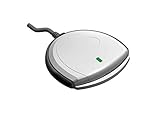
- Fully Compliant - Complies With All Major Industry Standards, Including Iso/Iec 7816, Usb Ccid, Pc/Sc, And Microsoft Whql. As Well As, Emv 2011 Ver 4.3 Level 1 And Gsa Fips 201.
- Seamless Integration - With Identiv-Specific Smartos You’Ll Get Easy, Complete Support Of All Major Contact Smart Card Ics And Technologies In One Simple Reader.
- Universal Compatibility - Works With Virtually All Contact Chip Cards And Pc Operating Systems, Including Windows, Macos, Linux And Android.
- Fast And Convenient- Shorten Your Transaction Time With A Reader That’S Optimized For Speed. It’S Ultra-Compact And Robust Design Is Streamlined For Mobile Operation, Making This Reader The Best Choice For Convenience, Security And Reliability.
- Ergonomic and cost efficient design
To import the public certificate, open mmc.exe, select File > Add/Remove Snap-in, add Certificates for the current user, and open:
Personal > Certificates > All Tasks > Import
If the card software cannot read the certificate or use its private key, Windows cannot use the card at sign-in, even if the reader appears in Device Manager.
Check the smart-card certificate
For a conventional Active Directory smart-card logon certificate, check the certificate’s Details tab:
| Certificate field | Expected value |
|---|---|
| Key Usage | Digital Signature |
| Enhanced Key Usage | Smart Card Logon, OID 1.3.6.1.4.1.311.20.2.2 |
| Subject Alternative Name | Usually Other Name: Principal Name containing the user’s UPN, such as user1@contoso.com |
| Private key | Present on the smart card and accessible through the card middleware |
| Validity | Not expired or not-yet-valid |
A UPN in the SAN is the normal arrangement, but it is not an absolute requirement in current Windows. Supported certificate-to-account mapping methods can identify the user without a UPN SAN. If Windows cannot identify the account from the certificate, a username hint may be needed.
Do these 3 things before closing this tab:
1Scan for outdated or missing drivers - takes under a minute2Clear out junk files and repair common Windows errors3Fix the driver behind crashes, sound loss and screen glitchesConfigure smart-card policies in Windows 11
Use this policy location in Local Group Policy Editor or a domain-based GPO:
Computer Configuration > Administrative Templates > Windows Components > Smart Card
To open Local Group Policy Editor, press Win+R, enter gpedit.msc, and press Enter. Domain administrators can configure the equivalent setting in Group Policy Management and link the GPO to the relevant computers.
Most correctly issued certificates need no special policy. The following settings are exceptions for specific certificate formats or card behavior.
Allow certificates with no Smart Card Logon EKU
By default, Windows does not accept a certificate with no EKU, an All Purpose EKU, or only the Client Authentication EKU as a smart-card sign-in certificate. If your certificate authority deliberately issues one of those formats, enable:
Allow certificates with no extended key usage certificate attribute
Its policy registry value is:
HKEY_LOCAL_MACHINE\SOFTWARE\Policies\Microsoft\Windows\SmartCardCredentialProvider\AllowCertificatesWithNoEKU
Rank #2
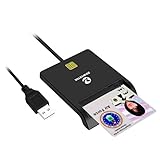
- Advanced Realtek Chipset; PIV, EMS, ISO-7816 & EMV2 2000 Level 1, CE, FCC, VCCI and Microsoft WHQL certifications.
- Supports ActivClient, AKO, OWA, DKO, JKO, NKO, BOL, GKO, Marinenet, AF Portal, Pure Edge Viewer, ApproveIt, DCO, DTS, LPS, Disa Enterprise Email and etc. CAC chip cards
- Sleek ergonomic flat design, precise slot, convenient to horizontally plug card
- Compatible with Windows10/11, Mac OS 10.15 or later. Driver free, plug and play.
- New generation DOD Military CAC USB smart chip card reader, no firmware upgrade requirements
Using the policy is preferable to manually editing the registry. Enabling it broadens which certificates Windows considers valid, so do not use it instead of correcting an improperly issued certificate.
Allow ECC certificates
ECC certificates are not accepted for domain smart-card sign-in by default. If the card uses ECC, enable:
Allow ECC certificates to be used for logon and authentication
The corresponding registry value is EnumerateECCCerts. If the card uses an ECDSA key, an associated ECDH key is required for sign-in while the computer is offline.
Allow signature-only keys
Signature-only certificates are not shown on the sign-in screen by default. To enumerate them, enable:
Allow signature keys valid for Logon
The registry value is AllowSignatureOnlyKeys. Microsoft’s current policy name uses Logon with a capital L.
Read every certificate on the card
Some cards or CSPs return only the default certificate when Windows asks for certificates. If the required certificate is not the default, enable:
Force the reading of all certificates from the smart card
The registry value is ForceReadingAllCertificates. This can slow sign-in because Windows reads more data from the card.
Show a username hint
For certificates mapped across forests, or certificates that do not uniquely identify a user, enable:
Allow user name hint
The registry value is X509HintsNeeded. This adds a username or domain field to the sign-in experience so the user can provide the missing account information.
Rank #3

- Compact And Lightweight Dongle Form-Factor Card Reader
- Accepts Cards In Id1 Format (Iso8716)
- Ccid Compliant
- Compact and lightweight dongle form-factor card reader
- Accepts cards in ID1 format (ISO8716)
After changing a local policy, run this command from an elevated Command Prompt:
gpupdate /force
Configure Active Directory smart-card logon
Active Directory logon requires more than a certificate on the card. Check these requirements on the domain and certification-authority infrastructure:
What’s actually slowing this PC down?
Pick the symptom - the matching free tool is one click away.
- Issue the user certificate correctly. Use the Smart Card Logon EKU where possible, include the user’s UPN in the SAN, and generate and retain the private key on the card.
- Map the certificate to the user account. The certificate must identify the correct AD account through its UPN or another supported mapping method.
- Publish the issuing CA in NTAuth. The CA that issued the user certificate must be trusted in the forest’s enterprise NTAuth store. If it is missing, a common error is: “The system could not log you on. Your credentials could not be verified.”
- Check the domain-controller certificate. The domain controller needs a valid certificate suitable for domain authentication. The user certificate, domain-controller certificate, and their issuing chains must lead to trusted roots.
- Check revocation and validity. The domain controller validates the certificate chain, expiration, revocation status, NTAuth trust, and account mapping during authentication.
- Confirm the certificate in the user’s Personal store. Import the public certificate into the current user’s
Personal > Certificatesstore if it is not already present.
Do not try to fix a missing NTAuth entry by enabling unrelated client policies. Correct the certificate-authority trust in Active Directory and distribute it to the relevant computers and domain controllers.
Sign in with the smart card
- Insert the card at the Windows 11 sign-in screen.
- Wait for Windows to detect the reader and enumerate the card certificates.
- Select the smart-card certificate tile or icon.
- Enter the card PIN.
- Press Enter.
For an AD account, Windows sends a certificate-based authentication request to a domain controller, which validates the certificate and maps it to the account. If no smart-card tile appears, Windows has not found an eligible certificate. This differs from a tile appearing and authentication being rejected.
Use smart-card sign-in with Microsoft Entra ID
Microsoft Entra certificate-based authentication has a different setup from traditional AD logon. No special Windows client policy is required just to accept smart-card authentication. You need:
- A Microsoft Entra-joined or hybrid Microsoft Entra-joined Windows device.
- Microsoft Entra CBA configured in the tenant.
- A certificate and card that satisfy the tenant’s authentication and mapping configuration.
At sign-in, present the physical or virtual card, select the smart-card icon, enter the PIN, and authenticate.
On Microsoft Entra-joined devices, Windows first uses the certificate SAN principal name and then the RFC822Name. If neither identifies the user, provide a username hint. An X509UserNameHint must use UPN format, such as user1@contoso.com.
This Windows smart-card sign-in scenario does not support federated authentication. Users must be in a managed domain or use Staged Rollout.
Credential Guard and smart-card logon
Credential Guard is not a switch that enables smart cards; it protects credentials and can be enabled independently. Starting with Windows 11 version 22H2, it is enabled by default on eligible domain-joined, non-domain-controller devices that meet Microsoft’s hardware, software, and licensing requirements.
To configure it through Group Policy, use:
Computer Configuration > Administrative Templates > System > Device Guard > Turn On Virtualization Based Security
Crashes, No Sound, or Screen Glitches?
Random freezes, missing sound and display glitches usually trace back to one bad driver. Find and replace yours safely.Free scan · under a minuteWindows Errors? Fix Them Before They Spread
Repair common Windows errors and clear accumulated junk for a smoother, more stable PC - no reinstall needed.Free scan · no reinstallSet the policy to Enabled, then choose Enabled with UEFI lock or Enabled without lock under Credential Guard Configuration.
Rank #4
Check its status from an elevated PowerShell window:
(Get-CimInstance -ClassName Win32_DeviceGuard -Namespace root\Microsoft\Windows\DeviceGuard).SecurityServicesRunning
Output 1 means Credential Guard is running. Output 0 means it is disabled or not running. Microsoft does not recommend checking for LsaIso.exe in Task Manager as the verification method.
Free tools Windows power users keep installed
One-click scans. No signup required.
Smart-card sign-in through Remote Desktop
RDP adds requirements beyond an interactive sign-in at the local Windows console. An RD Session Host needs the relevant Remote Desktop Services policies, and the RDP client needs access to the KDC certificate and trust chain.
Microsoft documents this command for publishing and managing the required certificates:
certutil.exe -dspublish NTAuthCA "DSCDPContainer"
For a specific Active Directory configuration, the command can use the full NTAuth container:
certutil.exe -dspublish NTAuthCA <CertFile> "CN=NTAuthCertificates,CN=Public Key Services,CN=Services,CN=Configuration,DC=engineering,DC=contoso,DC=com"
Recommended Free Tools
To add a KDC issuer certificate to the enterprise NTAuth store:
certutil -addstore -enterprise NTAUTH <CertFile>
To provision domain root certificates to a smart card from a domain-joined computer:
certutil.exe -scroots update
A non-domain-joined computer can use a smart card for RDP sign-in only when the card contains the domain controller’s root certification. Cross-domain RDP sign-in also requires a certificate UPN in this form:
<ClientName>@<DomainDNSName>
Troubleshoot when the smart-card tile is missing
Work through these checks in order:
- Confirm the reader appears in Device Manager and the vendor middleware or minidriver is installed.
- Use the card vendor’s utility to verify that Windows can read the certificate and access the private key.
- Check that the certificate is current and has a usable key.
- Check the EKU, Key Usage, SAN, and account mapping.
- If the card has several certificates, enable Force the reading of all certificates from the smart card.
- If the certificate is ECC, enable the ECC enumeration policy.
- If the certificate is signature-only, enable Allow signature keys valid for Logon.
- If the certificate has no suitable account identifier, enable Allow user name hint and provide the user’s UPN.
A certificate that is expired or not yet valid is normally excluded. Renew or replace it rather than enabling a time-invalid certificate policy as a permanent fix.
Free tools Windows power users keep installed
One-click scans. No signup required.
Best Value
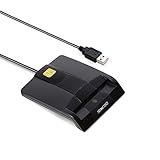
- DOD Military CAC USB Smart Card Reader for Government ID, National ID, ActivClient, AKO, OWA, DKO, JKO, NKO, BOL, GKO, Marinenet, AF Portal, Pure Edge Viewer, ApproveIt, DCO, DTS, LPS, Disa Enterprise Email etc. CAC Cards
- Compatible with windows (32/64bit) XP/Vista/ 7/8/10, Mac OS X
- Sleek Ergonomic Design -Gloss Black Finish. EMS ready.ISO7816 Class A,B and C.
- What You Get: Saicoo CAC Smart Card Reader, 18-month warranty and lifetime technical support.
Troubleshoot “credentials could not be verified”
When the tile appears but authentication fails, investigate the domain side and certificate configuration:
- The issuing CA is missing from the forest NTAuth store.
- The domain controller has no valid domain-controller certificate.
- A root or intermediate CA is not trusted.
- The SAN or UPN is malformed.
- The certificate is expired or revoked.
- The certificate is missing from the user’s Personal store or does not match the card’s private key.
- The certificate maps to the wrong user or cannot be mapped to an account.
- The reader, CSP, minidriver, or middleware cannot perform the signing operation.
The error is generic. Check certificate validity, trust, NTAuth, domain-controller certificates, and account mapping rather than repeatedly changing client-side policies.
What does not enable smart-card logon
Manually changing the Smart Card service startup type is not the supported way to enable Windows 11 smart-card logon. Windows uses its smart-card credential provider when it detects a usable reader, card, and certificate. The service, driver, middleware, certificate, and domain configuration must work together, but there is no separate Windows 11 master switch.
FAQ
Is there an Enable Smart Card Logon setting in Windows 11?
No. Windows displays the smart-card credential tile when it detects a reader and an eligible certificate. Active Directory environments also require correct certificate mapping, trust, NTAuth configuration, and a valid domain-controller certificate.
Why is my smart card detected but there is no sign-in tile?
Common causes include an unreadable certificate, a non-default certificate that cannot be enumerated, an ECC or signature-only certificate without the relevant policy, an expired certificate, or a certificate without enough account-identifying information.
Does the certificate always need a UPN in the SAN?
No. A UPN SAN such as user1@contoso.com is the normal configuration, but current Windows supports other certificate-to-account mapping methods. A username hint may be required when the certificate does not identify the account clearly.
Must I copy the smart-card private key to Windows?
No. The private key should remain on the smart card. The corresponding public certificate must be available in the logging-on user’s Personal certificate store.
Can I use a smart card with Microsoft Entra-joined Windows 11?
Yes. The device must be Microsoft Entra joined or hybrid joined, and Microsoft Entra certificate-based authentication must be configured in the tenant. No special Windows client policy is required for the sign-in method itself.
Quick wins for a faster PC:
Clear out junk files and repair common Windows errorsFree Scan →Scan for outdated or missing drivers - takes under a minuteDriver Scan →Repair Windows errors before they cause bigger problemsFix Now →Why does smart-card sign-in fail over Remote Desktop even though local sign-in works?
RDP has additional Remote Desktop Services, KDC certificate, trust, and root-certificate requirements. Check the RD Session Host configuration and publish the relevant certificates to NTAuth as required by the domain design.
The Bottom Line
To enable smart-card logon on Windows 11, install a working reader and card middleware, ensure the card contains an eligible certificate, and use the smart-card tile at sign-in. For Active Directory, also configure certificate-to-user mapping, publish the issuing CA in NTAuth, and provide valid certificates and trust on the domain controllers. If the tile is missing, troubleshoot certificate enumeration and eligibility; if it appears but authentication fails, troubleshoot PKI trust, NTAuth, domain-controller certificates, and account mapping.
Quick Recap
Product prices and availability are accurate as of the date/time indicated and are subject to change. Any price and availability information displayed on Amazon at the time of purchase will apply.

