
iTechGuides is reader-supported. When you buy through links on our site, we may earn an affiliate commission. As an Amazon Associate I earn from qualifying purchases. Learn more
Before moving to another wetland, remove mud and plant debris from boots, nets and other field gear, then disinfect every relevant surface for the full contact time specified by your chosen protocol. The updated NEPARC 2022 protocol lists 1.6% sodium hypochlorite for at least five minutes for broader pathogen coverage, including Bsal. Work well away from natural water, then rinse gear with clean water and let it dry. Follow local agency rules, product labels and equipment-care guidance.
Why clean field gear between wetlands?
Chytrid fungi can move between sites on contaminated equipment. New South Wales environment guidance identifies wet or muddy boots, tyres and frog-survey equipment as possible contributors to spread through infected water or direct frog contact. The U.S. Fish and Wildlife Service says Bd is not airborne, but contaminated gear such as boots and frog nets can carry it between sites. Treat gear as potentially contaminated after visiting frog habitat.
Cleaning and disinfection are different steps: brushing off dirt removes material that can interfere with disinfectants, while disinfection treats surfaces that may still carry pathogens. NSW guidance recommends cleaning and drying equipment and wet or muddy footwear before and between frog sites. NSW frog chytrid guidance; U.S. Fish and Wildlife Service.
Free tools Windows power users keep installed
One-click scans. No signup required.
A between-wetlands decontamination workflow
- Prepare before leaving the site. Carry a brush or other cleaning utensil, the disinfectant required by your program, suitable application or immersion equipment, gloves and clean rinse water. NSW government guidance specifically recommends carrying cleaning utensils and disinfectant when visiting frog habitat; NEPARC lists brushes, application tools, gloves and rinse water as useful supplies.
- Remove mud and vegetation. Brush visible soil and plant matter from boots, nets, buckets and other equipment before applying disinfectant. Organic material can reduce disinfection effectiveness, so do not skip this step.
- Apply the chosen disinfectant for its full contact time. Wet or immerse all relevant surfaces as the product and protocol direct, and keep them treated for the entire minimum time. Use the active concentration specified by the protocol—not an assumed household-bleach dilution.
- Work away from natural water. NEPARC 2022 specifies at least 150 feet from lakes, streams and ponds. The Australian disease strategy warns that bleach and other disinfectants are toxic to aquatic organisms, including invertebrates and tadpoles; carry chemicals away for disposal rather than allowing them to enter a wetland.
- Rinse and dry. Rinse treated gear with clean water to limit equipment damage and avoid carrying disinfectant residue toward the next wetland. Air-dry items completely where practical. Follow the product label and local directions for handling rinse water and disposing of chemicals.
Plan where to do this before the visit: the process needs a place far enough from water to protect aquatic life, along with clean rinse water and a way to contain or carry away chemicals.
#1 Best Overall
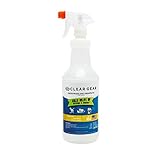
- Unique Formula: Proudly made in the USA and EPA-registered, Clear Gear protects against bacteria, germs, and odors safely without any harsh chemicals like bleach, alcohol, or ammonia. Clear Gear is a water-based formula that has a low toxicity rating, is non-corrosive to surfaces, and does not leave noxious fumes behind.
- Perfect for Healthcare Equipment: Clear Gear Spray disinfects and deodorizes healthcare facilities, emergency and rescue vehicles, and equipment such as masks, gloves, face and eye protectors, uniforms, and footwear. It can also be used in waiting areas, exam rooms, offices, bathrooms, counters, and reception areas. Clear Gear easily fits in equipment bags for quick use.
- Eliminate Odors: Medical offices, hospitals and clinics are high risk operations, and it’s important to keep equipment and facilities odor-free for both staff and patients. Clear Gear is lightly-scented and eliminates bad smells at the source.
- Multi-Surface Cleaner: Clear Gear is safe for use on equipment, communal surfaces, and other high-touch surface areas, including bed rails, gurneys, examining tables, and countertops. Use Clear Gear as a proven and effective one-step sanitizer and spot treatment on soft surfaces and fabrics. No wiping or rinsing necessary!
- Trusted: Win the fight against germs! Proudly used by first responders, paramedics, law enforcement, hospitals, and medical offices including chiropractic care, physical therapy, imaging and diagnostic centers, dentists, home healthcare services, minor emergency, physician practices, and nursing and residential care facilities.
Disinfectant options and contact times in the NEPARC 2022 protocol
The NEPARC table gives these minimum working concentrations and contact times. They are protocol-specific minimums, not universal instructions; check local requirements and the product label before use.
| Disinfectant | Minimum working concentration | Minimum contact time | Material and safety considerations |
|---|---|---|---|
| Sodium hypochlorite (bleach) | 1.6% | At least 5 minutes | Check stock strength and calculate dilution from its actual concentration. NEPARC warns it can harm people, is fatal to amphibians at high concentrations, corrodes metals, fades colors and breaks down fibers. Organic material and sunlight can inactivate it. |
| Potassium peroxymonosulfate | 1.0% | At least 2 minutes | NEPARC prefers it over bleach for fabric and metals, but notes it may pit galvanized or soft metal if not rinsed. The protocol also notes irritation and eye-damage hazards. |
| Ethanol | 70% | At least 1 minute | Listed for delicate equipment. It is flammable, evaporates, may damage rubber or plastic and can deteriorate glues; high concentrations can harm amphibians. |
These figures are from NEPARC Publication 2022-02. The protocol includes additional preparation and hazard details; use its full instructions when selecting and preparing a disinfectant.
Rank #2
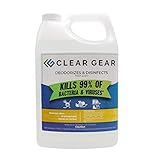
- Powerful Protection - Made in the USA and EPA-registered, Clear Gear protects against bacteria, germs, and odors with a gentle, water-based formula. It contains no harsh chemicals like bleach, alcohol, or ammonia, ensuring low toxicity and no corrosive effects or lingering fumes.
- Ideal for Sports & Fitness Gear - Clear Gear Spray is perfect for disinfecting and deodorizing athletic equipment, exercise mats, weights, and cardio machines. Compact for easy storage, it’s convenient to use in locker rooms and on-the-go for fast cleanup after games and workouts.
- Odor Eliminator at the Source - Clear Gear effectively neutralizes unpleasant odors, keeping sports facilities, gyms, studios, and workout spaces smelling clean and fresh. With a light, refreshing scent, it’s the ideal solution for odor control.
- Multi-Surface Cleaner - Safe for high-touch surfaces and equipment, Clear Gear can be used on everything from door handles and countertops to shared gym equipment. It also works as a one-step cleaner for fabrics and soft surfaces—no wiping or rinsing needed.
- Trusted by Top Athletes and Facilities - Professional NFL, MLB, NBA, and NHL teams, gyms, wellness centers, schools, and colleges trust Clear Gear for powerful protection. It’s ideal for athletes, fitness enthusiasts, and anyone looking for a dependable disinfecting solution.
Why the recommended bleach concentration changed
The updated NEPARC guidance uses 1.6% sodium hypochlorite for broader coverage, including Bsal. A 2023 U.S. Geological Survey review says the revised bleach concentration is about ten times stronger than the older NEPARC guidance because the stronger level is needed for Bsal effectiveness. Do not combine the old and new figures as if they were interchangeable.
The earlier NEPARC protocol recommended 3% bleach for Bd and most ranaviruses, with a five-minute field contact time. That is a prior recommendation, not the concentration in the 2022 revision. USGS review of herpetofaunal-pathogen disinfection protocols; NEPARC 2014 protocol.
Rank #3

- Kills the following bacteria in 3 minutes: Listeria monocytogenes, Salmonella typhi, staphylococcus aureau, Escherichia coli, Corynebacterium ammoniagenes
- Kills the following viruses and bacteria in 5 minutes: Hepatitis B Virus (HBV), Hepatitis C (HCV), Mycobacterium tuberculosis BCG
- Ideal for fitness centers, gyms, wellness facilities, boot camps, dance studios and locker rooms.
- Volume: Quart
Local instructions can differ. For example, a National Park Service page gives a regional National Capital Region example of a greater-than-10% bleach solution between sites. That wording is not a universal standard, and it should not be confused with a percentage of active sodium hypochlorite. Follow the rule for your location and pathogen concern rather than substituting one agency’s example for another’s. National Park Service regional guidance.
Independent reader supportYour contribution helps us test, update, and keep practical guides available for everyone.Choose a protocol that fits the site and the equipment
There is no single procedure that overrides local rules or equipment limits. The Australian disease strategy identifies site-specific risk, habitat, nearby water, worker safety, environmental impact, legal requirements, and access to an approved and effective disinfectant as factors that can affect the procedure. Check agency guidance, permits, product directions and equipment-care instructions before selecting a method.
Rank #4
- HEALTHIER: Kills drug resistant MRSA, VRE and fungus, Kills Norovirus, HIV (Aids virus) and Influenza, Norovirus, Hepatitis in as short as 60 seconds. Prevents growth of damaging mold and mildew. Eliminates odors and allergens.
- PURER: Free of alcohol, synthetic fragrance, and VOC; No harsh chemical residue (turns into water); No rinsing is required including food contact surfaces. Just spray and walk away - let it air dry.
- SAFER: Noncorrosive, pH balanced; Safe for sensitive materials like rubber gym mat use; Recommended by doctors for sensitive population including allergic asthma, atopic dermatitis (eczema), immunodeficient etc.
- PROVEN: Proven by hospitals, senior care, and childcare facilities to protect those most vulnerable from germs, allergens, and contaminants.
- For Bsal-aware coverage: the revised NEPARC table lists 1.6% sodium hypochlorite for at least five minutes. Confirm that the protocol is accepted locally and compatible with the gear.
- For fabric or metal equipment: NEPARC prefers potassium peroxymonosulfate over bleach, while warning that it may pit galvanized or soft metal unless rinsed.
- For delicate equipment: NEPARC lists 70% ethanol, but its flammability, evaporation and potential effects on rubber, plastic and glue may make it unsuitable for some items.
- For site-separated work: dedicated equipment sets for different sites can add a barrier in some programs, but do not replace cleaning and disinfection when required.
Never infer a dilution from the word “bleach” alone: store products vary in strength. Use the actual active concentration and the protocol’s preparation instructions, and do not apply chemical disinfectants where runoff can reach wetland water. The Australian chytrid disease strategy discusses site and environmental considerations.
What’s actually slowing this PC down?
Pick the symptom - the matching free tool is one click away.
Quick Recap
Best Value

- HEALTHIER: Kills drug resistant MRSA, VRE and fungus, Kills Norovirus, HIV (Aids virus) and Influenza, Norovirus, Hepatitis in as short as 60 seconds. Prevents growth of damaging mold and mildew. Eliminates odors and allergens.
- PURER: Free of alcohol, synthetic fragrance, and VOC; No harsh chemical residue (turns into water)
- SAFER: Noncorrosive, pH balanced; Safe for sensitive materials like rubber gym mat use; No rinsing is required including food contact surfaces. Just spray and walk away - let it air dry. Recommended by doctors for sensitive population including allergic asthma, atopic dermatitis (eczema), immunodeficient etc.
- PROVEN: Proven by hospitals, senior care, and childcare facilities to protect those most vulnerable from germs, allergens, and contaminants.
Product prices and availability are accurate as of the date/time indicated and are subject to change. Any price and availability information displayed on Amazon at the time of purchase will apply.

