
Recommended Free Tools
To reduce WAN packet loss, first find where packets are disappearing and which applications, sites, directions, and time windows are affected. Compare end-user symptoms with interface and tunnel counters, application telemetry, and measurements taken at both WAN edges. Repair the fault or congestion source when possible; if the network has multiple paths, steer eligible traffic to one that meets the application’s loss, latency, and jitter needs. Forward error correction, packet duplication, or TCP optimization can help in specific cases, but each has support, bandwidth, or compatibility limits.
Why WAN packet loss slows some applications more than others
A loss percentage alone cannot predict what users will notice. The effect depends on where loss occurs, whether it is isolated or bursty, the round-trip time, latency and jitter, the transport protocol, and how the application handles missing data. Track those conditions alongside the affected application, site, direction, and time window.
TCP applications
TCP detects missing data and generally responds with retransmissions and congestion control. Retransmissions use capacity, and recovery can delay delivery; the throughput impact can be especially significant on long-latency paths. A slow file transfer or web transaction may therefore reflect loss-related recovery even when the circuit is not continuously saturated.
Real-time and UDP applications
Real-time or UDP-based traffic may not wait for a retransmission before playing or rendering data. Depending on the application, loss can instead appear as gaps, artifacts, freezes, or degraded call quality. The symptom is not proof of packet loss: latency, jitter, congestion, DNS, and server delays can produce overlapping complaints, so compare application behavior with network measurements.
#1 Best Overall

- Multifunctional Network Cable Tester: TESMEN TLP-123A Supports RJ45 and RJ11, enabling rapid detection of line connectivity, short circuits, open circuits, miswiring, and cable shielding status. An essential tool for troubleshooting line faults and network maintenance, it effectively boosts your work efficiency
- Convenient and Efficient: Featuring one-button operation and a test speed adjustment gear on the main control unit for enhanced flexibility. Clear LED indicators provide intuitive test result displays, making it easy for both professionals and home users to operate
- Portable and Durable: Compact and lightweight design for easy portability. Constructed with high-quality plastic housing for robust structure, ensuring both durability and stability. Ideal for home wiring, IT equipment setup, electrical maintenance, and LAN DIY projects
- Detachable design: The main control unit and remote unit can be separated and used independently, allowing you to test both ends of long cables. This makes it ideal for wall-mounted ports, long-distance cabling, or structured cabling systems, perfect for homes, offices, or professional IT environments
- What you will get: 1 * TLP-123A Network Cable Tester, 1 * user manual, 2 * AAA batteries
How to find where packets are being lost
Use aligned observations rather than relying on one dashboard or device counter. Local interface counters can show drops at that interface, but an edge with no local drops does not prove that packets crossed the WAN successfully. Cisco’s Catalyst SD-WAN documentation describes path measurements based on BFD Hello packets and observations averaged in polling buckets; Cisco’s troubleshooting guide for WAN loss describes marking selected traffic and comparing captures at the source and destination transport interfaces.
| Evidence | What it can establish | What to compare or verify |
|---|---|---|
| Interface and tunnel counters | Local errors or discards, tunnel health, and reported path loss, latency, or jitter | Site, direction, interval, probe method, device, and whether counters reset or roll over |
| Application monitoring | Which applications and sites are actually affected | App flow, implicated link, time alignment, and whether the dashboard measures the traffic-receiving side |
| Captures at both WAN edges | Whether selected packets seen at the source also reached the remote transport interface | Consistent packet marking and filters, synchronized clocks, encapsulation, sequence numbers, and capture-drop counters |
| Path-quality monitoring | How measured loss, latency, and jitter vary over time and across eligible links | Measurement interval, application policy, failover delay, alternate-path capacity, and route stability |
Capture narrowly and compare both sides
If counters do not identify the loss point, mark a narrow traffic class with an identifiable DSCP value and capture it at both WAN transport interfaces. Compare matching packets across the captures to establish whether they crossed the path. Keep the filters and time windows consistent, check capture-drop counters, and account for encapsulation. Cisco’s published example uses particular older lab platform and software versions, so its commands and interface behavior should be validated against the release actually deployed.
Rank #2

- VERSATILE CABLE TESTING: Cable tester for data (RJ45) terminated cables and patch cords, ensuring comprehensive testing capabilities
- LARGE BACKLIT LCD: Backlit LCD display enables easy reading of pin-to-pin wiremap results, even in low-lit areas
- COMPREHENSIVE FAULT DETECTION: Test for Open, Short, Miswire, Split-Pair faults, Cross-over, and Shield, providing thorough fault detection
- INTUITIVE USER INTERFACE: User-friendly interface with three buttons and simple, easy-to-identify test responses, ensuring a smooth testing experience
- MULTIPLE TONE GENERATOR STYLES: Tone on a single wire, wire pair, or all 8 conductor wires using the multiple style tone generator (solid/warble); requires probe Cat. No. VDV500-123 (sold separately)
Where available, compare LAN ingress, WAN egress, remote WAN ingress, and remote LAN egress. This narrows the segment in which packets disappear. If evidence points beyond the enterprise edge, request circuit-specific evidence from the access carrier or provider rather than attributing the loss to the local network.
A practical WAN packet-loss troubleshooting sequence
- Scope the impairment. Record affected sites, applications, users, traffic direction, and time window. Distinguish suspected loss from high latency, jitter, saturation, tunnel flaps, DNS problems, or server delay; several can occur together.
- Inspect edge and path telemetry. Check interface errors and discards, tunnel status, path loss, latency, jitter, and application retransmission data if available. Use comparable intervals and correlate measurements with the user-visible symptom.
- Test end to end if edge counters are inconclusive. Mark a limited traffic class and compare captures at the two WAN transport interfaces. Make sure clocks and filters align, and account for capture loss and tunnel encapsulation.
- Isolate the likely segment and test causes. Compare the LAN and WAN boundaries at both sites. Check utilization and congestion, physical errors, policers or shapers, MTU and fragmentation, tunnel overhead, and optics or cabling. Treat these as hypotheses to verify, not presumed causes.
- Change one thing, then measure again. Repair an identified fault or congestion source first. If applying traffic management, reserve or shape capacity and prioritize latency-sensitive or business-critical flows according to policy. Repeat the same application and path measurements over aligned intervals so the effect of the change is clear.
Ways to reduce loss and protect application performance
Repair the cause or relieve proven congestion
Use the measurements to determine whether loss tracks utilization, a physical error, a provider segment, or a configuration boundary. If sustained congestion is established, rebalance or increase capacity; if shaping or policing is mismatched, correct the policy; if physical errors are present, repair the affected interface, optics, or cabling. Review MTU and encapsulation when packet sizing points to fragmentation or sizing problems. None of these causes should be assumed without evidence.
Free tools Windows power users keep installed
One-click scans. No signup required.
Rank #3
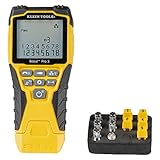
- VERSATILE CABLE TESTING: Cable tester tests voice (RJ11/12), data (RJ45), and video (coax F-connector) terminated cables, providing clear results for comprehensive testing on unenergized Ethernet cables (not designed to test PoE)
- EXTENDED CABLE LENGTH MEASUREMENT: Measure cable length up to 2000 feet (610 m), allowing for precise cable length determination
- COMPREHENSIVE FAULT DETECTION: Test for Open, Short, Miswire, or Split-Pair faults, ensuring thorough fault detection and identification
- BACKLIT LCD DISPLAY: Backlit LCD screen displays cable length, wiremap, cable ID, and test results, ensuring easy readability in various lighting conditions
- EFFICIENT CABLE TRACING: Trace cables, wire pairs, and individual conductor wires using the multiple style tone generator (requires analog probe Cat. No. VDV500-123, sold separately), simplifying cable tracing tasks
Apply QoS and application-aware path selection
Classify traffic reliably, protect priority flows from bulk contention, and measure path quality. If multiple WAN links are available, steer eligible traffic to an alternate path only when it meets the application’s service needs. Cisco documents SD-WAN Application-Aware Routing using BFD measurements for loss, latency, and jitter. Palo Alto Networks documents path-quality profiles that can steer traffic after thresholds are exceeded and recommends tuning profiles as application behavior becomes understood.
Those thresholds are implementation-specific, not universal definitions of acceptable network quality. Set them against the application’s observed behavior, link characteristics, failover overhead, and service objectives. In Palo Alto Networks’ documented implementation, raising a threshold delays failover, while lowering it triggers failover sooner; either choice can have trade-offs, including unnecessary path changes or remaining too long on a degraded link.
Rank #4

- Multi-Function Network Cable Tester: Supports RJ45 (CAT5, CAT5e, CAT6, CAT6A, CAT7) and RJ11 telephone cables. Quickly detects continuity, short circuits, open wires, miswiring, and cable shielding status, ensuring your LAN or phone lines are correctly wired and ready to use.
- Fast/Slow Mode with LED Indicators: Switch between fast and slow scan speeds to identify wiring issues more precisely. LED lights on both master and remote units show wire order, making it easy to spot errors like open pairs or misaligned pins at a glance.
- Split-Type Design for Long-Distance Testing: Master and remote units can be detached and used separately, allowing you to test both ends of a long cable run, ideal for wall-mounted ports, long runs, or structured cabling. Perfect for home, office, or professional IT setups.
- Compact, Lightweight & Durable: Ergonomically designed with sturdy ABS housing, this pocket-sized tester is ideal for on-the-go network engineers, DIYers, and electricians. It’s your go-to toolkit for cable maintenance, upgrades, or new installations.
- Safe & Easy to Use: Simple one-button operation makes testing quick and hassle-free. LED indicators clearly show wiring status, while the G light instantly identifies shielded (FTP/STP) or unshielded (UTP) cables. Supports safe testing of telephone lines with typical voltages under 48-72V, ideal for both home and professional use.
Use forward error correction or packet duplication selectively
Forward error correction adds redundant information that can help recover missing or corrupted data without waiting for retransmission. Packet duplication sends copies across links or paths so a surviving copy can preserve delivery. Both can consume additional bandwidth, and availability depends on supported platforms, flows, and feature combinations. Confirm from platform telemetry that correction was applied and that corrected, impacted, or total session counts change as expected. Cisco documents that AppQoE and packet duplication cannot be enabled on the same connection in its implementation.
Consider TCP optimization only for suitable flows
Cisco Catalyst SD-WAN’s documented TCP optimization uses WAN devices as proxies: one proxy terminates the client connection and establishes a separate connection to its peer, which then connects onward to the server. Cisco describes buffering traffic to improve TCP performance over long-latency links and recommends deploying both ends; a single-ended arrangement is possible but compromises the optimization. The feature is not a general remedy for UDP or every TCP issue. Verify model and software support, device capacity, topology, security or inspection implications, application behavior, and interactions with other features before enabling it.
Best Value

- EASY WIRE TRACING: Simple analog tone generator and wire tracing probe for open-ended, non-active low-voltage wires, making wire tracing hassle-free (<60v)
- OPTIMIZE SIGNAL FOR BEST RESULTS: Separate wires when possible and use proper grounding to improve tone detection and accuracy
- ALLIGATOR CLIPS INCLUDED: Comes with alligator clips for easy connection to unterminated wires, providing convenience during testing
- RJ45 TO RJ45 TEST CABLE: Includes an RJ45 to RJ45 test cable for seamless connectivity during testing and wire mapping
- COMPREHENSIVE WIRE MAPPING: Toner and probe together perform a pin-to-pin wire map test, ensuring thorough wire mapping and identification
Is there an acceptable WAN packet-loss percentage?
There is no single percentage in the vendor guidance that defines acceptable loss for every application or network. A threshold that works for one flow, measurement method, or path may not meet another application’s needs. Evaluate loss together with latency and jitter, the path’s behavior over time, and the application’s actual response. For video calls or SaaS, use the application’s service objectives and observed user impact rather than applying a universal number; tune any SD-WAN profile against those requirements.
Interpreting vendor defaults and feature guidance
Cisco documents a default 1-second BFD Hello interval and a 10-minute polling interval for the cited Catalyst SD-WAN measurements. At that default probe interval, a polling bucket uses about 600 Hello packets. These are Cisco implementation defaults, not universal WAN measurement requirements; confirm deployed configuration and release because feature names, defaults, supported models, dashboards, licensing, and compatibility can change.
Quick Recap
Product prices and availability are accurate as of the date/time indicated and are subject to change. Any price and availability information displayed on Amazon at the time of purchase will apply.

