
Do these 3 things before closing this tab:
1Clear out junk files and repair common Windows errors2Fix the driver behind crashes, sound loss and screen glitches3Repair Windows errors before they cause bigger problemsConduct an industrial safety audit by reviewing records and worker concerns, inspecting the facility and its work, assessing visible and less-visible hazards, then assigning corrective actions and verifying that controls work. A checklist is a site-specific prompt—not a universal certification or guarantee of legal compliance. OSHA’s recommended practices are voluntary program guidance; determine the federal, state-plan and local requirements that apply to your facility.
For a U.S. general-industry starting point, use OSHA’s Safety and Health Program Implementation Checklist alongside a checklist tailored to your site.


What an industrial safety audit should cover
A useful audit is broader than a quick visual walk-through. It checks how work is actually performed, whether safeguards and procedures are effective, and whether the safety program identifies and corrects hazards. Define the scope to include the facility’s relevant operations, equipment, work areas and facilities—not only the production floor.
Plan coverage for each relevant shift, process and work group. Include storage and warehousing, maintenance, vehicles, contractors, subcontractors and temporary workers; consider purchasing and office functions where they affect safety. OSHA also recommends worker participation in inspections and program evaluation.
The Tool Desk
Outbyte Driver Updater FREEScan for outdated or missing drivers - takes under a minuteDriver Scan →Outbyte PC Repair FREERepair Windows errors before they cause bigger problemsFix Now →#1 Best Overall
Distinguish a physical inspection from a broader program evaluation. A walk-through can reveal conditions at a particular time; reviewing procedures, training, incident trends and corrective-action performance can expose gaps that a visual check will miss.
How to conduct an industrial safety audit
1. Define the scope and assemble the team
Set the facility boundaries, areas, shifts, processes, contractors and audit objectives. Involve workers who know how tasks are performed, supervisors and relevant safety or technical specialists. Explain how the team will handle observations, including what to do if it finds an urgent hazard.
2. Review records and worker input
Before the walk-through, gather information that can guide the inspection and point to recurring or hidden hazards:
Rank #2

- Vehicle inspection report book helps document and report needed repairs to help maintain safe workplace utility vehicles.
- Heavy equipment inspection report contains a checklist of 36 common vehicle items and space for additional comments. Easy to use for reporting vehicle condition.
- This equipment maintenance log book set comes with 25 books. Each book contains 31 sets of forms. In total, you will receive 775 forms.
- The maintenance book is 2-ply and carbonless.
- Driver inspection books measure 5.5" x 8.5".
- Equipment and machinery manuals, Safety Data Sheets (SDSs), and existing safety programs such as lockout/tagout, confined-space and personal protective equipment procedures.
- Prior inspection reports, injury and illness records, incident investigations, workers’ compensation trends and worker reports or safety-committee input.
- Exposure-monitoring results and industrial-hygiene assessments, where available.
Protect confidential medical information; redact it where appropriate. OSHA describes hazard identification as a “proactive, ongoing process” in its Hazard Identification and Assessment guidance.
Outdated Drivers Are Slowing You Down
One free scan finds every outdated or missing driver and matches the right update for your exact hardware.Free scan · exact hardware matchWindows Errors? Fix Them Before They Spread
Repair common Windows errors and clear accumulated junk for a smoother, more stable PC - no reinstall needed.Free scan · no reinstall3. Build a site-specific checklist and map coverage
Use a checklist to prompt observation, not as a substitute for knowing the work and applicable requirements. OSHA’s common inspection prompts include housekeeping; slips, trips and falls; electrical hazards; equipment operation and maintenance; fire protection; process flow and work organization; work practices; violence; ergonomics; and emergency procedures. Add hazards specific to the site, its processes and applicable regulations.
Map which areas, shifts, operations, equipment and facilities the team will cover so that no relevant activity is missed simply because it is outside the usual production area.
Rank #3
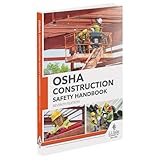
- 2024 OSHA Construction Safety Book is the seventh edition with the new OSHA HazCom final rule on 5/20/24. While the rule takes effect 7/19/24, the compliance dates don’t begin until 1/19/26 per 29 CFR 1910.1200(j).
- Construction Site Book offers quick access to essential OSHA regulations, jobsite hazards, and practical safety tips. It also helps employees identify hazards and prevent injuries and illnesses.
- Features easy-to-read format, full-color images, chapter quizzes with answer key, and comes in a compact size making it a convenient reference for employees.
- Critical topics include Confined Space Entry; Cranes & Derricks; Electrical Safety; Emergency Response; Ergonomics & Back Safety; Excavations; Fall Protection; First Aid & Bloodborne Pathogens; HazCom; Health & Wellness; Jobsite Exposures; Lockout/Tagout; Ladders & Stairways; Materials Handling/Storage; Motor Vehicles; PPE; Scaffolds; Site Safety & Security; Slips, Trips & Falls; Tool Safety; Welding, Cutting & Brazing; and Work Zone Safety.
- Specifications: 5 1/4” x 7 1/4", English, Soft bound. 7th Edition. Copyright 2024.
4. Walk the site and talk with workers
Observe normal production as well as nonroutine work and changing conditions. Check equipment condition, safeguards, housekeeping, work practices and whether written procedures match actual work. Ask workers what hazards and near misses they have seen, and whether controls work in practice. Inspect plant vehicles and transportation vehicles where used.
Photograph or video problem areas when appropriate and permitted. Document findings with enough detail to locate and track each condition through correction; OSHA’s inspection guidance recommends documenting observations so corrections can be verified.
5. Look beyond visible hazards
A visual checklist cannot establish that every exposure is safe. Review chemical use through labels and SDSs, considering quantities, volatility, ventilation and skin exposure. Also consider noise, heat, radiation, biological hazards and ergonomic factors such as heavy lifting, overhead work, repetition and vibration.
Some gases and vapors are invisible or odorless, and assessing health hazards may require specialized knowledge. Where conditions indicate a need, arrange suitable quantitative exposure assessment—such as air sampling or direct-reading instruments—with qualified expertise.
6. Investigate and prioritize findings
Consider injuries, illnesses, close calls, near misses and worker concerns alongside walk-through observations. An investigation should look for underlying causes that can prevent recurrence, rather than stopping at the immediate event or behavior.
Characterize each hazard by potential severity and likelihood, and consider how many workers may be exposed. Address serious recognized hazards promptly. Fix simple issues when found if it is safe to do so; do not let an easy correction distract from more serious risks.
Recommended Free Tools
7. Assign corrective actions and verify closure
For each finding, record the location and condition, affected task or exposed workers, risk priority, any immediate or interim protection, proposed control, responsible owner, target date and evidence needed to verify completion. These are practical tracking fields, not a form OSHA requires employers to use.
Select feasible, effective and durable controls using OSHA’s hierarchy of controls. After implementation, inspect or test the control, check that workers understand and use it, and confirm that it remains effective. A task marked complete is not proof that the hazard has been controlled.
8. Review the program and repeat as needed
Look for patterns in hazards, incidents, response times, corrective-action completion and worker feedback. Trends can reveal system weaknesses that individual findings do not. OSHA recommends evaluating program implementation initially and at least annually; its Program Evaluation and Improvement guidance does not establish one universal interval for every walk-through. The appropriate scope and frequency depend on hazards, complexity and program maturity.
Changes to processes or equipment, a serious injury, significant property damage or rising complaints may warrant another evaluation. OSHA’s Explore Tools and How Do I Get Started? pages point employers to free materials, including checklists and consultation resources. Training and worker participation are also part of an effective program; see OSHA’s Education and Training guidance.
Industrial safety audit checklist
Adapt this outline to the facility’s hazards and requirements. It is editorial guidance based on OSHA material, not an OSHA-issued compliance form.
- Scope and participation: Record the date, areas, shifts, processes, audit team and how workers participated.
- Records reviewed: Note relevant incidents, near misses, complaints, prior inspections, SDSs, equipment information, exposure assessments and safety programs reviewed.
- Work areas and equipment: Check housekeeping, walking-working surfaces, electrical conditions, equipment safeguards, operation and maintenance.
- Emergency readiness: Review fire protection and emergency procedures and readiness.
- Health exposures: Consider chemical, noise, heat, radiation, biological and ergonomic hazards, including whether specialist assessment is needed.
- Work and coordination: Observe work practices, nonroutine tasks, process changes and contractor coordination.
- Finding details: Record the hazard, location, affected workers, severity and likelihood, interim protection and priority.
- Corrective action: Assign an owner and due date, then record implementation evidence and an effectiveness check.
- Program follow-through: Capture trends, worker feedback, lessons learned and the program review date.
For a fuller self-evaluation, use OSHA’s general-industry implementation checklist and tailor it to the work performed at your facility.
Quick Recap
Product prices and availability are accurate as of the date/time indicated and are subject to change. Any price and availability information displayed on Amazon at the time of purchase will apply.

