
Outdated Drivers Are Slowing You Down
One free scan finds every outdated or missing driver and matches the right update for your exact hardware.Free scan · exact hardware matchWindows Errors? Fix Them Before They Spread
Repair common Windows errors and clear accumulated junk for a smoother, more stable PC - no reinstall needed.Free scan · no reinstallChoose storage media as part of a preservation plan, not as a device expected to last forever. No computer storage medium is permanently archival: carriers age, readers and interfaces become obsolete, and files may depend on software or formats that stop working. For a personal archive, keep at least two copies in different places where practical, check that files remain readable at least once a year, and make fresh media copies every five years or sooner if needed. Those are Library of Congress recommendations—not a promise about any drive’s lifespan.
What matters when choosing storage media?
The National Archives (UK) recommends comparing storage options by longevity, capacity, viability, obsolescence, cost, and susceptibility. Apply those criteria to the whole system: the carrier, the equipment and software needed to read it, and your ability to maintain and recover copies over time.
- Longevity and viability: Consider how long the medium may remain usable under realistic storage and handling conditions, and whether you can verify that the data can still be read. Physical survival alone is not enough.
- Capacity and growth: Make sure each copy can hold the archive and allow for future additions. Consider the space and cost of keeping multiple copies, not just one device.
- Obsolescence and access: Ask whether compatible readers, interfaces, software, encryption keys, and file formats will remain available—or whether you can migrate the content before they become inaccessible.
- Integrity and recovery: Prefer an arrangement that lets you check for file changes and restore a known-good copy if one is damaged. Checksums can help detect changed bits, but do not guarantee that future software can open or interpret a file.
- Cost and maintenance: Include the ongoing effort and expense of checking copies, replacing media, refreshing data, and documenting how to restore it.
- Susceptibility and separation: Consider exposure to damage, environmental conditions, theft, and shared disasters. Keep a copy away from the others when practical.
The National Archives (UK) cautions that no computer storage medium can be considered archival regardless of physical longevity: all media have limited lifespans, and technological obsolescence is inevitable. That makes maintenance and migration part of the choice, not an afterthought. Read its storage-media selection guidance.
How should you think about common media?
The Library of Congress lists portable hard drives, USB flash drives, optical discs, and internet storage as possible ways to keep extra copies. Their inclusion is not a ranking or a guarantee of durability. Choose based on your ability to maintain separate, readable copies.
#1 Best Overall

- High-capacity add-on storage.Specific uses: Business, personal
- Fast data transfers
- Plug-and-play ready for Windows PCs
- WD quality inside and out
| Option | Role in an archive | Important limitation |
|---|---|---|
| Portable external hard drive | Can serve as one personal-archive copy. | It is not a complete preservation plan by itself; keep another copy separately and check readability. |
| USB flash drive | Can serve as another separate copy. | Its listing as an option does not establish that it is suitable for unattended long-term storage. |
| Optical disc | Can serve as another separate copy. | Its listing as an option does not establish that it is suitable for unattended long-term storage. |
| Internet or cloud storage | Can provide a copy away from home or another primary location. | The Library of Congress guidance does not evaluate any provider’s durability, access terms, pricing, or preservation guarantees. |
These sources do not establish a universal service life or identify a categorically best choice among tape, hard drives, solid-state drives, flash drives, or optical discs. Do not treat a media category—or a specific device—as permanent storage.
How to build a personal archive that can be maintained
- Select and organize what matters. Choose the files with long-term value and arrange them in descriptive folders with useful names. The Library of Congress personal archiving guidance covers this approach.
- Make at least two complete copies. Use separate media and keep them in different physical locations where practical. A portable external hard drive can be one copy; internet storage may be another off-site option.
- Record how to find and read the copies. Note what is stored, where each copy is, and what equipment or software is needed. The National Digital Stewardship Alliance’s Levels of Digital Preservation provides a current framework for preservation practices; its version 2.1 was released in March 2026. The older version 1 matrix is historical, so do not assume its details are unchanged.
- Check readability at least once a year. Open files or otherwise verify that they can be read. Where possible, retain checksum values and compare them over time. A checksum comparison can reveal bit-level changes; it cannot ensure the file remains renderable in future software. See the Library of Congress glossary definition of fixity.
- Refresh copies on a schedule and when circumstances require it. The Library of Congress advises making new media copies every five years or when necessary to avoid data loss. Treat that interval as personal archiving guidance, not a guaranteed expiration date or a measured lifespan for any product.
What if your archive is on old disks, tapes, or other legacy media?
Treat legacy media as a recovery and transfer task, not as the only copy of an archive. The National Archives and Records Administration notes that machine-readable media can present both stability and equipment-availability challenges, and recommends copying content into a current storage environment as soon as possible. The exact risk depends on the medium and whether compatible readers remain available. See NARA’s guidance on machine-readable media.
Rank #2

- [Upgraded Version] - This external hard drive features a mirrored logo stripe combined with a striped anti-slip design, and the rounded corners of the casing make it easier to grip. The stripes also have a heat dissipation function, ensuring stable and fast data transfer.
- 【Ultra-thin and quiet】 - The motherboard adopts JMicron 578 noise-free solution, giving you a quiet working environment. Lightweight and portable size designed to fit in your pocket for easy portability.
- 【Ultra-Fast Data Transfers】 - Pairing this external hard drive with JMicron 578 solution USB 3.0 and USB 2.0 interfaces enables blazing-fast data transfer. It boasts theoretical read speeds of up to 125MB/s and write speeds of up to 103MB/s.
- 【Plug and Play】 - With no software to install, just plug it in and the drive is ready to use.The hard disk chip is wrapped with an aluminum anti-interference layer to increase heat dissipation and protect data.
- 【What You Get】 - 1 x Portable Hard Drive, 1 x USB 3.0 Cable, 1 x User Manual, Gift-type shell packaging ,Three-year manufacturer's warranty and free technical support services.
How does institutional preservation differ?
Institutions may use layered systems that are beyond the needs of many home archives. The U.S. Government Publishing Office describes a repository approach with at least two geographically separate archival copies, weekly backups on redundant disk systems, a disaster-recovery instance, and fixity checking. That is an example of institutional practice, not a product prescription for a personal archive. See the GPO’s digital preservation description.
Quick Recap
Best Value
- 【Upgraded version】 - The mirror logo strip is combined with the striped non-slip design. The rounded corners of the shell are more suitable for holding. The strips play a heat dissipation function to ensure a stable and fast transmission process.
- 【Ultra-thin and quiet】 - The motherboard adopts JMicron 578 noise-free solution, giving you a quiet working environment. Lightweight and portable size designed to fit in your pocket for easy portability.
- 【Ultra-Fast Data Transfers】 - Pairing this external hard drive with JMicron 578 solution USB 3.0 and USB 2.0 interfaces enables blazing-fast data transfer. It boasts theoretical read speeds of up to 125MB/s and write speeds of up to 103MB/s.
- 【Plug and Play】 - With no software to install, just plug it in and the drive is ready to use.The hard disk chip is wrapped with an aluminum anti-interference layer to increase heat dissipation and protect data.
- 【What You Get】 - 1 x Portable Hard Drive, 1 x USB 3.0 Cable, 1 x User Manual, Gift-type shell packaging ,Three-year manufacturer's warranty and free technical support services.
Rank #4
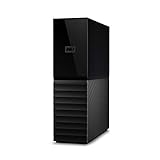
- Massive capacity, up to 18TB capacity (1 1TB = one trillion bytes. Actual user capacity may be less depending on operating environment.).date transfer rate:600.0 megabytes_per_second.Operating temperature: 5°C to 35°C, Non-op. temperature: –20°C to 65°C.
- Includes software for device management and backup with password protection (Download and installation required. Terms and conditions apply. User account registration may be required.)
- 256-bit AES hardware encryption
- SuperSpeed USB (5 Gbps); USB 2.0 compatible
Rank #3

- High capacity in a small enclosure – The small, lightweight design offers up to 6TB* capacity, making WD Elements portable hard drives the ideal companion for consumers on the go.
- Plug-and-play expandability
- Vast capacities up to 6TB[1] to store your photos, videos, music, important documents and more
- SuperSpeed USB 3.2 Gen 1 (5Gbps)
Product prices and availability are accurate as of the date/time indicated and are subject to change. Any price and availability information displayed on Amazon at the time of purchase will apply.

