
Choose church management software by testing whether its security controls match the information your church will store and the people who need to use it—not by relying on an encryption claim or a feature checklist. Map your data and workflows, request current evidence from vendors, test permissions and exports, and verify security and data-handling commitments in the contract.
Start with the data and ministry workflows your church needs
A church management system (ChMS) may hold household and member records, giving, attendance, pastoral-care details, volunteer information, children’s check-in data, event records, and communications. Before comparing products, decide which of those workflows actually belong in the system. Collect only the information the church needs, and classify records that could cause harm or distress if seen by the wrong person.

Then map each user group to the tasks it performs. A pastor, administrator, finance staff member, and volunteer may all need access to the same system, but not to the same records. Write down what each role should be able to view, add, edit, export, or delete. This gives you concrete scenarios to test instead of relying on a vendor’s generic claim of “role-based access.”
How do I choose the right church management software?
Use the same evaluation process for every finalist so that a polished demo or a long feature list does not outweigh security, usability, or the church’s actual needs.
#1 Best Overall

- Church Management Software
- Church Facilities, Office, Bookkeeping and Finances Administration One purchase equals lifetime use. NO monthly fees Manage, Track and print member details including Personal information, member status, age group, address/email phone number, photo, member Manage, Track and print member attendance
- Scheduling and calendaring features included: Schedule client work to exact days, color code by day and hour. Get organized and avoid schedule conflicts.
- Write a requirements list. Include the church’s essential workflows, user roles, integrations, portability needs, support expectations, and security requirements. Separate must-haves from preferences.
- Request documentation. Ask each vendor for current answers and supporting materials on access controls, MFA, hosting, subprocessors, logging, backups, incident response, exports, deletion, and contractual safeguards.
- Test representative tasks. Use a demo or trial, where available, to check whether each role can do its work without seeing unrelated or sensitive records.
- Compare the whole cost and operating fit. Check the pricing structure, member limits, modules, payment processing, migration work, integrations, support, and contract terms alongside security evidence.
- Record the decision and accepted risks. Note why the chosen product meets the requirements, what remains uncertain, and who will own access reviews and vendor follow-up.
CISA’s supplier-assessment guidance recommends structured due diligence for ICT products and services, including cloud solutions. Its topics include supplier security practices, privacy policies, access controls, incident response, recovery, and contractual protections. This is useful procurement guidance, not a certification of a particular ChMS or legal advice.
Who can access our church’s member data?
Ask vendors to explain how access can be limited by role, ministry, and record type, and whether the controls apply to all relevant data—not just a few screens. Confirm whether permissions can be changed promptly and accounts disabled when a staff member or volunteer leaves. Test those controls with representative accounts before putting real sensitive records into the system.
Check MFA, especially for administrators
Ask whether multifactor authentication (MFA) is available to every user and can be required for administrators. Find out which methods the product supports, including passkeys or physical security keys if those matter to your church’s setup. CISA says, “Strong passwords help, but they are no longer enough to keep accounts and systems safe when used alone.” It recommends MFA wherever possible and describes security keys as the strongest option among the methods it lists. Compatibility depends on the ChMS, so confirm it with the vendor before buying or deploying keys.
Rank #2
- Track and print various Custom letters for members Manage, Track and print calender with events
- Track and print multiple Church Bank Accounts and transactions
- Church Finances
- Church Event Calenders
- Track and print members contribution
Ask what staff, vendors, and subprocessors can access
Request an explanation of privileged vendor access, how it is controlled, and whether access is logged. Ask which subprocessors handle member, payment, messaging, or analytics data, and whether the vendor will notify the church when that list changes. A hosting provider’s security certification does not, by itself, certify the ChMS vendor or the church’s configuration.
The Tool Desk
Outbyte Driver Updater FREEFix the driver behind crashes, sound loss and screen glitchesFind Drivers →Outbyte PC Repair FREEClear out junk files and repair common Windows errorsFree Scan →What security evidence should a ChMS vendor provide?
Encryption is important, but it is only one part of a security review. Ask for written answers and current documents that define the controls’ scope, date, and applicability to the product and plan you would buy. A vendor’s feature page describes its public claims; it is not an independent audit.
- Data protection: What is encrypted in transit and at rest? How are separate churches’ records isolated from one another?
- Access and accountability: Are permissions configurable? Which actions appear in audit logs, who can review the logs, and how long are they retained?
- Recovery: How often are backups made? Are restoration tests performed? What recovery targets, if any, are promised in the agreement?
- Incident handling: What is the vendor’s response process, and what incident-notification commitment is written into the contract?
- Assurance: Can the vendor provide independent audit reports, certifications, or other assurance materials? Ask what product, service, date, and scope each one covers.
- Privacy and contract terms: What confidentiality, data-use, security, subcontractor, incident-notice, retention, and deletion terms apply?
Look for specific explanations rather than labels such as “secure” or “bank-level encryption.” If a vendor cannot answer a question, record that as an unresolved risk and decide whether it is acceptable for the information the church plans to store.
Rank #3
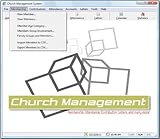
- Church Management All in One Software
- Church Management Membership Management
- Church Management Finance Management
How do I test permissions and everyday workflows?
Use a demo or trial with role-specific accounts and a realistic sample workflow. A system that is secure but too cumbersome for ordinary use may lead people to share accounts or keep information elsewhere. Conversely, a smooth demo does not establish that every sensitive record is properly restricted.
- Create or request accounts representing an administrator, finance user, pastor, and ordinary volunteer.
- Have each person complete the tasks they would perform, such as scheduling, attendance entry, or managing giving records.
- Check whether a volunteer can see giving or pastoral-care records without authorization, and whether access can be narrowed by ministry or record type.
- Change a role, remove a user, and check what happens to that person’s access and account history.
- Try an export and ask the vendor to explain what a recovery or support scenario would involve. Do not use real sensitive records in a trial unless the church has approved the arrangement.
Marketing-page statements and demo behavior do not prove the product’s full security posture. Request written confirmation for important controls and make sure the promised behavior applies to the plan and configuration under consideration.
Free tools Windows power users keep installed
One-click scans. No signup required.
Where is our data stored, and what happens if we leave?
Ask where the ChMS hosts church data, which subprocessors may handle it, and whether the location can vary by plan or customer. The answer may matter for legal obligations, but the applicable rules depend on the church’s location and circumstances; confirm them with an appropriate adviser rather than assuming a vendor’s regional hosting claim resolves the question.
Rank #4
- Church Facilities, Office, Bookkeeping and Finances Administration One purchase equals lifetime use. NO monthly fees Manage, Track and print member details including Personal information, member status, age group, address/email phone number, photo, member
- Manage, Track and print member details including Personal information, member status, age group, address/email phone number, photo, member
- Manage, Track and print member attendance Scheduling and calendaring features included: Schedule client work to exact days, color code by day and hour. Get organized and avoid schedule conflicts.
Portability should be tested before selection, not left until cancellation. Request a sample export and confirm which records and attachments it includes, the formats provided, and whether the exported files are usable without the vendor’s software. Ask what is deleted at cancellation, what is retained, for how long, and whether deletion covers backups and subprocessors. Put the relevant commitments in the contract.
How do vendor security claims compare?
The examples below summarize vendor-published statements identified for these products. They are not endorsements, independent audit findings, or proof that a control is enabled for every customer or plan. Ask each vendor for current documentation and confirm the scope directly.
| Product | Publicly described controls | What to verify |
|---|---|---|
| Nave | Its security overview, last updated June 2026, describes TLS 1.2 or later in transit, AES-256 at rest, parish-level row-level security, managed authentication, append-only audit logs for selected sensitive actions, and daily backups. | Ask which actions are logged, how access is managed, and whether backup restoration is tested and covered by contractual recovery commitments. |
| FaithPilot | Its security page describes TLS 1.3, AES-256, role-based access, daily backups, and data export. | Confirm the controls’ scope, backup restoration process, and which records and attachments an export includes. |
| Confide | Its security and pricing pages describe role permissions, MFA, audit logging, and data isolation. | Verify current availability and scope, including any optional encryption features and plan limitations. |
| Synq | Its access-control page describes role and module permissions, Google or Microsoft SSO, optional MFA, and audit records. | Confirm which MFA options are available, whether MFA can be required, and which events appear in audit records. |
| Flock | Its public materials describe tenant isolation, permission roles, authentication, audit logging, and account deletion features. | Ask for details on isolation, deletion timing and scope, and account offboarding. |
| ChurchLinker | Its public materials describe UK and EU hosting, per-church encryption for sensitive free text, and member data-rights features. | Confirm the hosting location for your account, the scope of the encryption claim, and how the data-rights features work. |
Compare cost and fit without overlooking security
Pricing and features can vary by plan and change over time, so compare current quotes rather than relying on old price lists. For each finalist, include the full cost of the workflows the church needs: member limits, module fees, payment processing, migration, integrations, and support. Compare those costs with the effort required to configure roles, train users, and maintain access safely.
A lower-cost product may still be a poor fit if it lacks the controls or export options the church needs. A feature-rich product may be unnecessarily complex if the church will not use its extra modules. Use the written requirements list to explain trade-offs and avoid treating the number of features as a measure of security.
Revisit access and vendor commitments after launch
Assign an owner to review permissions periodically, remove stale accounts, and check vendor notices for changes that affect security or data handling. Keep the contract, incident contacts, subprocessors information, and a tested export process accessible to the people responsible for the system. Reassess the product when the church’s workflows or the kinds of information it stores change.
Quick Recap
Product prices and availability are accurate as of the date/time indicated and are subject to change. Any price and availability information displayed on Amazon at the time of purchase will apply.

