
iTechGuides is reader-supported. When you buy through links on our site, we may earn an affiliate commission. As an Amazon Associate I earn from qualifying purchases. Learn more
There is no universally best AI gateway: the right choice depends on where it runs, how it handles failures, which request controls you need, and whether its evidence is trustworthy. The available comparisons offer useful starting points, but they are vendor or editorial publications—not an independent head-to-head test or a verified inventory of every page-one ranking. This guide reflects information published through October 9, 2026; features, security status, and prices can change.
What an AI gateway does—and what to compare
An AI gateway sits between an application and one or more model providers. It can route requests, enforce limits or spending controls, and record usage. That central position can simplify operations, but it also means the gateway handles sensitive traffic and often provider credentials.



Compare gateways on the boundaries and behaviors that affect your system, rather than relying on a generic “best” label. Vercel’s July 2026 comparison emphasizes deployment and failover; VDF.ai’s September 2026 comparison highlights hosting, controls, licensing, tool traffic, and evidence or logging. Both are useful editorial comparisons, not neutral product tests.
- Deployment boundary: Does the service run on a vendor’s network, in your cloud or VPC, on your own infrastructure, or in an on-premises or air-gapped environment? Identify whether prompts and logs cross a trust boundary you cannot accept.
- Failure behavior: Separate retries to the same upstream from fallback to another model and failover to another provider. Check defaults and the setup each behavior requires.
- Request controls: Confirm which controls are available in the plan you would actually use: budgets, rate limits, model allowlists, guardrails, and PII or data-loss handling.
- Observability: Determine whether traces show which route handled a request, what happened during retries or fallback, and enough detail to investigate cost, latency, and errors.
- Operating and commercial model: Check license, plan boundaries, pricing basis, operational burden, and whether required controls cost extra.
- Security and integrations: Review patch practices and incident response, then check how the gateway fits your existing cloud, API platform, and application SDK.
These are decision criteria, not a scorecard with a universal winner. Feature checklists can conceal important differences in deployment and failure handling, as Vercel’s comparison itself cautions. Vercel’s 2026 gateway comparison; VDF.ai’s September 2026 comparison.
How the compared gateways differ
The table summarizes only distinctions reported in the cited vendor or editorial comparisons. It is not a ranking, hands-on test, or guarantee that a feature is available in every plan or current configuration. Verify details with the provider before selecting or deploying a gateway.
| Gateway | Deployment or likely fit | Reported distinction and qualification |
|---|---|---|
| Vercel AI Gateway | Vercel- and AI SDK-oriented teams; Vercel says its gateway is not self-hostable. | Vercel reports production fallback and latency figures from its own system. These are vendor-specific reports, not a cross-vendor benchmark. Its claim about a live latency/throughput endpoint is also Vercel’s own claim. |
| Cloudflare AI Gateway | Managed on Cloudflare’s network. | VDF.ai lists routing, rate and spend controls, cost analytics, caching, guardrails, and data-loss prevention. Vercel distinguishes automatic retries for transient upstream errors from cross-provider failover, which requires Dynamic Routing configuration. |
| LiteLLM | Self-hostable, with broad provider support described by the comparisons; may suit teams that need infrastructure control. | Its self-hosting flexibility comes with operational responsibility, including security updates for a gateway that may concentrate API keys and logs. A June 2026 CSA AI-assisted note reports a vulnerability; see the security section before relying on its version details. |
| Portkey | Arize describes it as managed or hybrid. | Arize lists routing, retries, fallbacks, governance, and plan-specific pricing. Its comparison lists a free developer plan and Pro at $49 per month for 100,000 requests; this is a source-reported price snapshot, not a current quote. |
| TrueFoundry | Arize describes options spanning SaaS, customer-owned storage, self-hosted, VPC, on-premises, and air-gapped configurations. | Arize lists plan prices, including Pro at $499 per month. Treat the amount as a 2026 comparison snapshot and confirm current terms and what the plan includes. |
| Kong | The comparisons identify it as a possible fit for organizations with an existing Kong API estate. | Feature availability and pricing vary by deployment and plan; the comparisons do not establish one universal configuration or price. |
| OpenRouter | A managed option for access to a broad model catalog, as described in the comparisons. | Arize reports inference prices pass through without markup, but separately reports a 5.5% fee on credit purchases, subject to a minimum fee. “No markup” on inference therefore does not mean there are no fees. |
Gateway descriptions and commercial details above come from the cited comparisons, not an independent procurement check. Arize AI’s 2026 comparison; Vercel’s 2026 comparison; VDF.ai’s 2026 comparison.
Retries are not the same as provider failover
A retry repeats a request after a temporary error, often against the same upstream. It can help with transient failures, but it does not by itself move traffic to a different model provider. Cross-provider failover is a separate routing behavior and may need explicit configuration.
The Tool Desk
Outbyte PC Repair FREERepair Windows errors before they cause bigger problemsFix Now →Outbyte Driver Updater FREEScan for outdated or missing drivers - takes under a minuteDriver Scan →Vercel’s comparison says Cloudflare automatically retries transient upstream errors, while cross-provider failover requires Dynamic Routing to be configured. Treat that as a comparison’s description, not a substitute for checking current product documentation. In a pilot, deliberately test a transient error and an unavailable provider separately; record whether the request is retried, rerouted, or returned as an error, and check which route appears in logs. Vercel’s comparison of retry and routing behavior.
Security deserves its own selection check
A gateway can hold provider credentials and process prompts and logs, so a compromise can have consequences beyond a single application. Self-hosting gives a team more control over infrastructure, but also makes patching and configuration its responsibility.
A June 2026 Cloud Security Alliance Labs note reports that CVE-2026-42271 affected LiteLLM versions 1.74.2 through 1.83.6 and says the authorized fix requires LiteLLM 1.83.7 and Starlette 1.0.1. The same note reports CVSS scores of 8.7 for the vulnerability and 10.0 for a chained attack. However, the document identifies itself as AI-assisted and says it has not undergone official CSA review and approval. Treat these details as a lead, not as the sole authority for determining exposure or remediation; verify affected versions and fixes against primary vulnerability advisories before taking action. Cloud Security Alliance Labs note, June 2026 (PDF).
Rank #4
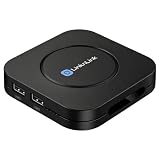
- ONE-CLICK HA INSTALL - Deploy Home Assistant in seconds, no coding. Unifies multi-brand devices into one control center. Includes one-click HACS, Add-on Manager, OTA, backup, and 30s auto-restore watchdog. Full Linux SSH and Docker access.
- AI HOME AUTOMATION - OpenClaw AI agent learns your routines to auto-adjust lighting, climate, and devices. Skip YAML—describe needs in plain language and AI creates automation instantly. Proactively recommends useful automations, evolving into a smart household manager.
- MATTER BRIDGE - Connects Zigbee, Wi-Fi, and other smart devices into Apple Home, Alexa, and Google Home. Generates a Matter pairing QR code—simply scan with your preferred app to add devices. Control everything by voice via HomePod, Echo, or Nest for a unified multi-platform smart home.
- FULL AI SERVER - A compact 24/7 OpenClaw AI server beyond smart home control. Handles writing, research, emails, and content generation as your everyday AI assistant. Saves hardware costs and power versus a separate PC/Mac. Affordable, low-maintenance local AI.
- MOBILE APP SETUP - Download the free LinknLink App, sign in, and add multi-brand devices via smartphone. All device info auto-syncs to HomeClaw—no repeated config or manual importing. Drastically reduces setup time and effort for first-time installation and future expansion.
For any candidate, establish who receives security reports, how updates are delivered, and who is responsible for applying them. For a managed gateway, ask what the provider operates and what remains your responsibility; for self-hosted deployments, include gateway and dependency updates in your operational process.
Do these 3 things before closing this tab:
1Fix the driver behind crashes, sound loss and screen glitches2Repair Windows errors before they cause bigger problems3Scan for outdated or missing drivers - takes under a minuteHow to read gateway rankings and performance claims
Published rankings answer different questions and reflect their publishers’ selection criteria. Vercel’s recommendation for its own gateway is explicitly aimed at Vercel- and AI SDK-oriented teams, and should be read as vendor guidance. Arize and VDF.ai provide comparison snapshots, not independent verification of every feature, price, or deployment claim. The available material does not establish that every page-one ranking has been audited.
Vercel reports that its production index rescued 3.5% of requests and 5.1% of tokens through fallback in 2026. Those are Vercel-reported figures from its own system, not a controlled comparison across gateways or a prediction for another workload. Vercel also attributes a claim that 37% of teams run five or more models in production, up from 29% the prior year, to a16z; the underlying survey was not verified here. Neither figure should decide a gateway purchase without the underlying scope and methodology. Vercel’s 2026 comparison and reported figures.
A practical way to make the choice
- Set the deployment boundary first. Rule out options that cannot meet your requirements for vendor-managed hosting, customer cloud or VPC, self-hosting, on-premises operation, or air-gapping.
- Write down required request-path controls. Specify model access, rate or spend limits, guardrails, PII handling, and audit detail. Confirm that each is available under the intended plan and configuration.
- Define failure expectations. Decide whether you need retries, a fallback model, or cross-provider failover. Ask how each is configured and test failure cases rather than inferring behavior from the word “fallback.”
- Run a representative pilot. Use your application’s request patterns and providers. Check that traces explain routing and failures, and measure your own latency, reliability, and cost rather than borrowing a vendor’s production statistics.
- Validate total operating fit. Confirm current licensing and pricing, identify who handles patches and incidents, and test integration with your existing platform and SDK.
This process turns a broad “best gateway” search into a shortlist tied to your actual trust boundary, controls, and failure requirements. Reconfirm product details and commercial terms directly with vendors because the comparisons are dated snapshots, not live specifications.
Quick Recap
Product prices and availability are accurate as of the date/time indicated and are subject to change. Any price and availability information displayed on Amazon at the time of purchase will apply.

