
What’s actually slowing this PC down?
Pick the symptom - the matching free tool is one click away.
Choose a subwoofer by matching its output and enclosure to your room, listening habits, system connections, and placement options. Sealed models are often more compact; ported models can provide more deep-bass output for larger spaces or louder playback. Neither type is automatically best: placement and calibration have a major effect on how well the bass blends with your speakers.
Start with your room and where the subwoofer can go
Measure the available floor space and check the cabinet dimensions before comparing models. Include clearance around a port opening if you are considering a ported subwoofer. Room shape, furnishings, boundaries, and the listening position all affect bass response, so a model that fits physically may still need experimentation to sound balanced.
Think about where you could place the sub, not just where it will sit on day one. Corner placement often increases output, but the loudest location is not necessarily the smoothest-sounding one. Bass below approximately 80 Hz is generally considered non-directional, according to Klipsch’s placement guidance; room reflections and boundaries can still make the bass vary considerably from seat to seat.
Choose the output you actually need
Consider the size of the listening space, how loudly you listen, and whether you prioritize movie effects, bass-heavy music, or both. Driver size and amplifier power can help narrow options, but specifications alone do not predict how a subwoofer will perform in your room. When comparing power figures, distinguish continuous RMS output from peak-power ratings; peak numbers do not describe sustained output.
Free tools Windows power users keep installed
One-click scans. No signup required.
#1 Best Overall

- 10" front-firing spun-copper IMG woofer
- All-digital amplifier with 300 watts peak power
- Volume low pass crossover and phase control
- Line level LFE RCA inputs for maximum receiver compatibility
- Dimensions 14 5" x 12 5" x 16 4"
For a large room, high playback levels, or strong deep-bass effects, look for a model designed to deliver sufficient output without strain. For a smaller room or moderate listening, a large, high-output cabinet may bring little practical benefit and can be harder to place.
Sealed or ported: compare the trade-offs
| Design | Typical trade-off | May suit |
|---|---|---|
| Sealed | Often more compact; may appeal to listeners who prioritize music or have limited space. | Smaller rooms, tight placement constraints, or listeners who prefer a sealed design. |
| Ported | Typically larger, but can deliver greater deep-bass output more efficiently. | Larger rooms, louder playback, or listeners seeking stronger deep-bass output. |
These are broad design tendencies, not guarantees about sound quality. A well-designed ported subwoofer can work well with music; “ported” does not automatically mean boomy. SVS says its ported models produce 2–4× the peak dynamic output in the 18–36 Hz octave compared with sealed models in the same family and price range. That is a manufacturer comparison, not an independent finding about all ported and sealed subwoofers.
Rank #2
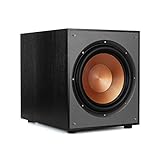
- 12" high excursion spun-copper Imp woofer
- 29 hertz – 120 hertz plus /- 3 dB
- 400 watt
- Max acoustic output 116dB
- Bass-reflex via rear firing port. Amplifier power (control/peak): 200 watts/400 watts
Check connections and system compatibility
Before buying, confirm that the subwoofer has an input your receiver or amplifier can use. Common options include RCA/LFE, speaker-level, and XLR inputs; the right choice depends on your equipment and cabling. Also check whether your system has a dedicated subwoofer output and supports the calibration or bass-management features you plan to use.
If a subwoofer has left and right RCA inputs but the receiver has one subwoofer output, follow the connection instructions for the specific subwoofer and receiver. The existence of two inputs does not by itself establish that a Y-splitter is required. Crutchfield’s connection guide covers common home-theater hookups and adjustment.
Quick wins for a faster PC:
Fix the driver behind crashes, sound loss and screen glitchesFind Drivers →Clear out junk files and repair common Windows errorsFree Scan →Scan for outdated or missing drivers - takes under a minuteDriver Scan →Rank #3

- POWERED SUBWOOFER FOR EXTRA BASS & PUNCH – 10-inch Dynamic Balance woofer and configured directed port provide accurate bass depth that brings music and movies alive. The perfect home theater subwoofer for small-to-mid size rooms. Waterproof : No
- LOUDER CLEARER SOUND EVEN AT HIGH VOLUME – Enjoy a thrilling balanced audio experience with rich, deep sound, even at low frequencies, when using the 10 inch subwoofer. BLENDS EASILY WITH ANY SPEAKER & plays demanding nodes without distortion
- DOUBLE THE AMPLIFIER POWER TO 100 Watts of Power with its in-built 50-watt RMS amp. Sophisticated engineering featuring best in class resonance-free driver materials makes this subwoofer with built in amp highly durable and FIT FOR EXTENDED USE
- EASY TO INTEGRATE WITH EXISTING SYSTEMS – Hook up this compact subwoofer to the receiver and upgrade your music sound instantly. Features continuously variable 80-160 Hz crossover and 40-160 Hz (-3dB) frequency response
- A sleek detachable grille on the front, speaker and line-level inputs, speaker-level outputs on the back, plus a Phase Toggle Switch for multiple subwoofers, make this home subwoofer cohesive and complete
Place and tune the subwoofer
- Try more than one location. If possible, use a sub crawl: place the subwoofer at the main listening position, play familiar bass-heavy material, and listen from candidate subwoofer locations. Choose a position that sounds balanced from the primary seat, rather than assuming a corner is best.
- Keep the port unobstructed. For ported models, leave the port opening clear of the nearby wall. Klipsch suggests clearance of about twice the port-exit diameter, described as probably 6–12 inches; check the manufacturer’s guidance for your model.
- Run receiver auto-calibration. Re-run the system’s calibration after moving the subwoofer so its level and integration are measured from the intended listening position.
- Adjust crossover, phase, and level if needed. Treat suggested crossover values as starting points, then listen for a smooth transition between the sub and main speakers. Crutchfield gives approximately 120 Hz for bookshelf speakers and 60 Hz for large tower speakers as setup-guide examples, not universal settings.
The goal is bass that sounds integrated with the main speakers rather than detached. If the receiver offers room correction or the subwoofer has DSP, those features can help tailor the response, but they do not remove the need to choose a suitable location.
Decide whether one subwoofer is enough
One subwoofer may be sufficient when the priority is a single listening seat. In a large room or across several seats, a second subwoofer can help distribute bass more evenly or address weak response in parts of the room, provided the receiver or system supports it. An isolation platform is optional; consider one if vibration or rattling is a problem rather than treating it as a required accessory.
Rank #4
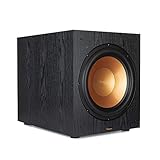
- Spun copper front-firing Cerametallic woofers
- 12-inch, front-firing driver
- 200 watts continuous, 400 watts dynamic power
- Compatible with almost any AV receiver
- Strong, flexible, removable grille
Use a practical shortlist
- Fit: Compare cabinet dimensions with available floor space and, for a ported model, port clearance.
- Output: Match the subwoofer’s intended capability to room size, listening level, and the type of content you play.
- Design: Weigh the usual compactness of sealed models against the deep-bass output advantage ported models can offer.
- Compatibility: Confirm inputs, receiver output, and any calibration features you intend to use.
- Coverage: Consider whether you need bass for one primary seat or more even coverage across multiple seats.
- Evidence: Prefer model-specific performance measurements when available; no universal best model follows from enclosure type or specifications alone.
Crutchfield buying-guide author Colin M. summarizes the central criterion: “The best subwoofer for you is one that’s appropriately sized for your room and integrates well with the rest of your system.” The guide was published August 10, 2026.
Quick Recap
Best Value
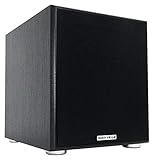
- POWERFUL BASS: 10" woofer with 600W peak/300W RMS output delivers tight, thumpy low end for movies, music, and gaming
- CLASS-D AMPLIFIER: Built-in amplifier precisely matched to the woofer and enclosure for clean, distortion-free sound
- ADJUSTABLE SETTINGS: Volume, crossover frequency, and phase controls allow you to customize your audio experience
- FLEXIBLE CONNECTIVITY: Features RCA line inputs/outputs and high-level speaker inputs/outputs to suit any setup
- DURABLE BUILD: MDF enclosure with high-grade vinyl finish and detachable foam grill for lasting performance and style
Product prices and availability are accurate as of the date/time indicated and are subject to change. Any price and availability information displayed on Amazon at the time of purchase will apply.

