
Recommended Free Tools
Choose an advanced metering infrastructure (AMI) system by matching the complete system—not just the meter—to your utility’s operational needs, territory, data requirements, security risks, regulatory obligations and lifecycle budget. Define measurable outcomes first, then compare meter, communications, head-end, meter-data management, integrations, services and supplier responsibilities as one operating system. There is no universally best communications technology or vendor without knowing the utility’s conditions.
Define what the system must deliver
Start with the operational and customer outcomes the investment must support. Potential uses include billing reads, remote service operations, outage or restoration support, demand response, customer information, distributed energy integration and distribution planning. Prioritize only the uses relevant to your utility; a long list of possible smart-grid applications is not a substitute for requirements.
For each priority, describe what the system must do, which teams or systems will use the result, how quickly the result is needed and how success will be verified. For example, “support outage operations” should become a defined requirement for the events to be detected, the data or notifications delivered, the receiving system and the acceptance test. FERC’s description of smart-grid characteristics links digital controls with reliability, security, efficiency, demand response, distributed resources, consumer information, metering communications and interoperability; it does not prescribe one AMI design for every utility.
DOE’s Federal Metering Guidance recommends documenting the process for selecting, procuring, installing, commissioning and authorizing meters and their supporting system. It is written for federal facilities, so use it as a planning reference rather than assuming it is binding on a utility.
#1 Best Overall

- Easy Installation: This digital energy meter is designed for simple installation in standard form 2S socket bases, making it ideal for RV, garage, and workshop electrical upgrades. The single-phase 120/240V design fits common power systems, allowing fast wiring into a breaker panel, meter box, or sub-panel without special tool. Its labeled terminals simplify connecting line, load, and neutral so you can begin monitoring kWh usage immediately through the bright LCD. Perfect for DIY users and professionals seeking reliable electric setup. The ANSI 2S 4-jaw fit ensures a quick snap-in install, while the Pulse and Reverse LEDs give instant confirmation of correct wiring & active meter operation.
- Sub-Metering: This digital smart meter is designed for sub-metering applications, allowing power usage to be separated across tenants, workshops, RV pads, and small apartments. Installed on a sub-panel, it measures energy consumption in accurate kWh, enabling fair cost allocation for rental units or individual circuits. Its solid-state electronic design reliably supports tools, heaters, and other electrical loads while providing clear digital readings for billing and monitoring. Suitable for rental homes, garages, and outbuildings, it delivers dependable usage data. Pulse output & Modbus communication allow simple system integration, and EEPROM memory helps retain data during power outages.
- Solar Monitoring: This digital energy meter is a powerful tool for solar users who need precise import/export kWh monitoring. Installed between inverter and home or between charger and battery, it reveals real-time power flow, electricity draw, and total system consumption. The bright LCD shows solar output trends clearly, helping users evaluate panel performance, balance loads, and size future wattage upgrades. Ideal for hybrid off-grid systems, cabins, RV conversions, and backup power configurations where accurate energy visibility is essential. The Reverse-flow LED provides quick detection of solar backfeed or polarity issues, helping users verify inverter behavior and system safety.
- Multi-Scenario Use: This meter adapts to RV parks, mobile homes, cabins, garages, remote buildings, and light industrial spaces. The 120/240V single-phase configuration fits standard electrical systems and installs easily in a meter box, breaker panel, or outdoor socket. It reliably measures power for welders, compressors, HVAC units, chargers and other heavy loads. The bright LCD display and accurate kWh tracking make it a multifunctional monitoring solution for nearly any environment that needs dependable electricity usage insight. Its solid-state design tolerates harsh environmental conditions, and the IR port allows technicians to check or adjust meter settings without opening the panel.
- Reliable Performance: Built to address reliability concerns seen, this solid-state electronic design delivers long-term stability for 60Hz residential and light industrial systems. It withstands electrical fluctuations from motors, pumps, and HVAC units without losing kWh accuracy. The sealed housing protects circuitry when used in a proper box or panel, ensuring consistent energy monitoring across temperature and humidity changes. For users frustrated by early failures, this meter offers dependable operation in any electric power environment. EEPROM storage keeps essential usage data through power cycles, while the Pulse LED provides a quick way to confirm proper meter function.
Specify the whole AMI system
AMI includes the field devices, communications, software, interfaces, operating processes and support needed to move meter data securely into utility operations. Write the specification around the end-to-end service and identify who supplies, integrates, operates and maintains each part.
- Meters: Required meter types, electrical and service configurations, environmental conditions and applicable local metrology requirements.
- Communications: Coverage, capacity, latency, read frequency, resilience, monitoring, operating model and any recurring connectivity charges.
- Head-end system (HES): Device onboarding and management, event handling, command controls and communications with meters and downstream systems.
- Meter-data management (MDM/MDMS): Data validation and editing, retention, access controls, exports and delivery to operational and business systems.
- Integrations: Interfaces to billing, customer-information systems, outage management, distribution management, analytics and authorized third parties.
- Security and support: Identity and key management, audit, software and firmware maintenance, supplier access, incident handling and support responsibilities.
- Delivery and operations: Survey, installation, commissioning, acceptance, training, maintenance and operational handoff.
DOE’s Federal Metering Guidance says equipment specifications should cover advanced meters, data acquisition and management systems, communications and associated hardware. It also recommends describing data acquisition, local storage and transmission, and considering applicable industry standards such as IEEE, ANSI and AGA. Confirm which standards and local requirements apply to your utility rather than treating that federal guidance as a compliance checklist.
Choose communications for the territory
Compare RF mesh, cellular, power-line communications (PLC) and hybrid designs against the service territory and operating requirements. A technology that performs well in one geography or network configuration may not suit another. The cited guidance establishes communications as a core AMI component but does not establish a universal technology winner.
Rank #2

- UL/cUL Listed, California CTEP approved. Conform to ANSI C12.1 and C12.20 national accuracy standards. Revenue-grade 0.5% accuracy. Comes with a lower cover which has two 3/4" knockouts to connect the conduits. Confirmed by UL, fuse is not required when connecting breaker of electric panel to the meter. Good for both 3 phase 4 wire (3 hot wire, 1 Neutral) and 3 phase 3 wire (3 hot wire, no Neutral). Please connect the wiring as per 5th picture.
- DAE Cloud Metering (2nd picture) available with DAE CC2030 Gateway. CC2030 will collect energy data from DAE electrical meters and send them to Cloud Server through Ethernet. With PC, cell phone or tablet, landlords or property managers can get access to real time data, monthly kWh and billing reports to their tenants. TOU (Time of Use) billing reports are also available. No IT guy required. Just connect wires as per a simple picture (see video) & ready to go.
- For existing building, hard to draw cable between electric meter (close to electric panel) and CC2030 (close to your router), please choose 1 CC2030 KIT + 2 WSC500A RF Converters to connect electric meter and CC2030 wirelessly (3rd picture). Indoor use only, DAE B1725 watertight enclosure is available for outdoor use (4th picture).
- Factory Calibration Certificates available. DAE Controls LLC is an Minority Business. Please feel free to get the NMSDC Minority Supplier Certificate from DAE Controls Website. Following CTs are available with the meter. Split Core CTs DAE CT-5000SB (5000A), CT-3000SB (3000A), CT-2000SB (2000A), CT-1500SB (1500A), CT-1000SB (1000A), CT-600S (600A), CT-400S (400A), CT-200SB (200A), CT-100S (100A) and Solid Core CT-600D9 (600A), CT-400D6 (400A), CT-200D3 (200A).
- For monitoring up to 8 electric panels remotely with cell phone, PC and generate billing reports, you will just need 1 SMB350-UL-8-B KIT + 1 CC2030 KIT.
Ask bidders to provide evidence for representative locations and operating conditions, including:
What’s actually slowing this PC down?
Pick the symptom - the matching free tool is one click away.
- Coverage and reach across the actual service area, including difficult-to-serve locations.
- Read success, latency and capacity at the required read frequency and expected device count.
- Performance during relevant local conditions and resilience when power or communications are disrupted.
- Interference, coexistence and monitoring arrangements, including how faults are found and resolved.
- Who operates and maintains the network, and what recurring connectivity, equipment and labor costs apply.
Require a territory-specific survey, field test or pilot where bidder assumptions cannot otherwise be substantiated. Do not accept generic claims that one option is always cheaper, more reliable or faster.
Make interoperability and data access contractual
AMI deployments commonly combine multiple systems, vendors and protocols; DOE’s Federal Metering Guidance notes that this can make data access and use challenging. Before award, require interface documentation, applicable protocol and conformance evidence, and end-to-end integration tests. Specify the utility’s rights to access, use and export its data, including formats, retention, fees and access after a contract ends.
Rank #3
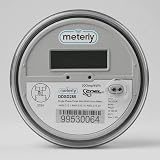
- Electronic LCD register
- Polycarbonate cover
- Test LED Unattended Processing
- Tested for ANSI C12 compliance
- Meter Zeroed
Ask whether the utility can replace or add a supplier at one layer—such as communications or data management—without having to replace the entire stack. Get a practical answer about dependencies, interface support, migration, configuration access and the services or costs involved. For utilities in India, the Central Electricity Authority resource page lists guidance on standardization and interoperability for end-to-end communications among smart meters, HES and MDM, alongside technical specifications and functional AMI requirements. Verify the date and applicability of each publication before treating it as binding. Those CEA materials are India-specific, not general requirements for utilities elsewhere.
Evaluate cybersecurity and secure maintenance across the system
Assess the full data and control path: meter, network, HES, MDM, integrations, cloud or hosted services, supplier support and utility operations. Cybersecurity should be addressed in architecture, procurement, implementation and continuing risk management, not treated as a single vendor questionnaire. DOE says its electricity subsector Cybersecurity Risk Management Process was developed with NIST and NERC and supports ongoing, organization-tailored risk management involving utilities and supporting vendors. NIST IR 7628 Rev. 1 provides a framework for tailoring smart-grid cybersecurity to organizational risks and vulnerabilities, including AMI, privacy and security requirements.
Ask bidders to provide evidence and assign responsibility for:
Rank #4

- UL/cUL Listed, Conform to ANSI C12.1 national accuracy standards. Comes with a lower cover which has two 3/4" knockouts to connect the conduits. One in-inline fuse with holder is attached for you to connect hot wire A to VA of the meter. The meter is powered by VA and VN. VB and VC just take the reference of voltage from hot wire B, C. They do not need in-inline fuse.
- P153-200 KIT is ready for Cloud Metering (2nd picture) with DAE CC2030 Gateway. CC2030 will collect energy data from DAE electrical meters and send them to Cloud Server through Ethernet. With PC, cell phone or tablet, landlords or property managers can get access to real time data, monthly kWh and billing reports to their tenants. TOU (Time of Use) billing reports are also available. No IT guy required. Just connect wires as per a simple picture (see video) & ready to go.
- For existing building, hard to draw cable between electric meter (close to electric panel) and CC2030 (close to your router), please choose 1 CC2030 KIT + 2 WSC500A RF Converters to connect electric meter and CC2030 wirelessly (3rd picture). Indoor use only, DAE B1725 watertight enclosure is available for outdoor use (4th picture).
- Factory Calibration Certificates available. DAE Controls LLC is an Minority Business. Please feel free to get the NMSDC Minority Supplier Certificate from DAE Controls Website. Following CTs are available with the meter. Split Core CTs DAE CT-5000SB (5000A), CT-3000SB (3000A), CT-2000SB (2000A), CT-1500SB (1500A), CT-1000SB (1000A), CT-600S (600A), CT-400S (400A), CT-200SB (200A), CT-100S (100A) and Solid Core CT-600D9 (600A), CT-400D6 (400A), CT-200D3 (200A).
- For monitoring up to 8 electric panels remotely with cell phone, PC and generate billing reports, you will just need 1 SMB350-UL-8-B KIT + 1 CC2030 KIT.
- Authentication, authorization, access control and secure communications.
- Key and credential management, logging and audit.
- Vulnerability intake, remediation timelines, incident notification and response coordination.
- Supplier access, subcontractors and the security practices of hosted or support services.
- Product support life, security maintenance and the process for updating meters and associated systems.
Require documented controls for authenticated updates, testing, rollback and ownership of the upgrade process. NIST IR 7823 describes voluntary conformance test requirements for secure local and remote meter upgrades under NEMA SG-AMI 1-2009, including information for vendors and high-level tester procedures. The NIST page dates the report to March 2015 and identifies the testing as voluntary; it should not be presented as a current mandatory certification.
Independent reader supportYour contribution helps us test, update, and keep practical guides available for everyone.Plan data governance, commissioning and acceptance
Decide who stewards AMI data and where it is collected, stored, secured, backed up, retained, analyzed and made available. Define access by role, the purpose of each data use and how exceptions are handled. Put these decisions in a data-management plan and align them with the utility’s applicable privacy and records obligations.
Build field commissioning and acceptance into the procurement and rollout plan. Define pass/fail criteria before installation, covering the requirements that matter to operations:
Best Value

- ✅ Farady cage cover for your uitlity company electric smart meter that emit EMF
- ✅ Faraday cages are proven technology designed to shield electic fields
- ✅ Invented and designed by us and Made in the USA. We are EMF experts. All other are copies of the Smart Meter Guard.
- ✅ Safe and easy installation - No assembly required - fits all smart meters in the US and Canada. Comes with instructions that has pictures even though it is very easy to install, takes minutes to install.
- ✅Once installed there is no need for any other shielding inside your house behind the smart meter.
- Meter installation, configuration and communications at representative sites.
- Data completeness, accuracy, validation and delivery to intended systems.
- End-to-end integrations and exception handling when data or communications fail.
- Security controls, access procedures, update processes and audit evidence.
- Training, support escalation, operational ownership and handoff documentation.
DOE’s Federal Metering Guidance recommends documenting installation and commissioning, providing a system-acceptance mechanism, and having a utility representative confirm operation after installation and commissioning. Adapt that process to the utility’s own governance and acceptance authority.
Compare lifecycle cost, delivery capability and exit risk
Use a common lifecycle-cost model rather than comparing meter purchase prices alone. Include meters and network equipment; recurring connectivity; HES and MDM licenses or services; integration; cybersecurity; deployment labor; training; operations; maintenance; upgrades; replacements; and exit or migration. Ask each bidder to state assumptions and exclusions so that a lower initial price is not mistaken for a lower total cost. DOE’s federal guidance calls for considering lifecycle costs, procurement strategy and contract terms, and supply-chain risk management. The cited sources do not establish a current cross-vendor price benchmark or a defensible savings percentage.
Evaluate delivery risk alongside price. Request evidence of deployments in comparable conditions, implementation capacity, support horizon, security maintenance, service-level commitments, references, data export and transition options. A pilot or phased rollout can test assumptions in representative conditions before full deployment. DOE’s 2022 System in Transition report shares regulator discussions and utility lessons about AMI and related technologies; it is not a current vendor ranking.
| Comparison area | Questions and evidence to require from each bidder |
|---|---|
| Functional fit | Which required use cases work today? What needs custom work, another product or a later release? |
| Meter coverage | Which service configurations, environmental conditions and local requirements are supported? |
| Communications | What measured coverage, latency, read success, resilience, capacity and operating costs apply to this territory? |
| Interoperability | Which interfaces and standards are documented and tested? Can one system layer be changed without replacing the rest? |
| Data control | What can the utility access and export, in which formats and at what cost? What are the retention and access controls? |
| Cybersecurity | What architecture, controls, test results, update process, supplier practices, incident commitments and support life are evidenced? |
| Implementation | What survey, installation, commissioning, migration, training, acceptance and rollout plan is proposed? |
| Lifecycle economics | What capital, recurring, integration, staffing, maintenance, upgrade and exit costs are included, and what assumptions apply? |
| Operational and vendor risk | What dependencies, service commitments, support capacity and transition options exist? |
Score proposals against the utility’s stated priorities, not a generic vendor league table. Set the scoring criteria and evidence thresholds before bids arrive; distinguish a demonstrated capability from a roadmap promise or an unsupported assertion.
Windows Errors? Fix Them Before They Spread
Repair common Windows errors and clear accumulated junk for a smoother, more stable PC - no reinstall needed.Free scan · no reinstallCrashes, No Sound, or Screen Glitches?
Random freezes, missing sound and display glitches usually trace back to one bad driver. Find and replace yours safely.Free scan · under a minuteApply the rules for the utility’s jurisdiction
The applicable requirements depend on the utility’s country, regulator, service territory and procurement context. Check local metrology rules, utility commission requirements, privacy law, cybersecurity obligations, procurement rules and recognized standards before converting any framework into a compliance requirement. DOE’s Federal Metering Guidance addresses federal agencies; the CEA resources cited here are from India; and DOE’s electricity subsector cybersecurity process is guidance that still must be mapped to the organization’s obligations and risk context.
A defensible selection therefore begins with local requirements and operational outcomes, compares the whole AMI stack on common evidence, and makes acceptance and ongoing responsibilities explicit in the contract. Without the utility’s territory, customer mix, existing systems, budget and required data intervals, no particular system, vendor or communications technology can be named as the best choice.
Quick Recap
Product prices and availability are accurate as of the date/time indicated and are subject to change. Any price and availability information displayed on Amazon at the time of purchase will apply.

