
Outdated Drivers Are Slowing You Down
One free scan finds every outdated or missing driver and matches the right update for your exact hardware.Free scan · exact hardware matchPC Slower Than It Used to Be?
A free scan shows the junk files, broken settings and background clutter dragging Windows down - then fixes them in one click.Free scan · Windows 10 & 11Start with your camera’s sensor format, then choose the focal range and decide whether you need autofocus. Sigma offers Sony E-mount lenses for both APS-C and full-frame cameras, including autofocus primes and zooms. Voigtländer’s native E-mount lenses in this comparison are manual focus, with electronic communication that can provide camera-dependent information and aids. An E-mount fit alone does not tell you whether a lens covers your camera’s sensor.
First check mount fit and sensor coverage
Sony E-mount lenses and bodies can be used across APS-C and full-frame formats, but mount compatibility and image coverage are separate questions. Sony explains that an APS-C lens on a full-frame body records using APS-C/Super 35 framing; if you see vignetting, check the camera’s crop setting. The resulting framing and image dimensions may not suit every use. See Sony’s E-mount APS-C and full-frame guidance.
If your camera is APS-C
Sigma DC lenses are designed for APS-C and are a format-matched place to start. Sigma’s lineup includes the 18–50mm F2.8 DC DN, an APS-C zoom example. Full-frame lenses can also be used on APS-C bodies, but compare their size, weight, field of view and cost for your needs. Voigtländer examples discussed here use full-frame image circles, so an APS-C camera captures a narrower field of view than a full-frame camera would with the same lens.
If your camera is full-frame
Sigma DG lenses are designed for full-frame. An APS-C/DC lens can still be used, but the camera records with APS-C/Super 35 crop framing. Check the crop setting and whether the resulting image size works for your intended output before choosing one.
Do these 3 things before closing this tab:
1Repair Windows errors before they cause bigger problems2Scan for outdated or missing drivers - takes under a minute3Clear out junk files and repair common Windows errors#1 Best Overall

- World’s first high-speed standard zoom lens for APS-C cameras with the focal length range of 17-70mm 4.1x zoom ratio
- Outstanding optical performance with 16 elements in 12 groups featuring two GM (Glass Molded Aspherical) lens -elements and one hybrid aspherical lens element
- Upgraded VC effective in combination with Sony APS-C mirrorless cameras, leveraging AI for video shooting
- Close focusing capability with MOD of just 7.5” at 17mm / 15.4" at 70mm
- Moisture-Resistant Construction and Fluorine Coating
Choose based on autofocus and how you shoot
For autofocus or moving subjects
Prioritize a lens explicitly made for Sony E-mount autofocus, and check the manufacturer’s compatibility information for your exact camera body. Sigma says its E-mount range uses an optimized AF drive control algorithm, but that does not establish identical feature support on every body. Sigma also notes that in-body stabilization and in-camera aberration correction depend on compatible cameras. Consult its camera compatibility table for your camera and lens.
For deliberate manual focus
Voigtländer’s native E-mount lenses are manual focus: you set focus yourself, and aperture is manually controlled. They are a fit when that approach is intentional, rather than a substitute for autofocus when a subject is moving and you depend on the camera to track it. Cosina describes its Voigtländer E-mount lineup as manual-focus designs with electronic contacts for usage data.
Rank #2

- Supreme lightweight portability that makes telephoto shooting fun
- Uncompromising image quality with 15 elements in 10 groups that lets you focus on creativity
- Up-close shooting performance (31.5" / 1:9.4 Wide & 59.1" / 1:5.1 Tele)
- Moisture-Resistant Construction
Electronic communication does not make these lenses autofocus. Depending on the lens and camera, it can support EXIF data and features such as lens correction, stabilization or focus assistance. The Voigtländer E-mount manual describes camera-dependent communication. For example, the 50mm F1.0 Nokton E-mount is described as a full-frame design with a distance encoder for camera-dependent 5-axis stabilization support.
Match focal range and lens type to the subject
Choose the framing and working distance you need before choosing a brand. A zoom covers a range of focal lengths without changing lenses; a prime has one focal length. For a flexible APS-C zoom path, consider the Sigma 18–50mm F2.8 DC DN for Sony E. For a full-frame standard-zoom path, consider the Sigma 24–70mm F2.8 DG DN II for Sony E. These are examples, not universal recommendations: the better fit depends on camera format, subjects, desired framing, budget and how much size or weight you will carry. Verify the E-mount variant when comparing product listings.
Free tools Windows power users keep installed
One-click scans. No signup required.
Rank #3
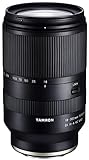
- World’s first 16.6x all-in-one zoom lens for APS-C mirrorless cameras
- Best-in-class, extremely fast and precise AF provided by VXD linear motor focus mechanism
- Maintains high resolving power from the center to the corners throughout the range
- Compact and portable design at 4.9 X 2.9 inches and a weight of just 21.9 ounces
- Moisture-Resistant Construction and Fluorine Coating
For a prime, start with the focal length and maximum aperture that suit your subject and working distance. A model name or brand reputation by itself does not establish which lens will be best for your photographs. Sigma’s lineup spans APS-C DC and full-frame DG products, with primes and zooms across several focal-length categories; consult the Sigma E-mount range for available options.
Compare the exact model specifications
Once you have narrowed the format and focus type, compare model-level specifications rather than relying on the brand label. Sigma’s March 2026 catalogue lists focal length, angle of view, filter diameter, dimensions and weight; check the entry for the exact model and mount variant. Voigtländer publishes product-specific details on its lens pages and manuals.
Rank #4

- Wide zoom range (82 - 315mm 35mm equivalent) ideal for sports or nature;Aperture blades : 7
- Internal focusing for smooth, quiet operation - perfect for video capture.Direct manual focus with non-rotating focus ring during AF: ideal for precise, comfortable manual focus adjustments
- Optical Steady Shot image stabilization for stable video capture and low light performance
- Minimum Focus Distance - 3.28 ft, Maximum Magnification ratio - 0.23x
- Provides a wide focal range of up to 315mm (35mm equivalent) ideal for sports or nature shooting
- Coverage: Confirm APS-C/DC or full-frame/DG suitability for your body.
- Focal length and angle of view: Check the actual framing on your camera format.
- Maximum aperture: Compare the aperture against your light and depth-of-field needs.
- Zoom or prime: Decide whether changing framing without changing lenses matters more than having one fixed focal length.
- Handling: Compare dimensions, weight and filter diameter, particularly if you carry filters or travel with the lens.
- Operation: Confirm autofocus support or manual-focus operation, and check any camera-dependent functions.
Use Sigma’s March 2026 lens catalogue for its model specifications. Prices, stock and regional availability are not established here, so check current local listings after selecting the model and exact mount.
Independent reader supportYour contribution helps us test, update, and keep practical guides available for everyone.Check compatibility and firmware before buying
Feature support can vary by camera and firmware, so verify the particular body-and-lens combination rather than assuming every E-mount feature works identically. Check Sigma’s compatibility table and firmware downloads for updates applicable to your lens. Firmware information changes over time; the support page listed a Sony E-mount firmware entry for the 12mm F1.4 DC dated September 17, 2026.
Quick Recap
Best Value
- Wide zoom range (82 - 315mm 35mm equivalent) ideal for sports or nature;Aperture blades : 7
- Internal focusing for smooth, quiet operation - perfect for video capture.Direct manual focus with non-rotating focus ring during AF: ideal for precise, comfortable manual focus adjustments
- Optical Steady Shot image stabilization for stable video capture and low light performance
- Minimum Focus Distance - 3.28 ft, Maximum Magnification ratio - 0.23x
- Angle of view (on APS-C) 28.2° - 7.8°
Product prices and availability are accurate as of the date/time indicated and are subject to change. Any price and availability information displayed on Amazon at the time of purchase will apply.

