
Free tools Windows power users keep installed
One-click scans. No signup required.
iTechGuides is reader-supported. When you buy through links on our site, we may earn an affiliate commission. As an Amazon Associate I earn from qualifying purchases. Learn more
Choose a password manager that can generate a different, random password for every financial account, protect its vault with a long unique master passphrase and multifactor authentication (MFA), and work reliably on your devices. Before moving bank logins into it, understand how recovery works—and separately secure the email account used for password resets. A password manager helps protect credentials; it does not replace the MFA offered by your bank or brokerage.
What matters most when choosing one
NIST says password managers offer greater security and convenience by generating unique, complex passwords for online services and storing them securely. That matters for financial accounts because reusing a password means a credential exposed at one service may also put another account at risk. NIST’s consumer guidance recommends password managers for accounts that require passwords. NIST SP 800-63 FAQ | NIST: How Do I Create a Good Password?

- Unique password generation: It should create and store a distinct password for each bank, brokerage, credit-card account, and other financial service.
- Vault protection: Look for MFA to protect access to the password manager, and review the provider’s published security information. The vault is a high-value target because it holds credentials for many accounts.
- Recovery you understand: Find out what happens if you forget the master passphrase, lose a device, or are locked out. Recovery that can expose or reset the master secret may create a route to the vault.
- Device and browser fit: Test the sign-in workflow on the phone and computer you actually use. Autofill may behave differently across sites and devices.
- Compatibility with each financial provider: Check the bank’s password-entry and MFA options independently. No password manager or physical security key is established as compatible with every institution.
Protect the vault and plan for recovery
Use a long, unique master passphrase for the manager; do not reuse a bank password or a password from another site. Turn on MFA for the manager if it offers it. NIST cautions that recovery of a master password can compromise the vault, so read the recovery and emergency-access rules before storing your most sensitive credentials. NIST SP 800-63 FAQ
Do these 3 things before closing this tab:
1Scan for outdated or missing drivers - takes under a minute2Repair Windows errors before they cause bigger problems3Fix the driver behind crashes, sound loss and screen glitchesRecovery is not only about the manager. Financial institutions often send password-reset links to email, so protect the email account tied to your bank accounts and manager with its own unique password and MFA. The FTC explains why control of that inbox can give someone a route to account resets. FTC: Creating Strong Passwords and Other Ways To Protect Your Accounts
#1 Best Overall
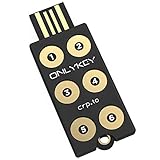
- ✅ PROTECT ONLINE ACCOUNTS – A password manager, two-factor security key, and secure communication token in one, OnlyKey can keep your accounts safe even if your computer or a website is compromised. OnlyKey is open source, verified, and trustworthy.
- ✅ UNIVERSALLY SUPPORTED – Works with all websites including Twitter, Facebook, GitHub, and Google. Onlykey supports multiple methods of two-factor authentication including FIDO2 / U2F, Yubico OTP, TOTP, Challenge-response.
- ✅ PORTABLE PROTECTION – Extremely durable, waterproof, and tamper resistant design allows you to take your OnlyKey with you everywhere.
- ✅ PIN PROTECTED – The PIN used to unlock OnlyKey is entered directly on it. This means that if this device is stolen, data remains secure, after 10 failed attempts to unlock all data is securely erased.
- ✅ EASY LOG IN –No need to remember multiple passwords because by plugging OnlyKey to your computer, it automatically inputs your username and password. It works with Windows, Mac OS, Linux, or Chromebook, just press a button to login securely!
Keep a recovery plan you can use if a device is lost, but do not leave the master secret somewhere easily accessible. The right balance depends on your circumstances: a recovery method should be usable when you need it without becoming an easy shortcut into the vault.
Check how it works with your bank or brokerage
Try the manager’s autofill on each financial site and app you use. If autofill is unavailable or unreliable, check whether the service lets you paste a password. NIST SP 800-63B Revision 4 says verifiers should permit paste when password autofill APIs are unavailable; that standard does not establish that every bank implements the recommendation. NIST Special Publication 800-63B, Revision 4
Rank #2

- POWERFUL SECURITY KEY: The Security Key C NFC is the essential physical passkey for protecting your digital life from phishing attacks. It ensures only you can access your accounts.
- WORKS WITH 1000+ ACCOUNTS: Compatible with Google, Microsoft, and Apple. A single Security Key C NFC secures 100 of your favorite accounts, including email, password managers, and more.
- FAST & CONVENIENT LOGIN: Plug in your Security Key C NFC via USB-C and tap it, or tap it against your phone (NFC) to authenticate. No batteries, no internet connection, and no extra fees required.
- TRUSTED PASSKEY TECHNOLOGY: Uses the latest passkey standards (FIDO2/WebAuthn & FIDO U2F) but does not support One-Time Passwords. For complex needs, check out the YubiKey 5 Series.
- BUILT TO LAST: Made from tough, waterproof, and crush-resistant materials. Manufactured in Sweden and programmed in the USA with the highest security standards.
Also inspect each institution’s MFA settings. A bank may offer options such as an authenticator method, a passkey, or a physical security key, but available methods vary by provider. CISA encourages strong, phishing-resistant MFA and identifies physical security keys as one possible method. Confirm that your institution supports the specific method—and, for a security key, its model or protocol—before relying on it. CISA: Require Multifactor Authentication
Set it up for financial accounts
- Create the manager account: Choose a long, unique master passphrase and enable MFA for vault access if available.
- Review recovery first: Check how the provider handles forgotten passphrases, lost devices, account lockouts, and vault restoration before adding sensitive logins.
- Secure the recovery inbox: Give the email account tied to financial services a unique password and MFA.
- Replace reused financial passwords: Generate a separate password for each bank, brokerage, card account, and other financial login rather than making small variations on one shared password.
- Test your actual workflow: Sign in on the devices and browsers you use, confirming autofill or paste works as needed.
- Enable the bank’s strongest practical MFA: Review the options at each institution. If you want to use a physical security key, verify that the institution accepts it.
- Keep a usable recovery plan: Make sure you can respond to a lost-device or lockout situation without storing the master passphrase in an easily accessible place.
What the guidance does—and does not—establish
NIST’s consumer article, created April 28, 2025 and updated August 20, 2025, recommends password managers in its practical advice. The NIST SP 800-63 FAQ discusses their benefits and safe use; the technical SP 800-63B standard itself does not explicitly recommend using a password manager, though Revision 4 recommends permitting password paste in the stated circumstances. These are related but distinct forms of guidance.
Rank #3

- Requires 3 "AAA" batteries (included)
- Unit auto-locks for 30 minutes after 5 consecutive incorrect PINs
NIST’s consumer article reports that the Identity Theft Resource Center recorded more than 3,000 data breaches in 2024, potentially exposing hundreds of millions of online accounts. That figure is broad breach context, not evidence that password managers reduce banking fraud or a measure of any manager’s effectiveness. The available guidance supports choosing by security practices, recovery, and compatibility; it does not establish a brand ranking or universal bank support.
Quick Recap
Best Value

- FIDO-ONLY FUNCTIONALITY: Supports FIDO2 (passkeys) and FIDO U2F protocols for passwordless and second-factor authentication. Does not support OTP, TOTP, Smart Card (PIV), or other advanced features - upgrade to YubiKey 5 Series for extended functionality
- SECURE AND CONVENIENT: Passwordless MFA login with the YubiKey Bio authenticator and biometric information using a fingerprint, with a PIN as a fallback. Simply plug in via USB and use your fingerprint to authenticate
- DEVICE & OS COMPATIBILITY: Compatible with Windows, macOS, ChromeOS, and Linux. Works seamlessly with supported services like Google and Microsoft accounts, and major password managers. See the full compatibility list at "Works With YubiKey"
- DURABLE & RELIABLE: Resistant to tampering, water, and crushing. No batteries or network connectivity required, offering dependable authentication without any downtime. Securely manufactured in USA & Sweden
- Yubico Authenticator App - Fingerprint enrollment, passkey management and PIN configuration available via the app app - Upgrade to YubiKey 5 Series to generate one-time-passwords (OTP) via Yubico Authenticator and for advanced compatibility (OATH, PIV)
Product prices and availability are accurate as of the date/time indicated and are subject to change. Any price and availability information displayed on Amazon at the time of purchase will apply.

