
Free tools Windows power users keep installed
One-click scans. No signup required.
Choose a database only after you have defined what “temporal” means for your application and shown that relationships between entities improve retrieval. A timestamp stored on a node or edge is not, by itself, temporal database support. You need to establish how the system represents changing facts, retains history, and answers the point-in-time questions your users will ask.
There is no evidence here for a universally best database or a comparable ranking. The documented architectures show different ways to combine graph retrieval with vectors; they do not establish that each candidate provides native temporal versioning or bitemporal queries.



First decide whether graph retrieval is worth the added system complexity
Graph RAG combines semantic retrieval—often vector search—with queries over relationships between entities. It is most useful when those connections change the answer: for example, tracing ownership through several organizations, following a sequence of dependencies, or relating a claim to the people, events, and documents around it.
If users can get good answers by retrieving relevant passages without traversing meaningful relationships, conventional RAG may be sufficient. Google Cloud’s Spanner Graph GraphRAG architecture guidance makes this distinction: complex interrelationships can support graph retrieval, while less connected source data may suit conventional RAG. The choice should follow the shape of the questions and data, not the fact that an application uses an LLM.
Outdated Drivers Are Slowing You Down
One free scan finds every outdated or missing driver and matches the right update for your exact hardware.Free scan · exact hardware matchWindows Errors? Fix Them Before They Spread
Repair common Windows errors and clear accumulated junk for a smoother, more stable PC - no reinstall needed.Free scan · no reinstall#1 Best Overall
- Graph retrieval is worth evaluating when answers depend on multi-hop connections, entity resolution, or relationships that are difficult to recover reliably from isolated text chunks.
- Start with conventional RAG when relevant information is mainly found by matching a question to passages and relationships add little to the answer.
- Use a representative question set to check whether graph context improves completeness and traceability enough to justify ingestion, indexing, and operational complexity.
Specify the temporal questions before comparing databases
“Temporal” can mean several different things. Write down the questions the system must answer, then identify which notion of time each one requires. A fact timestamped at ingestion may help sort records, but does not necessarily let the database reconstruct what was true or known at an earlier point.
| Time or history concept | What it means | Example question |
|---|---|---|
| Event time | When an event occurred in the modeled world. | When did the supplier change its delivery terms? |
| Valid time | The period during which a fact was true in the modeled world. | Which supplier was contractually responsible on 1 March? |
| Transaction time | When the database recorded or changed a fact. | When did the system learn that the contract had changed? |
| History or snapshots | Retained versions or snapshots that can be inspected or compared. The exact semantics depend on the design. | What changed between the last two published graph versions? |
Also distinguish “What was true on date X?” from “What did we believe on date X?” The first usually concerns valid time; the second may require transaction-time history as well. If the system must answer both, document how it handles late-arriving evidence, corrections, retractions, and deleted records. A single date field rarely answers all of these questions.
Rank #2
The reviewed product documentation does not establish comparable native temporal graph versioning or bitemporal query support across the candidates below. Verify the required semantics for the specific product, edition, deployment, and release you intend to use. If the database does not provide them directly, determine whether your application will model dated assertions, retain versions, or keep history in another system—and test that design with the same point-in-time queries.
Choose the graph model and query ecosystem that fit your data
RDF and property graphs organize and query connected data differently. The better fit depends on the data you need to represent, the inferences you need, and the skills and tools your team can support.
Do these 3 things before closing this tab:
1Repair Windows errors before they cause bigger problems2Scan for outdated or missing drivers - takes under a minute3Clear out junk files and repair common Windows errors- Investigate RDF, SPARQL, and semantic inference when interoperable semantic data, ontologies, and inference over those ontologies are central requirements. Ontotext’s GraphDB 10.8 documentation describes RDF and SPARQL support and semantic inferencing; that documentation is explicitly an older version, so confirm current product, edition, and release details.
- Investigate a property graph when your application naturally represents labeled entities and relationships, and its schema and traversal patterns map well to the team’s query tools and application model.
- Consider a multi-model approach if existing relational data and graph queries both matter. Google documents Spanner Graph’s GQL interface and interoperability with SQL; assess how that fits your existing data and query workflows rather than assuming one model replaces the other.
Do not choose a model from a language label alone. Express a few representative queries—including a multi-hop query and a point-in-time query—in the proposed model. Check whether the result is understandable, maintainable, and practical to update as facts change.
Compare candidate platforms by their documented role, not by a presumed ranking
The platforms below illustrate different documented approaches to GraphRAG. Their reference architectures and product documentation describe capabilities and patterns, not neutral, head-to-head results for accuracy, speed, cost, or temporal behavior.
Rank #4
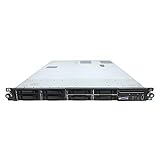
- HP ProLiant DL360 G7 8B Server
- 2x X5650 2.66GHz 12-Cores Total
- 32GB RAM / 8x 146GB 10K 2.5in SAS Hard Drives
- P410 w/ 512MB
| Candidate | Documented fit to investigate | Important qualification |
|---|---|---|
| Neo4j / AuraDB | Neo4j’s GraphRAG for Python documentation describes vector-index creation and similarity retrieval, and also lists external vector retrievers. An AWS reference architecture published 26 November 2024 describes entity extraction, graph enrichment, Cypher, Neo4j AuraDB, and GraphRAG applications. | The current GraphRAG Python documentation observed on 3 October 2026 states support for Neo4j 5.18.1 and later and Aura 5.18.0 and later; it notes that one in-index filter feature requires Neo4j 2026.01 or later. Recheck version support before implementation. Its vector-index queries use approximate nearest-neighbor search and may not return exact results. |
| Google Cloud Spanner Graph | Google documents graph retrieval combined with vector search, integrated full-text and vector search, a GQL interface, and SQL interoperability. Its GraphRAG architecture describes storing embeddings and graph nodes in Spanner Graph, then combining vector similarity search with graph traversal during serving. | The Spanner Graph overview was last updated 30 September 2026; the GraphRAG infrastructure page was last reviewed 1 July 2025. These are Google product and architecture descriptions, not independent comparative benchmarks or proof of the temporal semantics your application requires. |
| Ontotext GraphDB | Worth evaluating when RDF, SPARQL, and semantic inferencing are requirements. Its cited documentation also describes external search integrations and cloud deployments. | The cited material is GraphDB 10.8 documentation, last updated 7 May 2026 and marked as an older documentation version. Verify current capabilities, edition, deployment options, and temporal behavior for your intended release. |
| Microsoft GraphRAG | Its documentation describes an indexing and retrieval framework with a knowledge model, rather than establishing that one underlying graph database is required. The indexing flow includes loading, chunking, graph and claim extraction, embedding, community detection, and report generation; custom storage providers are supported. | Evaluate it as part of the end-to-end system you intend to operate. Its documented indexing model is not a comparative database benchmark or a guarantee of temporal database features. |
Evaluate retrieval and ingestion as one end-to-end design
A graph database is only one part of a GraphRAG system. Decide where embeddings, vector search, full-text search, graph traversal, ranking, and source passages live, and how data moves through each stage. Some architectures consolidate capabilities; others connect a graph database to external retrieval or storage systems.
- Retrieval placement: Check whether the desired deployment supports the vector and full-text search you need alongside graph traversal, or whether the design depends on a separate vector store. Google documents integrated vector and full-text search in Spanner Graph. Neo4j’s GraphRAG Python documentation describes both its vector index and external vector retrievers.
- Indexing and updates: Map the path from source documents to chunks, entities, claims, embeddings, and graph relationships. Decide how entity resolution, schema changes, corrections, and incremental updates are handled. Microsoft GraphRAG’s documented indexing stages illustrate how much work may sit outside the database itself.
- Serving: Trace how a question becomes a vector or full-text result, how graph traversal expands or filters that context, and how the application decides what to send to the language model. Confirm whether this sequence meets the application’s freshness and latency needs under its actual workload.
- Portability: Record which parts depend on a database’s query language, managed-service features, indexing behavior, or a framework’s storage interface. This makes later migration and lock-in trade-offs concrete.
Design for provenance and answer traceability
When extracted facts support an answer, preserve their relationship to the evidence they came from. Retain links from entities and claims to source documents or chunks, and make sure the serving layer can expose which graph facts and passages contributed to an answer. That gives reviewers a path to inspect the evidence rather than treating generated text as its own source.
The AWS and Neo4j reference architecture describes entity extraction and graph enrichment as part of a GraphRAG grounding flow. Google’s GraphRAG architecture shows graph and vector context being combined before answer generation. These examples demonstrate possible architecture patterns; they do not guarantee that a system will produce correct answers or eliminate hallucinations. Test whether your own application preserves and returns the provenance needed for audit and correction.
Benchmark the questions and operating conditions you actually have
Product feature lists can narrow the field, but they cannot tell you which design performs best for your workload. Build a small evaluation that uses the same source data, temporal rules, and representative questions across the shortlisted designs.
Quick Recap
- Write acceptance questions: Include ordinary retrieval, multi-hop questions, “what was true on date X?”, “what did we believe on date X?”, and questions about what changed between versions—only where those questions matter to your users.
- Prepare representative data: Include corrections, late-arriving evidence, entity merges, deleted or retracted facts, and the time ranges your application needs to retain. Define the expected answer and evidence for each case.
- Measure retrieval and answer quality: Check whether relevant passages and relationships are found, whether answers reflect the intended time semantics, and whether a reviewer can trace claims to evidence. Assess latency and freshness under realistic concurrent use.
- Exercise operations: Test expected read and write rates, graph growth, backups and recovery, availability targets, security boundaries, observability, and deployment geography. Include the operational expertise available to your team.
- Compare economics and portability: Estimate license and managed-service costs at expected usage, and record the dependencies created by query languages, storage APIs, and service-specific features.
- Choose from measured fit: Keep the assumptions, configuration, and results with the decision. Architecture diagrams establish that an approach is documented, not that it is fastest, cheapest, or most accurate for your workload.
Make the decision in this order
- Confirm that connected relationships materially improve answers compared with conventional RAG.
- Define the temporal questions and the history, correction, and deletion semantics they require.
- Select an RDF, property-graph, or multi-model approach that fits the data, inference needs, queries, and team skills.
- Choose an integrated or multi-service retrieval architecture based on the required vector, full-text, graph, and provenance behavior.
- Validate temporal queries and operational requirements in a workload-specific evaluation before committing to a platform.
Product prices and availability are accurate as of the date/time indicated and are subject to change. Any price and availability information displayed on Amazon at the time of purchase will apply.

