
Windows Errors? Fix Them Before They Spread
Repair common Windows errors and clear accumulated junk for a smoother, more stable PC - no reinstall needed.Free scan · no reinstallCrashes, No Sound, or Screen Glitches?
Random freezes, missing sound and display glitches usually trace back to one bad driver. Find and replace yours safely.Free scan · under a minuteChoose the cloud provider, regions, and services that can meet your workload’s recovery time, data-loss, availability, latency, and data-location requirements—not the provider with the most impressive general infrastructure claims. Compare failure domains and service-specific SLA terms, account for the customer work needed to make an application recover, and test the design. Multiple zones can protect against some zone failures; recovery from a region-wide outage may require a second region, with added cost and complexity.
Start with the workload, not the provider shortlist
A provider cannot be judged a good fit until you know what the workload must withstand and how quickly it must recover. Set requirements with the business owners and operators before comparing services. Reliability needs may differ between applications, even within one organization.
- Recovery time objective (RTO): the maximum acceptable time to restore the workload after an outage.
- Recovery point objective (RPO): the maximum acceptable data loss, expressed as the point in time to which data must be recoverable.
- Availability objective: the level of service the business needs, and how it will be measured from the user’s perspective.
- Failure scenarios: decide whether the design must withstand a data-center incident, a zone outage, a region outage, or a broader disaster.
- Location and performance: record where users are, what latency they can tolerate, and which legal or policy restrictions govern data location.
These requirements determine whether a single zone, multiple zones, or multiple regions are appropriate. Microsoft’s Azure reliability guidance emphasizes agreeing on workload reliability requirements first because risk tolerance varies by workload. It also advises checking the actual regulatory requirement rather than assuming a standard imposes a particular location rule.
Match failure domains to the recovery requirement
Cloud locations are divided into failure domains, but the names and capabilities do not guarantee that every service has the same protection. For each proposed service and region, find out whether it is single-zone, zonal, zone-redundant, regional, or multi-region—and who must configure replicas, routing, and failover.
The Tool Desk
Outbyte PC Repair FREERepair Windows errors before they cause bigger problemsFix Now →Outbyte Driver Updater FREEScan for outdated or missing drivers - takes under a minuteDriver Scan →#1 Best Overall

- 𝗢𝗻𝗲 𝗦𝘄𝗶𝘁𝗰𝗵 𝗠𝗮𝗱𝗲 𝘁𝗼 𝗘𝘅𝗽𝗮𝗻𝗱 𝗡𝗲𝘁𝘄𝗼𝗿𝗸: 5× 10/100/1000Mbps RJ45 Ports supporting Auto Negotiation and Auto MDI/MDIX.
- 𝗚𝗶𝗴𝗮𝗯𝗶𝘁 𝘁𝗵𝗮𝘁 𝗦𝗮𝘃𝗲𝘀 𝗘𝗻𝗲𝗿𝗴𝘆: Latest innovative energy-efficient technology greatly expands your network capacity with much less power consumption and helps save money.
- 𝗥𝗲𝗹𝗶𝗮𝗯𝗹𝗲 𝗮𝗻𝗱 𝗤𝘂𝗶𝗲𝘁: IEEE 802.3X flow control provides reliable data transfer and Fanless design ensures quiet operation.
- 𝗣𝗹𝘂𝗴 𝗮𝗻𝗱 𝗣𝗹𝗮𝘆: Easy setup with no software installation or configuration needed.
- 𝗔𝗱𝘃𝗮𝗻𝗰𝗲𝗱 𝗦𝗼𝗳𝘁𝘄𝗮𝗿𝗲 𝗙𝗲𝗮𝘁𝘂𝗿𝗲𝘀: Prioritize your traffic and guarantee high quality of video or voice data transmission with Port-based 802.1p/DSCP QoS and IGMP Snooping.
Multiple zones within one region
Availability zones are intended to provide separation within a region. A supported multi-zone design can help a workload continue through some zone or data-center failures. It does not protect against a failure affecting the entire region. Azure documents zones as independent locations with separate power, cooling, and networking, while warning that zone support varies by service and region. Confirm support for the specific service in the intended region rather than inferring it from the provider’s general infrastructure description.
Multiple regions
A second region can extend recovery coverage beyond a single region, but it is not automatically necessary. AWS guidance says a well-architected multi-AZ deployment in one region provides high availability for most scenarios and treats multi-region as a deliberate choice. Consider multi-region when the workload’s recovery objectives, the consequences of region-wide disruption, user geography, or sovereignty requirements justify it.
Confirm how the service handles replication and failover. A second region may require you to operate replicas, route traffic, reconcile data, and perform failback. Merely selecting two regions does not establish that the application can recover within its RTO or RPO.
Rank #2

- GIGABIT ETHERNET PORTS: Features 5 x 1.0Gbps Ethernet ports for high-speed connectivity. Auto-negotiating ports detect the optimal speed for connected devices and work with existing Cat5e or Cat6 Ethernet cables.
- PLUG-AND-PLAY UNMANAGED NETWORK SWITCH: Simple plug-and-play setup with no software to install or configuration required.
- FLEXIBLE MOUNTING OPTIONS: Compact metal design supports desktop or wall-mount placement for versatile installation.
- SILENT & ENERGY-EFFICIENT OPERATION: Fanless design ensures silent performance, while IEEE 802.3az Energy Efficient Ethernet reduces power consumption without compromising high-speed network performance.
- REGIONAL COMPATIBILITY: Made for use in U.S. & CA only
Compare provider evidence without mistaking it for a ranking
Provider documentation is useful for understanding stated controls and service capabilities, but it is not a like-for-like independent comparison. The evidence available here does not establish that one provider is more resilient overall than the others.
| Provider | Relevant published guidance | What it does—and does not—establish |
|---|---|---|
| AWS | AWS describes site assessment, physical separation of Availability Zones, automated movement of traffic away from affected areas, N+1 capacity for core applications, and capacity planning. Its architecture guidance discusses multi-AZ and multi-region design. | These are AWS’s own descriptions of its controls and architecture guidance. They do not independently prove superiority over another provider or guarantee a particular workload’s recovery. |
| Microsoft Azure | Azure documents independent zones with separate power, cooling, and networking, and explains that service and region support varies. Its reliability guidance distinguishes the platform from the customer’s workload design and operation. | Use the current region and service documentation for the proposed deployment. Platform commitments do not by themselves establish application availability. |
| Google Cloud | Google’s reliability guide discusses failure domains, redundancy, and the effect of service dependencies on aggregate availability. | Its general infrastructure availability targets are not service-specific SLAs or a neutral comparison with other providers. |
Google Cloud’s current reliability documentation, accessed in 2026 (publication date not stated), gives illustrative infrastructure availability targets below. Google says service-specific SLAs can differ; these targets should not be read as an application guarantee or cross-provider ranking.
| Google Cloud infrastructure configuration | Illustrative target | Qualification |
|---|---|---|
| Single zone | 99.9% | Google Cloud infrastructure availability target in documentation accessed in 2026; not a service-specific SLA. |
| Multiple zones in one region | 99.99% | Google Cloud infrastructure availability target in documentation accessed in 2026; not a service-specific SLA. |
| Multiple regions | 99.999% | Google Cloud infrastructure availability target in documentation accessed in 2026; not a service-specific SLA. |
Read the SLA for each critical service
A provider’s general description of resilient infrastructure is not the SLA for every database, compute service, or complete application. For each critical service, read the SLA that applies to the exact service and configuration you plan to use. Check its availability definition, exclusions, measurement period, qualifying architecture, and remedy.
Rank #3

- GIGABIT ETHERNET PORTS: Features 8 x 1.0Gbps Ethernet ports for high-speed connectivity. Auto-negotiating ports detect the optimal speed for connected devices and work with existing Cat5e or Cat6 Ethernet cables.
- PLUG-AND-PLAY UNMANAGED NETWORK SWITCH: Simple plug-and-play setup with no software to install or configuration required.
- FLEXIBLE MOUNTING OPTIONS: Compact metal design supports desktop or wall-mount placement for versatile installation.
- SILENT & ENERGY-EFFICIENT OPERATION: Fanless design ensures silent performance, while IEEE 802.3az Energy Efficient Ethernet reduces power consumption without compromising high-speed network performance.
- REGIONAL COMPATIBILITY: Made for use in U.S. & CA only
An SLA is a service commitment, not necessarily the business’s measure of application health. A multi-tier workload depends on its components and on how the application behaves when a dependency slows or fails. Azure cautions that its SLA’s availability definition may not align with a customer’s assessment of workload health. Google Cloud likewise explains that the selected services, their redundancy, and the number of dependent tiers affect expected aggregate availability.
Check data location and recovery location together
Confirm where the specific service stores and processes data, and where replicas, backups, logs, and failover copies will reside. Do not assume that choosing a region settles every data-location question: verify the behavior of each service and the locations used for recovery.
Quick wins for a faster PC:
Scan for outdated or missing drivers - takes under a minuteDriver Scan →Repair Windows errors before they cause bigger problemsFix Now →If policy or regulation restricts data to one region, that boundary may rule out a secondary region. In that case, Azure recommends zone resilience as the main way to improve availability without moving data, alongside backup and restore planning for a full-region disruption. That approach does not make a region-wide event harmless; the backup and restoration plan still needs recovery objectives that the business can accept.
Rank #4
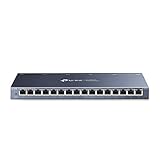
- One Switch Made to Expand Network-16× 10/100/1000Mbps RJ45 Ports supporting Auto Negotiation and Auto MDI/MDIX
- Gigabit that Saves Energy-Latest innovative energy-efficient technology greatly expands your network capacity with much less power consumption and helps save money
- Reliable and Quiet-IEEE 802.3X flow control provides reliable data transfer and Fanless design ensures quiet operation
- Plug and Play-Easy setup with no software installation or configuration needed
- Advanced Software Features-Prioritize your traffic and guarantee high quality of video or voice data transmission with Port-based 802.1p/DSCP QoS and IGMP Snooping
Assign the recovery work and test it
Resilience is shared work. Providers operate infrastructure and offer building blocks; customers still design, configure, and operate the workload. Microsoft summarizes this in its Azure reliability guidance: “Microsoft provides the resilient platform through Azure. You design the resilient workload.” AWS also notes that customer architecture affects recovery time, recovery point, and service availability.
Before choosing an architecture, identify who owns each operational action:
- Detecting an incident and deciding when to fail over.
- Configuring database replication and failover, application routing, retries, and error handling.
- Monitoring service health and communicating impact to users and business owners.
- Setting backup retention, restoring data, and validating restored workloads.
- Returning to the primary environment and reconciling changes after recovery.
Then test recovery procedures against the stated RTO and RPO. Infrastructure features alone do not show that failover works, data is usable, or the team can restore service on time. The design should be judged by its demonstrated behavior under the failure scenarios in scope.
What’s actually slowing this PC down?
Pick the symptom - the matching free tool is one click away.
Best Value

- 8 GIGABIT PORTS: Features 8 RJ45 ports supporting 10/100/1000 Mbps speeds, providing high-speed wired network connectivity for computers, printers, gaming consoles, and other Ethernet-enabled devices
- PLUG AND PLAY SETUP: No configuration required; simply connect the switch to your network devices and it is ready to use immediately, making network expansion quick and hassle-free
- FANLESS QUIET DESIGN: The fanless design ensures silent operation, making this switch suitable for noise-sensitive environments such as home offices, bedrooms, or conference rooms
- STURDY METAL CONSTRUCTION: Built with a durable metal housing and shielded ports that provide reliable performance, better heat dissipation, and protection against electromagnetic interference
- TRAFFIC OPTIMIZATION: Supports IEEE 802.3x flow control and advanced traffic optimization technology to reduce data bottlenecks and ensure smooth, efficient data transfer across your network
Compare the full cost and operating burden
Compare architectures that actually meet the requirements, not a single instance in one provider against a redundant deployment in another. Include duplicated or standby resources, replication and synchronization, data transfer, duplicated dependencies, testing, and the staff effort needed to operate and recover the system.
Multi-region can provide broader failure coverage and more predictable recovery, but it can also increase cost, latency, synchronization work, and operational complexity. Choose it when the additional coverage or business requirement warrants those tradeoffs, rather than treating more regions as automatically better.
Use a workload-specific shortlist
For each candidate provider, region, and service combination, record the evidence against the same criteria:
- Geographic coverage and permitted data locations.
- Availability of the required service and zone features in the intended region.
- Documented isolation between zones and regions, and the limits of that isolation.
- The service-specific SLA and the architecture conditions required to qualify.
- Whether the proposed design can meet the workload’s RTO and RPO.
- Customer responsibilities for failover, recovery, monitoring, and failback.
- Latency between users and services, and between replicas.
- Resilience testing and ongoing operational effort.
- Full cost of redundant infrastructure and data movement.
The strongest choice is the option whose documented capabilities and tested design meet the workload’s requirements at an acceptable cost and operational burden. Provider infrastructure claims alone cannot determine that fit.
Quick Recap
Product prices and availability are accurate as of the date/time indicated and are subject to change. Any price and availability information displayed on Amazon at the time of purchase will apply.

