
The Tool Desk
Outbyte PC Repair FREEClear out junk files and repair common Windows errorsFree Scan →Outbyte Driver Updater FREEFix the driver behind crashes, sound loss and screen glitchesFind Drivers →iTechGuides is reader-supported. When you buy through links on our site, we may earn an affiliate commission. As an Amazon Associate I earn from qualifying purchases. Learn more
To check whether an AI agent can reach your website, test one agent, one hostname and one URL at a time. Confirm the agent’s documented identity, fetch that hostname’s live /robots.txt, request the page and record the status, redirects and body, then check your CDN, firewall and origin logs for what the agent’s real requests received. A request with a copied user-agent string is a useful first test, but it does not prove that the real agent passes your network and security controls.
Bot names, operator roles and IP ranges change. The details below come from the following documentation: OpenAI’s Help Center article “Advertiser Guidance for Allowing OpenAI Web Crawlers”, Anthropic’s Help Center article “Does Anthropic crawl data from the web, and how can site owners block the crawler?” (dated April 7, 2026), Cloudflare’s AI Crawl Control documentation (the bot reference, “Manage AI crawlers” and “Directives” pages), and OpenAI’s Help Center article “ChatGPT Work’s Cloud browser allowlisting”. Check the current version of each page before you change a policy.
Start by naming the agent and the goal
“AI agent” covers several kinds of traffic. A provider may run one bot to collect data for model training, another to power search results, and a third that fetches a page only when a user asks about it. Each can have its own identity and its own controls, so a result for one bot tells you little about the others.
| Provider | Bot name | Role as the provider or Cloudflare describes it |
|---|---|---|
| OpenAI | GPTBot | AI crawler (Cloudflare’s bot reference) |
| OpenAI | OAI-SearchBot | AI search (Cloudflare’s bot reference) |
| OpenAI | ChatGPT-User | AI assistant identity (Cloudflare’s bot reference) |
| Anthropic | ClaudeBot | Potential model-training collection (Anthropic’s Help Center) |
| Anthropic | Claude-SearchBot | Search quality (Anthropic’s Help Center) |
| Anthropic | Claude-User | Retrieval in response to user queries (Anthropic’s Help Center) |
Cloudflare’s bot reference also lists Perplexity, Google, Microsoft and other operators. Use each operator’s own documentation for the current token and role, because the inventory changes.
#1 Best Overall

- 1. 【Multi-Functional USB-C Hub & Security】** Upgraded design features a built-in **USB-C pass-through charging and data port**. Unlike basic fingerprint scanners, this allows you to simultaneously use your fingerprint login while keeping your USB-C port free for charging your laptop or connecting a wireless mouse/keyboard. Perfect for modern laptops with limited ports.
- 2. 【Premium Aluminum Build & Portability】** Crafted from a **durable aluminum alloy** casing, this scanner is built to withstand the rigors of daily travel and desk life. Included **3M adhesive backing** allows you to securely mount it to your laptop lid or desk, ensuring it stays put in your bag and is always ready for instant access.
- 3. 【Instant Windows Hello Login (<1 Sec)】** Experience **password-less login in under one second**. With full support for **Windows 10/11 and Windows Hello**, this biometric reader provides seamless, secure access to your device, apps, and websites. Just a touch and you're in—no more typing complex passwords in coffee shops or airports.
- 4. 【360° Touch & Data Pass-Through】** Equipped with **360-degree capacitive touch** technology, it reads your fingerprint accurately from any angle. The upgraded USB-C port supports **data synchronization**, allowing you to connect and read a flash drive or external hard drive through the scanner without any loss in speed.
- 5. 【Universal Compatibility for On-the-Go Pros】** Designed for modern hybrid workers. Simply plug-and-play on any **Windows 10/11 laptop or PC** with a USB-C port. No complicated setup required. The compact size and detachable cable (with the adhesive mount) make it the ideal security companion for business travel and hot-desking.
Browser agents are a separate case
Interactive browser agents do not necessarily identify themselves the way crawlers do. For ChatGPT Work’s Cloud browser, OpenAI documents signed outbound HTTP requests that follow the HTTP Message Signatures standard (RFC 9421). The Signature-Agent header identifies https://chatgpt.com, and a public-key directory lets a server verify the signature. OpenAI also publishes allowlisting instructions for Akamai, Cloudflare, HUMAN and Vercel, plus a direct verification route for other CDNs. At launch, that article says the Cloud browser cannot sign in to websites or complete payments. These details describe one product as documented at that time. Do not apply crawler user-agent rules to other browser agents without checking their documentation.
The six checks
1. Define what “reach” means
Write down the provider and product, the exact URL, whether the agent is a crawler or an interactive browser, and whether you want to permit or prevent access. Do not assume that blocking a training crawler also blocks search or user-directed retrieval. Anthropic distinguishes ClaudeBot, Claude-SearchBot and Claude-User and describes separate consequences for disabling each.
2. Fetch the live robots.txt for each hostname
- Request
https://your-hostname/robots.txtdirectly. Confirm that it returns HTTP 200 on that hostname and does not redirect to a different one. - Find the group that applies to the bot’s token, or the
*group if none matches, and check the rules for your target path. - Repeat for every subdomain you want to cover. Anthropic says its opt-out rules must be applied to each subdomain the owner intends to cover.
Do not rely on a local copy of the file. A CDN, hosting layer or managed robots feature can change what is served. OpenAI states that its crawlers respect robots.txt, but a robots rule is a permission signal, not proof that the page will be delivered.
Do these 3 things before closing this tab:
1Scan for outdated or missing drivers - takes under a minute2Clear out junk files and repair common Windows errors3Fix the driver behind crashes, sound loss and screen glitches3. Request the page and record the response
Request the exact public URL and record the status code, every redirect hop, the relevant response headers and a short inspection of the body. Repeat the request with an ordinary browser user agent so you have a comparison. OpenAI’s guidance for landing-page access asks for a successful HTTP response, so a 403, 429, redirect or interstitial is a signal to investigate. A copied user-agent request tests one request pattern from your own machine and network. It is a diagnostic, not a guarantee of how the provider’s infrastructure will be treated.
Rank #2

- 📱 QR CODE SETUP GUIDE: Scan the QR code on the packaging to access the setup page with Windows drivers and installation instructions. The package includes the main item and a Japanese manual. On the website, tap the 🌐 World icon to switch to English, then scroll down to download the English manual.
- 🚀 INSTANT ACCESS: Login 10x faster than typing passwords - Under 1 second!
- 🛡️ HIGH-LEVEL SECURITY: Match-On-Chip technology = Your fingerprint NEVER leaves the device
- 🎯 WORKS EVERY TIME: 99.999% accuracy with 360° recognition - Touch from any angle!
- 💻 PLUG & PLAY MAGIC: Zero software installation - Works instantly with Windows 10/11 Hello
4. Review the CDN, WAF and bot controls
Search the security layer’s event log for the time, hostname, path, suspected bot identity, action taken and response returned. A request can be allowed by robots.txt and still be challenged or blocked by an edge rule.
Cloudflare’s AI Crawl Control documentation describes crawler-specific allow or block actions, reporting on requests and unsuccessful requests, robots.txt violation reporting, and advanced WAF rules. Its bot reference notes that some plans identify crawlers by user-agent string, while a more thorough detection option uses Bot Management detection IDs. These are Cloudflare features and plan distinctions, so check which mode your plan uses.
Where a provider offers verified-bot identification, use its documented mechanism. OpenAI advises against relying only on short-term IP observations, because crawler infrastructure may change. It publishes crawler IP-range files, but those ranges can change too, so recheck the files before writing IP-based rules.
Free tools Windows power users keep installed
One-click scans. No signup required.
5. Check application-level barriers and the content served
Review authentication, session checks, CAPTCHAs, JavaScript challenges, behavioral analysis and geographic rules. OpenAI lists these as barriers that can stop automated access even when the network layers are passed. Then confirm that the response contains the content the agent needs. An HTML shell or an access interstitial is not the same as the page’s real content. The guidance reviewed for this article does not establish a test that works for every agent’s handling of client-rendered content, so report only what you actually tested.
Rank #3

- "Hot swappable Play Arrange with 1.5m Cablemail: Enjoy bother complimentary installation and flexible placement with a generous 1.5m USB cable, allowing accessible positioning for any computer arrange lacking driver demands"
- Tap Hook for Strengthened Security: Day night private data by simply poignant the transducer to instantly hook your computer
- "FIDO Licensed Multiple Function Security: Beyond Windowslogin, this reader serves as a FIDO U2F/FIDO2 security code for websites/apps like Two processor , providing immune 2FA security"
- "Sophisticated Controlled Breathing Ligheight: Board game with a smooth sensitive light club highlighting modifiable breathing consequences, reducing organ of sight strain while enhancing beauty"
- "Recognition & Immediate Loginumberebog: Knowledge extreme fast fingerprint scanning with recognition corner, facilitating secure passcode complimentary signin through Windowslogin for 10/11 PCs and laptops in under 1 second"
6. Confirm in logs, then retest
Check both edge or CDN logs and origin logs. A request rejected at the edge never reaches the origin, so application logs alone can miss it. Compare the timestamp, requested URL, user agent or verified identity, status code and mitigation action. Retest after each specific configuration change, using the same provider and the same path, and confirm the result in the logs.
Run the checks with code
The scripts below run checks 2 and 3 from your own network. Set AGENT_UA to the full user-agent string from the provider’s documentation, and set BROWSER_UA to an ordinary desktop browser string. The Python script evaluates simple path rules with the standard library parser, which does not handle * or $ wildcards, so check wildcard rules by eye.
Python
import os
import sys
from urllib import robotparser
from urllib.parse import urlsplit

import requests

target = sys.argv[1]                    # e.g. https://www.example.com/pricing
agent_token = sys.argv[2]               # robots.txt token, e.g. GPTBot
agent_ua = os.environ['AGENT_UA']       # full UA string from the provider's docs
browser_ua = os.environ['BROWSER_UA']   # ordinary desktop browser UA for comparison

parts = urlsplit(target)
robots_url = f'{parts.scheme}://{parts.netloc}/robots.txt'

# Check 2: robots.txt on this exact hostname
r = requests.get(robots_url, timeout=20)
print(f'robots.txt: HTTP {r.status_code}, final URL {r.url}')
if r.status_code == 200:
    rp = robotparser.RobotFileParser()
    rp.parse(r.text.splitlines())
    print(f'allowed for {agent_token}: {rp.can_fetch(agent_token, target)}')
    print('check * and $ wildcard rules by eye; this parser does not evaluate them')
else:
    print('no usable robots.txt on this hostname: check redirects, subdomains and the CDN')

# Check 3: the page as the agent, then as a normal browser
for label, ua in [('agent', agent_ua), ('browser', browser_ua)]:
    resp = requests.get(target, headers={'User-Agent': ua, 'Accept': 'text/html,*/*;q=0.8'}, timeout=30)
    body = resp.text.lower()
    markers = [m for m in ('captcha', 'verify you are human', 'access denied', 'unusual traffic') if m in body]
    shown = ', '.join(markers) or 'none'
    hops = [h.status_code for h in resp.history]
    print(f'[{label}] status={resp.status_code} redirects={hops} final={resp.url}')
    print(f'[{label}] body_chars={len(resp.text)} challenge_markers={shown}')
    for name in ('Server', 'Content-Type', 'Retry-After', 'CF-Ray'):
        if name in resp.headers:
            print(f'[{label}] {name}: {resp.headers[name]}')
Run it with:
AGENT_UA='paste the full UA string from the provider docs' BROWSER_UA='your browser UA' python check_agent.py https://www.example.com/pricing GPTBotcURL
# Check 2: robots.txt on this exact hostname
curl -s -o /tmp/robots.txt -w 'robots HTTP %{http_code}\n' https://www.example.com/robots.txt
grep -n -i -A4 'user-agent: GPTBot' /tmp/robots.txt

# Check 3: the page as the agent, following redirects
curl -sL -o /tmp/agent.html -A "$AGENT_UA" -w 'agent status=%{http_code} redirects=%{num_redirects} final=%{url_effective}\n' https://www.example.com/pricing

# Check 3: the same page as a normal browser
curl -sL -o /tmp/browser.html -A "$BROWSER_UA" -w 'browser status=%{http_code} redirects=%{num_redirects} final=%{url_effective}\n' https://www.example.com/pricing

# Compare sizes and look for challenge text
wc -c /tmp/agent.html /tmp/browser.html
grep -i -c -E 'captcha|verify you are human|access denied' /tmp/agent.html
If the grep for user-agent: GPTBot returns nothing, the file has no group for that token, so the * group applies.
PC Slower Than It Used to Be?
A free scan shows the junk files, broken settings and background clutter dragging Windows down - then fixes them in one click.Free scan · Windows 10 & 11Crashes, No Sound, or Screen Glitches?
Random freezes, missing sound and display glitches usually trace back to one bad driver. Find and replace yours safely.Free scan · under a minuteNode.js
This version uses Node 18 or later with ES modules, saved as check-agent.mjs. Node has no built-in robots.txt parser, so it prints the file for manual review.
Rank #4
![ineo USB Fingerprint Reader for Windows Hello, Compact Plug and Play Security Key, Silver [Not for Mac]](https://m.media-amazon.com/images/I/41kpVE976ZL._SL160_.jpg)
- Instant Windows Hello Integration: Quickly unlock your Windows 10/11 PC with your fingerprint. No need to type passwords—just one touch for fast and secure access. Works directly with Windows Hello, no extra software needed.
- Plug & Play Simplicity: No drivers needed for genuine Windows systems—just plug it in and it works. Automatically recognized in most cases (95%+ compatibility). Tip: Manual driver update may be required for non-genuine systems.
- USB Fingerprint Reader: A compact metal fingerprint scanner for PCs and laptops that makes logging in quick and easy—just plug it into any USB port and start using it. Its ultra-portable design fits perfectly in your laptop bag.
- Microsoft-Certified Security: Fully supports Windows Hello and the Windows Biometric Framework for safe and reliable login. Features high accuracy (0.001% false acceptance / 0.1% false rejection) to keep your data secure. Also supports password and file encryption for most websites.
- Multi-User Flexibility: Store up to 10 fingerprints—perfect for shared devices at home or work. Enjoy fast and smooth access with lightning-speed authentication in under 0.5 seconds.
const [target, agentToken] = process.argv.slice(2);
const { origin } = new URL(target);

// Check 2: robots.txt on this exact hostname
const robots = await fetch(`${origin}/robots.txt`);
console.log(`robots.txt: HTTP ${robots.status}, final ${robots.url}`);
if (robots.ok) console.log((await robots.text()).split('n').slice(0, 40).join('n'));
console.log(`review the group for ${agentToken} by hand`);

// Check 3: the page as the agent, then as a normal browser
for (const [label, ua] of [['agent', process.env.AGENT_UA], ['browser', process.env.BROWSER_UA]]) {
  const res = await fetch(target, { headers: { 'User-Agent': ua, Accept: 'text/html,*/*;q=0.8' }, redirect: 'follow' });
  const body = (await res.text()).toLowerCase();
  const markers = ['captcha', 'verify you are human', 'access denied', 'unusual traffic'].filter(m => body.includes(m));
  console.log(`[${label}] status=${res.status} final=${res.url} redirected=${res.redirected}`);
  console.log(`[${label}] body_chars=${body.length} challenge_markers=${markers.length ? markers.join(',') : 'none'}`);
  console.log(`[${label}] retry-after=${res.headers.get('retry-after') ?? 'none'}`);
}
Run it with AGENT_UA='...' BROWSER_UA='...' node check-agent.mjs https://www.example.com/pricing GPTBot.
Read the results
- robots.txt returns 200, the group allows the token, the agent request returns 200 and the body matches the browser response: the path is reachable from your network with that request pattern. Confirm in the logs that the real agent’s requests arrive and get the same response.
- robots.txt disallows the token for that path: the permission signal says no. Change the group only for the bot you intend to affect, then retest.
- Any other status, redirect or challenge marker: go to the troubleshooting table below.
Troubleshooting
| Symptom | Likely cause | Fix |
|---|---|---|
| robots.txt returns 404 | The hostname serves no robots.txt, so no robots rules are published there | Confirm you tested the hostname agents actually crawl. Check for a redirect to another host. A missing file is not a block on its own. |
| robots.txt returns 5xx or times out | The origin or a WAF rule is failing to serve the file | Cloudflare’s documentation advises checking upstream WAF or other security settings when the file exists but cannot be reached. Allow requests for /robots.txt through those rules. |
| Agent request gets 403, browser request gets 200 | An edge rule matches the agent’s user agent, or a bot score is blocking it | Find the matching event in the security log. Allow the verified bot through the provider’s documented mechanism rather than through a broad rule that also opens the site to other traffic. |
| Agent request gets 429 | Rate limiting | Review throttling rules and 429 events for that user agent. OpenAI recommends this check when rate limiting is suspected. Check the Retry-After header if present. |
| 200 response containing a challenge or CAPTCHA | A JavaScript challenge or CAPTCHA is served to that client | Review bot mitigation for that path. A 200 status alone does not prove the agent received the page. |
| Redirect to a login or region page | An authentication or geographic rule | Confirm the page is meant to be public. Repeat the test from the region the agent operates in if you can. |
| 200 response with an almost empty HTML shell | The content is loaded client-side | Compare the output with the browser response. The sources reviewed here do not establish how every agent renders JavaScript, so confirm against the provider’s documentation. |
When the script passes but the real agent still fails
Your test ran from your own machine and network, and the provider’s requests may come from different addresses and carry verification signatures your test does not send. Start with the logs for the real agent’s requests. If they show a block, the cause is almost always an IP-based, verified-bot or security-rule decision that a copied user-agent test cannot reproduce. Fix that rule, using the provider’s documented identification method where one exists, and retest from the logs.
Independent reader supportYour contribution helps us test, update, and keep practical guides available for everyone.Sources and dates
- OpenAI Help Center, “Advertiser Guidance for Allowing OpenAI Web Crawlers”: robots.txt, WAF and CDN rules, bot mitigation, rate limiting, IP-range caution.
- Cloudflare, “Bot reference” (AI Crawl Control documentation): crawler names, operators and categories.
- Cloudflare, “Manage AI crawlers”: request reporting, allow and block controls, detection modes and WAF integration.
- Cloudflare, “Directives”: robots.txt availability and status by hostname, and upstream security checks.
- Anthropic Help Center, “Does Anthropic crawl data from the web, and how can site owners block the crawler?” (April 7, 2026): bot purposes, robots.txt behavior, subdomain scope.
- OpenAI Help Center, “ChatGPT Work’s Cloud browser allowlisting”: signed requests and provider-specific allowlisting, as documented at launch.
Or skip the browser setup
The checks above need you to run requests from a machine you control and to read logs you have access to. If you only need a current image of what a public page looks like to a rendering browser, ScreenshotNeo is a website screenshot API and MCP server. One GET request with a URL returns a PNG, JPEG or WebP screenshot or a PDF. It is a visual check of what a browser received. It does not show what a specific AI agent received, so keep using the robots.txt and log checks for that.
curl -G "https://api.screenshotneo.com/v1/shot" -d access_key=YOUR_API_KEY --data-urlencode url=https://example.com/pricing -o shot.webpimport requests
r = requests.get("https://api.screenshotneo.com/v1/shot", params={"access_key": "YOUR_API_KEY", "url": "https://example.com/pricing"}, timeout=90)
open("shot.webp", "wb").write(r.content)import { writeFile } from 'node:fs/promises';
const q = new URLSearchParams({ access_key: 'YOUR_API_KEY', url: 'https://example.com/pricing' });
const res = await fetch(`https://api.screenshotneo.com/v1/shot?${q}`);
await writeFile('shot.webp', Buffer.from(await res.arrayBuffer()));Parameters are listed in the ScreenshotNeo docs.
- Cookie banners, popups and chat widgets are removed before the shot. ScreenshotNeo accepts the cookie or consent banner the way a visitor would and removes 60+ known consent platforms, newsletter popups and chat widgets. Each step can be turned off.
- Bot checks, blank pages and failed loads are never billed. Bot checks and CAPTCHAs, blank pages, timeouts, failed loads and cache hits cost nothing. Each response says which it was in the X-Page-Verdict and X-Billed headers.
- An MCP server lets AI agents take screenshots. Claude, Cursor and other MCP clients can use the take_screenshot, get_page_info and capture_pdf tools.
- Free to start. 1,000 screenshots a month are free with no card. Paid plans start at $5 for 3,000 screenshots.
Create a free account at https://screenshotneo.com/account/sign-up/ to get 1,000 screenshots a month with no card required.
Best Value
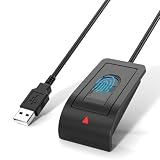
- Windows Hello Fingerprint Login: Designed for windows hello fingerprint reader compatibility on Windows 10/11 PCs, this usb fingerprint reader replaces passwords with fast one-touch biometric access. Enjoy convenient, secure login through your PC’s built-in Windows Hello system without extra software.
- Match-in-Sensor Security Protection: This fingerprint reader uses advanced biometric processing to verify fingerprints inside the sensor, helping protect your personal data. Your fingerprint information stays stored locally on your Windows device and is never uploaded or shared externally.
- Fast & Accurate Biometric Recognition: Built as a reliable fingerprint scanner for everyday computer security, this fingerprint reader for windows 11 provides quick recognition and stable performance. Access your PC, lock screens, and manage user accounts with a simple touch.
- Plug & Play Desktop Convenience: The usb fingerprint reader windows 11 solution connects easily through USB with no complicated drivers or third-party apps. The included 4ft cable provides flexible placement for desktops, workstations, and home office setups.
- Designed for Windows PC Security: This fingerprint scanner for pc supports password-free login through Windows Hello and works as a practical windows fingerprint reader for compatible systems. Compact design and angled sensor placement offer comfortable daily use.
Frequently Asked Questions
Can I run these checks without access to my CDN or origin logs?
Only the public side. You can test robots.txt, status codes, redirects and the response body from outside your network. Event and origin logs need dashboard or server access, so ask whoever runs your CDN or hosting for the edge events and origin logs covering the time of your test.
My page sits behind a login. Can an AI agent reach it?
Not through an anonymous request. The check will return the login response or a redirect to it. OpenAI’s Cloud browser article says that product could not sign in to websites at launch, so treat logged-in content as unreachable for that agent unless the page is public.
Does this method work for Perplexity, Google or Microsoft crawlers?
The steps are the same: confirm the identity, fetch robots.txt, request the page, and check the logs. Replace the token and user-agent string with the values from that operator’s own documentation. The sources used here cover OpenAI, Anthropic and Cloudflare, so check other operators’ documentation directly.
How should I decide which AI bots to allow?
Decide bot by bot. Compare the purpose (training, search or user-directed retrieval), the hostname and path scope, whether the operator supports verified identity, whether enforcement happens in robots.txt, at the WAF or in the application, whether the bot receives the real page content, and what allowing or blocking it does to your traffic. Check the provider’s current terms before you change policy.
Quick Recap
Product prices and availability are accurate as of the date/time indicated and are subject to change. Any price and availability information displayed on Amazon at the time of purchase will apply.

