
To check whether a crypto company is a licensed bank, verify the exact legal entity behind the brand in the relevant regulator’s records. For a claimed national bank or federal savings association, check the Office of the Comptroller of the Currency (OCC). If the company says a partner bank holds your cash, look up that bank in the FDIC’s BankFind Suite and read your account agreement. These checks answer different questions: a company’s charter, a partner bank’s status, and whether your particular balance qualifies as an insured deposit.
What “licensed bank” can mean
A crypto company may operate as a nonbank while working with a separately chartered bank. A bank partner, a bank’s authorization to provide a particular crypto service, and a bank charter for the crypto company itself are not interchangeable.
- Charter: Is the legal entity behind the crypto company itself a bank, and what regulator issued its charter?
- Bank partner: Does a separate bank hold or process customer cash?
- Deposit coverage: Is the particular balance an eligible deposit at an insured bank under the applicable rules?
- Platform failure: What happens to your money or crypto if the nonbank company becomes insolvent?
The FDIC says it does not insure assets issued by nonbank entities, such as crypto companies. Its deposit insurance applies to eligible deposits at insured banks, not crypto assets or the failure of a nonbank crypto company. FDIC: What the Public Needs to Know About FDIC Deposit Insurance and Crypto Companies.
How to check the company and any bank partner
- Find the legal entity names. Check the company’s terms of service, account agreement, regulatory disclosures, and website footer. Record the exact name of the crypto company and, if different, the entity that holds funds or provides the service.
- Check a claimed federal charter. If the company says it is a national bank or federal savings association, search the OCC’s official lists and licensing or decision records. The OCC publishes pending digital-asset applications separately from lists of chartered institutions. A pending application or conditional approval is not an operating charter. OCC: Charters and Licensing.
- Look up a named partner bank. Search the bank’s exact legal name, website, or FDIC certificate in FDIC BankFind Suite. Confirm that the record matches the institution named in the product’s documents. BankFind covers current and former FDIC-insured banks and branches; finding a bank does not establish that every product offered through a crypto company is an insured deposit.
- Read the account-level terms. Identify who owes you the balance, where and when funds are deposited, what type of account it is, and whether the arrangement relies on pass-through coverage. The FDIC says pass-through coverage may depend on the funds being deposited at the insured bank and on ownership records and other requirements. FDIC: Financial Products That Are Insured by the FDIC.
- Match coverage to the asset and the failure. Separate cash held as a deposit from crypto assets and from an amount the nonbank company owes you. Consider what happens if the bank fails and, separately, what happens if the platform fails.
- Follow up on inconsistencies. Ask the company and the relevant regulator if its marketing names one bank but the contract names another entity, the named bank cannot be found in BankFind, or the company implies that crypto itself is FDIC-insured.
What each regulator check does—and does not—show
OCC records: federal charter claims
The OCC’s charter and licensing records are relevant when a company claims to be a national bank or federal savings association. Confirm that the exact legal entity appears as an operating institution; an application or conditional approval alone does not show that a charter is active. For a state-chartered institution, check the relevant state banking regulator as well. An OCC or FDIC search alone does not establish state or foreign licensing, and charter categories and permissions vary by jurisdiction.
Free tools Windows power users keep installed
One-click scans. No signup required.
#1 Best Overall

- Effortlessly build your crypto portfolio via the all in one Ledger Wallet app: buy, sell, send, receive, swap, stake and more across popular blockchains. 15,000+ coins & tokens in a single dashboard. Keep a close eye on the market. Compare service providers. Track performance. Get timely alerts. Build your portfolio with confidence.
- Effortlessly build your crypto portfolio via the all in one Ledger Wallet app: buy, sell, send, receive, swap, stake and more across popular blockchains. 15,000+ coins & tokens in a single dashboard. Keep a close eye on the market. Compare service providers. Track performance. Get timely alerts. Build your portfolio with confidence.
- Enjoy Bluetooth connectivity, iOS access, and hours of battery use with this mobile-first, secure backup signer. Freedom you can depend on.
- Genuine Check: confirm your signer is authentic during setup with the Ledger Wallet app.
- Protect your signer: keep it in mint condition at all times with a bespoke Pod or Case to avoid scratches and everyday wear and tear.
FDIC BankFind: a bank’s insured status
BankFind can establish whether the named institution is listed as an FDIC-insured bank. It cannot, by itself, establish that the crypto company is a bank or that a particular app balance qualifies for deposit insurance. The account documents and actual arrangement matter.
Agency permissions: a bank’s activities
A bank may be permitted to provide crypto-asset custody or execution services, including through third parties, while remaining subject to applicable law and safe-and-sound operation. That permission concerns the bank’s activities; it does not give a crypto company using the service a bank charter. The OCC states that a bank must conduct crypto-asset custody activities safely and soundly and in compliance with applicable law. OCC, May 7, 2025. A joint statement from the OCC, Federal Reserve, and FDIC likewise describes safekeeping as holding an asset for a customer and says existing law and risk-management principles apply to banking organizations providing that service. Joint agency statement.
Rank #2

- Proven security at scale: Over 9 years and millions of cards issued with no known remote hacks, while military‑grade EAL6+ security keeps your private keys locked inside the chip. Your cryptocurrencies stay strongly protected from online attackers.
- Tap once to manage your entire crypto wallet across 90 blockchains - no USB cables or Bluetooth, no batteries, no setup. Access 14,100+ coins & tokens, DeFi, NFTs, and staking instantly from your phone
- Smart backup: Use your second Tangem Wallet as your Backup keys with end‑to‑end encryption; no more papers, pictures. If one card is lost, the remaining can still restore full access, with an optional seed phrase available for advanced users.
- Engineered to last up to 25 years: Waterproof (IP69K), shockproof and tested for extreme temperatures from −25°C to 50°C. A durable cold wallet with long‑term protection and independently audited security.
- Trusted by 6 million users worldwide (4.9 App Store, 4.8 Google Play) - buy, sell, swap, stake, and spend cryptocurrency directly. The secure offline storage wallet designed for how people actually use crypto wallets
What FDIC insurance can cover
For direct deposit accounts at an FDIC-insured bank, the FDIC’s 2024 consumer guidance states coverage of at least $250,000, subject to applicable coverage rules. That threshold does not apply to crypto assets or obligations of a nonbank company. FDIC: Deposit Insurance.
The FDIC reported in 2022 that since 1934 no depositor had lost a penny of FDIC-insured funds as a result of an insured bank’s failure. This statement concerns insured funds and insured-bank failures; it is not a guarantee against losses involving crypto, investment products, or a nonbank platform. FDIC crypto-company fact sheet.
Quick wins for a faster PC:
Scan for outdated or missing drivers - takes under a minuteDriver Scan →Repair Windows errors before they cause bigger problemsFix Now →Fix the driver behind crashes, sound loss and screen glitchesFind Drivers →Rank #3

- Proven security at scale: Over 9 years and millions of cards issued with no known remote hacks, while military‑grade EAL6+ security keeps your private keys locked inside the chip. Your cryptocurrencies stay strongly protected from online attackers.
- Tap once to manage your entire crypto wallet across 90 blockchains - no USB cables or Bluetooth, no batteries, no setup. Access 14,100+ coins & tokens, DeFi, NFTs, and staking instantly from your phone
- Smart backup: Use your second Tangem Wallet as your Backup keys with end‑to‑end encryption; no more papers, pictures. If one card is lost, the remaining can still restore full access, with an optional seed phrase available for advanced users.
- Engineered to last up to 25 years: Waterproof (IP69K), shockproof and tested for extreme temperatures from −25°C to 50°C. A durable cold wallet with long‑term protection and independently audited security.
- Trusted by 6 million users worldwide - buy, sell, swap, stake, and spend cryptocurrency directly. The secure offline storage wallet designed for how people actually use crypto wallets
Warning signs in “bank” or “FDIC-insured” claims
- The company uses a bank logo or says “banking services provided by” but does not identify the legal entity holding your funds in the agreement.
- The company describes a pending application or conditional approval as though it were an operating charter.
- The partner bank named in marketing does not match the bank or account structure described in your documents.
- The company suggests that crypto holdings themselves are FDIC-insured. The FDIC’s fact sheet addresses public confusion arising from crypto-company claims about deposit insurance.
- The company treats a bank’s custody or execution permission as proof that the crypto company itself is a bank.
A logo or marketing phrase is not proof of charter status or deposit eligibility. Verify the legal entity, bank, account, and asset separately.
Quick Recap
Best Value
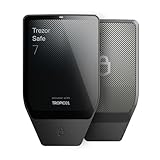
- Dual-chip architecture for maximum protection: The next-gen, fully auditable TROPIC01 chip works alongside a certified EAL6+ Secure Element—completely NDA-free—to deliver radically transparent, industry-leading defense against physical attacks.
- Quantum-ready security: Get protection against future threats with the first-ever hardware wallet designed with quantum-ready architecture.
- See every detail with confidence: Our largest high-resolution color touchscreen makes it easy to navigate your assets, review transactions and manage your coins with clarity.
- Wireless freedom with encrypted Bluetooth control: Manage, buy, swap and stake securely using Trezor Suite on desktop or mobile. Qi2-compatible wireless charging keeps your Trezor powered up. No cables required—security meets convenience.
- Works seamlessly with Android, iOS and desktop: Connect wirelessly or via USB-C to your phone or computer. Manage your crypto anywhere with our companion Trezor Suite app.
Rank #4

- EAL5+ CERTIFIED SECURE ELEMENT + FINGERPRINT PROTECTION — Your private keys stay encrypted offline on a certified EAL5+ chip, the same security tier used in EMV bank cards. Built by DCENT, securing crypto since 2018. Fingerprint authentication adds a second layer no PIN-only wallet can match.
- 10,000+ ASSETS NATIVE ON 100+ BLOCKCHAINS — Hold Bitcoin, Ethereum, XRP, Solana, Cardano, popular stablecoins (USDT, USDC), and NFTs in one wallet. No third-party apps, no fragmented setup — every supported asset works straight out of the box.
- TAP-TO-SIGN MOBILE EXPERIENCE — Pair your wallet with the DCENT mobile app over Bluetooth. Manage tokens, review transactions, and access in-app swap features directly from your phone — no cables, no desktop required.
- WEB3 & dAPP ACCESS VIA METAMASK — Connect to MetaMask and other browser extension wallets to manage NFTs, claim airdrops, and access dApps. A large screen and intuitive 4-button interface keep every transaction clearly visible before you sign.
- SEAMLESS FIRMWARE UPDATES & 30-DAY MONEY-BACK GUARANTEE — Apply security updates without resetting your wallet or migrating funds. Backed by Amazon's 30-day money-back guarantee — your purchase is risk-free.
Product prices and availability are accurate as of the date/time indicated and are subject to change. Any price and availability information displayed on Amazon at the time of purchase will apply.

