
The Tool Desk
Outbyte Driver Updater FREEScan for outdated or missing drivers - takes under a minuteDriver Scan →Outbyte PC Repair FREEClear out junk files and repair common Windows errorsFree Scan →To calculate Indian GST, multiply the taxable value by the applicable rate and divide by 100. The harder part is confirming which rate applies: identify the exact product or service classification, read the complete rate entry and its conditions, and check that it was in force on the transaction date. There is no single GST rate for every product or service.
Calculate GST on a known taxable value
Use these formulas once you have established both the taxable value and the applicable rate:
- GST amount = taxable value × GST rate ÷ 100
- Total including GST = taxable value + GST amount
For example, at an assumed 18% rate on a taxable value of ₹1,000, GST is ₹180 and the total is ₹1,180. This example demonstrates the arithmetic only; it does not mean that 18% applies to any particular product or service.
Work backwards from a GST-inclusive amount
If one GST rate applies to the whole gross amount, extract the embedded tax using:
#1 Best Overall

- Customisable percentage rates
- Shopping list facility
- Many national and regional tax rates included
- GST included in the amount = gross amount × rate ÷ (100 + rate)
- Taxable value = gross amount ÷ (1 + rate ÷ 100)
For instance, if ₹1,180 includes tax at an assumed 18% rate, the embedded GST is ₹180 and the taxable value is ₹1,000. These formulas assume a single rate and do not resolve valuation or classification complications.
Establish the taxable value before calculating
The amount shown on a sticker or quote is not automatically the taxable value. Under section 15 of the CGST Act, the value of a supply is generally its transaction value when the statutory conditions are met. The rules can require additions, including certain incidental expenses and amounts the recipient pays on the supplier’s behalf. Discounts, related-party transactions, non-monetary consideration, reimbursements, and composite or mixed supplies can also affect the calculation or classification. See the CBIC CGST Act section 15, Value of Taxable Supply.
Rank #2
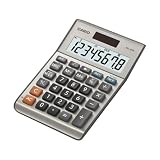
- LARGE EIGHT-DIGIT DISPLAY – Clear and easy-to-read 8-digit display, perfect for everyday calculations and ensuring accurate results in home or office settings.
- TAX & CURRENCY EXCHANGE FUNCTIONS – Effortlessly handle tax calculations and convert home currency to other currencies for easy financial management.
- GENERAL PURPOSE CALCULATOR – Ideal for a wide range of applications, from basic math to business and personal use, with memory keys for quick storage and recall.
- USER-FRIENDLY KEYBOARD – Easy-to-use layout, featuring square root, percent calculation, and simple functions that make it perfect for everyday tasks.
- COMPACT & PORTABLE DESIGN – Space-saving design that fits easily on any desk or in a briefcase, making it ideal for both home and office use.
Verify the rate for the exact product or service
- Describe the supply precisely. Record what the item or service is, its composition or use where relevant, packaging or label details where relevant, and the transaction date. Rate entries can depend on these details.
- Find its classification. Identify the relevant HSN heading for goods or SAC/accounting classification for services. Read the full entry, including conditions, exclusions, and notes—not just a search-result snippet or a broad category label. The CBIC HSN/SAC press release provides historical classification and reporting guidance; check current requirements against current law.
- Check official rate and legal updates. Use the CBIC GST Goods and Services Rates schedule as a reference, then check the CBIC Tax Information portal for relevant notifications, amendments, or clarifications. The schedule includes historical notification references, and the Tax Information portal says its content is being updated. The portal’s search results list 2026 notifications, so an older schedule entry alone may not prove the rate currently in force. Confirm the notification’s effective date against your transaction date.
- Determine whether CGST plus SGST/UTGST or IGST applies. In ordinary cases, intra-State supplies attract CGST and SGST or UTGST, while inter-State supplies attract IGST. The legal place-of-supply tests and exceptions determine the treatment; the buyer’s billing address alone is not decisive. Consult CGST Act section 9, IGST Act section 5, and IGST Act section 8.
- Reconcile the invoice. Check that the description and classification, taxable value, rate and tax amount agree with the supply and applicable entry. Also check place-of-supply details where relevant and whether reverse charge applies. See the CBIC Tax Invoice, Credit and Debit Notes rules.
- Resolve ambiguity before using the rate. If more than one classification appears plausible, or an entry’s condition or exemption may apply, verify the current notification and seek qualified tax advice for a consequential or disputed transaction.
Choose between two plausible rate entries
A percentage by itself is not enough to decide which treatment applies. Compare the competing entries across the facts that can change the result:
| What to compare | Why it matters |
|---|---|
| HSN/SAC classification and exact entry wording | A different classification can lead to a different rate or treatment. |
| Conditions, exclusions, and exemptions | An entry may apply only when stated requirements are met. |
| Transaction date and effective amendments | A rate or condition may have changed; match the operative notification to the supply date. |
| Taxable-value treatment | Included charges, statutory additions, and discounts can affect the base used in the calculation. |
| Place of supply and tax type | These facts help determine whether CGST plus SGST/UTGST or IGST applies. |
What cannot be determined without item details
No particular product or service rate can be verified without its description, relevant transaction facts, date, and HSN/SAC classification. The official schedules and notification history are tools for that lookup, not a basis for applying one generic GST percentage to an unspecified purchase.
Crashes, No Sound, or Screen Glitches?
Random freezes, missing sound and display glitches usually trace back to one bad driver. Find and replace yours safely.Free scan · under a minuteWindows Errors? Fix Them Before They Spread
Repair common Windows errors and clear accumulated junk for a smoother, more stable PC - no reinstall needed.Free scan · no reinstallQuick Recap
Best Value

- GST Calculation
- About GST
- News GST
- GST Rate
- Amount
Rank #4

- Easy to use for anyone.
- Extra field of discount.
- Gives the quick result.
- Show the discounted amount.
- Show the payable tax amount.
Rank #3

- ✔ Easy-to-use interface
- ✔ Add or remove GST with one tap
- ✔ Supports multiple GST rates (5%, 12%, 18%, 28%)
- ✔ Quick & accurate calculations
- ✔ Ideal for businesses, freelancers & individuals
Product prices and availability are accurate as of the date/time indicated and are subject to change. Any price and availability information displayed on Amazon at the time of purchase will apply.

