
Build a remote customer service team around the work it must handle—not an assumed headcount or a promise that remote work automatically improves service. Define the service commitments, forecast demand by channel, schedule coverage, establish clear workflows, coach for quality, and protect customer data wherever agents work. The right operating model depends on your channel mix, service hours, systems, and security obligations.
1. Define the service your team is responsible for
Before hiring or changing schedules, describe the service the business intends to deliver. A distributed team needs the same clarity as an in-office operation, with additional care around handoffs, documentation, and access to customer information.
- Customers and scope: Identify who the team serves, which requests it owns, and which cases it must escalate to another team or specialist.
- Coverage: State the hours, time zones, and languages the business can support. Distinguish staffed hours from any response commitment that applies outside those hours.
- Promises: Record the response and resolution commitments the business has actually made. Do not imply a service target that staffing and workflows cannot reliably support.
- Channels and issues: Map expected work across voice, email, website messaging or chat, SMS, and social channels as applicable. Note which issue types arrive through each channel and what context agents need to resolve them.
- Systems and data: List the customer-service platform, knowledge resources, business systems, and customer data agents need to access.
This service map is the basis for staffing, routing, training, and security decisions. It also makes trade-offs visible: wider channel coverage, longer hours, or faster responses require the right skills and capacity, not just a remote-work policy.
2. Forecast demand and schedule coverage
Staffing is a demand-planning problem. Use historical interaction volume and known demand patterns to estimate when work arrives, then schedule coverage against the service commitments, channel mix, and skills required. Review what actually happened and adjust the forecast and schedules over time. Zendesk’s workforce-management guidance covers forecasting, schedules, reporting, workstreams, agent activity, and access controls: Zendesk workforce management.
#1 Best Overall
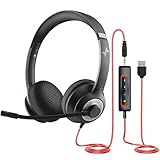
- ✅【Outstanding Noise cancelling Microphone】 The headphones with unidirectional boom 270°microphone that only picks up your voice and block out unwanted background noises. Also, you can wear it on the left or right ear as you like.
- ✅【All-Day Comfort for All Head Shape】 Eaglend always designed for all-day comfort using, there will be no restraint pressure, with the adjustable headbend fit adult and kids easily.The soft protein memory foam earpads is made of high-level breathable materials,ROHS certified materials prevent your ears from heat and sweat.
- ✅【Enhanced sound performance & 40mm audio driver】:Corded phone headset with built-in audio sound card, Eaglend sound lab tested thousands of times for your daily conversation/music/movie/gaming, bringing you extra clear and bass for pleasant experience.
- ✅【USB/3.5mm Connection】 The headphone is designed for multiple use, 3.5mm audio cable with USB In-line audio volume control (cord length 5+4 feet),with mic mute &indicators /speaker mute.Compatible with PC/Tablet/Mac/iOS/laptop /Android phone and other devices."
- ✅【Global warranty &multi-purpose】24 months warranty by eaglend. Great ideal for online courses, Skype chat, call center, Webinars Presentations, Office, Business, Rosetta Stone, Dragon Speaking, Conference Calls and more.
Build a forecast your operation can use
- Separate demand by channel and work type. Total contacts can conceal important differences: a message, a phone call, and a complex account issue may not use agent time in the same way.
- Map demand to time periods. Examine when contacts arrive and identify recurring peaks, quiet periods, and known changes in demand. Use the granularity supported by your records and scheduling process.
- Translate service commitments into coverage. Match the forecast to the hours the team must be available, the queues it must monitor, and the skills needed for likely contacts.
- Compare the plan with actual work. Review real workload and service outcomes, not just whether the scheduled hours were filled. Use those observations to revise future forecasts and schedules.
There is no universal agent-to-customer or agent-to-shift ratio established by the cited guidance. The required coverage depends on actual channel demand, operating hours, service commitments, skill requirements, and observed workload. A schedule that works for a voice-heavy queue may not suit a team handling persistent messaging conversations.
Salesforce describes workforce management as forecasting demand, optimizing schedules, and managing performance in real time across voice, SMS, chat, social, and email: Salesforce workforce management. Treat these capabilities as planning functions to assess against your existing systems and operating needs, rather than as proof that one platform or staffing model fits every team.
3. Design a workflow for each channel
Different channels create different work patterns. Salesforce’s workforce-management overview includes voice, SMS, chat, social, and email; Zendesk specifically advises planning messaging operations differently from traditional support structures. Its guide is titled “Planning your staffing and operational requirements for messaging”: Zendesk messaging staffing guidance.
For every channel you support, document the operating path from arrival to resolution:
Quick wins for a faster PC:
Clear out junk files and repair common Windows errorsFree Scan →Fix the driver behind crashes, sound loss and screen glitchesFind Drivers →- Queue ownership: Specify which team or role owns new work and who watches the queue during each coverage period.
- Routing: Set out how requests reach an agent with the appropriate availability or skills, and what happens when no such agent is available.
- Escalation: Name the cases that require a specialist, manager, or another department, and explain how the receiving person gets the interaction history.
- Handoffs: Define what agents must record when transferring or pausing a case so a customer does not have to repeat essential information.
- Documentation: Establish where the conversation, decisions, and follow-up actions are recorded in the approved system.
Account for messaging conversations that remain active
Messaging may involve conversations that continue over time rather than a single, uninterrupted interaction. That can change how work is routed, how many conversations an agent can manage, and how a team measures activity. Set expectations for ownership, follow-up, and queue monitoring that reflect how customers actually use the channel.
Rank #2

- Digital Stereo Sound: Fine-tuned drivers provide enhanced digital audio for music, calls, meetings and more
- Rotating Noise Canceling Mic: Minimizes unwanted background noise for clear conversations; the rotating boom arm can be tucked out of the way when you’re not using it
- Handy In-line Controls: Simple in-line controls on the headset cable let you adjust the volume or mute calls without disruption
- Plug-and-Play USB Computer Headset: Simply plug the USB-A connector into your computer and you’re ready to talk or listen without the need to install software
- Padded Comfort: Comfortable headphones with adjustable headband features swivel-mounted, leatherette ear cushions for hours of comfort and is easy to clean
Zendesk’s guidance identifies service targets, customer satisfaction, and budget as considerations in staffing messaging. Avoid treating a messaging queue as interchangeable with a voice or email queue: the appropriate coverage and workload assumptions depend on the channel’s operating pattern.
4. Measure service quality, not just speed
Response time and contact volume can help managers see operational conditions, but neither establishes whether a customer received an accurate, respectful, or secure answer. Zendesk notes that first-response time does not show whether an agent went the extra mile, acted rudely, gave incorrect technical advice, or missed a security step. Its quality-assurance guidance describes interaction reviews, scorecards, calibration, and coaching: Zendesk quality assurance.
Use a balanced review process suited to the service you provide. As an operating recommendation—not a universal metric prescription—pair service-level measures with interaction quality, resolution outcomes, customer feedback, agent development, and adherence to security procedures. Make the expectations clear enough that agents know what good work looks like beyond closing a queue quickly.
Make reviews useful to agents
- Use a scorecard that reflects the actual requirements of the interaction, including correctness, communication, appropriate escalation, and required security checks.
- Review examples of work with agents and explain the specific behavior or decision that should continue or change.
- Calibrate reviewers so similar interactions are assessed consistently.
- Use coaching to develop judgment and skills, not only to point out missed targets.
Salesforce also cautions against relying too heavily on metrics that may not fit a remote setting or fully represent an interaction: Salesforce guidance on managing remote employees. A number is a signal to investigate in context, not a substitute for reviewing the customer’s experience.
5. Keep a distributed team aligned and supported
Remote agents need dependable access to the information and people required to resolve cases. Keep procedures, escalation routes, product updates, and approved customer-facing guidance accessible in shared documentation. Give agents a clear route to ask for help when a case falls outside their authority or knowledge.
Rank #3
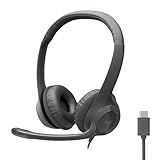
- Digital Stereo Sound: Fine-tuned drivers provide enhanced digital audio for calls, meetings, music, and more
- Rotating Noise-Canceling Mic: Minimizes unwanted background noise for clear conversations; the rotating boom arm can be tucked out of the way when not in use
- Handy Inline Controls: Simple inline controls on the headset cable let you adjust the volume or mute calls without disruption
- USB-C Plug-and-Play: Simply plug the USB-C cable into your computer, including MacBook Neo laptops, and you're ready to talk or listen without installing software.
- Padded Comfort: Comfortable USB C headphones with adjustable headband feature swivel-mounted, leatherette ear cushions for hours of comfort
Use one-to-ones, peer learning, team updates, and coaching where they meet the team’s needs. The appropriate cadence depends on the work, team size, and current challenges; there is no single meeting schedule established as effective for every remote support team. Use interaction reviews and agent feedback to identify where alignment or training is missing, then adjust the support practices accordingly.
6. Secure customer information and remote access
Security is part of the service model because agents may access customer records and business systems from outside a central office. Choose controls according to the sensitivity of the information, systems involved, contractual commitments, and applicable legal obligations. Vendor features are examples to evaluate, not universal requirements.
Free tools Windows power users keep installed
One-click scans. No signup required.
Establish access controls
- Limit permissions: Give agents access only to the systems and customer information needed for their role. Restrict administrative access to people who need it.
- Choose approved authentication: Evaluate options such as single sign-on, two-factor authentication, and other account controls in the systems agents use. Zendesk documents platform authentication and access options including SSO, two-factor authentication, IP restrictions, and encrypted connections: Zendesk Trust Center.
- Manage endpoints: Decide which devices can access internet-facing services and what endpoint-management controls the organization needs. Salesforce’s remote-workforce security guidance discusses endpoint management and access to internet-facing services: Salesforce remote-workforce security.
- Keep access auditable: Consider available audit logs and account controls when selecting and configuring systems. Review access when roles change.
- Train for safe handling: Teach agents to follow approved procedures for customer-data access and to verify identity before making account changes.
NIST’s telework publication covers broader security considerations for remote access and bring-your-own-device arrangements: NIST SP 800-46 Rev. 2. It dates to 2016, so do not treat it alone as a statement of current compliance requirements; check whether newer guidance and your organization’s obligations apply.
NIST SP 1308, published in March 2026, connects cybersecurity risk management with workforce decisions and adaptation to evolving technologies and threats: NIST SP 1308. Its abstract says, “This QSG addresses the need for agile, continuous workforce adaptation to rapidly evolve for emerging threats and technologies.” That principle supports revisiting workforce and security decisions as the tools and threat environment change.
Independent reader supportYour contribution helps us test, update, and keep practical guides available for everyone.7. Choose tools that fit the operating model
Remote support does not require one specific platform. Start with the work the team must do and compare tool categories against the channels, schedules, quality practices, and access controls already defined. The sources here describe capabilities and vendor guidance; they do not establish a universal product ranking.
Rank #4

- Digital Stereo Sound: Fine-tuned drivers provide enhanced digital audio for music, calls, meetings and more
- Rotating Noise Canceling Mic: Minimizes unwanted background noise for clear conversations; the rotating boom arm can be tucked out of the way when you’re not using it
- Handy In-line Controls: Simple in-line controls on the headset cable let you adjust the volume or mute calls without disruption
- Plug-and-Play USB Computer Headset: Simply plug the USB-A connector into your computer and you’re ready to talk or listen without the need to install software
- Padded Comfort: Comfortable headphones with adjustable headband features swivel-mounted, leatherette ear cushions for hours of comfort and is easy to clean
| Tool category or example | What it can support | When it may fit | What to account for |
|---|---|---|---|
| Workforce-management tools, including Zendesk WFM | Forecasting, scheduling, and reporting; Zendesk’s materials also cover workstreams, agent activity, and access controls. | When leaders need structured ways to plan coverage and review workforce activity. | Fit depends on channel demand, service hours, existing systems, and the team’s planning needs. Current product entitlements are not established here. |
| Customer-service platforms and access controls | Customer interactions and platform security options; Zendesk documents SSO, two-factor authentication, IP restrictions, encrypted connections, and account controls. | When agents need a shared system for customer work and controlled remote access. | Platform controls do not replace an organization’s broader endpoint, training, and least-privilege decisions. |
| Quality-assurance tools, including Zendesk QA | Interaction reviews, scorecards, calibration, and coaching support. | When managers need a repeatable way to assess work beyond speed measures. | Automated or structured QA does not remove the need for human review, calibration, and useful coaching. Current plan details are not stated. |
8. How to choose a workable approach
Use the service map and operating evidence to make decisions in this order:
The Tool Desk
Outbyte Driver Updater FREEScan for outdated or missing drivers - takes under a minuteDriver Scan →Outbyte PC Repair FREEClear out junk files and repair common Windows errorsFree Scan →- Set the customer promise. Confirm the issues, channels, hours, languages, and response commitments the business will support.
- Match coverage to demand. Forecast by channel and time, account for skills and messaging patterns, then schedule and revise using actual workload.
- Specify the workflow. Decide queue ownership, routing, escalation, handoff, and documentation for each channel.
- Define quality expectations. Pair operational indicators with interaction review and coaching that reflect accuracy, customer treatment, resolution, and security.
- Set security controls. Inventory the data and systems agents need, apply least privilege, select approved authentication and devices, and account for applicable obligations.
- Evaluate tools against the design. Compare workforce management, customer-service, and QA capabilities with team size, service hours, existing systems, budget, and data needs.
- Revisit the model. Review actual demand, outcomes, tools, and security risks as the business and threat environment change.
Frequently Asked Questions
How many agents should a remote customer service team have?
There is no universal headcount ratio established by the cited guidance. Size coverage from forecast demand by channel and time, service commitments, required skills, and observed workload.
Does a remote customer service team need different performance metrics?
It needs measures that reflect the work and the customer experience, rather than an overreliance on speed or volume. Combine operational signals with interaction quality, resolution outcomes, customer feedback, development, and security adherence as appropriate to the operation.
Is messaging staffed the same way as voice or email?
Not necessarily. Messaging conversations may remain active over time, changing routing, workload, and performance evaluation. Set staffing and ownership rules around the way customers use that channel.
What security controls should remote support agents use?
Choose controls for the data and systems involved. Relevant measures to evaluate include least-privilege access, approved authentication, managed or approved devices, access logging, training, and identity verification before account changes.
Quick Recap
Product prices and availability are accurate as of the date/time indicated and are subject to change. Any price and availability information displayed on Amazon at the time of purchase will apply.

