
You can access home PCs remotely without buying a dedicated appliance, but “free” depends on the design: a managed network service may offer a free personal tier, while a cloud-hosted VPN server can incur virtual-machine or data-transfer charges. The title alone does not identify a particular provider or setup, so this guide compares practical approaches rather than attributing a specific build to its author.
First decide what you need to reach
Remote access can mean three different things. Choosing the narrowest option you need reduces setup work and limits what the connection can reach.
- Specific home PCs: Install a compatible networking client on each computer and connect them through a managed network such as a Tailscale tailnet.
- Other devices on your home network: Use a subnet router when a target device cannot run the client itself. The router advertises a route to the home subnet, which must be enabled and permitted.
- Your general internet traffic: Use an exit node if you want internet-bound traffic from a remote device to travel through a selected node. This is different from reaching only a home subnet.
A cloud virtual machine, the network overlay or VPN, and your home PCs are separate nodes. For example, Tailscale’s AWS guide joins an EC2 instance to a tailnet; that does not make the instance the only route to your home PCs. Tailscale’s AWS VM guide describes that cloud-node setup.
Choose an approach that fits your setup
| Approach | Best fit | Main work | Cost considerations |
|---|---|---|---|
| Tailscale tailnet | Home PCs can run the client and you want managed device connectivity. | Install and authenticate devices; manage users and access permissions. | Tailscale’s quickstart describes a Personal plan with six free users for qualifying signups using public-domain email addresses. Check its current terms; this does not establish that every related cloud resource is free. Tailscale quickstart |
| Tailscale subnet router | You need to reach a home-network device that cannot run the client. | Configure an always-on gateway, advertise and approve routes, set access rules, and enable Linux IP forwarding when applicable. | No new hardware is inherently established as necessary, but the gateway must be an existing suitable device or an optional addition. Tailscale subnet-router guide |
| Self-managed WireGuard on a cloud VM | You want protocol-level control and are comfortable administering the server and clients. | Configure interfaces, peer keys, endpoints, routing, and firewall rules; consider persistent keepalive only where NAT or firewall behavior requires it. | The reviewed WireGuard documentation does not establish a free cloud deployment. The VM and traffic may be billable by the provider. WireGuard Quick Start |
| OpenVPN on Oracle Cloud Infrastructure | You want to follow Oracle’s remote-access VPN tutorial. | Configure OCI networking and compute, then set up the VPN server and clients. | Oracle links to Free Tier signup, but that does not guarantee that the resources or usage needed for this setup will remain free. Oracle’s OCI OpenVPN tutorial |
Set up individual-PC access with a managed network
Enroll and identify the devices
For a small group of PCs that can run the client, the straightforward route is to install Tailscale on each computer, authenticate it to the same tailnet, and manage membership in the admin console. Tailscale assigns devices unique 100.x.y.z addresses and offers MagicDNS names so you can find devices by name rather than memorizing addresses. Availability and labels can change, so follow the current Tailscale quickstart for the supported device and sign-in steps.
Free tools Windows power users keep installed
One-click scans. No signup required.
#1 Best Overall

- 【Five Gigabit Ports】1 Gigabit WAN Port plus 2 Gigabit WAN/LAN Ports plus 2 Gigabit LAN Port. Up to 3 WAN ports optimize bandwidth usage through one device.
- 【One USB WAN Port】Mobile broadband via 4G/3G modem is supported for WAN backup by connecting to the USB port. For complete list of compatible 4G/3G modems, please visit TP-Link website.
- 【Abundant Security Features】Advanced firewall policies, DoS defense, IP/MAC/URL filtering, speed test and more security functions protect your network and data.
- 【Highly Secure VPN】Supports up to 20× LAN-to-LAN IPsec, 16× OpenVPN, 16× L2TP, and 16× PPTP VPN connections.
- Security - SPI Firewall, VPN Pass through, FTP/H.323/PPTP/SIP/IPsec ALG, DoS Defence, Ping of Death and Local Management. Standards and Protocols IEEE 802.3, 802.3u, 802.3ab, IEEE 802.3x, IEEE 802.1q
Grant only the access you need
Being connected to the same tailnet should not be treated as a reason to grant every user broad access. Tailscale supports configurable ACLs and grants. Limit permissions to the people and devices that need remote access, and review them when your household or device list changes. Tailscale’s quickstart covers permissions and tailnet setup.
Add access to devices that cannot run a client
A subnet router is useful for a printer, older computer, or other reachable device that cannot install the networking client. The router itself runs the client and advertises the relevant private-subnet route. Advertising alone is not enough: approve or enable the route in the admin console and ensure the applicable access rules permit the intended users and devices.
Rank #2

- Next-Gen Gigabit Wi-Fi 6 Speeds: 2402 Mbps on 5 GHz and 574 Mbps on 2.4 GHz bands ensure smoother streaming and faster downloads; support VPN server and VPN client¹
- A More Responsive Experience: Enjoy smooth gaming, video streaming, and live feeds simultaneously. OFDMA makes your Wi-Fi stronger by allowing multiple clients to share one band at the same time, cutting latency and jitter.²
- Expanded Wi-Fi Coverage: 4 high-gain external antennas and Beamforming technology combine to extend strong, reliable, Wi-Fi throughout your home.
- Improved Battery Life: Target Wake Time helps your devices to communicate efficiently while consuming less power.
- Improved Cooling Design: No heat ups, no throttles. A larger heat sink and redefined case design cools the WiFi 6 system and enables your network to stay at top speeds in more versatile environments.
- Choose a suitable home-network device that can stay powered on and reach the target subnet.
- Install and authenticate the networking client on that gateway.
- Advertise only the private subnet you intend to make reachable, using the current instructions in the subnet-router guide.
- Approve the route in the admin console and configure access rules for the users and devices that need it.
- If the gateway runs Linux, enable IP forwarding. Check the firewall too: Tailscale advises ensuring that it denies forwarding by default as a safeguard against unintended routing.
Subnet routing reaches specified private-network destinations; it does not automatically send all of a remote device’s internet traffic through your home.
Use an exit node only when you want to route internet traffic
An exit node carries general internet-bound traffic through a selected node. A subnet router, by contrast, provides a route to specified private subnets. If your goal is simply to connect to a home PC, an exit node is not required.
Rank #3

- Please update the firmware upon initial setup of the router, as it greatly enhances the device's performance and ensures a superior user experience.*** 【WiFi 6 Standard with ultra-low latency】Wi-Fi 6 speeds up to 6 Gbps to let you enjoy smoother 4K streaming, gaming, video calls and more, DDR4 1GB / eMMC 8GB
- 【High Speed Gaming Router】Dominate with uninterrupted performance with the ultimate MT6000 gaming internet router, equipped with 8-stream Wi-Fi 6 technology, the Flint 2 delivers blazing speeds, ensuring a stable and high-speed connection during intense multiplayer battles.
- 【Rapid OpenVPN & Wireguard speed】Wireguard VPN and OpenVPN speeds up to 900Mbps and 880Mbps respectively, giving you complete control over your gaming, streaming and working bandwidth. Actual speed may differ depending on internet service provider, network environment, VPN server location, VPN service provider, etc.
- 【AdGuard Home Supported】Enabling the use of a DNS server for blocking unwanted tracking and offers a convenient web interface for filtering selected digital advertisements. Users can take full control of their online experience and enjoy a clutter-free browsing environment with ease.
- 【Mass device connectivity】Experience enhanced online connectivity with our higher storage capacity, catering to over a hundred devices and fulfilling the requirements of DIY users seeking to install additional plugins. Enjoy stable and reliable connections, ensuring seamless performance and accommodating a wide range of digital needs.
To use one in Tailscale, configure a device as an exit node, enable and approve that capability in the admin console, then select it on the remote device. See the current Tailscale exit-node instructions for the exact steps and platform details.
What a self-managed cloud VPN adds—and costs
With a self-managed WireGuard server, you control peer configuration, keys, endpoints, routes, and firewall behavior. WireGuard describes its function this way: “WireGuard securely encapsulates IP packets over UDP.” That describes the tunnel protocol, not a complete remote-access deployment; you still need to configure the peers and the paths traffic should take. WireGuard’s project overview and Quick Start explain the protocol and configuration basics.
Rank #4
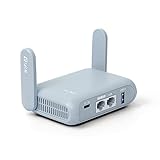
- 【DUAL BAND AX TRAVEL ROUTER】Products with US, UK, EU Plug; Dual band network with wireless speed 574Mbps (2.4G)+2402Mbps (5G); 2.5G Multi-gigabit WAN port and a 1G gigabit LAN port; USB 3.0 port; Wi-Fi 6 offers more than double the total Wi-Fi speed with the MT3000 VPN Router.
- 【VPN CLIENT & SERVER】OpenVPN and WireGuard are pre-installed, compatible with 30+ VPN service providers (active subscription required). Simply log in to your existing VPN account with our portable wifi device, and Beryl AX automatically encrypts all network traffic within the connected network. Max. VPN speed of 150 Mbps (OpenVPN); 300 Mbps (WireGuard). *Speed tests are conducted on a local network. Real-world speeds may differ depending on your network configuration.*
- 【OpenWrt 21.02 FIRMWARE】The Beryl AX is a portable wifi box and mini router that runs on OpenWrt 21.02 firmware. It supports more than 5,000 ready-made plug-ins for customization. Simply browse, install, and manage packages with our no-code interface within Beryl AX's Admin Panel.
- 【PROTECT YOUR NETWORK SECURITY】Our pocket wifi, unlike other vulnerable portable wifi hotspot for travel purposes supports WPA3 protocol–Preventive measures against password brute-force attacks; DNS over HTTPS & DNS over TLS–Protecting domain name system traffic and preventing data eavesdropping from malicious parties; IPv6–Built-in authentication for privacy protection, eliminating the need for network address translation.
- 【VPN CASCADING AT EASE】Surpassing the mediocre performance of most VPN routers for home usage, the Beryl AX is capable of hosting a VPN server and VPN client at the same time within the same device, enabling users to remote access local network resources like Wi-Fi printers or local web servers, and accessing the public internet as a VPN client simultaneously.
Persistent keepalive is a conditional setting, not a universal recommendation. WireGuard’s Quick Start says it is off by default because most users do not need it; where a peer behind NAT or a firewall must remain reachable after traffic goes idle, the guide describes 25 seconds as a sensible interval. Whether that applies depends on your network topology.
A public cloud endpoint can help make a server reachable, but it also makes access dependent on the provider account, network rules, uptime, and current billing terms. Oracle’s OpenVPN-on-OCI tutorial is a concrete route to follow, not proof that every required OCI resource or its traffic has no charge. Likewise, an AWS tutorial showing how to join a VM to a tailnet does not establish a zero-cost AWS deployment.
Do these 3 things before closing this tab:
1Repair Windows errors before they cause bigger problems2Scan for outdated or missing drivers - takes under a minute3Clear out junk files and repair common Windows errorsBest Value

- 𝐑𝐨𝐚𝐦 𝟔 𝐀𝐗𝟏𝟓𝟎𝟎 𝐝𝐮𝐚𝐥-𝐛𝐚𝐧𝐝 𝐬𝐩𝐞𝐞𝐝𝐬 - Wi-Fi 6 Speeds up to 1,201 Mbps (5 GHz) and 300 Mbps (2.4 GHz) for up to 60 devices simultaneously. Actual Wi-Fi speeds vary based on source bandwidth, environment, distance to devices, and obstacles. ◇§
- 𝐏𝐨𝐫𝐭𝐚𝐛𝐥𝐞 𝐚𝐧𝐝 𝐝𝐮𝐫𝐚𝐛𝐥𝐞 𝐝𝐞𝐬𝐢𝐠𝐧 - Roam 6 AX1500 is a pocket-sized travel router compactly designed for trips and adventures, featuring a 1 Gbps WAN/LAN port and a 1 Gbps LAN port for reliable wired connectivity.
- 𝗦𝗲𝗰𝘂𝗿𝗲 𝗪𝗶-𝗙𝗶 𝗼𝗻-𝘁𝗵𝗲-𝗴𝗼 - Connects to public Wi-Fi and creates a private, secure network for all your devices. Supports multiple devices at once, ideal for hotels, Airbnbs, airports, and even home use. VPN connectivity enables secure remote work.
- 𝐌𝐮𝐥𝐭𝐢𝐩𝐥𝐞 𝐰𝐚𝐲𝐬 𝐭𝐨 𝐜𝐨𝐧𝐧𝐞𝐜𝐭 - (1) Router Mode: Connects to public Wi-Fi, ISP, or phone (USB tethering). (2) AP/RE/Client Mode: Adds WiFi to wired setups, extends WiFi, or connects wired devices wirelessly.
- 𝐎𝐮𝐫 𝐜𝐲𝐛𝐞𝐫𝐬𝐞𝐜𝐮𝐫𝐢𝐭𝐲 𝐜𝐨𝐦𝐦𝐢𝐭𝐦𝐞𝐧𝐭 - TP-Link is a signatory of the U.S. Cybersecurity and Infrastructure Security Agency’s (CISA) Secure-by-Design pledge. Advanced security is integrated into the device’s design, development, and ongoing maintenance.
Keep the design secure and the bill predictable
- Restrict identity and permissions: Allow only the people, devices, and routes needed. Encryption protects traffic in transit; it does not decide who should be authorized to reach each destination.
- Avoid broad subnet exposure: Advertise only the routes you need and check the gateway’s forwarding rules, particularly on Linux.
- Protect keys and accounts: In a self-managed WireGuard setup, peer keys and configuration are part of the access-control system. Keep them private and remove peers that should no longer connect.
- Check the whole cost, not just the software: A free client or plan does not make a cloud VM, storage, or network traffic free. Confirm current provider billing terms and set usage controls where available.
- Do not buy hardware by default: The documented approaches do not establish a necessary hardware purchase. A suitable existing PC or gateway may be enough; an always-on gateway is relevant only if your chosen design needs one.
Which option should you pick?
If each home PC can run a client and you want straightforward access to those machines, begin with a managed tailnet and carefully scoped permissions. If you also need devices that cannot install the client, add a subnet router. Use an exit node only when routing general internet traffic is part of the goal. Choose a cloud-hosted WireGuard or OpenVPN server when you specifically want to administer a VPN endpoint yourself and have confirmed the provider’s likely charges. No single choice can honestly be called “free” for every configuration.
Quick Recap
Product prices and availability are accurate as of the date/time indicated and are subject to change. Any price and availability information displayed on Amazon at the time of purchase will apply.

