
What’s actually slowing this PC down?
Pick the symptom - the matching free tool is one click away.
A pre-market watchlist is a short list of securities to monitor—not a list of automatic buy or sell signals. Build it by checking the session and overnight context, verifying catalysts, screening for tradability, and writing an entry condition, invalidation point, exit rule, and maximum planned loss for every candidate before the opening volatility.
1. Check the calendar and overnight context
Start by confirming the date and the U.S. market session. Check for scheduled economic releases, company events, and other known developments that could change a candidate’s setup. Note when an event is due and whether it could make the plan uncertain or invalid.


Look at broad market context, including relevant futures, but do not treat futures, headline tone, or a pre-market price move by itself as a trade signal. Verify a company catalyst at the issuer or a reliable news source. Record where the information came from and when it was published; distinguish confirmed information from a report that has not been confirmed.
2. Find a small, explainable set of candidates
Use a consistent scan rather than collecting every security with a large percentage move. For each candidate, identify a verifiable reason to watch—or a setup you already understand—and check whether the security can be traded in the session you intend to use. A gap, headline, or scanner result is a prompt to investigate, not a prediction of direction.
Outdated Drivers Are Slowing You Down
One free scan finds every outdated or missing driver and matches the right update for your exact hardware.Free scan · exact hardware matchPC Slower Than It Used to Be?
A free scan shows the junk files, broken settings and background clutter dragging Windows down - then fixes them in one click.Free scan · Windows 10 & 11#1 Best Overall

- My Trading Journal for Stock Market, Forex, and Crypto: Precisely track and analyze every trade. This log book is essential for improving your trading performance and decision-making skills.
- Comprehensive Day Trading Planner: Record and review 80 guided trades with 8 review sections, perfect for traders aiming to refine their strategies and maximize profits.
- Customizable Trading Setup: Tailor your trading approach by documenting your setups, analyzing results, and adjusting strategies based on market conditions.
- For All Types of Traders: Whether you're trading stocks, forex, or crypto, My Trading Journal supports your unique trading style and helps you achieve consistent success.
- Premium Quality and Durability: Made with high-quality materials, this A5-sized journal is perfect for daily use and designed to withstand the rigors of active trading.
Before keeping a candidate, look at its pre-market price and volume context, quoted bid and ask, spread, and available liquidity relative to your intended order size. These are practical screening considerations, not regulator-set standards or validated universal thresholds. There is no single gap, volume, or spread cutoff that fits every security, broker, order size, and trading plan.
Candidate card: what to record
- Identity: ticker and company or security name.
- Catalyst: what happened, the source, its publication time, and whether it is confirmed or only reported.
- Reference levels: prior close, relevant prior-session high or low, and other levels you have independently chosen to monitor.
- Current conditions: observed pre-market range, volume context, bid/ask spread, and the timestamp of the observation.
- Conditional setup: the behavior or level that must occur before entry.
- Risk plan: the point that invalidates the idea, the planned exit or management rule, and the maximum acceptable loss.
- No-trade reason: for example, an unverified catalyst, poor liquidity, an excessive spread, a halt, or a price that has already moved too far from the planned risk.
Keep a candidate only if you can state both why it merits attention and what would make you abandon it. A short, conditional list is easier to manage than a catalog of every gapping security.
Rank #2
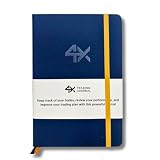
- BUILT FOR YOUR MARKET, FUTURES, STOCKS, FOREX, OPTIONS & CRYPTO: 4X is a mindset and process journal, not a strategy tool tied to one instrument. The plan, the trade log, the deep dive and the weekly review work the same whether you trade ES, EURUSD, SPY or BTC. Traders use it across all five markets every day.
- THE 2026 EDITION, REBUILT FROM TRADER FEEDBACK: Same trusted system, better in every way. An extra daily page for more room to log the session. Weekly reviews now grouped with each week's trades, so no more flipping back and forth. Crisp, darker print that's easy on the eyes after hours on a screen. A Quick-Start QR that scans straight to step-by-step instructions.
- NOT A NOTEBOOK, A COMPLETE 12-WEEK SYSTEM: Start with a one-time 9-part Trading Plan (your market, setups, risk rules and discipline checklist). Then twelve identical weeks: five Daily Logs, five Deep Dive trade pages, and a two-page Weekly Review. 189 guided pages, roughly 80 trades. Guided prompts walk you through every step. You never stare at a blank page.
- RATE YOUR EXECUTION, NOT YOUR RESULT: Your platform tracks the P&L. Nothing tracks the why. Log energy, sleep and mindset before the open; grade every trade A to F on whether you followed your plan, not on whether it won; then face the pattern every weekend with START / STOP / IMPROVE / CONTINUE. That review habit is the edge. You're 42% more likely to hit a goal you've written down.
- BUILT TO LAST, ARRIVES GIFT-READY: Vegan-leather hardcover, 100gsm bleed-resistant paper, two ribbon markers and an elastic closure band. Bound to lay flat so you're not fighting the spine while you write. 189 pages, 5.75" x 8.5", carries in a bag. Ships in a premium gift box: the gift every trader in your life actually wants.
3. Write the trading plan before the open
For each candidate, write a one-sentence thesis and define the plan before the opening volatility begins. A watchlist entry should be actionable only if its stated condition occurs; being on the list is not a reason to enter.
- Thesis: State why the security is on your list in one sentence, referring to the catalyst or setup you verified.
- Entry trigger: Specify the price level or market behavior that must occur before you consider an entry.
- Invalidation: Identify the price or behavior that would show the setup no longer meets your criteria.
- Exit and management: Decide in advance how you intend to manage or exit the position if the setup proceeds or fails.
- Maximum planned loss: Choose the maximum dollar loss you are willing to accept for the idea, based on your own circumstances.
- No-trade condition: Write down what would make you stand aside, such as a changed catalyst, an opening price far from the planned level, poor execution conditions, or risk that is no longer acceptable.
Position size follows the plan, not the ticker
Position size depends on the distance between the planned entry and invalidation point, as well as the maximum dollar loss you choose. For example, if a hypothetical plan sets a maximum loss of $100 and the distance from entry to invalidation is $2 per share, dividing $100 by $2 gives 50 shares before accounting for commissions, slippage, partial fills, or other costs. This is arithmetic to illustrate the relationship, not a recommended risk amount or a guarantee that the realized loss will stay within the planned amount. No universal risk percentage or share-size formula is appropriate for every trader.
If the security opens far from the planned level, the catalyst changes, or the risk no longer fits the plan, reassess or skip it instead of chasing a move simply because it appeared on the watchlist.
4. Confirm how your broker handles extended-hours orders
Extended-hours access and order handling are broker- and market-specific. Read your broker’s current instructions before placing an order and confirm the session times, eligible securities, permitted order types, time-in-force, routing and quote display, and whether an order can carry into regular trading. Fidelity, for example, says its extended-hours orders are limited to limit orders in the sessions described on its Trading FAQs: Placing Orders page. That is a Fidelity-specific example, not a rule for other brokers.
Nasdaq’s rules describe order activation and time-in-force options for its own market, including the opening cross and the boundary with regular trading; they should not be assumed to describe every venue or broker’s handling. See Nasdaq Equity 4 for Nasdaq-specific rules.
Why a pre-market order may fill at a different price
Nasdaq’s customer disclosures identify extended-hours risks that include lower liquidity, high volatility, changing prices, unlinked markets, news effects, and wider spreads. FINRA’s model disclosure also warns that an order may be partially executed or not executed, and that a price on one extended-hours system may not reflect prices on another. Read Nasdaq Equity 2 and FINRA’s Model Extended Hours Trading Risk Disclosure Statement for those disclosures.
Free tools Windows power users keep installed
One-click scans. No signup required.
Best Value
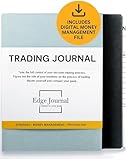
- FOR SERIOUS TRADERS: Track every entry, exit, position size, P&L, and setup with a structured layout designed for forex, stocks, options, futures, and crypto traders who want to identify what actually works in their strategy. NEUROSCIENCE-BASED DESIGN that encourages Growth Mindset and accountability
- TRADER PSYCHOLOGY FOCUS: Built on proven cognitive science principles, each page guides you through emotion tagging, bias recognition, and post-trade reflection to rewire reactive decision-making and build the disciplined mindset top-performing traders rely on
- COMPLETE 2026 TRADING LOG BOOK: Undated 12-month layout with performance summaries and goal tracking for day traders, swing traders, and long-term investors building consistent and serious results
- PERFORMANCE METRICS THAT DRIVE GROWTH: Dedicated sections for win rate, risk-reward ratio and strategy backtesting help you turn raw data into actionable insights, so every losing trade becomes a lesson and every winning trade becomes a repeatable system
- DIGITAL MONEY MANAGEMENT FILE INCLUDED : calculate your risk/reward ratio and win rate to find out whether you have a mathematical edge on the market, or not.
A limit order sets the worst price you are willing to accept for that order, but it does not ensure a fill. A displayed quote may change before execution, and an order may fill only in part or not at all. An order type does not remove market risk.
Independent reader supportYour contribution helps us test, update, and keep practical guides available for everyone.5. Use a compact watchlist template
Copy this structure into a spreadsheet or notebook and complete it for each candidate. Timestamp observations because pre-market prices and quotes can change quickly.
| Field | What to write |
|---|---|
| Ticker / security | Name and symbol. |
| Catalyst / source / time | What happened, where it was reported, when it was published, and whether it is confirmed. |
| Reference levels | Prior close, relevant prior-session levels, and the levels you chose to monitor. |
| Pre-market observation | Price range, volume context, bid/ask spread, and observation time. |
| Setup and trigger | Why it is on the list and what must happen before entry. |
| Invalidation / exit | What cancels the setup and how you plan to manage or exit. |
| Maximum planned loss | Your chosen dollar limit for the idea. |
| No-trade condition | The specific reason you will stand aside or abandon the setup. |
A paper journal is one optional way to keep these notes; the format matters less than recording the plan and what happened.
6. Review the plan after the session
After the session, record whether the planned condition occurred, whether the order filled as expected, what changed in the thesis, and whether you followed the rules you wrote down. Separate process from outcome: a profitable result does not prove the process was sound, and a loss alone does not prove the plan was poor.
Do these 3 things before closing this tab:
1Clear out junk files and repair common Windows errors2Fix the driver behind crashes, sound loss and screen glitches3Repair Windows errors before they cause bigger problemsQuick Recap
Product prices and availability are accurate as of the date/time indicated and are subject to change. Any price and availability information displayed on Amazon at the time of purchase will apply.

