
Outdated Drivers Are Slowing You Down
One free scan finds every outdated or missing driver and matches the right update for your exact hardware.Free scan · exact hardware matchWindows Errors? Fix Them Before They Spread
Repair common Windows errors and clear accumulated junk for a smoother, more stable PC - no reinstall needed.Free scan · no reinstallA cloud-based captive portal can help onboard visitors and personal devices, but it does not make Wi-Fi zero trust by itself. For corporate devices, use 802.1X with RADIUS and managed identity or device credentials; then apply least-privilege policies based on identity and, where available, device compliance. Keep guest, unknown, and noncompliant devices restricted, and continue enforcing access rules after login.
Can a captive portal provide zero-trust Wi-Fi security?
No—not on its own. A captive portal provides a browser-based interaction, such as visitor registration, terms acceptance, sponsorship, or self-onboarding. A successful portal login does not establish that the device is managed, compliant, or safe to reach internal systems.
The UK National Cyber Security Centre’s Zero Trust Network Access: Introduction to ZTNA states that “network connectivity alone never grants access to a service.” Apply that principle to Wi-Fi: connecting to an access point or passing through a portal should not automatically authorize access to business applications or broad internal network ranges. Authorization should depend on policy and context, and access should be checked continually.
Should corporate Wi-Fi use 802.1X or a captive portal?
They serve different purposes. For managed corporate devices, use enterprise Wi-Fi authentication with 802.1X and RADIUS. A portal is better suited to browser-based guest access or a bounded onboarding flow. Some organizations use both, but on separate access paths with different permissions.
#1 Best Overall

- Free Omada Essentials Cloud Management: Free cloud management with no additional fees, everything is managed in the cloud without the need for hardware or software controllers. Simply launch the Omada app, scan the S/N code on the package, and you're ready to deliver
- Ultra-Fast True Wi-Fi 6 Speeds: Designed with the latest wireless Wi-Fi 6 technology featuring 1024-QAM, HE60 and Long OFDM Symbol, the EAP650 boosts dual-band Wi-Fi speeds up to 2976 Mbps
- Ultra-Slim Design: Compact design ensures simple installation while saving space. The elegant appearance makes EAP650 blend into any modern office, hotel, classroom, or cafe
- Integrated into Omada SDN: Omada Software Defined Networking (SDN) platform integrates network devices including access points, switches and gateways with multiple control options offered - Omada Hardware controller, Software Controller or Cloud-based controller. Standalone mode also supported
- Cloud Access Omada Compatibility: Remote Cloud access and Omada app enables centralized cloud management of the whole network from different sites, all controlled from a single interface anywhere, anytime
| Approach | Best fit | What it establishes | Important limit |
|---|---|---|---|
| 802.1X with RADIUS | Managed corporate devices | Network authentication using the configured enterprise identity or device credentials | Authentication still needs to be followed by appropriately scoped authorization. |
| Cloud captive portal | Guests, visitors, and browser-based BYOD onboarding | A portal interaction, such as registration, sponsorship, terms acceptance, or an identity-provider sign-in | A browser login alone does not prove device management or compliance. |
| Portal followed by managed-profile provisioning | Some self-onboarding flows for personal devices | An onboarding interaction that can lead to a provisioned wireless profile | Provisioning and subsequent access policy must be configured and verified separately. |
Cloud4Wi documents examples of both an open-SSID captive-portal flow that uses corporate identity-provider authentication and a separate BYOD portal that provisions a Passpoint profile. These are product-specific patterns, not universal settings. For managed endpoints, Microsoft’s NAC guidance describes checking enrollment and compliance and recommends certificate-based authentication with the Intune device ID wherever possible.
How should a zero-trust Wi-Fi design work?
Separate the connection and onboarding paths, make an explicit access decision, and keep the resulting access narrow. A practical flow is:
Rank #2

- FREE Omada Essential Platform Centralized Remote Management: Unlock numerous advanced features by integrating with Omada Cloud Management Platform, such as network monitoring, remote network configuration, AI features, ZTP (Zero Touch Provisioning) etc. More possibilities you can find with your network management
- Dual-Band 4-Stream Wi-Fi 7: Up to 5.0 Gbps, 4324 Mbps on 5 GHz + 688 Mbps on 2.4 GHz. Powered by Wi-Fi 7 technology, enjoy faster speeds with Multi-Link Operation, increased reliability with Multi-RUs, and 120% more data capacity with 4K-QAM, delivering enhanced performance for all your devices
- Future Proof 2.5G Port: Equipped with a 2.5 Gigabit Ethernet port to support high-speed networking and future broadband upgrades-no hardware replacement required when switching to multi-gig internet plans
- Abundant Networking Features Available to Develop: Network monitoring, VLAN segmenting, Bandwidth management, Schedule Setup, Security features, PPSK all seated and right there waiting to be developed for you
- Premium WiFi Experience: Seamless roaming, Mesh, Airtime fairness and other business level wifi experience features are provided here
- Choose the right access path. Put managed corporate devices on an enterprise SSID using 802.1X and RADIUS. Provide a distinct guest or onboarding SSID when users need a browser-based interaction.
- Limit pre-authentication access. Before authentication, allow only what the device needs to reach the portal and required support services. Do not give the pre-authentication role general internal reachability.
- Authenticate users and devices. Use the organization’s identity provider for user identity and managed device credentials where available. For integrated NAC, verify what enrollment and compliance signals the product actually checks.
- Authorize by policy. Map identity groups and device classes to appropriately scoped access, such as VLANs, access-control rules, or a quarantine role. A successful authentication is an input to this decision, not a blanket grant.
- Keep access constrained when trust signals are missing. Place unknown or noncompliant devices in restricted or remediation access instead of treating them like managed endpoints.
- Review and monitor decisions. Record identity, device, policy outcome, portal session, and remediation events. Review those records and the policy mappings as identities, devices, and cloud-service dependencies change. The exact logging schema depends on the organization and platform.
For example, an employee’s managed laptop could receive access appropriate to its identity and device status, while a contractor receives only approved resources, an IoT sensor receives only the network access it needs, and an unknown device remains in a restricted role. Those are policy patterns, not universal VLAN names or settings; the available controls vary by wireless and NAC platform.
Where does a cloud portal fit?
Use the portal for the interaction it can perform well, rather than as a substitute for endpoint trust checks. Suitable purposes include guest registration, sponsor approval, acceptance of a legal notice, or self-onboarding that provisions a managed wireless profile. A portal can also participate in an identity-provider sign-in flow, but the organization should preserve the provider’s supported authentication and MFA requirements.
Recommended Free Tools
Rank #3
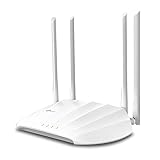
- Superior Speeds with MU-MIMO: Outfitted with the latest 802.11ac Wave 2 MU-MIMO technology, the TL-WA1201 easily delivers dual-band Wi-Fi speeds of up to 1200 Mbps to multiple devices at the same time
- Multi-Mode 4 in 1: Supports Client, Multi-SSID, Range Extender, and AP operation modes to enable various wireless applications to give users a more dynamic and comprehensive experience when using your AP
- PoE for Easy Installation: TL-WA1201 supports Passive PoE power supplies, can be powered by the provided PoE adapter, making deployment effortless and flexible
- Boosted Wi-Fi Coverage: Four external antennas equipped with Beamforming technology concentrate Wi-Fi signals towards your devices to extend reliable Wi-Fi to every corner of your home or office, even over long distances
- Gigabit Ethernet Port: Features a Gigabit Ethernet port that provides high-speed wired connectivity for devices requiring stable and fast network connections
Cloud services can centralize portal and policy management across locations, but compatibility is specific to the deployment. Confirm that the selected access points or controllers support the required RADIUS and policy features, that the identity provider and endpoint-management integration are supported, and that the cloud service’s configuration fits the organization’s operational and incident-response needs. Vendor documentation describes product capabilities; it is not independent performance testing.
How do you secure portal discovery and sign-in?
A portal must be discoverable without undermining the security checks that protect the connection. IETF RFC 8952, which specifies the Captive Portal API, calls for secure delivery of the Captive Portal URI, TLS certificate validation by clients using the API, and solutions that permit DNSSEC validation.
Rank #4

- Free Omada Essentials Cloud Management: Free cloud management with no additional fees, everything is managed in the cloud without the need for hardware or software controllers. Simply launch the Omada app, scan the S/N code on the package, and you're ready to deliver
- Ultra-Fast True Wi-Fi 6 Speeds For Your Business: Designed with the latest wireless Wi-Fi 6 technology featuring 1024-QAM and Long OFDM Symbol, the EAP610 boosts dual-band Wi-Fi speeds up to 1800 Mbps. With 4 Spatial streams, multi-user throughput is incredibly increased to drive more applications
- Ultra-Slim Design: Compact design ensures simple installation while saving space. The elegant appearance makes EAP610 V2 blend seamlessly into any modern office, hotel, classroom, or cafe
- Integrated into Omada SDN: Omada Software Defined Networking (SDN) platform integrates network devices including access points, switches and gateways with multiple control options offered - Omada Hardware controller, Software Controller or Cloud-based controller. Standalone mode also applies
- Cloud Access Omada Compatibility: Remote Cloud access and the Omada app enable centralized management of your entire network across multiple sites. Control everything from a single interface, anywhere and anytime. Please verify device compatibility with SDN firmware in the product documentation or manufacturer's technical specifications
- Serve the portal over HTTPS with a valid certificate and a hostname clients can validate.
- Use a trusted mechanism to provide the portal URI; do not rely on forged DNS responses to redirect users.
- Do not ask users to bypass browser certificate warnings or weaken TLS validation to complete sign-in.
- Limit pre-authentication network rules to the portal and the services required for authentication and support.
These safeguards apply to portal discovery and transport. They do not replace the separate authorization decision that determines what an authenticated device may access.
Independent reader supportYour contribution helps us test, update, and keep practical guides available for everyone.How should remediation, captive-portal assistants, and VPNs be handled?
Decide what happens when a device cannot authenticate, has an expired session, or fails a compliance check. A restricted remediation path should provide only the enrollment, support, or compliance services needed to resolve the problem. Microsoft documents NAC redirection to enrollment or compliance remediation; the exact workflow depends on the NAC and endpoint-management integration.
Best Value
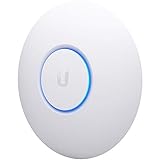
- Four stream 802.11AC Wave2 technology
- Supports 200+ concurrent users
- 802.3af PoE compatibility
- Optional covers (sold separately) allow the Unifi nanohd AP TO discreetyly blend into its setting
Test captive-portal behavior with the VPN configurations users actually have. The UK NCSC’s Device security guidance: Virtual Private Networks (VPNs) says a captive portal must be reachable before VPN establishment and that a captive-portal assistant application is less risky and should be preferred over disabling a forced VPN configuration when captive Wi-Fi is used.
- Test a first connection, a returning device, and an expired portal session.
- Check that the portal assistant appears and that users can complete sign-in without a certificate-warning workaround.
- Verify that required portal and remediation services are reachable before a forced VPN connects.
- Confirm that restoring VPN connectivity does not leave the device with broader access than its policy allows.
- Document a support route for devices that cannot reach the portal or complete remediation.
What should you compare when choosing an implementation?
Compare products and designs against the access requirements, not just the presence of a portal. Pilot the full connection, authentication, authorization, and recovery flow on the wireless hardware and endpoint types in use.
| Decision area | What to verify |
|---|---|
| Authentication and device coverage | Whether corporate devices can use 802.1X/EAP and managed credentials, and whether the portal flow is limited to guests or onboarding where appropriate. |
| Authorization context | Whether policies can use identity groups alone or combine identity with endpoint enrollment and compliance signals. |
| Segmentation and remediation | Whether contractors, IoT devices, unknown devices, and noncompliant endpoints can receive appropriately constrained access and a workable remediation path. |
| Infrastructure compatibility | Support for the access points or controllers, RADIUS, identity providers, endpoint management, and any vendor-specific configuration required. |
| Portal and VPN behavior | Portal discovery, TLS validation, pre-authentication rules, captive-portal assistant behavior, and compatibility with forced VPN settings. |
| Operations | Cloud-service dependencies, policy management across locations, event visibility, support processes, and incident response responsibilities. |
Microsoft’s wireless deployment guidance identifies 802.1X-capable access points, RADIUS compatibility, and server certificates as elements of an 802.1X deployment. That article describes an older Windows Server-era environment, so use it for the general architecture rather than as a current, vendor-independent build guide. For current access-point and controller settings, consult the selected platform’s documentation.
What should you verify before deployment?
- Confirm which SSIDs are for managed devices, guests, and onboarding, and document the access each one permits.
- Verify that identity groups and device classes map to the intended network policies, including restricted states for unknown or noncompliant devices.
- Check the endpoint-management and NAC integration against current product versions. Microsoft notes that NAC integration requirements can change after a NAC product upgrade.
- Test the portal certificate, portal discovery, pre-authentication rules, VPN behavior, and recovery flow on supported client devices.
- Decide how authentication credentials, device certificates, sessions, guest records, and legal notices will be managed under the organization’s requirements and jurisdiction.
- Review cloud dependencies, monitoring, support ownership, and the process for changing or revoking access.
The exact EAP method, certificate lifecycle, guest-retention period, legal notice, and regulatory controls depend on the organization and jurisdiction; there is no single setting established for every deployment.
The Tool Desk
Outbyte Driver Updater FREEFix the driver behind crashes, sound loss and screen glitchesFind Drivers →Outbyte PC Repair FREEClear out junk files and repair common Windows errorsFree Scan →Quick Recap
Product prices and availability are accurate as of the date/time indicated and are subject to change. Any price and availability information displayed on Amazon at the time of purchase will apply.

