
Free tools Windows power users keep installed
One-click scans. No signup required.
To audit police access to automated license plate reader (ALPR) data, obtain query-level access logs, match each search to an identifiable user and an authorized purpose, compare external access with approved sharing arrangements, and verify that supervisors reviewed exceptions and acted on them. A written policy describes what should happen; logs, supporting records, and completed reviews show whether it did. Start with the law and policies that apply to the agency you are examining: California’s rules are a useful case study, not a nationwide standard.
What an ALPR access audit can establish
An ALPR access audit examines who searched or otherwise accessed plate-reader information, when they did so, what they queried, why they said they needed it, and whether the access complied with the rules that applied at the time. It also tests whether the agency can demonstrate meaningful oversight.

Keep three questions separate:
- Was access authorized? Did the user have an approved account, suitable role, current training, and a legitimate need?
- Was this search justified? Does the recorded purpose make sense in light of the query, the user’s assignment, and a case or incident record?
- Was the system governed? Were sharing, retention, accuracy, auditing, and corrective-action controls followed?
An absent or incomplete log is evidence of a recordkeeping or control problem; by itself, it does not prove why a search occurred or establish misconduct. Likewise, a purpose typed into a field is not proof that the purpose was authorized.
Scale is one reason to examine individual query records rather than rely on broad policy statements. The California State Auditor’s 2020 report described Sacramento’s system collecting 1.7 million ALPR images in one week during the review period, and Los Angeles having accumulated more than 320 million images over several years. Those are historical figures from that report, not current system counts.
#1 Best Overall
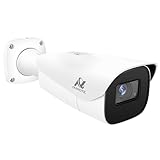
- Compatibility-- Only Work With ONWOTE TD Series NVR (PNT-808, PNA-8016-T, PNT-1232).
- LPR-- License Plate Recognition IP Network PoE Camera.
- 4MP Resolution-- 2592×1520 @30fps for sharp and fluid video.
- 1/1.8" Low-Light Image Sensor-- Ensuring clear images even in dim conditions.
- 8-32mm Motorized Varifocal Lens @F1.6 for adjustable field of view.
Start with the applicable rules and system roles
Before requesting records, identify the agency, system and vendor, period under review, data-sharing network, applicable policy version, and records custodian. Establish whether the agency operates the database, uses another organization’s system as an end-user, or does both. The distinction can affect which entity controls the data and which records exist.
California provides a detailed example. SB 34 requires covered ALPR operators and end-users to have written, publicly available usage and privacy policies. The policies address matters including permitted purposes, eligible job roles and training, monitoring, sharing or transfer, custodianship, accuracy and correction, and retention and destruction. The statute also requires reasonable operational, administrative, technical, and physical safeguards. For covered operator access, it calls for an access record that includes the date and time, query data, username and affiliation as applicable, and purpose. The statute states: “The record shall include the date and time the information is accessed.” (California Civil Code section 1798.90.52(a)(1), enacted through SB 34.)
California DOJ’s 2023 guidance distinguishes operators from end-users and describes the access-log duties as applying when an operator accesses its system or provides access, including by allowing another agency to query its database. It also describes California-specific limits on sharing with private entities, out-of-state agencies, and federal agencies. Hosting and towing-service arrangements can raise distinct questions, so assess the actual arrangement and obtain legal review rather than assuming a category of access is allowed or prohibited.
For the period being audited, collect the applicable law, written usage and privacy policy, user and system agreements, retention schedule, training requirements, audit procedure, vendor contract and security addenda, prior audit findings, and any relevant public-meeting record. Check effective dates: a policy adopted after the period under review cannot establish what rules governed earlier activity.
Quick wins for a faster PC:
Clear out junk files and repair common Windows errorsFree Scan →Scan for outdated or missing drivers - takes under a minuteDriver Scan →Repair Windows errors before they cause bigger problemsFix Now →Obtain records that show activity, identity, and oversight
Request or inspect native access-log exports and their metadata, including date range, time zone, field definitions, and any explanation of vendor-side logging limits. Preserve the original export. Confirm whether it records searches that returned no match, as well as searches that produced results.
Rank #2

- LICENSE PLATE RECOGNITION CAMERA - Features 8mm - 32mm lens for an 15° - 40° Viewing Angle. F1.6 Max Aperture, 1/1.8" 4-Megapixel CMOS Image Sensor and License Plate Recognition Distance 26.25ft - 98.43ft. Supports recognizing vehicle type, vehicle color, and license plate details. Supports IVS, Tripwire & Intrusion as well as displaying vehicle plate, vehicle path & loitering detection.
- SMARTER SECURITY – Query and review license plate details professionally on a PC using a web browser. Works with most standard web browsers however for an optimal experience it is recommended to use Microsoft Edge in IE mode as the camera may require the use of a .exe plugin. Supports storage to a MicroSD Card (up to 256GB), PC/Windows only supports SFTP, IE mode in Microsoft Edge, Firefox, Chrome (limited query options).
- ACTIVE DETERRENTS – This outdoor POE IP LPR camera features a heavy-duty metal weatherproof IP67 housing as well as 4 IR LEDs for night vision up to 98 feet, includes red/blue warning LEDs which can be used as an active deterrent. Dual H.265/H.264 compression allows for maximum encryption with the latest technology as well as backwards compatibility with legacy platforms.
- SIMPLE, RELIABLE, SECURE – This Amcrest POE camera features a secure connection. At Amcrest, we want to ensure the safety of our customers, their loved ones, homes and businesses. Compatible with the following Amcrest AI NVR's for live view purposes only: B0C381YK91, B0CDHDHPR8, B0CBL8W9NY, B0D464HMBB, B0D47X8WJJ
Depending on the system and the audit’s authority, useful records may also include:
- User and role rosters; account approvals, changes, and termination dates; training records; and administrator activity.
- Case or incident references and supporting records for sampled searches.
- Query-result and export logs, including records downloaded or sent outside the system.
- External-agency access lists, shared-network accounts, data-user agreements, and sharing approvals.
- Vendor access provisions, support records, relevant configuration details, and logs showing whether vendor personnel accessed raw or identifiable data.
- Audit workpapers, completed reports, exception investigations, and remediation records.
The required records vary by jurisdiction, policy, contract, and system. These items are practical audit evidence, not a claim that every jurisdiction requires each one to be created or disclosed. Public-record access rules also vary; use the relevant local process and account for applicable exemptions.
Test the access log before relying on it
Compare the log’s fields with the legal and policy requirements in force during the audit period. In California, SB 34’s covered-operator record requirements provide a baseline for checking time, query data, username and affiliation as applicable, and purpose. Confirm whether the export retains field definitions and whether system documentation explains events it does not capture.
What’s actually slowing this PC down?
Pick the symptom - the matching free tool is one click away.
Assess whether a reviewer can connect a logged event to a person, an organization, and a reason. A username without a reliable identity mapping, a purpose field that permits generic boilerplate, or unexplained gaps in the date range can make a log difficult to use even when a policy requires logging. Record such limitations rather than treating the export as a complete account of activity.
Do not assume a vendor offers a particular export, field, or audit feature. Obtain the system’s documentation and inspect its configuration and records. The available evidence does not establish a universal log-export format or set of fields beyond requirements imposed by a particular law, policy, contract, or system.
Rank #3

- 🏆 [REVOLUTIONARY TELEPHOTO LENS: NO MORE BLURRY PLATES] Unlike standard wide-angle dash cams that distort images and fail to read plates beyond 10 meters, EYES features a patented Dual-Front System (Wide + Telephoto). The dedicated telephoto lens acts like a binocular, capturing crystal-clear license plates and road signs up to 165ft (50m) away. Never miss critical evidence in a hit-and-run again.
- 🛡️ [AI CO-PILOT: BSD & ADAS SAFETY SYSTEM] More than a recorder, it’s your intelligent driving assistant. Built-in AI algorithms provide real-time Blind Spot Detection (BSD) to alert you of vehicles in your blind zones. Plus, advanced ADAS features (Lane Departure, Forward Collision, Pedestrian Warning) actively prevent accidents before they happen. Perfect for daily commutes and long road trips.
- ☀️ [HEAT RESISTANT & WON'T FALL OFF] Engineered for extreme climates. Powered by a Super Capacitor instead of lithium batteries, EYES withstands temperatures from -4°F to 158°F without overheating or explosion risks. The newly designed Ergonomic Mount ensures the unit stays firmly attached to your windshield, solving the common "melting adhesive" issue found in heavy competitors.
- 📶 [FAST 5GHz WIFI & INSTANT PROOF] Frustrated with slow, buggy apps? Our upgraded 5GHz WiFi delivers transfer speeds 4x faster than standard 2.4GHz connections. Use the intuitive AKEEYO App to view, download, and share accident footage to insurance agents or police in seconds. Supports OTA updates to keep your AI features cutting-edge.
- 👁️ [TRIPLE 2K CLARITY & 24H PROTECTION] Records the road with three separate eyes: Front Wide (155°), Front Telephoto (41°), and Rear (155°), all in stunning 2K HDR. The Sony STARVIS 2 sensor ensures unparalleled night vision. Includes a 64GB MicroSD Card and supports 24H Parking Monitoring (Time-Lapse/Collision Detection) to guard your car while you sleep. (Hardwire kit sold separately).
Follow a query from account to outcome
Use a documented sample drawn across users, dates, agencies, shifts, and query types. There is no universal sample size established by the examples below; explain how the sample was selected and what period it represents. For each event, follow the steps below and retain the evidence supporting the result.
-
Verify the user and access authority
Map the username to a person and affiliated organization. Check employment status at the time of the search, approved role, training, access approval, and continuing need. Examine dormant, shared, administrator, and terminated-user accounts. California DOJ General Order 2023-05, for that DOJ program, limits access to people with an authorized need and approval and calls for annual review of approvals.
Windows Errors? Fix Them Before They Spread
Repair common Windows errors and clear accumulated junk for a smoother, more stable PC - no reinstall needed.Free scan · no reinstallOutdated Drivers Are Slowing You Down
One free scan finds every outdated or missing driver and matches the right update for your exact hardware.Free scan · exact hardware matchSpecial offer. See more information about Outbyte and uninstall instructions. Please review EULA and Privacy policy. -
Assess the recorded purpose against the query
Compare the query and stated purpose with the applicable policy’s permitted uses, the user’s assignment, and any case or incident record. Where policy requires a case reference, check that it exists and relates to the search. Vague boilerplate, repeated searches with no evident case connection, unusually broad date ranges, or searches involving sensitive people or locations may warrant follow-up if those subjects are within the audit’s scope. They are red flags to investigate, not proof of misconduct on their own.
-
Check results, exports, and onward disclosure
Where records are available, compare the query log with result-access, export, and disclosure records. Identify whether results went to another agency, were downloaded or emailed, or were used outside the ALPR platform. Confirm that each recipient and transfer had an applicable approval and purpose. California DOJ’s guidance describes jurisdiction-specific limits on sharing; apply the rules for the actual agency and arrangement rather than treating California’s rules as universal.
-
Record the disposition of each test
For each sampled event, document the control expected, records examined, result, exception, and follow-up needed. Separate a justified search from adequate documentation: a search may have had a valid reason that the available records do not demonstrate, which is different from evidence that the search was unauthorized.
Map agency, network, and vendor access separately
Build a list of every route by which another agency, contractor, vendor, or shared-network user could see ALPR information. Reconcile approved agency lists and data-user agreements with actual user rosters and access logs. Check whether accounts are individual or shared and whether approval and removal processes match the written rules.
For vendor access, examine contract language, security addenda, configuration, support arrangements, and available logs. Determine whether vendor personnel can reach raw or identifiable data, for what support purpose, under whose authorization, and with what monitoring. Do not infer access merely because a vendor hosts or supports the system. The California State Auditor has emphasized vendor contract safeguards for sensitive ALPR information, including relevant CJIS-related provisions; assess the actual contract and applicable requirements.
Verify audits, review, and corrective action
Compare the agency’s stated audit schedule with completed audit reports. Determine whether reviews examine query activity or only account lists, who performs them, who reviews and approves the results, how exceptions are investigated, and whether corrective actions are tracked to closure. A schedule on paper is not evidence that reviews occurred or that identified problems were resolved.
| Example | What it says about oversight | Scope and qualification |
|---|---|---|
| California SB 34 statutory baseline | Sets covered access-log fields and requires policy provisions addressing monitoring and periodic system audits. | California-specific. It does not set a general ALPR-data retention period. (California SB 34; California State Auditor, 2020 report.) |
| California DOJ General Order 2023-05 | Requires annual audits of access, use, and sharing; administrator review and approval; and retention of audit information for three years. | Applies to that DOJ program, not every California agency. |
| NCRIC 2024 policy | Provides for quarterly reports to supervisory personnel. Its described log fields include user, agency, date and time, queried plate whether or not a match was found, and a valid case number. | A regional-policy example, not a universal cadence. Its vendor-retention statements are time-sensitive. |
| NIJ-sponsored policy guidance | Recommends retained records that facilitate audit and prosecutor or attorney-general review; its framework states five-year periods. | An older research report. Its disclaimer says it was not published by DOJ and does not necessarily reflect DOJ’s official position. |
Compare models on what they examine, query-level detail, reviewer independence or supervision, approval, exception handling, retention of audit evidence, sharing review, and public reporting. Frequency alone does not show whether an audit tests actual searches or whether findings lead to documented correction.
Independent reader supportYour contribution helps us test, update, and keep practical guides available for everyone.Check retention and accuracy as separate controls
Inventory records by type rather than applying one retention period to everything. At minimum, distinguish raw reads and images, hot lists, query logs, exported records, audit workpapers, and investigative evidence. Compare actual deletion settings and exceptions with applicable law, policy, contract terms, and evidence or litigation holds.
Best Value

- ▶【 Upgraded Stainless Steel】Now the material of Pixelman backup camera license plate mount is upgraded to stainless steel, all the metal parts are made of high-quality stainless steel, and even the screws equipped are also made of stainless steel, which comprehensively improves durability and stability of this license plate camera mount. This rear view camera mount generally fit the rear cameras included in dash cam kit. Replace the small mount with license plate mount, easier to install.
- ▶The distance between the two screw holes of this back up camera bracket is 13mm, please confirm the distance between the two screw holes of your reversing camera is 13mm as well.
- ▶This bracket mount is rear view camera accessory, this backup camera license plate mount includes license plate bracket, rearview camera holder and installing screws.
- ▶This is a universal rear camera bracket, you just need to make sure that the distance between the two screw holes of your rear camera is 13mm, then buy it with confidence.
- ▶This rear view camera bracket can be only applied to US car license plates. Please note that do not install your backup camera upside down, you should test picture before installing.
California SB 34 does not set a universal retention period for ALPR data. The California State Auditor’s 2020 report described a then-applicable limit of no more than 60 days for CHP ALPR images, subject to felony-investigation or evidence exceptions. That is a CHP-specific historical description, not a rule for all California agencies; check current law before relying on it. The same auditor recommended setting a maximum retention period and periodically evaluating whether image retention is as short as practicable, with attention to hot lists.
Audit evidence has its own schedule. California DOJ General Order 2023-05’s three-year period applies to audit information for that program; it is not a general ALPR-data retention rule. Do not assume a data-retention period also governs logs or workpapers, or vice versa.
Accuracy affects how a search should be interpreted. Review the agency’s process for checking plate reads against images, correcting identified errors, and communicating corrections to people or systems relying on the data. The policy of the agency identified as BAR describes periodic spot-checks that compare captured readings with manually reviewed images and correct identified errors. Treat that as an example of an accuracy control, not a universal requirement.
Write findings that distinguish evidence from inference
For each finding, state the expected control, records inspected, sample and period, observed exception, risk, and agency response. Identify whether the evidence establishes a policy violation, a documentation gap, or a control that could not be tested. Do not infer a user’s motive from a missing field or treat an unexplained log entry as proof of wrongdoing.
When an exception needs action, document the recommended next steps and who is responsible: for example, disabling unjustified access, correcting permissions, preserving relevant evidence, reviewing affected searches, retraining users, updating agreements, or scheduling a follow-up test. These are practical remediation options; the applicable law and agency policy determine any mandatory response.
Quick Recap
Product prices and availability are accurate as of the date/time indicated and are subject to change. Any price and availability information displayed on Amazon at the time of purchase will apply.

