
Crashes, No Sound, or Screen Glitches?
Random freezes, missing sound and display glitches usually trace back to one bad driver. Find and replace yours safely.Free scan · under a minuteWindows Errors? Fix Them Before They Spread
Repair common Windows errors and clear accumulated junk for a smoother, more stable PC - no reinstall needed.Free scan · no reinstallA construction task is ready for a tool-wielding robot only when the complete robot-and-tool application can do that specific job safely and reliably in the actual work area, with controls for everyone exposed. A successful demonstration is not enough. Define the task and site, identify exposed people and operating phases, assess hazards, select safeguards, and verify the integrated system before use. There is no single validated readiness score or rule that makes a robot suitable for a factory automatically suitable for a construction site.
Start with the task and the actual work area
Assess a defined piece of work, not a whole trade. “Drywall,” “masonry,” or “concrete work” can include many different motions, tools, materials, access needs, and hazards. Describe the intended outcome, the task steps, the workpiece and tool, and what counts as completion. The NIOSH Human-Robot Interaction Assessment Tool for Construction Operations uses task-specific planning and includes examples such as drywall installation, bricklaying, and concrete grinding and polishing; those examples are not blanket approval to automate every version of those tasks.
Next, record where the task will occur and how the work area may change during the project. Include access routes, nearby trades, materials, obstructions, and the phases in which the robot will be used. NIOSH notes that active, changing jobsites create challenges for automation compared with more controlled manufacturing environments in its November 12, 2024 overview.
Identify everyone and every phase that could be exposed
List the operator and any workers or passersby who could enter the work area. Include people involved in setup, programming, testing, adjustment, clearing faults, and maintenance—not just those present during normal operation. OSHA notes that non-routine work can put workers inside a robot’s working envelope, a concern described in its Robotics: Overview.
Free tools Windows power users keep installed
One-click scans. No signup required.
#1 Best Overall

- Valued Carpenter Pencil Set: You will get 2 pcs solid carpenter pencils with 26 piece 2.8 mm refills, 1 replaceable sharpener, 1 plastic storage box.The complete carpenter pencils combination allows you to finish your work faster and more easily
- Deep Hole Marker Pencil: The deep-hole construction pencils adopts 45mm elongated tip design, which is more convenient to mark in the small hole or in other tight areas that other carpenter markers cannot reach
- Carpenter Pencils with Sharpener: The sharpener is screwed into the top of the work pencil, which won't get lost either. Built-in pencil sharpener that keep the lead with pointed and smooth to Improves line of sight in fine work
- Stronger Solid Lead: This work pencil is matched with a 2.8 mm thick lead , which is much thicker and stronger during the drawing process of construction work, it will not break or damage easily
- Marks on Various Surfaces: 3 colors solid construction pencil can marks on various surfaces,such as metal, plastic, wood, paper etc. Ideals for woodworkers, contractors, craftsmen, builders, merchants and masons
Map when a person and robot must share space or a workpiece, whether contact could happen while the robot is moving, and how access to the area will be managed. These details determine which safeguards and procedures might be appropriate; the robot’s label or normal operating mode does not answer the exposure question.
Assess the complete application, not just the robot arm
The system under review includes the robot, end-effector or tool, workpiece, support equipment, controls, operating modes, and their integration. A drilling, cutting, material-removal, sensing, or inspection tool can introduce hazards that differ from those of the robot alone. OSHA’s technical manual on industrial robot systems and safety discusses application-specific risk assessment, integration, training, safeguarding, and verification; check current standards and requirements for the actual equipment and construction setting.
Rank #2

- Ergonomically Designed: Work in tight areas with a compact design that gets into tough spots
- Compact and Lightweight: Both tools are designed to fit into difficult to reach spaces. The 1/4" impact driver has a length of 5.55 in. and weighs just 2.8 lbs, while the 1/2" drill/driver measures only 7.5 in. and weighs 3.6 lbs
- Both the DEWALT impact driver and electric drill driver feature integrated LED work lights with a convenient 20-second delay, ensuring enhanced visibility in dimly lit or challenging work areas
- One-Handed Loading - Keep one hand free with a 1/4 in. hex chuck that accepts 1 in. bit tips
- Power drill cordless with 1/2" single sleeve ratcheting chuck provides tight bit gripping strength, making bit changes faster and more secure
Collaborative safety approaches described by NIOSH include monitored stop, power and force limiting, speed and separation monitoring, and hand guiding. These are not automatic guarantees of safety: NIOSH says that implementing approaches developed for controlled settings, including ANSI/RIA R15.06 and ISO/TS 15066 guidance, is more difficult on active construction sites. Suitability depends on the application, hazards, and safeguards, not simply on whether a system is marketed as collaborative.
Complete a task-specific hazard analysis
Use the available safety information for the robot, tool, and other equipment alongside a job hazard analysis. Identify hazards across normal operation and non-routine phases, decide who could be exposed, and evaluate the risk before and after controls. The NIOSH assessment tool includes safety-data and job-hazard-analysis forms, but it does not replace applicable safety processes or the hierarchy of controls.
Rank #3

- 【Great Compatibility】This Katerk 1/4 inch hex shank bit holder is specifically designed for 1/4 inch hex shank drill bits. It's compatible with most 1/4 fast hex handles, hex sockets, various electric screwdrivers, and handheld screwdrivers. The bit holder makes it a valuable addition for any handyman.
- 【Secure and Safe】Built with a secure backup nut design, each drill bit holder securely locks onto your bits, ensuring they stay firmly in place. Additionally, our bit holder incorporates a high-quality steel ball rolling design that holds up to several kilograms of weight, ensuring your various drill bits don't fall off.
- 【Easy One-Handed Operation】The bit holder for impact driver allows you to change bits single-handedly, simplifying your workflow. Its multi-color design further allows for quick identification of the drill bit you need.
- 【Compact and Convenient】Thanks to its compact size, this 1/4 inch bit holder is easy to carry around. The bit holder allows for easy attachment to various tools, making this a convenient addition to your construction accessories. The Katerk bit holder is cast from high-quality alloy material, promising a long product lifespan. Despite its rugged strength, the bit holder remains lightweight, making it portable.
- 【Cool Christmas Gift For Men Stocking Stuffers】 This screwdriver bit holder, driver bit holder, impact bit holder, can be given as a gift to your loved one, especially for anyone involved in construction or electrical work. It's a must-have for stocking stuffers for men and women, tools gifts for dad, tech gadgets for men, gifts for dad, gifts for him, gifts for husband, gifts for boyfriend, cool gadgets for men, and cool gifts for dad.
OSHA states that there are no specific OSHA standards for the robotics industry in its overview. That does not remove other applicable OSHA construction requirements or relevant standards. Its technical manual addresses industrial robot systems, so confirm which current requirements apply to the specific system and jobsite rather than treating a general robotics reference as site approval.
Compare candidate tasks using practical readiness factors
Use the same factors to compare possible tasks on a project. This is a decision aid synthesized from NIOSH and OSHA guidance, not a validated scoring instrument; do not add up points and present the result as a universal safety threshold.
Rank #4

- Long Nib and Deep Hole Marker: Our mechanical carpenter pencil with 45mm nib is designed for easy marking of deep holes or narrow areas. These construction pencils are the great choice for woodworking tools, construction tools, carpenter tools, contractor tools, wood carpentry tools and architect tools
- Extra Refills in 2 Colors for Versatile Marking: The construction mechanical pencil comes with 12 extra 2.8mm refills, including 6 red and 6 black refills. The black refill is suitable for light surfaces, while the red wax is perfect for dark surfaces. Our carpenter mechanical pencil makes sure that you'll have an ample supply for extended use
- Built-in Sharpener: Our construction pencil comes with a built-in sharpener to ensure the mechanical pencil tip is always sharp and ready for use. Never buy an extra pencil sharpener again. A great tool for any woodworker pencil, contractor pencils. The refill can easily be extended or retracted with a simple click of the pencils mechanical, allowing you to work more efficiently and accurately
- Portable Clip Design: Our deep hole construction pencil features a portable clip design, easy to carry and attach to your pocket or tool box, so that you can keep the carpenter pencils mechanical close at hand, making it a convenient tool to have on the go. Great gifts choice for carpenters
- Stronger Pencil Lead: The black refills are made of lead, sturdy and smooth. The red refills are made of wax, clear and light. These marking pencils are much thicker and stronger than normal pencils during the marking process of construction work, suitable for various surfaces, such as glasses, metal, boards, floors, walls, furniture, etc. The written marks can be easily wiped with a wet paper towel when needed
| Factor | What to examine | What would make readiness harder |
|---|---|---|
| Repetition and physical burden | How consistently the task repeats and whether automation could address strenuous or repetitive work. | Frequent changes in the work sequence or outcome. |
| Hazard exposure | Hazards from the task, tool, workpiece, robot motion, and nearby activity; who may be exposed. | High exposure with no feasible way to reduce risk adequately. |
| Site variability | Changes in materials, access, obstructions, and surrounding work. | Conditions change faster than the system and procedures can accommodate. |
| Access and workspace | Whether the robot, tool, people, and materials can operate in the available area. | Constrained access or uncontrolled entry into the work area. |
| Human proximity and contact | Whether people and the robot share space or contact the work system, and when. | Uncontrolled proximity or contact during movement. |
| Tool and end-effector | Hazards introduced by the tool and the way it is attached, controlled, and used. | Tool hazards cannot be adequately safeguarded in the intended configuration. |
| Safeguards | Whether effective safeguards and work procedures can be implemented for the real site. | Controls depend on assumptions that cannot be maintained on the jobsite. |
| Verification and maintenance | Whether performance and safeguards can be checked and maintained over time. | Safe conditions cannot be verified after setup, changes, or maintenance. |
A 2022 construction study by Okpala, Nnaji, and Gambatese identified 40 human-robot interaction hazards and 20 potential mitigation strategies through literature review, a three-round Delphi process, and safety-expert interviews. Those figures describe that study’s findings, not a complete checklist for every task or project; see its assessment-tool article.
Independent reader supportYour contribution helps us test, update, and keep practical guides available for everyone.Set up, test, and verify before use
- Define the application: document task steps, completion criteria, location, robot and tool configuration, workpiece, support equipment, and operating modes.
- Plan for exposure: identify who may enter or work near the area during normal operation and non-routine phases, including setup, programming, testing, adjustment, and maintenance.
- Analyze hazards and choose controls: use safety information and a task-specific job hazard analysis to identify hazards, select safeguards and procedures, and assess residual risk.
- Prepare the people and work area: establish access controls, task procedures, and training for the people who will operate, work near, set up, or maintain the system.
- Verify the integrated application: conduct a site acceptance check before initial startup and confirm that the robot, tool, safeguards, and procedures work together in the real setting.
- Reassess when conditions change: check that safety conditions remain appropriate after changes to the task, configuration, work area, or maintenance state.
OSHA recommends application-specific risk assessment, site acceptance before initial startup, and continued checks that safety conditions remain appropriate in its technical manual. A motion that works in a demonstration is not sufficient evidence that the complete application is safe, repeatable, and maintainable on site.
Best Value
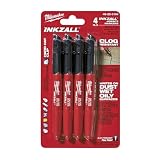
- Milwaukee Ink all Fine Point Marker, Black, 4 Per Pack
- 4 per pack Features Clog Resistant Marker Tip Writes through Dusty, Wet and Oily Surfaces Durable Marker Tip for Writing on Concrete, OSB and Rough Surfaces
- Clog resistant tip writes on dusty, wet and oily surfaces and is optimized for rough surfaces such as OSB, cinderblock and concrete
- Hard hat clip- attaches for easy access
- Quick dry time with reduced smearing and marking
Interpret readiness as a site-specific decision
A 2026 systematic review in Results in Engineering analyzed 375 studies published from 2023 through 2025 and reported that operator-led workflows dominate current construction robotics practice, reflecting limited autonomy and readiness for full automation. The review’s study count is its research corpus, not a deployment rate. For a project team, the practical implication is to define the human role explicitly rather than assume a construction robot will run autonomously.
Proceed only when the task and site have been assessed, people are protected across operating phases, controls are in place, and the integrated application’s performance and safeguards can be verified and maintained. If those conditions cannot be demonstrated, the task is not ready in that configuration or location.
Quick Recap
Product prices and availability are accurate as of the date/time indicated and are subject to change. Any price and availability information displayed on Amazon at the time of purchase will apply.

