
What’s actually slowing this PC down?
Pick the symptom - the matching free tool is one click away.
Assess a data centre by defining what is included and for which period, collecting absolute energy and water totals, then reporting a suite of efficiency and resource-use indicators. PUE, WUE, REF and ERF each describe a different part of the picture; none alone establishes the facility’s overall environmental impact.
What should an assessment cover?
Start by deciding what the assessment is meant to support: operational improvements, a comparison between facilities, procurement, public reporting or regulatory compliance. Those goals can require different levels of detail. A site-level operational assessment is not the same as a benchmark intended to rank multiple data centres.
State whether the assessment covers operational impacts only or also the embodied impacts of constructing buildings and manufacturing equipment. The indicators and reporting guidance discussed here chiefly address operational energy, water, carbon-related metrics and resource use; they do not, by themselves, measure a facility’s full life-cycle footprint.
A complete operational assessment should pair absolute resource totals with standardized indicators, then explain relevant context such as electricity emissions, water source, local water stress, climate, cooling design, IT workload and heat reuse.
#1 Best Overall

- Condition: 100% Brand New and in Perfect package to ensure you receive a perfect product
- Model: DV4600-492
- Bearing Type: Ball; Fan Diameter: 120mm; Maximum Fan Speed: 2650/3100 RPM; Material: Plastic; Type: Axial cooling fan
- Packaging: Carton; Power Connection: 2-Pin; Voltage: 115VAC
- Fan size: 120*120*38MM
How should you set the boundary and reporting period?
Define what counts as the facility
List the buildings and functions included in the data-centre boundary. Depending on the site, these may include IT rooms and equipment, cooling, power conversion and distribution, security, and environmental systems. Identify energy sources and water flows within that boundary, and explain how shared or mixed-use building systems are treated.
Record where each measurement is taken, which meters or devices are used, and whether a value is measured or estimated. Note missing data, changes to installed IT capacity and any changes in the boundary. These details let a reader judge whether a reported total or ratio actually represents the facility described.
Choose a period that captures operations
Use a complete reporting year where possible, and identify the dates covered. If the facility was operating for only part of the year, disclose that period rather than presenting it as a full-year result. Seasonality can affect cooling and water use, so a partial period may not be comparable with a full year.
For EU reporting, the delegated regulation requires operators to retain records of measurement points and measurement devices for at least 10 years. See Commission Delegated Regulation (EU) 2024/1364.
Rank #2

- APPLICATION: USB computer fans cool off gaming systems, routers, amplifiers, and receivers. 120mm case fan keep entertainment centers' stereos and cables cool and help with air flow in various spaces
- PLAY AND PLUG: Just plug this server fan into any USB source—like a charger, power bank, phone adapter, game console, or USB outlet. It's a breeze to use
- PACKAGE INCLUDING: This usb cooling fan set comes with two USB fans, one USB cable to control two fans (high speed medium speed low speed), and a metal shield to protect your hands. Easy to use, safe and reliable
- Variable Speed Fan: It has a variable-speed controller so you can adjust the pc fan for the best mix of quiet operation and airflow
- Specification: 120 x 120x 25 mm ( 4.72 x 4.72 x 0.98 in. ) | Rated Voltage : 5V | Rated Current: 0.25A | Airflow: 77 x 2 CFM | Noise: 32dBA | Speed: 2000 RPM (MAX)
Which data should you collect?
Collect the underlying quantities before calculating ratios. Keep the measurement source and time resolution with each data point so the figures can be checked and interpreted.
- Energy: total data-centre energy and IT energy, using the same period and a clearly stated facility boundary.
- Water: total water entering the facility and potable water input as separate figures. Record the source and the WUE measurement category or method.
- Energy sourcing and reuse: renewable energy and energy reused outside the data centre, with the accounting approach stated.
- IT activity: IT power demand and, where there is a defensible measure, workload or useful computing output. This helps explain whether energy use reflects changes in demand or efficiency.
- Context: electricity emissions, cooling approach, local water conditions, heat exported for reuse, and changes in site operation or IT capacity.
The EU framework collects energy and water totals separately from its intensity-style indicators. Keeping both makes it possible to distinguish resource demand from efficiency. The Joint Research Centre’s Best Practices Document recommends relating standardized KPI data to IT workload where appropriate.
Which indicators should you calculate?
Use the applicable standardized measurement method, name the KPI edition or method, and disclose the measurement category. Under the EU delegated regulation, the core formulas are as follows:
| Indicator | Calculation | What it helps describe |
|---|---|---|
| PUE (power usage effectiveness) | Total data-centre energy ÷ IT energy | Facility energy in relation to IT energy. A lower ratio indicates less facility energy per unit of IT energy under the stated boundary and method. |
| WUE (water usage effectiveness) | Water input ÷ IT energy | Water input relative to IT energy. Report the water measurement category and units alongside the result. |
| REF (renewable energy factor) | Renewable energy ÷ total facility energy | Renewable energy relative to total facility energy, as defined by the reporting method. |
| ERF (energy reuse factor) | Energy reused ÷ total facility energy | Energy reused outside the data centre relative to total facility energy. |
These definitions come from Commission Delegated Regulation (EU) 2024/1364. PUE measurement guidance is also addressed by ISO/IEC 30134-2:2026, Edition 2, published in January 2026. Its scope includes mixed-use buildings, on-site generation and unaccounted energy.
Quick wins for a faster PC:
Fix the driver behind crashes, sound loss and screen glitchesFind Drivers →Clear out junk files and repair common Windows errorsFree Scan →Scan for outdated or missing drivers - takes under a minuteDriver Scan →Rank #3

- An ultra-quiet UL-certified fan system designed for cooling cabinets that requires minimal noise.
- Features a multi-speed controller to set the fan’s speed to optimal noise and airflow levels.
- Contains a CNC machined aluminum frame with a modern brushed black finish.
- Powered by wall outlet or USB port, included Turbo Adapter increases performance by 25%.
- Dimensions: 8.5 x 4.4 x 1.3 in. | Total Airflow: 52 CFM | Total Noise: 18 dBa | Bearings: Dual Ball
The ISO/IEC 30134 catalogue also lists carbon usage effectiveness (CUE), cooling efficiency ratio, server energy efficiency and server utilization indicators. Those can add useful detail about emissions, cooling and IT performance, but use their applicable standard methods rather than inferring a formula from the indicator name. See the ISO/IEC JTC 1/SC 39 catalogue.
How do you interpret the results without overclaiming?
Read totals and ratios together
A ratio describes a relationship, not the facility’s entire resource demand. PUE can improve while total facility energy rises if IT demand grows. Report the absolute energy total next to PUE so the reader can see both the efficiency relationship and the scale of consumption.
Apply the same discipline to water: WUE does not, by itself, say whether the water is potable or whether its use is sustainable in the local area. Show total and potable water input separately, explain the source and method, and consider local water stress when drawing conclusions.
Explain emissions and energy sourcing
Energy-related climate impact depends on more than how much electricity the site uses. Include relevant electricity emissions information and explain renewable-energy accounting and on-site generation where data are available. REF describes renewable energy relative to facility energy; it is not a substitute for disclosing energy totals or the accounting boundary.
Free tools Windows power users keep installed
One-click scans. No signup required.
Rank #4
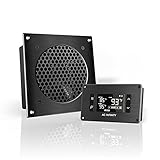
- An ultra quiet UL-certified fan system designed for cooling cabinets that requires minimal noise.
- Features an on board processor that provides a digital read-out of the cabinets temperatures.
- Programming includes thermostat control, fan speed control, and SMART energy saving mode.
- Dimensions: 6.3 x 6.3 x 1.3 in. | Airflow: 52 CFM | Noise: 18 dBA | Bearings: Dual Ball
Put cooling and IT activity in context
Climate, cooling design, utilization and workload can change how a facility’s results should be understood. Where useful, report free-cooling and compressor-based cooling hours, as recommended in the JRC best-practices guidance. Relating energy use to workload can help separate changes in computing activity from changes in operational performance.
Compare only like with like
Before comparing sites, check whether their boundaries, reporting periods, KPI editions, facility types and data quality align. Also consider climate, size, workload, utilization, cooling design, water source and local scarcity, energy emissions, on-site generation and heat reuse. If these differ materially, describe the differences instead of treating a ratio as a league-table score.
For aggregated EU indicators, the regulation uses energy-weighted aggregation. Some reporting by data-centre type or size is restricted to groups containing at least three centres. An aggregate can therefore represent a weighted group result rather than a simple average of individual sites; consult the regulation’s reporting rules when interpreting it.
Independent reader supportYour contribution helps us test, update, and keep practical guides available for everyone.How can the assessment guide improvements?
Use the results to identify areas for investigation, not to promise a fixed level of savings. The most relevant opportunities depend on the site and its boundary.
Best Value
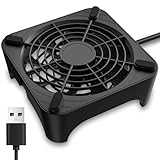
- 【Universal Compatibility】This USB cooling fan works seamlessly with Mini PC, PS5, routers, Apple TV, modems, PlayStation, receivers, Rokus, T-Mobile 5G Home Internet, Xbox Series, and other audio-video electronics. Whether cooling a gaming console, router, or streaming device, it eliminates overheating worries across your digital ecosystem.
- 【Powerful Cooling Performance】Equipped with a 120mm fan boasting 55.8 CFM airflow and 850RPM±10% speed, this USB PC fan delivers rapid cooling—dropping device temperatures by 20% in seconds. The 9-blade design ensures powerful airflow to tackle heat buildup in routers, mini PCs, and gaming consoles, preventing lag and performance drops caused by overheating.
- 【Ultra-Quiet Operation & Scratch-Proof Protection】 Designed for ultra-quiet and scratch-resistant cooling needs, this USB computer fan comes with 4 shock-absorbing pads and operates at just 18dB(A)±10% noise—whisper-quiet, quieter than library silence (30dB) and close to the sound of rustling leaves (20dB). It enables efficient device cooling without noise interference or surface scratches, letting you fully immerse in video, audio, and gaming. It’s perfect for home offices, living rooms, and gaming setups.
- 【USB-Powered & Space-Saving Setup】This USB powered fan features an integrated 530mm (20.87-inch) USB cable, connecting easily to chargers, mobile power banks, or laptops—no extra wires needed. With dimensions of 130mm×130mm×48.6mm (5.12×5.12×1.91 inches), it can be placed flat or upright, making it perfect for narrow spaces while keeping your setup tidy.
- 【Sturdy & Long-Lasting Durability】Made from premium eco-friendly ABS material, this USB fan (with a box fan-like structure) supports heavy-duty use and can withstand weights up to 11LB. With a lifespan of 40000 hours, it offers long-term cooling for your devices, ensuring stable performance and protection against overheating for years to come.
- Examine energy overhead in cooling and power systems, including cooling performance and the balance of free-cooling and compressor-based operation.
- Review renewable sourcing, on-site generation and the electricity emissions associated with energy use.
- Investigate water consumption, potable-water input, water source and local water conditions.
- Identify whether waste heat can be usefully exported, and document the quantity and accounting method for energy reused outside the centre.
- Assess server efficiency and utilization, and relate energy use to workload where a defensible measure is available.
The European Commission identifies transparency on energy and water, renewables, lower-carbon energy, waste-heat reuse and grid efficiency among its data-centre policy goals. Its energy-performance page reports that data centres account for about 1.5% of the world’s yearly electricity consumption, or 415 TWh, and attributes to the IEA a projection that consumption will exceed 945 TWh by 2030. The 2030 figure is a projection, not observed consumption.
What EU requirements and proposals should operators distinguish?
As of 7 October 2026, the Energy Efficiency Directive has introduced monitoring and reporting obligations for data centres, and Delegated Regulation (EU) 2024/1364 specifies information and KPIs for the EU database. Whether a particular facility is covered, and how national implementation applies, depends on its circumstances and jurisdiction.
The Commission’s page states that a common rating scheme was proposed on 21 September 2026. It also says a legislative proposal on minimum performance standards was in preparation, with publication planned for Q2 2027. Those are policy developments, not existing minimum-performance requirements. Check the Commission page and the applicable national rules for current obligations before making a compliance claim.
Quick Recap
Product prices and availability are accurate as of the date/time indicated and are subject to change. Any price and availability information displayed on Amazon at the time of purchase will apply.
The Tool Desk
Outbyte PC Repair FREEClear out junk files and repair common Windows errorsFree Scan →Outbyte Driver Updater FREEScan for outdated or missing drivers - takes under a minuteDriver Scan →
