
Quick wins for a faster PC:
Repair Windows errors before they cause bigger problemsFix Now →Fix the driver behind crashes, sound loss and screen glitchesFind Drivers →Clear out junk files and repair common Windows errorsFree Scan →There is no single soil test or universal pass/fail threshold for nanoparticle buildup. Before field use, assess the specific material and application: establish what may be released, how it could move or change in the proposed soil, whether it can be measured there over time, and what effects realistic exposures may have on soil organisms. A concentration reading alone cannot establish risk.
What does “buildup” mean for nanoparticles in soil?
It depends on what is being measured. A manufactured particle may aggregate, attach to minerals or organic matter, dissolve, or change chemically after release. As a result, the material present in soil may not retain the form it had in the product. For metal and metal-oxide nanoparticles, dissolution and the resulting chemical speciation can affect both fate and bioavailability.
A useful assessment therefore distinguishes, where the material and method allow, between particles and dissolved forms, and between total chemical content and the specific particle of concern. It also considers where material may concentrate: interactions with minerals or organic matter can create localized hotspots rather than even distribution. European Commission scientific material notes both this potential and the comparatively limited research on soil systems.
What information should you gather about the material and its use?
Start by documenting the proposed release, not just the product name. The U.S. Environmental Protection Agency’s interim guidance frames its approach as screening-level assessment of engineered nanomaterials’ environmental fate, transport, and exposure. Its overview also emphasizes that likely routes depend on a material’s properties and application, and that soil is one possible environmental medium.
#1 Best Overall
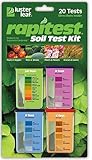
- Quick, at home results for Soil pH, Nitrogen, Phosphorous and Potash Innovative and inexpensive soil test kit features an easy-to-use capsule system and patented color comparators
- Contains all components needed for 20 tests. 5 for each of pH, N, P and K
- Contains all components needed to test all variables in several spots in the yard or garden
- Simple, detailed instructions included. Great for beginners and experienced gardeners alike.
- Soil pH preference list for over 450 plants included
- Material identity: composition and, where available, size distribution, shape, surface characteristics, coatings, and formulation.
- Behavior in relevant conditions: solubility or dissolution behavior and any information about aggregation or transformation.
- Use scenario: intended function, application method, rate, timing, and frequency.
- Potential release: the quantity likely to reach soil and possible losses to air or water during application or use.
If these details are unavailable, record them as unknowns rather than substituting properties from a different nanoparticle. Materials in this broad category can behave differently, so a result for one material does not by itself settle the assessment for another.
How could the material move or change at the proposed site?
Build a site-specific conceptual model before choosing measurements. Describe the soil and its relevant chemistry, including soil type, moisture and drainage, organic matter, and mineral surfaces. Map connections to surface water or groundwater and identify plausible transport routes and zones where material could accumulate.
Consider transport, aggregation, sorption, dissolution, chemical speciation, transformation, persistence, and potential sinks. Which processes matter most will depend on the particle and the site. European Commission risk-assessment material identifies release patterns and quantities, distribution, mobility, sinks, fate, persistence, and concentrations as exposure-assessment concerns. The point of the model is to guide what to measure—not to assume uniform mixing or predict a single fate for every nanomaterial.
Rank #2

- KNOW BEFORE YOU GROW | Grow the healthiest, sustainable lawn and garden with the most accurate and easy to use professional soil test kit on the market
- FAST & ACCURATE | Unlike at-home pH meters and test strips, our mail-in professional lab analysis accurately measures 13 plant-available nutrient levels, including Nitrogen and pH. Results in 6-8 days
- FOR ANY GROWING SCENARIO | Tests any soil type and growing condition - lawn & turf, vegetable gardening, flowers, compost, trees, vines, ornamental landscape, house plants, soil-less media or hydroponics
- SAVE TIME & MONEY | Stop applying products you don’t need. Learn exactly what products and amounts you need to grow the healthiest plants possible
- CUSTOM RECOMMENDATIONS | What to apply, how much to apply, and when to apply it. Provides both organic and non-organic fertilizer recommendations to effectively amend your soil
How should soil exposure and buildup be measured?
Choose characterization methods for the particular material in the actual soil matrix. Soil composition, natural organic matter, minerals, and background particles can interfere with detection or make it difficult to distinguish the engineered material from naturally occurring material. Ask a laboratory or study team to explain how its method handles those issues and whether it has been shown to work for the material and matrix in question.
Recommended Free Tools
Agree on what the measurement represents
Depending on the material and decision, useful measures may include particle number, mass, surface-related measures, dissolved species, or chemical speciation. These are not interchangeable: a measure of total mass, for example, does not on its own describe particle number, dissolved fraction, mobility, or biological availability. Define the measured quantity and how samples will be prepared before interpreting results.
Include time in the measurement plan
If the question is whether material accumulates or transforms, a single sample or time point cannot show how it changes. Plan characterization at relevant times, including a way to interpret results against existing soil conditions and background. The exact sampling locations, intervals, and methods depend on the material, site, use, and decision being made; they cannot be specified universally.
Rank #3

- Comprehensive Soil Analysis: Liquid soil test kits offer a comprehensive analysis of essential soil parameters, including pH, ammonia, nitrogen, phosphorus, and potassium. Having all these measurements in one kit provides a holistic understanding of the soil's fertility and health.
- Customized Fertilizer Recommendations: With data on pH and nutrient levels, liquid soil test kits help users apply the right type and amount of fertilizers, optimizing plant growth, and preventing over-fertilization, which could harm both plants and the environment. Whether its for lawns, garden, grass, plants, vegetables, turf, flowers, compost trees vines ornamental landscape house plants or hydroponics you will be able to get the results you want.
- Time and Cost-Effective: Liquid soil test kits are relatively quick and easy to use, saving time for gardeners and agricultural professionals. Compared to sending samples to a laboratory, these kits provide rapid results, allowing for prompt action. Additionally, they are cost-effective for routine testing, making it feasible to monitor soil health regularly.
- Optimal Plant Health and Yield: By knowing the soil's pH and nutrient levels, gardeners and farmers can fine-tune their agricultural practices to create an environment conducive to optimal plant growth. Adequate levels of ammonia, nitrogen, phosphorus, and potassium are essential for healthy plant development and higher crop yields.
- Accurate and Precise Results: Liquid test kits are designed to provide accurate and precise measurements when used correctly. They are calibrated to detect specific nutrient levels, ensuring reliable data for informed decision-making in plant nutrition and soil management. You get a total of about 140 test. which is 40 test for each parameter and about 20 or so for nitrogen
Do not rely on a general home soil kit
No general consumer soil kit is established as a detector of engineered nanoparticle buildup. Specialist environmental analysis may be needed. Before commissioning it, confirm that the laboratory’s method covers the specific material, is appropriate for the soil matrix, addresses background interference, and measures the quantity needed for the decision.
Independent reader supportYour contribution helps us test, update, and keep practical guides available for everyone.How should potential effects on soil organisms be assessed?
Pair exposure information with material-appropriate ecotoxicity evidence. A measured concentration is not a risk conclusion by itself: interpretation also requires evidence about the material, relevant exposure, and effects. Use a tiered approach: first review the most relevant existing evidence, then commission material- and soil-specific testing where remaining exposure or hazard questions warrant it.
Outdated Drivers Are Slowing You Down
One free scan finds every outdated or missing driver and matches the right update for your exact hardware.Free scan · exact hardware matchPC Slower Than It Used to Be?
A free scan shows the junk files, broken settings and background clutter dragging Windows down - then fixes them in one click.Free scan · Windows 10 & 11Tests should use justified exposure conditions and relevant soil organisms and ecosystem-function endpoints. The European Commission’s Joint Research Centre (JRC) reported in 2025 that updated OECD guidance covers sample preparation and dosimetry, physical and chemical characterization, ecotoxicological effects, environmental fate, and toxicokinetics. The JRC also noted that exposure and dose quantification remain challenging. Commission material describes less research on soil systems and terrestrial species than on some other environmental settings, and uncertainty about how laboratory results translate to field conditions. Treat laboratory results as evidence for the proposed use, not as a guarantee of field outcomes.
Rank #4

- Accurate Soil pH Testing: Dewildetradingco Soil pH Test Strips offer measurements of soil pH levels (pH 3.5-9). As an essential tool for every gardener and grower, these test strips help determine the optimal pH for various plants, such as outdoor plants, indoor plants, gardens, grass lawns, fruit trees, flowers, vegetables, and forest shrubs.
- User-Friendly Testing Procedure: The testing process is simple and efficient. Mix the sample soil with water, let the solution sit for 30 minutes, dip one strip into the solution for 3 seconds, and then hold it horizontally for 60 seconds. Compare the results against the provided color chart on the bottle for quick and reliable readings.
- Cost-Effective and Versatile: With 100 Soil PH checker strips included in each package, Dewildetradingco provides a cost-effective solution for soil testing. It caters to various planting needs, offering valuable insights for a wide range of horticultural applications.
- Optimize Plant Health and Growth: Maintaining the correct pH is crucial for optimal plant growth and bountiful yields. Dewildetradingco Soil pH Test Strips enable gardeners and growers to adjust their soil conditions, ensuring nutrient availability and preventing wasteful spending on ineffective amendments.
- Convenient On-the-Go Monitoring: The Dewildetradingco Soil pH Test Strips are designed for portability, allowing gardeners to perform quick soil testing in various locations. As an essential tool in every gardener's soil tester kit, these pH strips help ensure thriving plant life and efficient resource management.
How can you decide whether the evidence is sufficient?
For any alternatives under consideration, compare them using the same questions. This synthesis is an assessment framework, not a quoted regulatory decision rule.
- Release and exposure: What amount is expected to reach soil, by what route, and under what application pattern?
- Fate: What evidence addresses mobility, persistence, aggregation, and potential accumulation at the proposed site?
- Transformation and availability: Are dissolution, speciation, and bioavailability relevant, and have they been assessed?
- Effects: How relevant are the soil-organism and ecosystem-function results to the material, soil, and exposure conditions?
- Uncertainty: Which conclusions rely on indirect evidence, uncertain measurements, or laboratory conditions that may not represent the field?
If material-specific exposure or effects evidence is missing, treat the outcome as unresolved and identify the needed data before field use. Do not infer safety, harm, or an acceptable buildup threshold from results for a different nanoparticle. This framework does not determine regulatory permission: applicable requirements and sampling designs depend on the jurisdiction, product, material, site, and proposed use.
Quick Recap
Product prices and availability are accurate as of the date/time indicated and are subject to change. Any price and availability information displayed on Amazon at the time of purchase will apply.
The Tool Desk
Outbyte PC Repair FREEClear out junk files and repair common Windows errorsFree Scan →Outbyte Driver Updater FREEScan for outdated or missing drivers - takes under a minuteDriver Scan →
