
Outdated Drivers Are Slowing You Down
One free scan finds every outdated or missing driver and matches the right update for your exact hardware.Free scan · exact hardware matchPC Slower Than It Used to Be?
A free scan shows the junk files, broken settings and background clutter dragging Windows down - then fixes them in one click.Free scan · Windows 10 & 11The UK Online Safety Act 2023 (OSA) and the European Union’s Digital Services Act (DSA) both impose duties on online services, but they are different laws with different reach and structures. The OSA centres on provider duties concerning illegal content and children’s safety in the UK; the DSA sets a broader, proportionate framework for online intermediaries in the EU, with extra systemic-risk requirements for designated very large services. A service may need to assess both laws separately: compliance with one does not automatically meet the other.
How the two laws differ at a glance
| Area | UK Online Safety Act | EU Digital Services Act |
|---|---|---|
| Jurisdiction and scope | Applies to service categories regulated by the Act, including user-to-user and search services, in the UK context. Duties depend on the type and features of the service. UK Online Safety Act 2023 | Applies to online intermediary services offered to users in the EU, including platforms such as marketplaces, social networks and app stores. Obligations vary with provider and service type. European Commission DSA overview |
| Core regulatory focus | Safety duties addressing illegal content and activity, and additional duties to protect children where relevant. The Act also provides for freedom of expression and privacy protections. | Intermediary governance, including content-moderation transparency, user protections and marketplace requirements, alongside measures addressing illegal content and broader systemic risks. |
| Children | Relevant services likely to be accessed by children must assess risks to children and take proportionate safety measures. Some duties are specific to categories of harmful content and service type. | Child protection is part of a broader framework for safety and fundamental rights; it is not a direct equivalent of every OSA child-safety duty. |
| Largest services | Some additional duties apply to services in statutory categories, including Category 1. UK categories and thresholds are distinct from the EU’s designation system. | The European Commission designates very large online platforms (VLOPs) and very large online search engines (VLOSEs) when they have more than 45 million monthly users in the EU. Designation brings additional obligations. |
| Main regulators | Ofcom is the UK regulator. | The European Commission and national Digital Services Coordinators share supervision; the Commission supervises designated VLOPs and VLOSEs. |
| Key application dates | The UK government says illegal-content duties applied from 17 March 2025 and child-safety duties from 25 July 2025. | The general application date for online intermediaries was 17 February 2024. Additional duties for designated large services are tied to designation. |
| Maximum fine described by regulator or government | The UK government describes Ofcom’s maximum fine as 10% of qualifying worldwide revenue. | The Commission says DSA fines may not exceed 6% of a provider’s global annual turnover. |
The fine ceilings use different statutory wording and calculation bases; the percentages should not be treated as directly equivalent. UK government Online Safety Act guidance · European Commission DSA enforcement overview


Who and what each law covers
UK: regulated service categories and safety duties
The OSA’s stated purpose is to make use of internet services regulated by the Act safer for people in the United Kingdom. It covers defined service categories, including user-to-user services and search services; it does not impose every duty identically on every online business. A provider’s obligations depend on matters such as the service category and whether children are likely to access it. The Act’s provider duties include assessing and managing risks, providing reporting and complaints processes, and keeping records and reviewing safety measures. Online Safety Act, section 1 · Online Safety Act, section 7
EU: a proportionate intermediary-services framework
The DSA applies to online intermediaries and platforms in the EU. The Commission’s examples include marketplaces, social networks, app stores, and online travel and accommodation services. Its rules scale according to the provider’s size and the type of service, combining baseline intermediary obligations with additional requirements for the largest designated services. The framework includes content-moderation transparency, user protections and obligations relevant to online marketplaces. European Commission DSA overview
What’s actually slowing this PC down?
Pick the symptom - the matching free tool is one click away.
#1 Best Overall
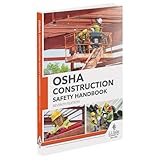
- 2024 OSHA Construction Safety Book is the seventh edition with the new OSHA HazCom final rule on 5/20/24. While the rule takes effect 7/19/24, the compliance dates don’t begin until 1/19/26 per 29 CFR 1910.1200(j).
- Construction Site Book offers quick access to essential OSHA regulations, jobsite hazards, and practical safety tips. It also helps employees identify hazards and prevent injuries and illnesses.
- Features easy-to-read format, full-color images, chapter quizzes with answer key, and comes in a compact size making it a convenient reference for employees.
- Critical topics include Confined Space Entry; Cranes & Derricks; Electrical Safety; Emergency Response; Ergonomics & Back Safety; Excavations; Fall Protection; First Aid & Bloodborne Pathogens; HazCom; Health & Wellness; Jobsite Exposures; Lockout/Tagout; Ladders & Stairways; Materials Handling/Storage; Motor Vehicles; PPE; Scaffolds; Site Safety & Security; Slips, Trips & Falls; Tool Safety; Welding, Cutting & Brazing; and Work Zone Safety.
- Specifications: 5 1/4” x 7 1/4", English, Soft bound. 7th Edition. Copyright 2024.
How child safety and illegal content are treated
OSA: explicit risk assessments and child-safety measures
Under the OSA, providers of regulated user-to-user services likely to be accessed by children must assess risks to children and take proportionate measures to mitigate them. Duties include preventing children from encountering specified priority harmful content through highly effective age assurance, and protecting them from other harmful content in line with assessed risks. The government describes highly effective age assurance as applying to preventing children’s access to pornography and certain self-harm, suicide and eating-disorder content. This is a description of the government’s implementation framework, not a rule prescribing one age-checking technology for every service. The precise duties depend on the service and the relevant statutory provisions. UK government Online Safety Act guidance · Online Safety Act 2023
DSA: safety within a wider rights framework
The DSA aims to make the online environment safer and more trustworthy while protecting fundamental rights. It requires platforms to address risks involving illegal and harmful content and includes obligations such as advertising transparency and restrictions on targeted advertising based on sensitive data. Those measures should not be read as a one-to-one substitute for the OSA’s defined child-risk assessments and child-safety duties. European Commission DSA overview
What additional rules apply to the EU’s largest services?
The Commission’s designation threshold for VLOPs and VLOSEs is more than 45 million monthly users in the EU. After designation, a service has four months to comply with the additional DSA obligations. These include identifying, analysing and assessing systemic risks associated with the service, including risks to fundamental rights, public security and wellbeing, and adopting measures to mitigate them. European Commission list of designated VLOPs and VLOSEs · European Commission VLOP/VLOSE obligations
The OSA also differentiates obligations among service categories, including Category 1 duties. That is a separate legal mechanism: UK service categories should not be compared mechanically with the DSA’s EU-user threshold. The Commission’s designation list can change, so a service’s current status should be checked there rather than inferred from its size or reputation.
When the duties began applying
The general DSA application date for online intermediaries was 17 February 2024. The Commission also described the rules as applying to all online platforms accessed by users in the EU from that date. European Commission DSA overview
In the UK, the government says the legal duty to protect users from illegal content began on 17 March 2025, and the legal duty to protect children began on 25 July 2025. These are distinct milestones in the OSA’s implementation, not a single start date for every provision. UK government Online Safety Act guidance
Rank #4
Who enforces the laws, and what penalties can apply?
UK: Ofcom and court applications
Ofcom is the UK’s independent online-safety regulator and has regulatory and enforcement functions under the OSA. The UK government says Ofcom can investigate non-compliance and impose fines of up to 10% of qualifying worldwide revenue. In the most serious cases, Ofcom can apply to a court to block a service; blocking is not an automatic action by the regulator. UK government Online Safety Act guidance · Online Safety Act 2023
EU: Commission and national coordinators
In the EU, the European Commission works with national Digital Services Coordinators. The Commission primarily supervises designated VLOPs and VLOSEs, while national authorities supervise other services under the framework and establishment rules. The Commission states that DSA fines may not exceed 6% of a provider’s global annual turnover. That ceiling is not worded on the same basis as the UK government’s description of Ofcom’s maximum fine. European Commission DSA enforcement overview · European Commission Digital Services Coordinators
Does the EU DSA apply in the UK?
The DSA is an EU framework for services offered to users in the EU, while the OSA is the UK’s online-safety framework. A company serving users in both jurisdictions may need to consider both regimes, depending on its service, users, establishment and applicable legal rules. The laws overlap in areas such as content processes, transparency and risk management, but their definitions and duties differ; complying with one does not itself establish compliance with the other.
What this comparison can—and cannot—tell you
This is a framework-level comparison, not a service-specific compliance assessment or a complete article-by-article legal concordance. Neither the cited application dates nor the penalty ceilings demonstrate how much either law has reduced online harm. For a particular service, the answer turns on its features, user base, establishment, applicable service category or designation, and current regulator guidance. The current status of EU designations and live implementation or enforcement developments should be verified against the Commission’s and Ofcom’s official materials.
Quick Recap
Product prices and availability are accurate as of the date/time indicated and are subject to change. Any price and availability information displayed on Amazon at the time of purchase will apply.

