
There is no single Canadian oil-pipeline permit. The first question is whether the proposed pipeline is federally or provincially regulated. From there, the project may need an impact assessment as well as separate regulator approvals, permits and licences. The route depends on the project’s facts and the laws that apply; an assessment decision alone does not necessarily authorize construction.
Start by identifying the regulator and review route
Natural Resources Canada (NRCan) says a pipeline must receive permission to construct from the appropriate federal or provincial regulator. Not every oil pipeline is reviewed by the Canada Energy Regulator (CER), and the federal Impact Assessment Act (IAA) process does not apply to every project.
For a particular proposal, the relevant questions include which regulator has jurisdiction, whether the project is a designated project under the IAA, the length of new pipeline and new right-of-way, and what other permits the route and activities may require. NRCan’s public summaries describe two distinct thresholds:
- 40 km or more of new pipeline: NRCan says a major pipeline project of this size has a public hearing before a decision. This is its summary of the major-pipeline hearing threshold.
- 75 km or more of new right-of-way: NRCan’s federally regulated petroleum-pipeline FAQ says a new pipeline requiring this amount of new right-of-way is subject to the IAA assessment process described there, conducted by the Impact Assessment Agency of Canada (IAAC) with CER support.
These are not interchangeable measures: one refers to new pipeline length and a hearing for a major pipeline project; the other refers to new right-of-way and an IAA assessment. They are general markers in NRCan’s summaries, not a complete legal test for every proposal. Actual applicability must be checked against current legislation, regulations and the project’s facts. IAAC likewise cautions that its plain-language process overview does not replace legal requirements; the Act and regulations prevail if they conflict with the summary.
#1 Best Overall

- 【Authentic Oil Refinery Scene】Faithfully recreates a working processing plant complete with catalytic towers, distillation columns, reaction vessels, and intricate pipeline networks. This model captures the complex, layered architecture of a real refining facility, turning your shelf into a miniature energy hub.
- 【Second Module of an Expandable Series】This refining plant serves as the core processing stage in a 3-part petroleum engineering collection. Display it as a standalone industrial centerpiece, or connect it with the oil pumping unit and transport/storage terminal from the same series to build a complete, end-to-end energy production landscape.
- 【Smooth Build with Clear Guidance】Crafted from 734 precision-molded ABS bricks. Once completed, a substantial presence that fits neatly on desks, shelves, or within brick-built city layouts.
- 【Multi-Tower Industrial Detail】From towering fractionating columns to control units, safety signage, and connecting pipework, every component mirrors the layered operations of real-world refining. This build offers an immersive challenge for those fascinated by chemical engineering, heavy industry, and complex mechanical systems.
- 【An Impressive Display & Thoughtful Gift】Whether showcased alone as an architectural statement or integrated into a broader industrial diorama, this model delivers striking visual depth. A memorable gift for aspiring engineers, industrial model collectors, or STEM enthusiasts on birthdays and special occasions—suitable for builders aged 6 and above.
How an IAAC-led impact assessment proceeds
When an impact assessment is required, IAAC describes a general process with five phases. The steps below explain the usual sequence; the route can differ where an integrated assessment or review-panel process applies.
1. Planning and the initial project description
The proponent submits an Initial Project Description identifying the proposed location and potentially affected communities and Indigenous Peoples. IAAC posts it to the Canadian Impact Assessment Registry for comment, considers issues raised and potential adverse effects within federal jurisdiction, and determines whether an impact assessment is required. It also discusses cooperation with relevant jurisdictions.
If an assessment proceeds, IAAC prepares project-specific Tailored Impact Statement Guidelines. These set out the studies and information the proponent must provide, engagement expectations and permits that may be needed. For a designated project, IAAC also develops a permitting plan identifying potentially required permits, licences and authorizations. That plan may change as information develops.
Rank #2

- [Exploring the Mysteries of Energy]: Say goodbye to boring theories! This building block set miniaturizes the vast oil industry system onto the desktop, allowing you to intuitively understand the oil extraction process, and through fun games, it stimulates your strong interest in physics and engineering
- [Highly Replicated Industrial Details]: This model accurately replicates a real oil pumping unit, with 668 pieces of building blocks faithfully reproducing details such as the movable pumping arm, pipeline valves, platform railings, and warning signs. The mechanical operating principles are clearly visible. It allows you to have a mini oil field at home, where you can not only assemble it yourself but also intuitively understand the industrial logic of oil extraction.
- [STEM Learning]: Exclusively designed piston pump with adjustable drill bit, manually controlled, allows you to experience the process of oil extraction! It is more interactive than static models and serves as an excellent teaching aid for STEM education, enabling children to learn mechanical engineering principles while having fun.
- [Home Collection Ornaments]: The finished product measures approximately 10.99*6.9*9.3 inches, with a modular design for the base. Thanks to its unique design reproduction and rich details, this product is not just a toy for children, but also an exquisite collectible worthy of being placed in a study, office, or display cabinet. It is a symbol of personal taste and interest.
- [Unique Gift]: Comes with an exquisite gift box and clear instructions, integrating assembly fun, educational value, and collectible attributes. It is a thoughtful gift for oil industry professionals, engineering enthusiasts, or assembly enthusiasts. It is suitable for birthdays and festivals, showcasing your unique taste and helping children develop their potential, embarking on their dream journey as energy tycoons.
2. The proponent prepares an Impact Statement
The proponent studies the project’s effects, engages Indigenous Peoples and the public, and submits a technical Impact Statement in accordance with the tailored guidelines. The statement describes predicted impacts and proposed mitigation. IAAC, federal experts, Indigenous Peoples and public participants review it; IAAC may request missing information before the assessment phase begins.
Quick wins for a faster PC:
Fix the driver behind crashes, sound loss and screen glitchesFind Drivers →Repair Windows errors before they cause bigger problemsFix Now →3. Assessment and report
IAAC analyzes effects within federal jurisdiction using the Impact Statement and input from Indigenous Peoples, the public, federal experts, other jurisdictions and other participants. Its report describes the evidence and Indigenous Knowledge considered, analyzes direct and indirect adverse federal effects and their significance, and proposes feasible mitigation measures and conditions.
4. Decision
The Minister makes the decision or refers it to the Governor in Council. The Decision Statement tells the proponent whether the project may proceed and, if so, sets out any enforceable conditions and follow-up measures. It may also specify a deadline for starting the project. IAAC describes the Decision Statement as a legally binding document; that means its applicable conditions must be followed, not that it replaces other required authorizations.
Rank #3

- [Industrial Micro Ecosystem] - This set of oil transport storage plants building set fully demonstrates the core processes of transportation, storage, and preliminary processing in city industry. By precisely recreating details such as oil pipelines, giant storage tanks, pumping stations, and valves with building blocks, it allows people to gain a more intuitive understanding of the scientific knowledge involved in petroleum engineering
- [STEM Building Set for Boys] - A fun series of oilfield building set for petroleum engineering allows kids to master the science of modern oil chemical factories as they build,stimulate children's imagination and creativity
- [Creative Gifts] -This industrial building block with a novel theme and a hardcore design is definitely a special gift. Whether it's a birthday, Children's Day, or academic reward, it can instantly attract everyone's attention, showcasing your unique taste and emphasis on your child's potential development. Give your child a unique surprise and start their dream of becoming an energy tycoon
- [High Quality & Stable] - Built to the highest standards. We use top-quality ABS bricks with excellent clutch power for a sturdy and durable build. The final model is a stable, detailed, and impressive centerpiece designed for lifelong display. It's a perfect collectible that you'll be proud of
- [DIMENSIONS] – The set includes 743 pieces and transport storage factory lengths vary but, as a guide, the petroleum engineering stand over Length 26.3cm/10.35cm, width 23.5cm/9.25in, height 15.1cm/5.94in
5. Follow-up and compliance
After the decision, IAAC may inspect whether binding Decision Statement conditions are being met and track whether predicted impacts and mitigation were accurate and effective. Public and Indigenous participation may also be part of follow-up. IAAC says non-compliance with the Decision Statement is a violation of federal law.
Some projects use an integrated or review-panel process
The five phases above describe IAAC’s general process, not a universal panel structure. Depending on the project and applicable regime, an integrated assessment or review panel may work with the lifecycle regulator. IAAC’s integrated-assessment overview describes a route that includes public hearings, an assessment report and a decision, followed by licensing or compliance responsibilities. The particular project record and governing regime determine which route applies.
Assessment is not the same as every required authorization
A favorable IAA decision does not automatically issue every other permit. Separate federal requirements may include authorizations under fisheries, species-at-risk or navigable-waters regimes; provincial or territorial approvals may also be required. IAAC says the permitting plan identifies likely requirements and that federal authorization processes can be prepared concurrently with the assessment, but the authorizations can only be issued after the project is allowed to proceed under the IAA. The assessment decision is therefore one part of a wider approval path.
Rank #4

- 【Industrial Pumpjack Model】840-piece oil pump jack building kit measuring 14.2 × 4.6 × 8.9 in. Features orange-gray design, sturdy platform, and detailed base—great as an industrial machine model for display or collection.
- 【Motorized Mechanical Action】Working pump arm and drill move up and down with chain-driven motion. Includes motor and battery box for lifelike pumping simulation—brings energy and realism to this motorized construction toy.
- 【Challenging Build Fun】Step-numbered bags and illustrated instructions make building smoother. Designed for teens 14+ and adults, this construction block set offers rewarding hands-on assembly and display value.
- 【Durable ABS & Compatibility】Made with quality ABS pieces for tight fit and durability. Compatible with most major building block systems, expandable into larger oilfield or industrial STEM building blocks scenes.
- 【STEM Value & Gift Choice】Demonstrates engineering concepts of pumping and drilling, builds patience, logic, and problem-solving. A STEM model kit and display piece—great for birthdays, holidays, and collectors.
How public participation and Indigenous consultation fit in
Public participation can begin during planning, when the Initial Project Description is posted for comment, and can continue through review and hearings where the applicable process includes them. IAAC states that “Meaningful engagement and consultation with Indigenous Peoples and the public is integral to the impact assessment process.” Participation gives people a way to raise concerns and contribute information to the record; it does not make every process identical.
The Crown’s duty to consult is grounded in section 35 of the Constitution Act, 1982. During an impact assessment, IAAC leads federal consultation from planning through decision. It identifies Indigenous groups whose rights may be adversely affected, offers participation funding, coordinates federal authorities and lifecycle regulators as appropriate, and works with groups on concerns and possible solutions. The assessment considers effects on Indigenous Peoples and impacts on constitutionally recognized and affirmed rights, and Indigenous Knowledge is integrated into the process.
Consultation is tailored to the potential effects and circumstances of the project. It is a legal Crown process involving listening, consideration and, where appropriate, accommodation; it should not be described as a guaranteed project consent or a universal individual veto. Project-specific rights, agreements and legal issues require examination of the relevant record and law.
The Tool Desk
Outbyte PC Repair FREEClear out junk files and repair common Windows errorsFree Scan →Outbyte Driver Updater FREEScan for outdated or missing drivers - takes under a minuteDriver Scan →Best Value
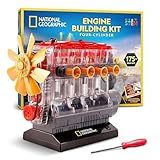
- BUILD YOUR OWN ENGINE – Assemble a clear 4-cylinder engine model kit with 175+ durable pieces. A fun DIY engineering toy engine that shows how pistons, valves, and gears really move.
- WORKING MODEL ENGINE – Install 3 AA batteries (not included), press start, and see this visible engine model kit come to life as pistons, valves, and gears move just like a real car engine.
- COMPLETE STEM ACTIVITY KIT – This kids engine build kit includes everything needed: 175+ parts, tools, illustrated instructions, and a Learning Guide for an engaging STEM toy experience.
- FUN & EDUCATIONAL – Encourages problem-solving skills and curiosity while teaching kids about mechanics and engineering. Perfect model engine kit for young builders and hobby kits for boys and girls.
- GREAT STEM GIFT – An exciting engine building kit for kids who love cars, building toys, and model kits. Inspires creativity and discovery through hands-on STEM play!
How long does approval take?
IAAC says it aims to complete impact assessments in two years. This is an agency aim, not a guaranteed duration and not a total timeline for pipeline approval. Proponent studies, panel proceedings, consultation and separate permits may affect the schedule. The official process summaries do not establish one reliable duration for all Canadian oil-pipeline approvals.
What to check for a specific pipeline
For a named proposal, the general summaries are only a starting point. Check its Canadian Impact Assessment Registry record, the responsible regulator, current legislation and regulations, decision documents, relevant provincial or territorial approvals, and any permitting plan. Those project-specific materials establish which review route applies and what conditions or authorizations remain.
Quick Recap
Product prices and availability are accurate as of the date/time indicated and are subject to change. Any price and availability information displayed on Amazon at the time of purchase will apply.

