
The BBC rebuilt parts of its iPlayer video workflow as Video Factory, using Amazon EC2, S3, SQS and Elemental Cloud to move beyond the capacity limits of fixed transcoding hardware. The cloud let the BBC add processing capacity for busy periods, including regional-news work that reportedly went from eight to ten hours to about 20 minutes. The 2013–2014 case describes lower transcode costs and more predictable scaling, but publishes no audited total saving.
Why the BBC moved beyond fixed transcoding hardware
As iPlayer use spread across phones, tablets and other devices, the BBC needed to create more versions of programmes for different streams and formats. Its existing transcode infrastructure had become a bottleneck: available hardware capacity influenced which programmes could be made available online. That put a technical constraint ahead of the editorial decision about what audiences should be able to watch.
Fixed equipment also made it difficult to respond efficiently to uneven demand. A large broadcast or a surge in viewing could create a temporary processing peak, while permanently provisioning enough hardware for that peak risked leaving capacity underused at quieter times. The BBC wanted a system that could scale with content volume, improve resilience and make the cost of additional processing easier to understand.
What was BBC Video Factory?
Video Factory was an in-house rebuild of the BBC’s ingest, media-storage, playout-data and transcoding workflows for iPlayer. It used Amazon EC2 for computing, Amazon S3 infrastructure for media storage, Amazon SQS for message-driven coordination, and Elemental Cloud for cloud transcoding. The implementation was described in 2014 reporting about a system that had replaced the old platform in September 2013; it should be understood as a historical design, not a description of current AWS product names or services.
Outdated Drivers Are Slowing You Down
One free scan finds every outdated or missing driver and matches the right update for your exact hardware.Free scan · exact hardware matchPC Slower Than It Used to Be?
A free scan shows the junk files, broken settings and background clutter dragging Windows down - then fixes them in one click.Free scan · Windows 10 & 11#1 Best Overall

- exactly which is the ability to easily screen share into a lot of Mac minis in a studio rack , made remoting into machines much easier! Works great for enabling the headless use of an application like RealVNC on a Raspberry Pi,Emulator works fine with native HDMI port,allows headless Macs to be accessed remotely at HiDef resolutions
- headless PLEX server with a driver hacked GTX 1060 for transcoding. use the 1060 for hardware transcoding,solves GPU without a monitor can cause problems&behavior of the remote desktop as well as issues with the CPU being used for video transcoding instead of the GPU
- using it along with a Steam Link for streaming games to my TV. many games will default to a lower than 1080p resolution if no monitor is present. Plug in this and Steam Link will be able to stream at full 1080p.
- without a monitor is something like 640x400, which is too small to even interact with Windows. connected this display emulator and get 1920x1080 resolution now when remoting into the system!
- no drivers or config needed download any software or configure the unraid server just plug in adjust resolution and connect .Works great as intended!have any questions please contact us 24 hours . Absolute service to your satisfaction!
The architecture was organized around four major areas:
- Mezzanine: captured and prepared source media for later processing.
- Time-Addressable Media Store: assembled media chunks into complete programmes.
- Playout Data: connected broadcast scheduling information to the online workflow.
- Transcoding: created profile-specific versions for delivery to different devices and streams.
About 20 components communicated through a fully message-driven design using Amazon SQS. That let workflow stages pass work along without relying on a single, tightly coupled processing chain.
Rank #2
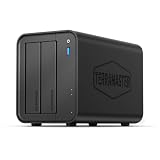
- Powerful Performance: Equipped with an Intel x86 quad-core processor and 4GB RAM, the F2-425 network attached storage effortlessly handles 4K transcoding and multitasking. The 2.5GbE port ensures ultra-fast file transfers and supports multi-user concurrent access
- Home Multimedia Hub: The F2-425 media server supports hardware-level 4K H.265 decoding, compatible with Plex, Emby, and Jellyfin for smooth HD video playback, with DLNA for seamless multi-device streaming. The Photos app features AI smart album and efficiently organizes millions of photos
- TNAS Mobile Full Control: Initialize setup for your F2-425 NAS storage via the TNAS Mobile app without a PC. The mobile app supports automatic photo and video backups, plus real-time local/remote synchronization, all managed through a single client
- Ultra-Quiet & User-Friendly: The F2-425 NAS server operates at just 19dB(A), suitable for quiet environments like bedrooms. Its tool-free Push-Lock design HDD trays enable to install HDDs in 10 seconds
- Massive Storage & Security: The F2-425 2-bay NAS supports up to 60TB storage (2 x 30TB for each bay), 50+ independent user accounts, and flexible TRAID arrays, saving 30% more storage space than traditional RAID while ensuring data redundancy. SPC security module and CloudSync (supporting Google Drive, OneDrive, Dropbox) guarantee worry-free data protection. Additionally, TerraSync enables two-way sync between the F2-425 and PCs/Macs
How the BBC’s cloud transcoding workflow operated
- Capture and chunk the broadcast feed. A broadcast-grade encoder captured 24 channels. A “chunker” divided the material into files of 80 MB each. ITPro’s 2014 account reports storage rates of 10 Mbps for standard-definition material and 30 Mbps for HD.
- Assemble programme media. The Time-Addressable Media Store used S3 infrastructure to join the chunks into a complete programme. The BBC implementation was reported to assemble a full programme in less than one minute.
- Attach the correct playout information. The Playout Data component integrated with the broadcast playout system, giving iPlayer the time codes needed to start and end programmes at the right points.
- Create delivery versions. The Transcoding module selected profiles for different device streams. Elemental Cloud handled cloud transcoding, while on-premises transcoders could remain in use, so the design could operate as a hybrid rather than requiring every job to move to the cloud.
Fixed hardware versus the BBC’s cloud or hybrid approach
The BBC case illustrates the trade-offs behind the move; it is not a controlled comparison with published benchmark results for every category.
| Consideration | Fixed on-premises transcoding | Cloud or hybrid approach in the BBC case |
|---|---|---|
| Handling spikes | Capacity is bounded by installed hardware, which can make peaks a bottleneck. | Cloud burst capacity could be used for unusually demanding work; on-premises transcoders could still be retained. |
| Turnaround | The BBC reported that its earlier approach constrained the amount of content it could process; no general hardware turnaround figure is stated. | The regional-news path was reported to fall from eight to ten hours to about 20 minutes. This is a BBC implementation result reported by ITPro in 2014, not a universal cloud-transcoding benchmark. |
| Storage and I/O | The BBC described its earlier platform as constrained, but the reporting does not give a comparable storage or I/O ceiling for it. | The chunked workflow used S3 infrastructure; no comparable maximum storage or I/O ceiling is stated. |
| Resilience | The BBC sought a more resilient system, but the reporting does not quantify the old platform’s outage rate or identify every single point of failure. | The architecture distributed work across message-driven components. The reporting describes resilience as a goal, not a measured uptime result. |
| Multiple device profiles | Processing capacity limited what the BBC could make available online as device use expanded. | The transcoding module selected profiles for different streams, with cloud and on-premises processing both possible. |
| Incremental cost | Fixed capacity can be available even when demand is low; the case gives no comparable hardware cost breakdown. | The BBC described cloud scaling as making cost track content volume more clearly. No total saving or per-minute cost is published. |
How cloud capacity changed the cost equation
The cost argument was about matching processing capacity to workload, rather than a published claim that cloud infrastructure is always cheaper. With fixed hardware, an organization must provision for capacity constraints and peaks. A cloud-based workflow can instead draw on burst capacity when a workload grows, while a hybrid setup preserves the option to use existing transcoders where appropriate.
Rank #3

- Professional Video Editing Hub - Edit 4K and 8K footage directly over network with blistering 1,181 MB/s speeds; support multiple editors working simultaneously
- Massive Media Library - Start with 100TB, expand to 300TB using DX525 units as your video projects, RAW photos and audio libraries grow
- 10GbE Network Ready - Upgrade to 10-Gigabit networking for post-production teams working on shared high-resolution projects
- Advanced Media Management - Stream content to clients organize thousands of assets with AI tagging and maintain project version control
- 3-Year Warranty & Enterprise Support - Dedicated technical account management is available for business-critical production environments
For the BBC, the reported benefit was lower transcode costs and a clearer relationship between the amount of content processed and the cost of processing it. But the available case reporting does not state a total pound or dollar saving, a before-and-after cost per programme, or an audited comparison of cloud and hardware operating expenses. It therefore supports the design rationale and reported cost direction, not a precise ROI figure.
Independent reader supportYour contribution helps us test, update, and keep practical guides available for everyone.What the reported results establish
ITPro’s 2014 account says the BBC served 36.5 billion minutes of iPlayer content with cloud assistance in 2012. That figure is a historical service-volume measure, not a claim that every minute was transcoded exclusively in the cloud. The same reporting describes the regional-news transcode path falling from eight to ten hours to about 20 minutes, demonstrating the practical value of burst processing for that workload.
Rank #4

- High Resolution and Frame Rate: Delivers up to 5MP resolution at 20fps, providing clear and detailed images for critical surveillance needs.
- Local Storage Available: Micro SD card local storage of image and record with pre-alarm recording and auto cycle recording
- Advanced Video Compression: Supports multiple compression formats including H.265+ and H.264+, optimizing storage and bandwidth usage.
- Intelligent Analytics: Features perimeter protection, face detection, and video exception detection to enhance security monitoring and response.
- Versatile Video Inputs: Compatible with TVI/AHD/CVI and traditional CVBS signals, allowing for flexible system integration.
An 18-person development team delivered the system in under a year, and the BBC switched off the old platform in September 2013. The evidence supports Video Factory as a substantial workflow redesign that eased a capacity bottleneck and enabled faster processing for at least one identified use case. It does not establish a universal speedup, a specific total cost reduction, or the architecture and pricing of BBC systems today.
Quick Recap
Best Value

- [Intel Quad-Core Efficient Processing Power] Powered by Intel Celeron N5105 quad-core CPU for smooth multitasking, file sharing, media streaming, and 24/7 NAS workloads.
- [Hybrid Storage NAS for Performance & Flexibility] Supports both SATA HDD/SSD and NVMe SSD cache, delivering a flexible hybrid storage architecture ideal for performance optimization and large-capacity data storage.
- [Dual 5GbE High-Speed Network Connectivity] Equipped with dual 5-Gigabit Ethernet ports, delivering significantly faster data transfer compared to standard Gigabit NAS for creators and small businesses.
- [4x M.2 NVMe SSD Slots for Cache Acceleration] Supports up to four NVMe SSDs for caching or tiered storage, improving system responsiveness, IOPS performance, and overall speed.
- [4K Media Server with HDMI Output] Supports hardware 4K transcoding and HDMI output for smooth media playback, ideal for Plex, streaming devices, and home entertainment systems.
Product prices and availability are accurate as of the date/time indicated and are subject to change. Any price and availability information displayed on Amazon at the time of purchase will apply.
Recommended Free Tools

