
Free tools Windows power users keep installed
One-click scans. No signup required.
Startups can bring new technologies and additional suppliers into the U.S. defense industrial base, but a promising prototype is only one step toward military adoption. The Department of Defense (DoD) is pursuing a more diverse, resilient supplier base and more flexible acquisition; programs such as DIU and SBIR/STTR can help companies engage with that system, while testing, integration, contracting, and a government customer remain essential to transition.
Why DoD wants more startup participation
DoD defines the defense industrial base as private-sector companies of all sizes that build military hardware and weapons systems. Startups matter in part because a wider pool of suppliers can give the department more options for technologies and reduce reliance on a narrow set of sources.
The department’s National Defense Industrial Strategy, released January 12, 2024, sets four priorities: resilient supply chains, workforce readiness, flexible acquisition, and economic deterrence. It also calls for commercial off-the-shelf acquisition where applicable and a more diverse supplier base. The strategy is a policy direction, not evidence that any particular startup will win a contract.
The stakes can be specific to a sector: a May 1, 2024 DoD article said that 90% of missiles came from three sources, attributing the figure to a DoD report released in early 2022. That statistic concerns missiles only; it should not be read as a measure of supplier concentration across the entire defense industrial base. DoD’s 2024 account frames a competitive, innovative supplier base as important to national security.
#1 Best Overall

- QUICK SNAP-FIT ASSEMBLY — No glue, no mess: every precision-engineered piece clicks firmly into place so builders of all skill levels may complete their A-10 Thunderbolt II Warthog in one satisfying session without extra tools or adhesives.
- AUTHENTIC WARBIRD DETAIL — Faithfully recreates the iconic twin-engine, straight-wing attack jet with raised panel lines, movable control surfaces, and characteristic GAU-8 cannon nose for a display-ready replica straight out of the box.
- STEM-FRIENDLY BUILDING EXPERIENCE — The numbered part system and illustrated step-by-step guide introduce basic aerospace engineering concepts, supporting spatial reasoning and fine-motor development for builders ages 8 and up.
- DURABLE ABS CONSTRUCTION — High-impact ABS plastic parts resist warping and breakage, ensuring the finished model withstands shelf display, light handling, and proud show-and-tell moments for years to come.
- GREAT VALUE GIFT UNDER $25 — Thoughtfully packaged and priced at $21.99, this building set makes an ideal birthday, holiday, or any-occasion gift for aviation fans, military history enthusiasts, and hobbyist model builders alike.
How startups can engage with DoD
There is no single entry route for every company. A startup may pursue a specific service need, seek early-stage research support, or engage with an organization that evaluates commercial technology. The right path depends on the problem, the maturity of the solution, and whether a government user is prepared to test and integrate it.
DIU and commercial technology
The Defense Innovation Unit (DIU) works with commercial technology, but identifying a promising product is not the same as adopting it. DoD’s July 19, 2024 account describes military services and other departmental organizations as critical partners in successful transition and integration. A company should therefore look for the government user and integration partners who would need to make a capability work in practice.
Rank #2

- 1/35 scale kit
- Includes driver figure in relaxed sitting pose
- Decals for five vehicles
SBIR/STTR and research-to-prototype funding
DoD’s Small Business Innovation Research (SBIR) and Small Business Technology Transfer (STTR) pathways support small-business innovation. The department’s SBIR/STTR policy description, dated May 16, 2024, describes Phase III as using non-SBIR government funding, private funding, or both to develop a prototype into a viable product or non-R&D service. Phase III is a potential transition route, not a promise of follow-on funding or a procurement award.
Direct opportunities and small-business engagement
A startup may also respond to a particular service solicitation or other government opportunity. In a July 3, 2024 interim implementation report announcement, DoD said it was exploring ways to lower barriers to entry for small and nontraditional businesses. That expresses an intent to make participation easier; it does not establish a standard timeline, a universal process, or an award for a given applicant. The announcement is available from DoD.
Rank #3
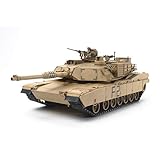
- 1/48 scale plastic model assembly kit. Length: 205mm, width: 77mm.
- Anti-slip surface details molded into the main sections of the model.
- Assembly type tracks feature straight sections for a highly realistic finish.
- Kit includes a weight for creating a heavy feel model.
- 2 marking options are included to recreate U.S. Army 3rd Armored Cavalry Regiment M1A2s from 2003 in the Iraq War.
From prototype to a capability the military can use
A prototype demonstrates a technical possibility; adoption also requires a user, a route to funding and contracting, and the work to fit the technology into operational systems. The available DoD descriptions point to a transition process rather than an automatic handoff.
- Identify a concrete need. Connect the product to a mission problem, a service requirement, or a government user who can evaluate it.
- Choose an engagement route. Consider a relevant DIU opportunity, a service solicitation, or SBIR/STTR if the work fits a small-business research pathway.
- Build and demonstrate the prototype. Show how the proposed capability addresses the need; a demonstration alone does not establish operational suitability.
- Line up transition partners and funding. Services and other DoD organizations may need to participate in integration. SBIR/STTR Phase III can use funding outside the SBIR award, but that funding must come from a government or private source.
- Complete adoption work. Testing, integration, contracting, and scaling are distinct from prototype development. Their requirements depend on the product and customer.
DoD’s October 29, 2024 implementation plan describes six initiatives for carrying the industrial strategy forward. Together with the department’s small-business and innovation-unit efforts, these initiatives indicate a broader system in which startup participation is one possible source of innovation—not a shortcut around acquisition and integration.
Rank #4
![ACA12127 1:35 Academy USMC AH-1Z Cobra 'Shark Mouth' [Model Building KIT]](https://m.media-amazon.com/images/I/51n+69EWuVL._SL160_.jpg)
- This is a plastic model kit. Assembly and painting is required.
- Paint and glue is NOT included.
- Contains parts to build one of each model.
What acquisition reform changes—and what it does not prove
In a July 23, 2025 account of acquisition reform, DoD said it seeks a broader range of companies, including startups and nontraditional vendors, to increase competition and innovation. Under Secretary of Defense for Acquisition and Sustainment Michael P. Duffey described the urgency: “What once took a decade must now be delivered in months or weeks to stay ahead of the threat.” This is an attributed statement of intent, not a verified delivery-time benchmark.
The department’s stated goals do not establish how often startups receive contracts or move from prototypes to fielded systems. The available sources do not provide a startup share of procurement, a typical time-to-contract, an award-conversion rate, or a startup transition success rate. Companies should assess a defense opportunity on its specific customer, funding path, and adoption requirements rather than assume that a government innovation program guarantees a sale.
Quick wins for a faster PC:
Repair Windows errors before they cause bigger problemsFix Now →Scan for outdated or missing drivers - takes under a minuteDriver Scan →Clear out junk files and repair common Windows errorsFree Scan →Quick Recap
Best Value

- Experience the legendary F-14 Tomcat through a highly detailed model designed for aviation collectors and hobby enthusiasts. The finished model becomes a striking desktop or showcase centerpiece.
- This 3D puzzle is designed for beginner-level assembly enthusiasts, offering an immersive hands-on building experience that helps cultivate patience, concentration, and mechanical problem-solving skills.
- This product is manufactured using high-quality, environmentally friendly plastic and employs an ultra-fine etching process to ensure durability, structural precision, and realistic aircraft details.
- Encourages understanding of aircraft engineering concepts while improving hand-eye coordination and spatial thinking through engaging mechanical assembly.
- Ideal gift for childs, engineers, collectors, model builders, and puzzle lovers for birthdays, Children’s Day, Christmas, or special hobby occasions.
What a startup should weigh before entering the defense market
| Decision | What to consider |
|---|---|
| Problem discovery and access | DIU or other government engagement may help surface commercial-technology opportunities; a service solicitation or small-business program may be a better fit when a defined need and route already exist. |
| Funding and maturity | Early research or prototype support is different from transition funding or procurement. Phase III can support development beyond an SBIR award, but does not itself guarantee a funder or award. |
| Adoption work | Prototype development is only one part of the path. A military customer may also need testing, integration, contracting, and scale-up. |
| Commercial potential | A dual-use customer base and private capital may diversify demand; a defense-only business may depend more heavily on government demand signals. The cited DoD sources do not compare the commercial outcomes of these models. |
Product prices and availability are accurate as of the date/time indicated and are subject to change. Any price and availability information displayed on Amazon at the time of purchase will apply.

