
Do these 3 things before closing this tab:
1Repair Windows errors before they cause bigger problems2Scan for outdated or missing drivers - takes under a minute3Clear out junk files and repair common Windows errorsFusion has a fundamental safety advantage over fission: it cannot sustain a neutron-multiplication chain reaction, and the fusion reaction stops if the conditions needed to maintain the plasma are lost. But a fusion plant would still handle radioactive tritium and materials activated by neutrons, so it would not be hazard-free. There is no evidence-backed, universal figure showing how much safer fusion plants are than fission plants; the answer depends on the design, materials, radioactive inventories and accident scenarios being compared.
How do fusion and fission compare on safety?
The clearest distinction is how the reactions behave when control is lost. Fission sustains a neutron chain reaction; fusion requires specific plasma conditions and is not a neutron-multiplication chain reaction. That difference removes the fission-like runaway chain-reaction pathway from fusion, but it does not remove other radiological or industrial hazards. The IAEA’s 2023 educational publication on fusion energy and the UK government’s 2023 annex on fusion regulation describe safety as dependent on the particular facility and its materials.
| Safety question | Fusion | Fission |
|---|---|---|
| Can the reaction run away as a chain reaction? | No fission-like neutron-multiplication chain reaction; if the conditions for fusion are disrupted, the reaction stops. IAEA, 2023 | Fission involves a neutron-multiplication chain reaction. The UK government contrasts this with fusion in its fusion regulation factsheet. |
| What happens after shutdown? | It does not have the same fission-product decay-heat situation. The sources do not establish a general quantitative comparison for future commercial plants. IAEA-TECDOC-1851 | Fission fuel continues to generate decay heat after shutdown, so the relevant safety functions differ. IAEA-TECDOC-1851 |
| Which radioactive materials need control? | Depending on the design, tritium, neutron-activated structures, corrosion products and radioactive dust require management. ITER safety information | Fission plants have spent fuel and other radioactive materials; the sources cited here do not provide a plant-by-plant inventory comparison. |
| Does it produce radioactive waste? | Yes. Activated or tritium-contaminated materials can become radioactive waste; materials and design choices affect its amount and characteristics. IAEA, World Fusion Outlook 2023 | Fission produces spent fuel and long-lived, high-activity waste. Fusion would not produce the same waste stream, but that does not mean it produces no radioactive waste. IAEA, World Fusion Outlook 2023 |
What hazards would a fusion plant still have?
Tritium handling and confinement
Many proposed power-plant designs use deuterium-tritium (D-T) fuel. Tritium is radioactive, so a facility would need systems to handle and confine it. For a real plant, the relevant questions include how much tritium is present, how it is contained, and what barriers and procedures limit releases. ITER’s safety and environment overview describes tritium and other safety considerations for its project; it should not be treated as a complete assessment of every future plant design.
Activated structures, dust and waste
Neutrons from fusion can activate reactor structures. Operation can also produce activated corrosion products and radioactive dust. These materials require control during operation and management when equipment is maintained, replaced or decommissioned. How much radioactive waste results, and what its characteristics are, depends in part on the materials chosen for the plant; “fusion produces no radioactive waste” is therefore inaccurate. The IAEA’s 2023 World Fusion Outlook discusses the outlook for fusion, while the IAEA’s fusion fundamentals publication covers technical safety considerations.
Outdated Drivers Are Slowing You Down
One free scan finds every outdated or missing driver and matches the right update for your exact hardware.Free scan · exact hardware matchPC Slower Than It Used to Be?
A free scan shows the junk files, broken settings and background clutter dragging Windows down - then fixes them in one click.Free scan · Windows 10 & 11#1 Best Overall

- Accurate WWII Replica : A 1/12 scale model of the U.S. Little Boy atomic bomb, metal model kits for adults, crafted from aluminum alloy for durability
- Heavy Weight : Thickened aluminum alloy sheet, Solid main body with a dedicated display stand
- Complete Assembly Tools : Includes an assembly guide, screwdriver, sanding rod, and decals for a rewarding build experience, with minimal glue(not include) needed
- Easy to Assemble : With a detailed manual, you can follow the steps to sand and assemble, quickly achieving your very own masterpiece
- Perfect for Collectors : Innovative full-metal nuclear bomb model, a must-have for history enthusiasts and collectors interested in WWII memorabilia
Industrial and design-specific hazards
Radioactivity is not the only consideration in a facility’s safety case. The technology, plant layout, materials, radioactive inventory, confinement barriers and assumed accident sequences all affect which hazards matter and how consequences are controlled. A result for one conceptual design should not be presented as a finding about all fusion plants.
What do accident analyses actually show?
The UK government’s 2023 annex considers potential accidents for conceptual future fusion power plants and stresses that assessments depend on technology, design and materials. Its illustrative hypothetical worst case for a conceptual D-T tokamak assumes a large release after an extreme earthquake causes total failure of both the vacuum vessel and tokamak building barriers. The annex says its literature review found no event sequence that would lead to that total failure. This is a bounding hypothetical used to explore possible hazards—not a prediction that the event is likely, a universal assessment of fusion plants, or a comparative probability. Read the scenario and its assumptions in the annex itself.
Rank #2

- The illustration presents a detailed patent-style breakdown, showing mechanical components arranged in precise, labeled views. Its technical layout highlights how each part fits within the overall device.
- Clean linework and structured diagram panels give it a vintage engineering aesthetic. The composition emphasizes clarity and symmetry, mirroring classic instructional schematics.
- Dual wall insulated: keeps beverages hot or cold
- Stainless Steel, BPA Free
- Leak proof lid with clear slider
The sources do not establish a numerical accident probability that applies across future commercial fusion plants or a universal numerical risk comparison with fission. A risk estimate needs a defined plant design, scenario, assumptions and assessment method. A dose estimate from one hypothetical scenario cannot, by itself, show expected harm or establish a general safety ranking.
Independent reader supportYour contribution helps us test, update, and keep practical guides available for everyone.How does regulation differ? The UK example
Regulatory arrangements depend on the country. In the UK, government policy says fusion facilities are outside the fission nuclear-site licensing regime. The Health and Safety Executive’s fusion energy facilities guidance describes relevant responsibilities in Great Britain, including workplace safety, radiological protection, environmental regulation and dangerous substances. The government’s 2023 factsheet describes the UK policy position and the roles of the HSE and environmental regulators. This UK framework is not a global rule; compare oversight using the law and regulator for the jurisdiction in question.
Quick Recap
Best Value

- The namesake of the Nimitz class,the U.S. NAVY's most modern aircraft carriers,
- ship is powered by two A4W nuclear reactors.
Rank #4
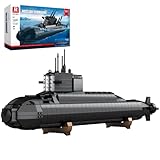
- 1498-Piece Nuclear Submarine Build – Create a detailed military submarine model designed for teens and adult builders who enjoy advanced brick building projects.
- LED Lighted Display Model – Includes a lighting kit and display stand, turning the finished submarine into a striking home, office, shelf, or collector’s display piece.
- Opening Side Panels & Interior Details – Features a radar antenna, sonar system, torpedo tubes, missiles, reactor area, and segmented compartments for a more realistic building experience.
- Challenging STEM Building Project – Encourages patience, spatial reasoning, problem-solving, and hands-on engineering exploration through a rewarding 14+ model kit.
- Gift for Military and Model Enthusiasts – A strong gift choice for birthdays, holidays, Father’s Day, Christmas, and collectors who enjoy military models, submarine toys, and technical building sets.
Rank #3

- HOBBY MODEL KIT – Unassembled model packed in an envelope with easy to follow instructions. Ideal for ages 14 and up
- NO GLUE OR SOLDER NEEDED – Parts can be easily clipped from the metal sheets. Tweezers are the recommended tool for bending and twisting the connection tabs.
- F4U CORSAIR – 1 Sheet Model with an easy difficulty level. Assembled Size: 4.49 x 3.71 x 1.48 inches.
- FROM STEEL SHEETS TO 3D – Pop out the pieces and connect using tabs and holes. Includes illustrated instructions.
- HIGHLY DETAILED ETCHED MODEL – Display your 3D model once completed - collect and build them all.
Product prices and availability are accurate as of the date/time indicated and are subject to change. Any price and availability information displayed on Amazon at the time of purchase will apply.

